1. Others

Others

There are a number of inhibitors, agonists, and antagonists which we cannot make precise classification because the research area is still unknown.

Others Related Products (73920):

Cat. No. Product Name CAS No. Purity Chemical Structure
  • HY-D1806
    Vari Fluor 594-Streptavidin
    Vari Fluor 594-Streptavidin is a dye marker of Vari Fluor-streptavidin consisting of labeling streptavidin with a Vari Fluor series of fluorescent probes. Streptavidin is a high-affinity tetramer protein, each tetramer consisting of four identical streptavidin subunits. Streptavidin binds to biotin specifically via a reversible non-covalent effect. Streptavidin can achieve rapid and efficient detection of biotin markers, and is often used in immunofluorescence (IF), enzyme-linked immunosorbent assay (ELISA), immunohistochemical staining (IFH), in situ hybridization (ISH) and other experiments. Ex/Em=590 nm/617 nm.
    Product Concentration: 0.8 mg/mL
    Vari Fluor 594-Streptavidin
  • HY-D1807
    Vari Fluor 555-Streptavidin
    Vari Fluor 555-Streptavidin is a dye marker of Vari Fluor-streptavidin consisting of labeling streptavidin with a Vari Fluor series of fluorescent probes. Streptavidin is a high-affinity tetramer protein, each tetramer consisting of four identical streptavidin subunits. Streptavidin binds to biotin specifically via a reversible non-covalent effect. Streptavidin can achieve rapid and efficient detection of biotin markers, and is often used in immunofluorescence (IF), enzyme-linked immunosorbent assay (ELISA), immunohistochemical staining (IFH), in situ hybridization (ISH) and other experiments. Ex/Em=555 nm/565 nm.
    Product Concentration: 0.8 mg/mL
    Vari Fluor 555-Streptavidin
  • HY-N0466
    Rebaudioside A 58543-16-1 98.0%
    Rebaudioside A is an orally effective steviol glycoside with high sweetness. Rebaudioside A acts as an inhibitor of α-glucosidase with an IC50 value of 35.01 μg/mL. Rebaudioside A increases the ATP/ADP ratio in β cells in a glucose-dependent manner, thereby inhibiting KATP channels, leading to membrane depolarization, calcium influx, and ultimately stimulating insulin secretion. Rebaudioside A activates the SREBP signaling pathway by inhibiting HMGCR, the rate-limiting enzyme in cholesterol synthesis, resulting in increased expression of LDLR on the cell surface, thus promoting the uptake of LDL-C in the blood. Rebaudioside A can be used for studies on blood glucose and lipid regulation as well as anti-obesity.
    Rebaudioside A
  • HY-N0520
    Calycosin-7-O-β-D-glucoside 20633-67-4 99.63%
    Calycosin-7-O-β-D-glucoside is an isoflavone isolated from Astragali Radix. Calycosin-7-O-β-D-glucoside has variety of biological activities, such as neuroprotective, cardioprotection, anti-inflammation, and antioxidative stress effects.
    Calycosin-7-O-β-D-glucoside
  • HY-NP051
    Bovine Serum Albumin-FITC
    Bovine Serum Albumin-FITC is a bovine Serum albumin conjugated to FITC (Ex=495 nm; Em=525 nm). Bovine Serum Albumin-FITC can be used as a fluorescent marker to label or detect specific antigens, molecules or cellular structures.
    Bovine Serum Albumin-FITC
  • HY-W004547
    (NH2)2bpy 18511-69-8 ≥98.0%
    (NH2)2bpy (4,4'-Diamino-2,2'-bipyridine) is an organic compound commonly used as a catalyst and complexing reagent. It can form complexes with other metal ions or organic molecules, and can play a catalytic role in some organic synthesis reactions. In addition, this compound is also widely used in some chemical analysis and detection methods, such as in biological analysis and electrochemical analysis
    (NH2)2bpy
  • HY-Y0406H
    Calcium chloride anhydrous, powder, 97% 10043-52-4
    Calcium chloride anhydrous, powder, 97% is an inorganic salt for the preparation of various buffers.
    Calcium chloride anhydrous, powder, 97%
  • HY-Y0998
    Potassium hexacyanoferrate(III), 99.5% 13746-66-2 ≥99.0%
    Potassium hexacyanoferrate(III), 99.5% (Red prussiate, 99.5%) is a chelating agent for metals such as iron and copper.
    Potassium hexacyanoferrate(III), 99.5%
  • HY-Z0283
    Benzamide 55-21-0 99.74%
    Benzamide (Benzenecarboxamide) is a potent poly(ADP-ribose) polymerase (PARP) inhibitor. Benzamide has protective activity against both glutamate- and methamphetamine (METH)-induced neurotoxicity in vitro. Benzamide can attenuate the METH-induced dopamine depletions and exhibits neuroprotective activity in mice, also has no acute effect on striatal dopamine metabolism and does not reduce body temperature.
    Benzamide
  • HY-W048739
    Fmoc-α-Me-Leu-OH 312624-65-0
    Fmoc-α-Me-Leu-OH is a leucine derivative with an Fmoc protecting group, which can be used to synthesize peptides with oxytocin receptor agonist activity.
    Fmoc-α-Me-Leu-OH
  • HY-134432B
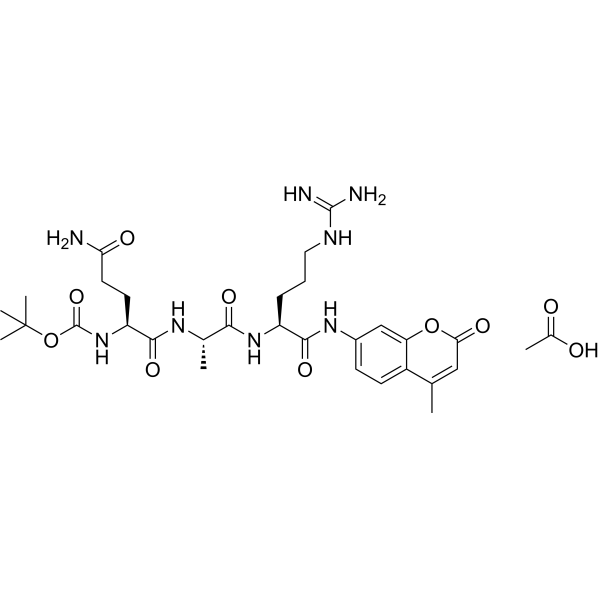
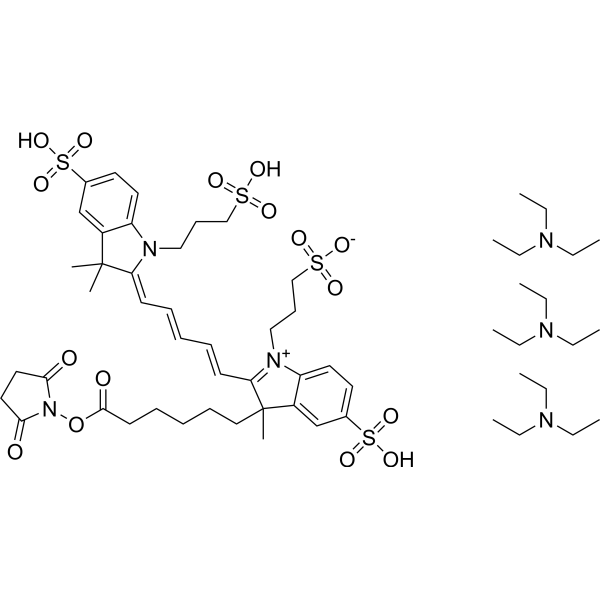
    Boc-Gln-Ala-Arg-AMC acetate 99.99%
    Boc-Gln-Ala-Arg-AMC acetate is a fluorogenic substrate for trypsin. Boc-Gln-Ala-Arg-AMC acetate can also be used for measuring the proteolytic activity of TMPRSS2.
    Boc-Gln-Ala-Arg-AMC acetate
  • HY-134575
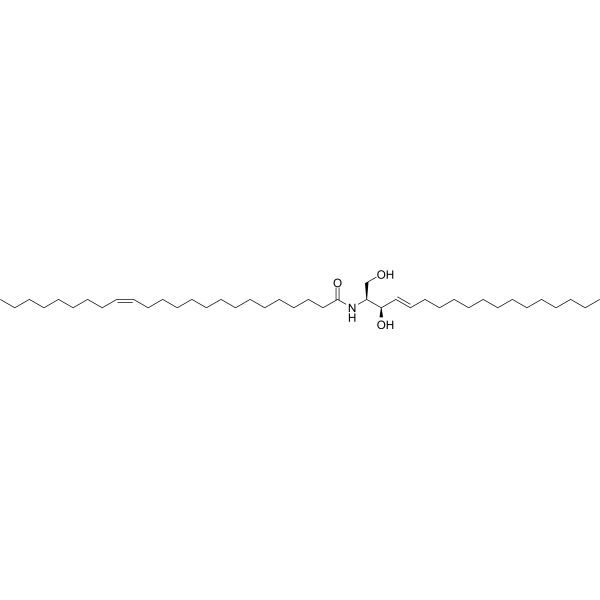
    C24:1-Ceramide 54164-50-0 99.91%
    C24:1-Ceramide is one of the most abundant naturally occurring ceramide. Ceramides regulates many diverse biological activities, such as cell apoptosis, cell differentiation, proliferation of smooth muscle cells, and inhibition of the mitochondrial respiratory chain.
    C24:1-Ceramide
  • HY-B2220A
    Cellulase R-10 from Trichoderma Vride 9012-54-8
    Cellulase R-10 from Trichoderma Vride is an enzyme mixture that includes cellulase, hemicellulase, pectinase and protease, etc. Cellulase R-10 from Trichoderma Vride can act on the 1,4-β-D-glucosidic bonds in cellulose, catalyzing the hydrolysis of cellulose molecules and generating cellulose oligosaccharides, cellulose di-saccharides and glucose. Cellulase R-10 from Trichoderma Vride can be used in combination with lyase R-10 to break down the cell walls of plants, preparing protoplasts. Cellulase R-10 from Trichoderma Vride is widely applied in plant cell hybridization research.
    Cellulase R-10 from Trichoderma Vride
  • HY-N0116
    Hematoxylin 517-28-2 99.40%
    Hematoxylin (Natural Black 1), a naturally occurring flavonoid compound derived from Caesalpinia sappan Linn.. Hematoxylin is a nuclear stain in histology and is also a potent Aβ42 fibrillogenesis inhibitor with an IC50 of 1.6 μM.
    Hematoxylin
  • HY-W038413
    2,6-Di(1-pyrazolyl)pyridine 123640-38-0 98%
    2,6-Di(1-pyrazolyl)pyridine (2,6-Bis(pyrazol-1-yl)pyridine) is a metal-organic framework (MOF).
    2,6-Di(1-pyrazolyl)pyridine
  • HY-W134327A
    DEAE-dextran (MW 500000) 9015-73-0
    DEAE-Dextran (MW 500000) is a complex carbohydrate polymer consisting of glucose molecules linked by glycosidic bonds and modified with diethylaminoethyl (DEAE) groups. DEAE-Dextran is a cationic molecule that can be used as a transfection reagent to deliver nucleic acids such as DNA or RNA into cells. Its positive charge interacts with negatively charged cell membranes, facilitating the uptake of nucleic acids. DEAE-Dextran can also be used as an ion-exchange chromatography resin, allowing the separation and purification of biomolecules based on their charge.
    DEAE-dextran (MW 500000)
  • HY-15916
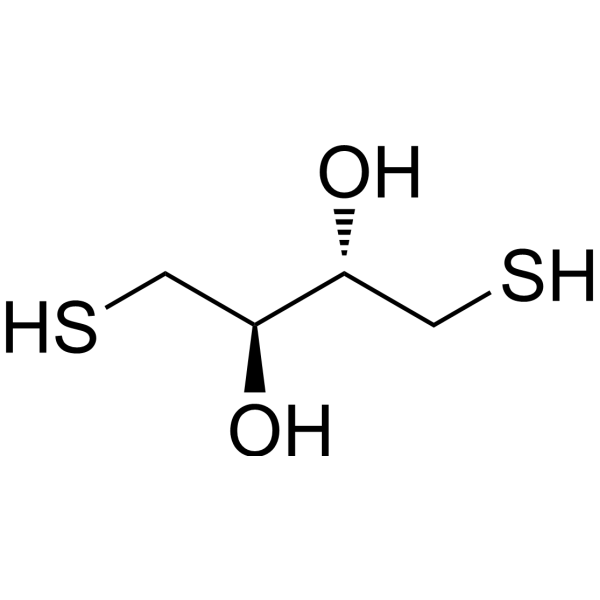
    DTE 6892-68-8 ≥98.0%
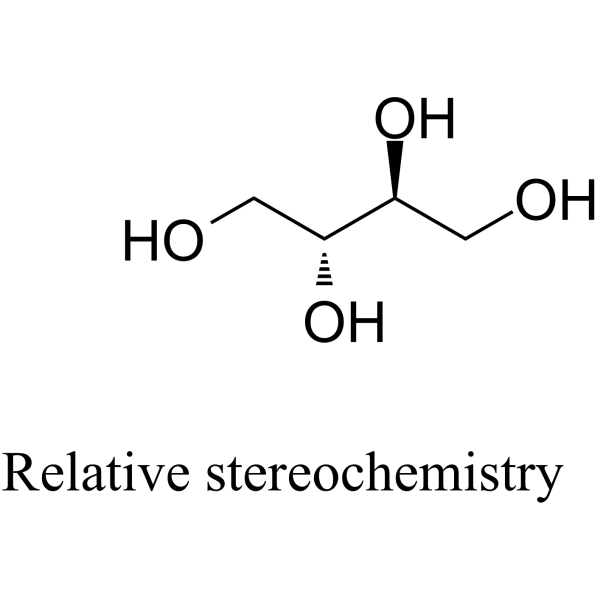
    DTE (Dithioerythritol) is a sulfur-containing sugar derived from the corresponding 4-carbon monosaccharide erythrose. DTE is an epimer of Dithiothreitol (DTT) (HY-15917). DTE is a thiol reducing agent.
    DTE
  • HY-W010981
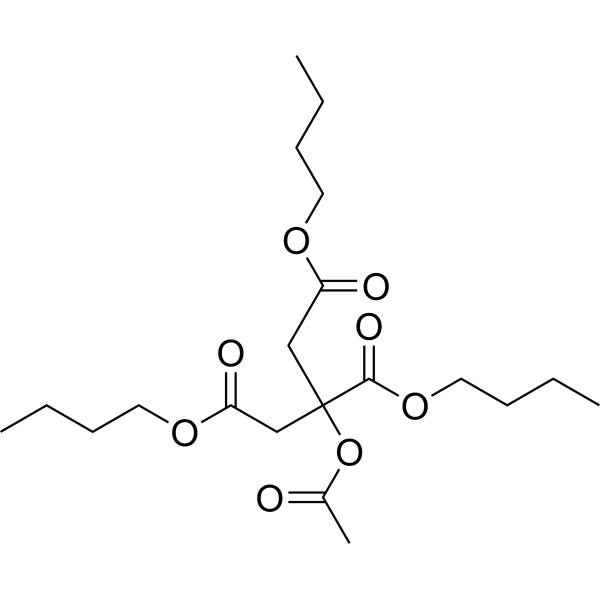
    Acetyl tributyl citrate 77-90-7
    Acetyl tributyl citrate (Tributyl O-acetylcitrate) is a pharmaceutical excipient and biodegradable hydrophobic plasticizer. Acetyl tributyl citrate can be used in cosmetics, food packaging, and as a flavoring substance for food.
    Acetyl tributyl citrate
  • HY-W059861
    3-(Benzyloxy)oxan-4-one 1351450-56-0 98.22%
    3-(Benzyloxy)oxan-4-one is a drug intermediate for synthesis of various active compounds.
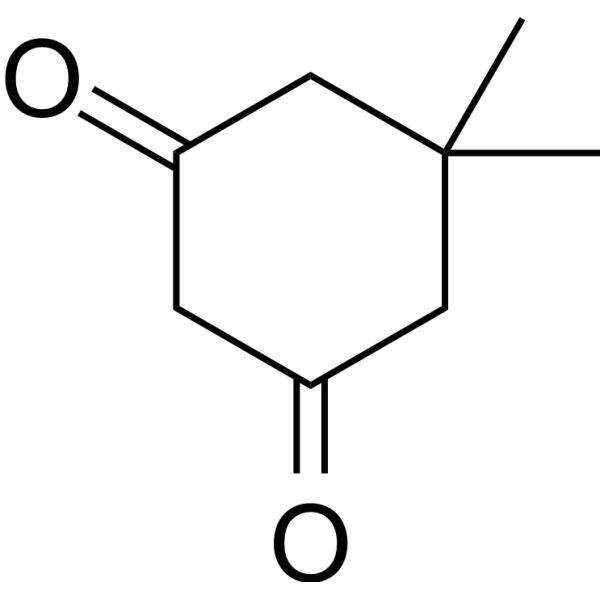
    3-(Benzyloxy)oxan-4-one
  • HY-14929A
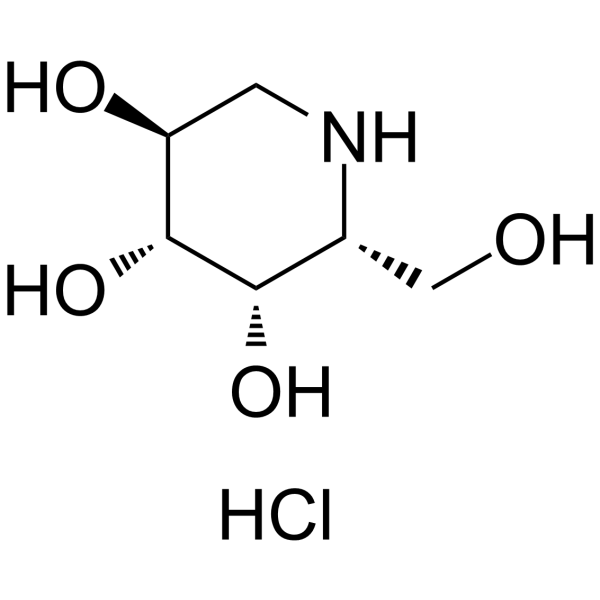
    Migalastat hydrochloride 75172-81-5 ≥99.0%
    Migalastat (GR181413A free base) hydrochloride is an orally active α-galactosidase A molecular chaperone, with an IC50 value of 0.04 μM for human α-Gal A. Migalastat binds to the active site of certain unstable mutant forms of α-galactosidase A, facilitating their transport to the lysosome. After dissociation in the acidic environment, Migalastat enables the mutant α-galactosidase A to exhibit biological activity.
    Migalastat hydrochloride