



Hematoxylin
Based on 12 publication(s) in Google Scholar
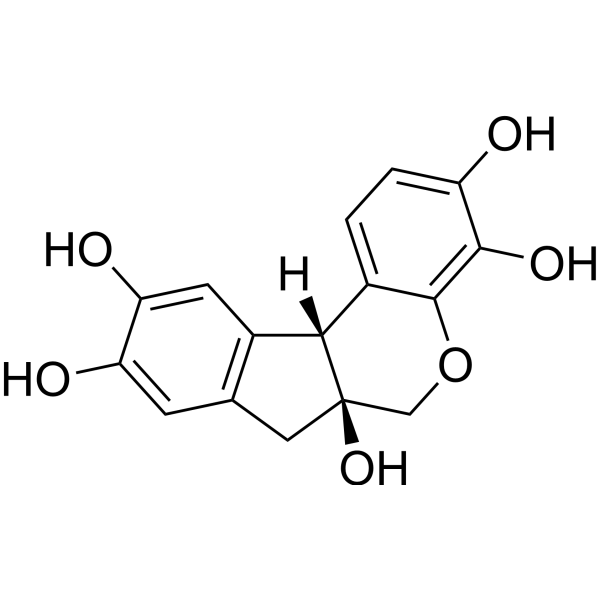
Hematoxylin (Natural Black 1), a naturally occurring flavonoid compound derived from Caesalpinia sappan Linn.. Hematoxylin is a nuclear stain in histology and is also a potent Aβ42 fibrillogenesis inhibitor with an IC50 of 1.6 μM.
For research use only. We do not sell to patients.
- Purity : 99.40%
- CAS No.: 517-28-2
- Formula: C16H14O6
- Molecular Weight:302.28
-
Storage:
4°C, protect from light
* In solvent : -80°C, 6 months; -20°C, 1 month (protect from light)

To place orders, for customer services and technical support, please contact: MedChemExpress USA
Tel: 609-228-6898 E-mail: [email protected] [email protected]


-
 Biological Activity
-
Chemical Information
-
Solvent & Solubility
- Protocols
- Purity & Documentation
- References
-
 Help & FAQs


-
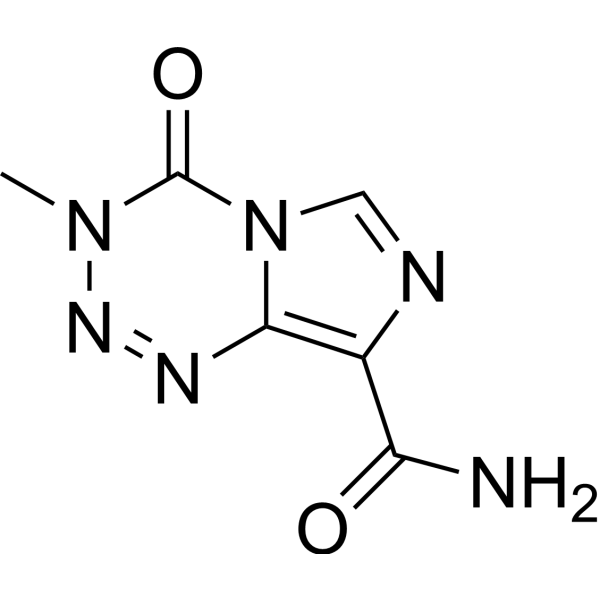
HY-17364
TemozolomideDNA Alkylator -
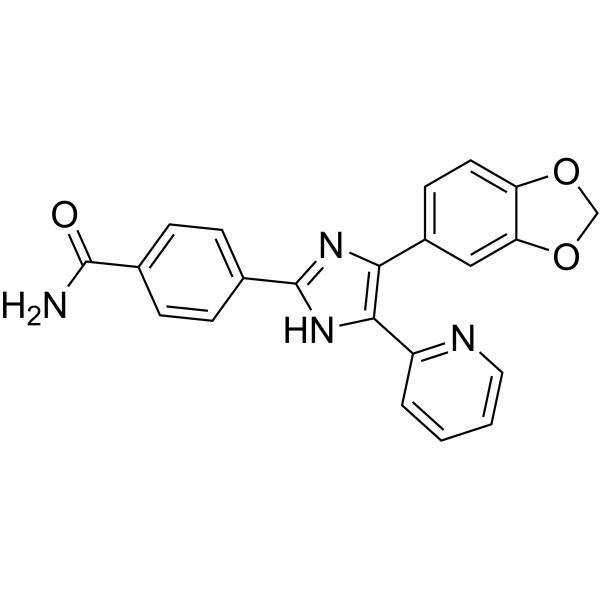
HY-10431
SB-431542TGF-β Receptor Kinase Inhibitor -
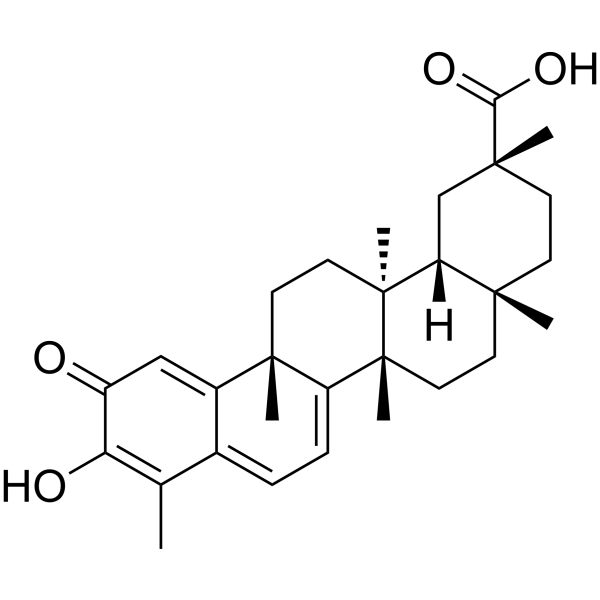
HY-13067
CelastrolAutophagy Inducer -
HY-15924
Thiazolyl BlueCytotoxicity Detection Reagent -
HY-N0752
ScutellareinAutophagy Inducer -
HY-K0010
Protease Inhibitor Cocktail (EDTA-Free, 100× in DMSO) -
HY-150042
TDI-011536Lats Kinase Inhibitor -
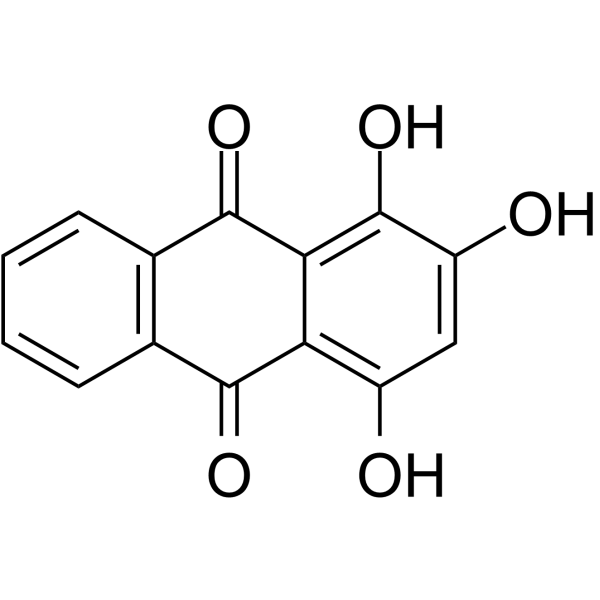
HY-N0571
PurpurinAntidepressant-like Drug -
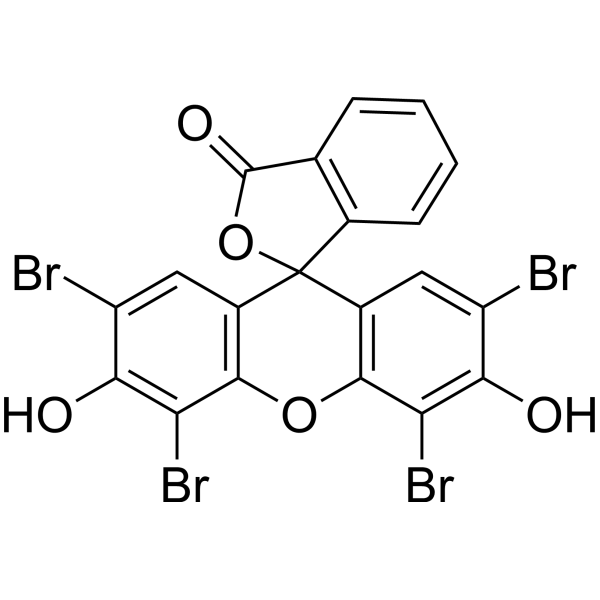
HY-D0505
Eosin YDye Molecule -
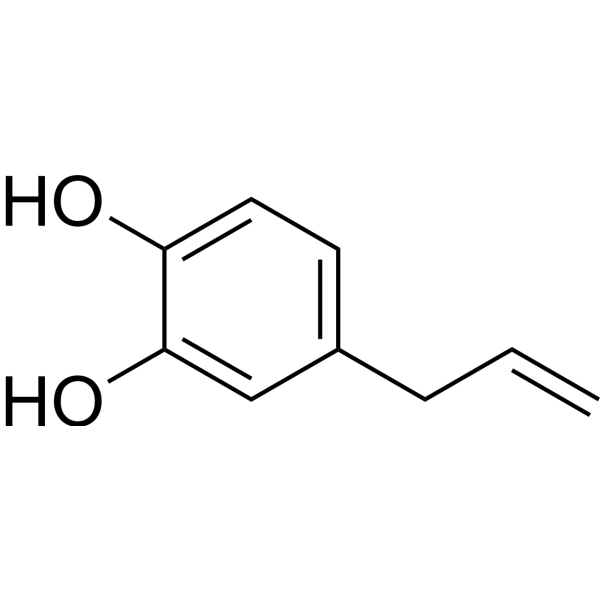
HY-N1887
4-AllylcatecholXylan -
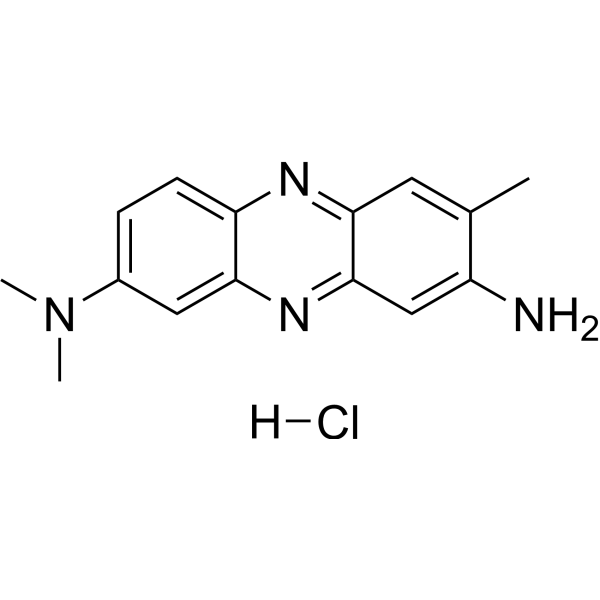
HY-D0166
Neutral RedBiochemical Assay Reagent -
HY-B0324A
Crystal VioletFluorochrome
Publications Citing Use of MedChemExpress (MCE) Hematoxylin
More- Neurochem Int. 2021 Nov:150:105191. [Abstract]
- Bioorg Chem. 2025 Jun 15:160:108480. [Abstract]
- Sci Rep. 2025 Jul 8;15(1):24580. [Abstract]
- Biochim Biophys Acta Mol Cell Res. 2026 Oct;1873(7):120212.
- BMC Cancer. 2025 Oct 16;25(1):1594. [Abstract]
- Int J Chron Obstruct Pulmon Dis. 2024 Aug 8:19:1819-1834. [Abstract]
- J Funct Foods. December 2021, 104784.
- Biochem Biophys Res Commun. 2025 Sep 12:779:152431. [Abstract]
- Exp Ther Med. 2021 Sep;22(3):938. [Abstract]
- Assay Drug Dev Technol. 2018 Feb/Mar;16(2):96-106. [Abstract]
- Anticancer Res. 2017 Aug;37(8):4475-4481. [Abstract]
- Heliyon. 2023 Nov 18;9(11):e22464. [Abstract]


Biological Activity
Description
IC50 & Target
IC50: 1.6 µM (Aβ42 fibrillogenesis)[2]
Cellular Effect
|
Cell Line

|
Type | Value | Description | References |
|---|---|---|---|---|
| HeLa | IC50 |
1.3 μM
Compound: 1
|
Inhibition of HIV1 VPR/human importin-alpha interaction in human HeLa cells assessed as inhibition of nuclear import of preintegral complex after 15 mins by confocal laser scanning microscopic analysis
Inhibition of HIV1 VPR/human importin-alpha interaction in human HeLa cells assessed as inhibition of nuclear import of preintegral complex after 15 mins by confocal laser scanning microscopic analysis
|
[PMID: 22244940] |
| MOLT-4 | CC50 |
40 μM
Compound: 1
|
Cytotoxicity against human MOLT4 cells expressing CD4+ after 2 days by MTT assay
Cytotoxicity against human MOLT4 cells expressing CD4+ after 2 days by MTT assay
|
[PMID: 22244940] |
In Vitro
When exposed to air, Hematoxylin is oxidized to reddish brown hematein. When oxidized to its hematein form and combined with a mordant, usually a metal salt, Hematoxylin stains tissue sections a deep blue to black color depending on the staining method. By itself, Hematoxylin is also amphoteric in its hematein form; it is red at acid pH and blue at alkaline pH. Differentiation following Hematoxylin staining removes nonspecific staining[1].
Hematoxylin treatment greatly alleviates Aβ42-induced cytotoxicity in SH-SY5Y cells. Hematoxylin is a potential agent against Aβ fibrillogenesis and cytotoxicity[2].
The Hematoxylin and Eosin (H&E) stained tissue section is the cornerstone of anatomical pathology diagnosis. The H&E procedure stains the nucleus and cytoplasm contrasting colors to readily differentiate cellular components[3].
MedChemExpress (MCE) has not independently confirmed the accuracy of these methods. They are for reference only. Further protocols information, click here.
In Vivo
The method of H&E staining[4]:
1. Place the glass slides that hold the paraffin sections in staining racks. Clear the paraffin from the samples in three changes of xylene for 2 min per change.
2. Hydrate the samples as follows.
i. Transfer the slides through three changes of 100% ethanol for 2 min per change.
ii. Transfer to 95% ethanol for 2 min.
iii. Transfer to 70% ethanol for 2 min.
iv. Rinse the slides in running tap water at room temperature for at least 2 min.
3. Stain the samples in Hematoxylin solution for 3 min.
4. Place the slides under running tap water at room temperature for at least 5 min.
5. Stain the samples in working eosin Y solution for 2 min.
6. Dehydrate the samples as follows.
i. Dip the slides in 95% ethanol about 20 times.
ii. Transfer to 95% ethanol for 2 min.
iii. Transfer through two changes of 100% ethanol for 2 min per change.
7. Clear the samples in three changes of xylene for 2 min per change.
8. Place a drop of Permount over the tissue on each slide and add a coverslip. View the slides using a microscope.
MedChemExpress (MCE) has not independently confirmed the accuracy of these methods. They are for reference only.
Clinical Trial
| NCT Number | Sponsor | Condition | Start Date |
Phase
|
|---|---|---|---|---|
| NCT01329991 | Plexxikon| | 2011-05 | PHASE1 |


Chemical Information
-
CAS No. 517-28-2
-
Appearance Solid
-
Molecular Weight 302.28
-
Formula C16H14O6
-
Color Yellow to brown
-
SMILES
OC1=CC=C([C@]2([H])[C@](CC3=C2C=C(O)C(O)=C3)(O)CO4)C4=C1O
-
Synonyms
Natural Black 1; Haematoxylin
-
Structure Classification
-
Initial Source
-
Shipping
Room temperature in continental US; may vary elsewhere.
-
Storage
4°C, protect from light
* In solvent : -80°C, 6 months; -20°C, 1 month (protect from light)


Publications (12)
-
Journal Impact Factor
-
Most Recent
-
Neurochem Int
IP3R-mediated activation of BK channels contributes to mGluR5-induced protection against spinal cord ischemia-reperfusion injury. [Abstract]2021 Nov:150:105191. PMID: 34547325 -
Bioorg Chem
Identification of novel AURKA inhibitors against neuroblastoma using a virtual screening approach. [Abstract]2025 Jun 15:160:108480. PMID: 40253760 -
Sci Rep
Circ_0008043 promotes the metastasis of hepatocellular carcinoma by regulating the miR-661/PLEKHG4B axis. [Abstract]2025 Jul 8;15(1):24580. PMID: 40628993 -
-
BMC Cancer
Tropomodulin 1 is essential for chemotherapy sensitivity and associated with better outcome in triple-negative breast cancer. [Abstract]2025 Oct 16;25(1):1594. PMID: 41102728 -
Int J Chron Obstruct Pulmon Dis
Network Pharmacology Followed by Experimental Validation to Explore the Mechanism of Stigmasterol in Sangbaipi Decoction Regulating PI3K/Akt Signaling to Alleviate Acute Exacerbation of Chronic Obstructive Pulmonary Disease. [Abstract]2024 Aug 8:19:1819-1834. PMID: 39140079 -
-
Biochem Biophys Res Commun
Knockdown of S100A9 inhibits pyroptosis and promotes PPAR signaling pathway in atopic dermatitis. [Abstract]2025 Sep 12:779:152431. PMID: 40773921 -
Exp Ther Med
Development of an optimal protocol for isolation and purification of human granulosa cells in patients with different ovarian reserves. [Abstract]2021 Sep;22(3):938. PMID: 34335887 -
Assay Drug Dev Technol
Development of a Time-Resolved Fluorescence Resonance Energy Transfer Ultrahigh-Throughput Screening Assay for Targeting the NSD3 and MYC Interaction. [Abstract]2018 Feb/Mar;16(2):96-106. PMID: 29634317 -
Anticancer Res
2017 Aug;37(8):4475-4481. PMID: 28739742 -
Heliyon
TDO2 deficiency attenuates the hepatic lipid deposition and liver fibrosis in mice with diet-induced non-alcoholic fatty liver disease. [Abstract]2023 Nov 18;9(11):e22464. PMID: 38074859


Solvent & Solubility
In Vitro:
DMSO : 50 mg/mL (165.41 mM; Need ultrasonic; Hygroscopic DMSO has a significant impact on the solubility of product, please use newly opened DMSO)
H2O : 6.67 mg/mL (22.07 mM; Need ultrasonic)
Please refer to the solubility information to select the appropriate solvent. Once prepared, please aliquot and store the solution to prevent product inactivation from repeated freeze-thaw cycles.
Storage method and period of stock solution: -80°C, 6 months; -20°C, 1 month (protect from light). When stored at -80°C, please use it within 6 months. When stored at -20°C, please use it within 1 month.
* Note: If you choose water as the stock solution, please dilute it to the working solution, then filter and sterilize it with a 0.22 μm filter before use.
Please refer to the solubility information to select the appropriate solvent. Once prepared, please aliquot and store the solution to prevent product inactivation from repeated freeze-thaw cycles.
Storage method and period of stock solution: -80°C, 6 months; -20°C, 1 month (protect from light). When stored at -80°C, please use it within 6 months. When stored at -20°C, please use it within 1 month.
* Note: If you choose water as the stock solution, please dilute it to the working solution, then filter and sterilize it with a 0.22 μm filter before use.
Concentration (start) × Volume (start) = Concentration (final) × Volume (final)

Protocols
-
Paraffin Section
The tissue is embedded in paraffin wax, cut into thin slices by a microtome, stained and sealed and finally made into samples for microscopic observation.
-
Protocol for Hematoxylin-Eosin (H&E) Staining
Hematoxylin-eosin staining is a routine histological method that stains nuclei mainly blue-purple with hemalum and stains cytoplasm, extracellular matrix, and many stromal components pink with eosin, allowing tissue architecture, cell morphology, necrosis, inflammation, fibrosis, tumor growth pattern, and treatment-associated injury to be evaluated by light microscopy. In cancer cells, primary neurons, mouse tumor models, intestinal organoids, inflammatory macrophage preparations, and drug-screening tissues, H&E is a morphology assay rather than a molecular assay; it should be interpreted with complementary molecular or immunostaining assays when the biological question concerns specific proteins, RNA levels, ferroptosis, mitophagy, or immune phenotypes.


Purity & Documentation
-
Data Sheet (280 KB)
-
SDS (393 KB)
- English - EN (393 KB)
- Français - FR (393 KB)
- Deutsch - DE (393 KB)
- Norwegian - NO (393 KB)
- Español - ES (393 KB)
- Swedish - SV (393 KB)
- Italian - IT (393 KB)
- Korean - KR (393 KB)
- Portuguese - PT (393 KB)
-
Handling Instructions (2659 KB)
References
[1]. M Titford. The long history of hematoxylin. Biotech Histochem. Mar-Apr 2005;80(2):73-8. [Content Brief]
[2]. Yilong Tu, et al. Hematoxylin Inhibits Amyloid β-Protein Fibrillation and Alleviates Amyloid-Induced Cytotoxicity. J Phys Chem B. 2016 Nov 10;120(44):11360-11368. [Content Brief]
[3]. Ada T Feldman, et al. Tissue processing and hematoxylin and eosin staining. Methods Mol Biol. 2014;1180:31-43. [Content Brief]
[4]. Robert D Cardiff, et al. Manual hematoxylin and eosin staining of mouse tissue sections. Cold Spring Harb Protoc. 2014 Jun 2;2014(6):655-8. [Content Brief]


Complete Stock Solution Preparation Table
Please refer to the solubility information to select the appropriate solvent. Once prepared, please aliquot and store the solution to prevent product inactivation from repeated freeze-thaw cycles.
Storage method and period of stock solution: -80°C, 6 months; -20°C, 1 month (protect from light). When stored at -80°C, please use it within 6 months. When stored at -20°C, please use it within 1 month.
| Optional Solvent | Concentration Solvent Mass | 1 mg | 5 mg | 10 mg | 25 mg |
|---|---|---|---|---|---|
| H2O / DMSO | 1 mM | 3.3082 mL | 16.5410 mL | 33.0819 mL | 82.7048 mL |
| 5 mM | 0.6616 mL | 3.3082 mL | 6.6164 mL | 16.5410 mL | |
| 10 mM | 0.3308 mL | 1.6541 mL | 3.3082 mL | 8.2705 mL | |
| 15 mM | 0.2205 mL | 1.1027 mL | 2.2055 mL | 5.5137 mL | |
| 20 mM | 0.1654 mL | 0.8270 mL | 1.6541 mL | 4.1352 mL | |
| DMSO | 25 mM | 0.1323 mL | 0.6616 mL | 1.3233 mL | 3.3082 mL |
| 30 mM | 0.1103 mL | 0.5514 mL | 1.1027 mL | 2.7568 mL | |
| 40 mM | 0.0827 mL | 0.4135 mL | 0.8270 mL | 2.0676 mL | |
| 50 mM | 0.0662 mL | 0.3308 mL | 0.6616 mL | 1.6541 mL | |
| 60 mM | 0.0551 mL | 0.2757 mL | 0.5514 mL | 1.3784 mL | |
| 80 mM | 0.0414 mL | 0.2068 mL | 0.4135 mL | 1.0338 mL | |
| 100 mM | 0.0331 mL | 0.1654 mL | 0.3308 mL | 0.8270 mL |
* Note: If you choose water as the stock solution, please dilute it to the working solution, then filter and sterilize it with a 0.22 μm filter before use.


Hematoxylin Related Classifications
HY-N0116 Related Classifications
 Powered by Bioz