Others
-
Others Related Products (76528)
Related Products (76528)

-
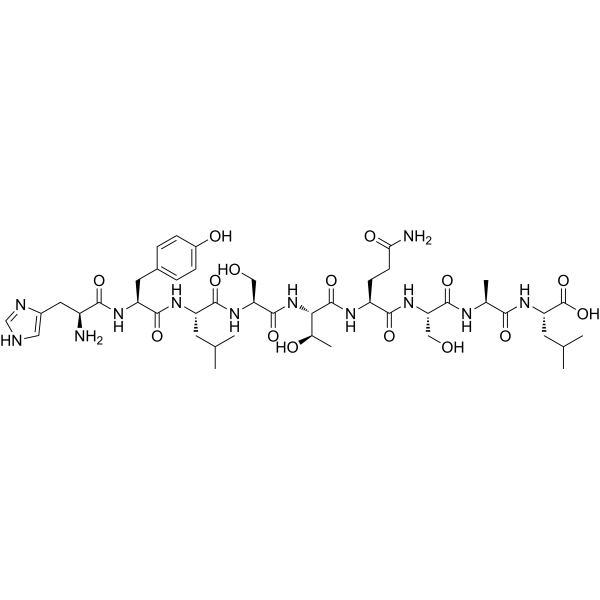
Enhanced Green Fluorescent Protein (EGFP) (200-208)
 0 Images
Enhanced Green Fluorescent Protein (EGFP) (200-208) is a specific peptide of enhanced green fluorescent protein (EGFP), containing 9 amino acids, and is the immunodominant epitope of EGFP1].
-
RVG-Cys
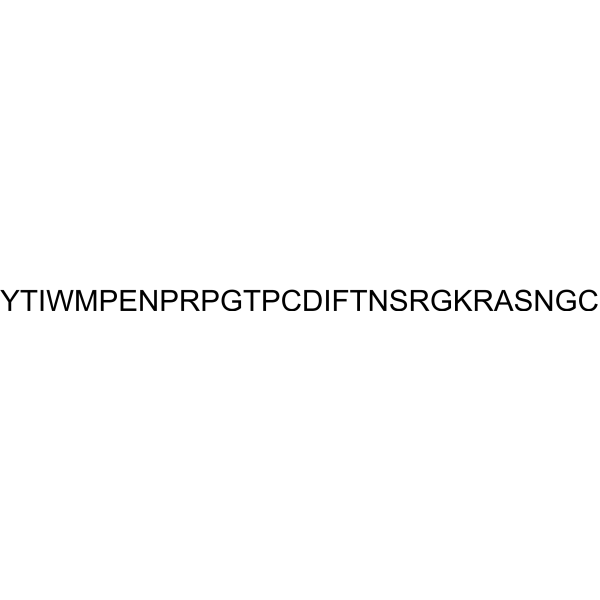 0 ImagesSynonyms: RVG29-Cys; RDP-Cys; Rabies Virus Glycoprotein-29-Cys
RVG-Cys (RVG29-Cys) is a peptide derived from rabies virus glycoprotein (RVG29) with Cys attached to facilitate subsequent conjugation. RVG-Cys enhances the specific targeted delivery of proteins in brain tissue and neurons.

-
3,3'-Diethyloxacarbocyanine iodide
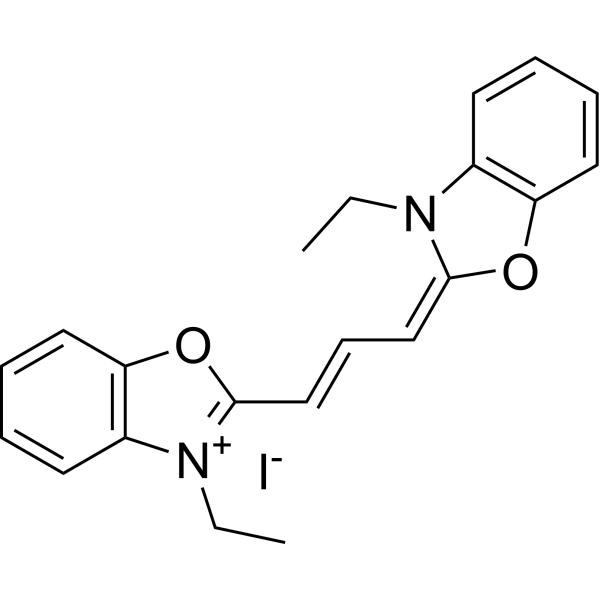 0 ImagesSynonyms: DiOC2(3)
3,3'-Diethyloxacarbocyanine iodide (DiOC2 (3)) is a Fluorescent probe used for microviscosity detection, micelle and microemulsion probing, critical micelle concentration determination, photophysical property research, and bacterial membrane potential assessment. The excitation wavelength of 3,3'-Diethyloxacarbocyanine iodide is 355 nm.
-
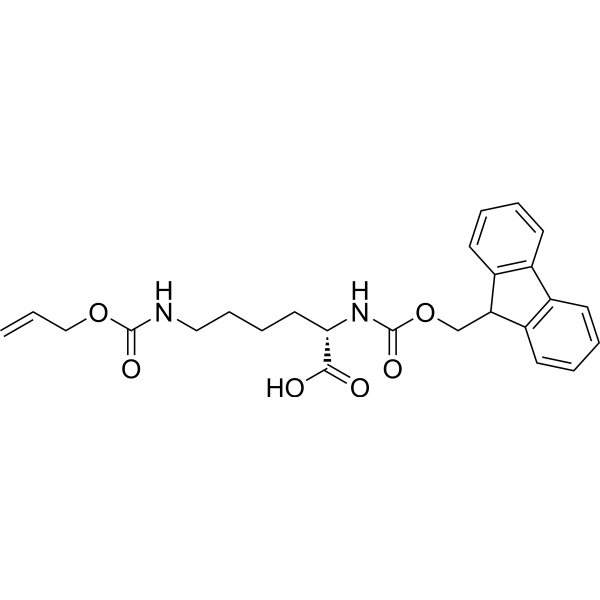
Fmoc-Lys(Alloc)-OH
 0 Images
Fmoc-Lys(Alloc)-OH is a lysine derivative.
-
Cryptand 2.2.2
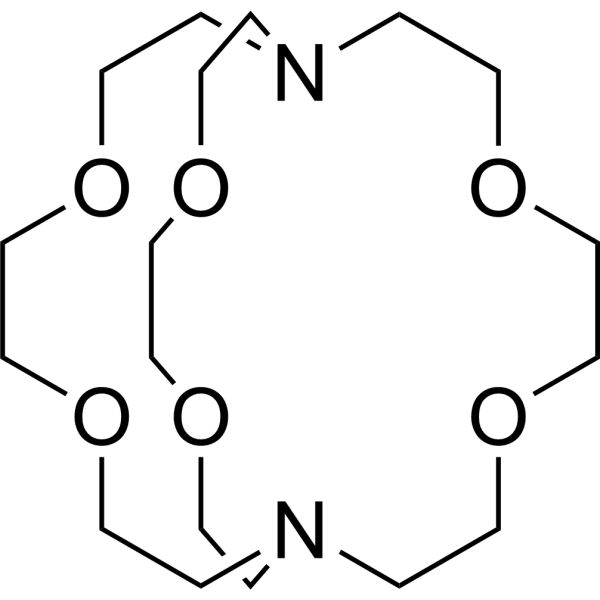 0 ImagesSynonyms: 4,7,13,16,21,24-Hexaoxa-1,10-diazabicyclo[8.8.8]hexacosane
Cryptand 2.2.2 (4,7,13,16,21,24-Hexaoxa-1,10-diazabicyclo[8.8.8]hexacosane) is a metal ion chelator. Cryptand 2.2.2 forms stable mononuclear, protonated and dinuclear complexes with copper (II) ions; forms protonated complexes with hydrogen ions; and also forms stable complexes with Zn2+, Co2+, Ni2+, Cd2+, Hg2+ and Pb2+ ions. Cryptand 2.2.2 can be used for the preparation of nanoparticles, transition metal compounds, etc.
-
2,3-Diaminonaphthalene
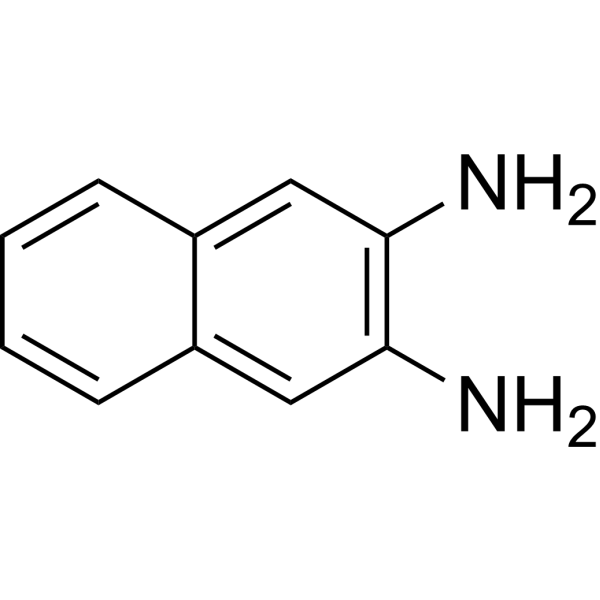 0 Images
2,3-Diaminonaphthalene is a fluorescent reagent used to detect selenium and nitric oxide (NO). 2,3-Diaminonaphthalene binds to selenium to form pyrazolene selenol, with excitation/emission maxima at 365 nm and 525 nm, respectively. 2,3-Diaminonaphthalene binds to NO2− to form the fluorescent product, 1-(H)-napthotriazole, with excitation/emission maxima at 360 nm and 440 nm, respectively.
-
Rhodamine 110
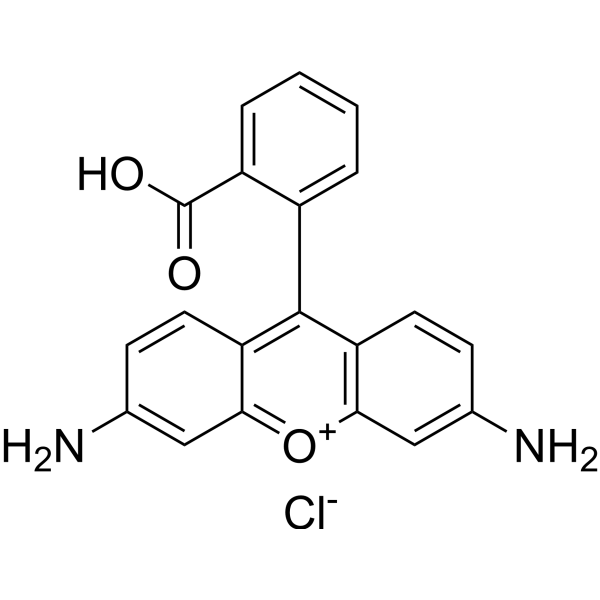 0 ImagesSynonyms: Rhodamine 110 chloride; RH110
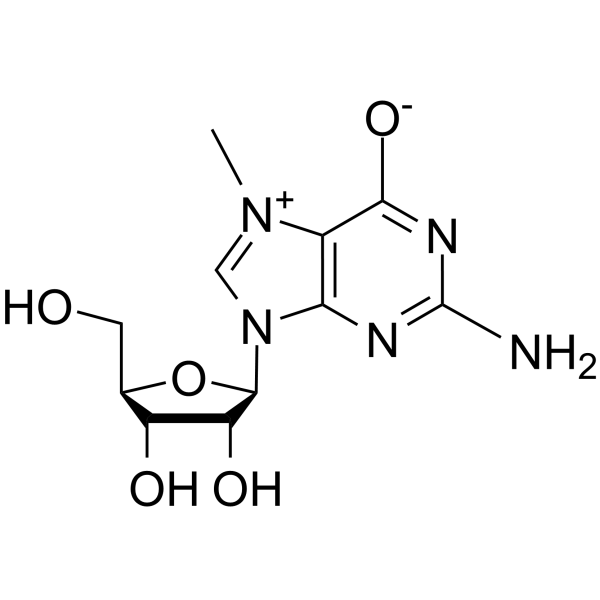
Rhodamine 110 is a sensitive and selective substrate for assaying proteinases in solution or inside living cells. The excitation wavelength is 498 nm and the emission wavelength is 521 nm.
-
PSAR18-COOH
 0 ImagesSynonyms: Ac-PSAR18-COOH
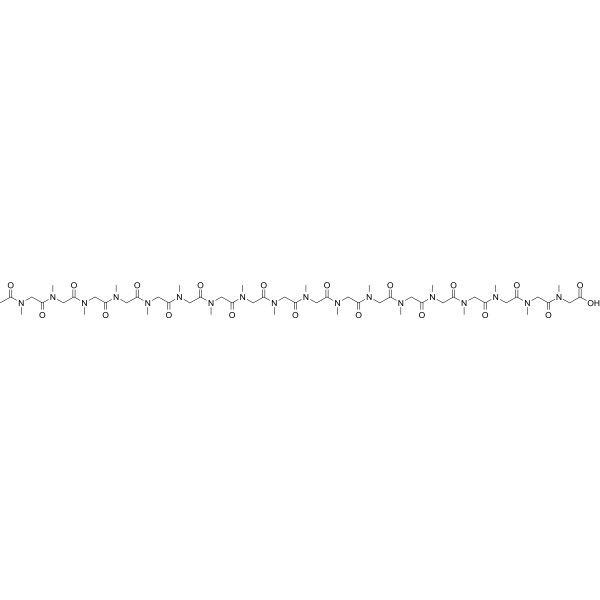
PSAR18-COOH (Ac-PSAR18-COOH) is a polysarcosine PSAR derivative. PSAR is a biodegradable, non-immunogenic polymer that has been used in a variety of compounds or diagnostic delivery systems. PSAR18 can be used as a component of ADC linkers.
-
N-Acetyl-D-galactosamine, 98%
 0 Images
N-Acetyl-D-galactosamine (GalNAc) is a terminal essential amino sugar derived from galactose and forms the antigens of blood group A in humans. N-Acetyl-D-galactosamine (GalNAc) interact with Soya bean agglutinin (SBA), hence decreasing the effects of SBA on cellular membrane permeability and tight junction protein expression in piglets. N-Acetyl-D-galactosamine (GalNAc) inhibits the hemagglutinating activity by the lectin.
-
Methyl (R)-2-((tert-butoxycarbonyl)amino)-3-iodopropanoate
 0 Images
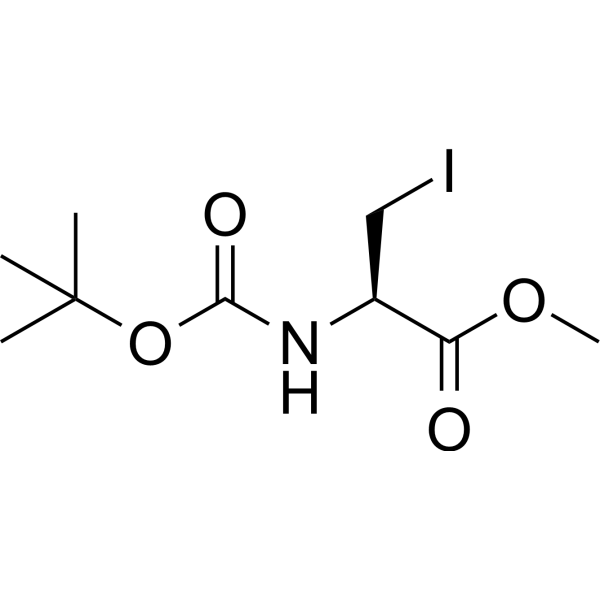
Methyl (R)-2-((tert-butoxycarbonyl)amino)-3-iodopropanoate is an alanine derivative.
-
4-Methylmorpholine N-oxide
 0 ImagesSynonyms: N-Methylmorpholine N-Oxide; MMNO; 4-Methylmorpholine 4-oxide
4-Methylmorpholine N-oxide (N-Methylmorpholine N-Oxide; MMNO; 4-Methylmorpholine 4-oxide) is an amine oxide ligand and ozonation reagent. 4-Methylmorpholine N-oxide forms coordination complexes with lanthanum (III) nitrate and yttrium (III) nitrate via its nitroso oxygen atom. The metal-ligand bonds are dominated by electrostatic interactions with a small covalent component. 4-Methylmorpholine N-oxide is applicable in ozonation reactions for the synthesis of methyl 9-oxononanoate.
-
1,3,5-Trimethoxybenzene
 0 Images
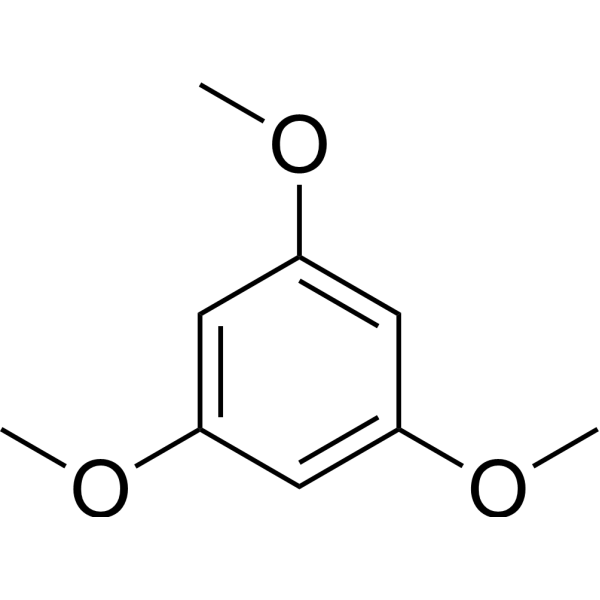
1,3,5-Trimethoxybenzene (TRIMETHYL PHLOROGLUCINOL) is an electrophilic substitution reaction substrate targeting free chlorine (Cl+) and free bromine (Br+). 1,3,5-Trimethoxybenzene has highly selective electrophilic addition characteristics. By capturing halogens, it undergoes specific substitution reactions to generate stable halogenated products. 1,3,5-Trimethoxybenzene can not only quench residual oxidants, but also quantify the halogen concentration by detecting the product without affecting the stability of redox-sensitive disinfection byproducts (DBPs). 1,3,5-Trimethoxybenzene is mainly used in water quality testing and quantitative analysis of free chlorine/bromine in water. At the same time, in phytochemistry, it is a key component of rose fragrance and participates in the study of pollination attraction mechanism.
-
PEG1000
 0 ImagesCat. No.: HY-Y0873GCAS No.: 25322-68-3Synonyms: Polyethylene glycol 1000
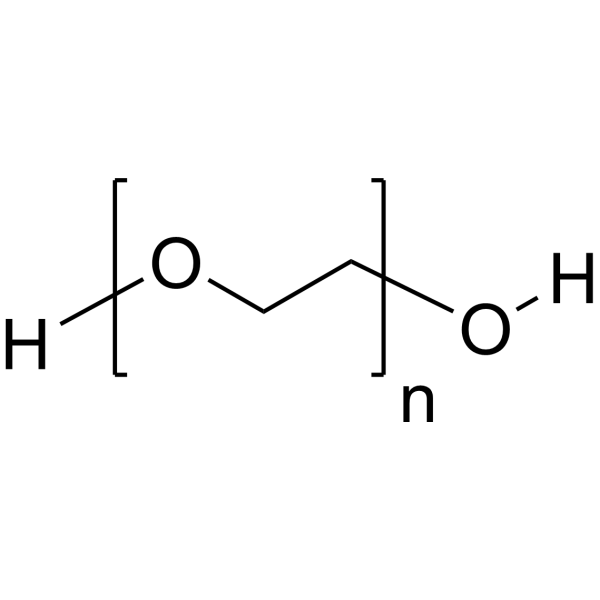
PEG1000 can be used as an excipient, such as Ointment base, lubricant, etc. Pharmaceutical excipients, or pharmaceutical auxiliaries, refer to other chemical substances used in the pharmaceutical process other than pharmaceutical ingredients. Pharmaceutical excipients generally refer to inactive ingredients in pharmaceutical preparations, which can improve the stability, solubility and processability of pharmaceutical preparations. Pharmaceutical excipients also affect the absorption, distribution, metabolism, and elimination (ADME) processes of co-administered drugs.
-
Diethyl maleate
 0 Images
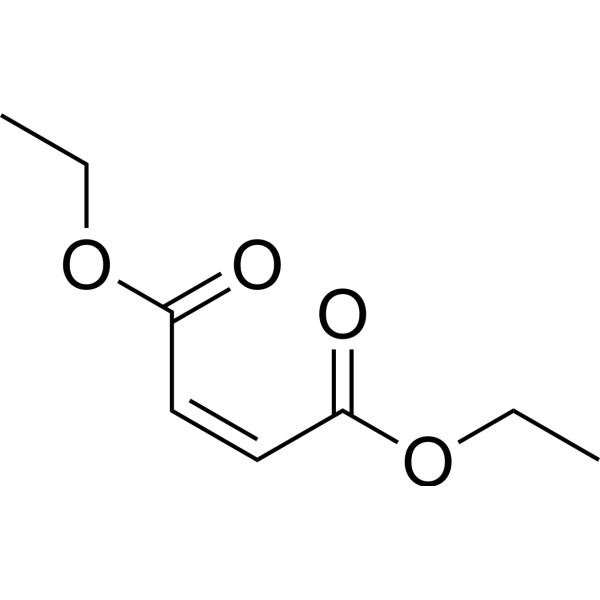
Diethyl maleate (DEM) is an orally available, effective glutathione (GSH) depletor that crosses the blood-brain barrier. Diethyl maleate covalently binds irreversibly to GSH via glutathione S-transferase with an in vitro IC50 of 0.1-0.5 mM. Diethyl maleate selectively depletes GSH in liver, lung, and brain tissues, exacerbating oxidative stress and enhancing hyperbaric oxygen toxicity. Diethyl maleate promotes precursor amino acid uptake and in turn promotes GSH synthesis by upregulating the activity of the cystine-glutamate transporter XO-. Diethyl maleate can be used to study redox homeostasis and GSH protection mechanisms in oxidative stress-related diseases such as hyperbaric oxygen injury and metabolic diseases[1][2][3].
-
Lipase,Candida antarctica (Immobilized)
 0 Images
Lipase,Candida antarctica (Immobilized) is an immobilized lipase isolated from Candida antarctica fraction B. Lipase,Candida antarctica (Immobilized) features high stability and selectivity. Lipase,Candida antarctica (Immobilized) is widely used in fields such as chemical synthesis, food oil modification, and biodiesel production.
-
4-Nitrophenyl a-D-glucopyranoside
 0 Images
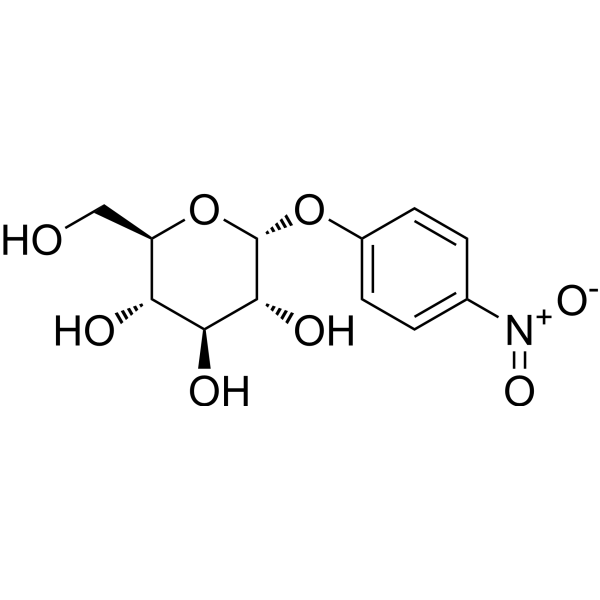
4-Nitrophenyl a-D-glucopyranoside is a chromogenic substrate for α-glucosidase. 4-Nitrophenyl a-D-glucopyranoside can be used to measure of α-glucosidase activity.