



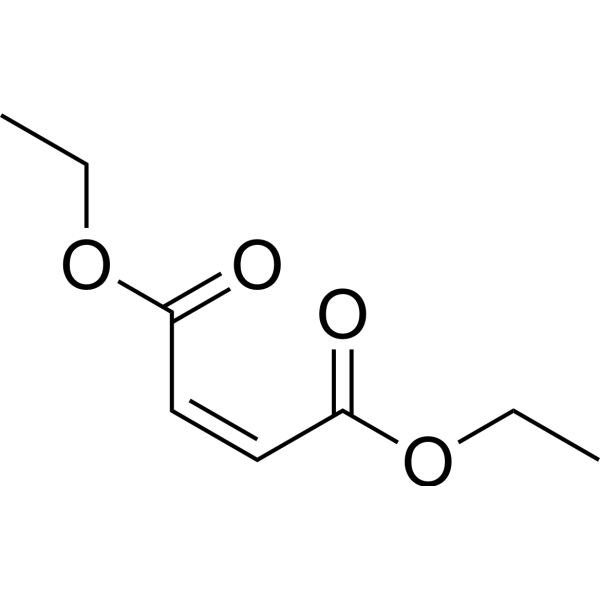
Diethyl maleate
Based on 1 publication(s) in Google Scholar
Diethyl maleate (DEM) is an orally available, effective glutathione (GSH) depletor that crosses the blood-brain barrier. Diethyl maleate covalently binds irreversibly to GSH via glutathione S-transferase with an in vitro IC50 of 0.1-0.5 mM. Diethyl maleate selectively depletes GSH in liver, lung, and brain tissues, exacerbating oxidative stress and enhancing hyperbaric oxygen toxicity. Diethyl maleate promotes precursor amino acid uptake and in turn promotes GSH synthesis by upregulating the activity of the cystine-glutamate transporter XO-. Diethyl maleate can be used to study redox homeostasis and GSH protection mechanisms in oxidative stress-related diseases such as hyperbaric oxygen injury and metabolic diseases[1][2][3].
For research use only. We do not sell to patients.
- Purity : 98.05%
- CAS No.: 141-05-9
- Formula: C8H12O4
- Molecular Weight:172.18
-
Storage:Pure form -20°C, 3 years , 4°C, 2 years ; In solvent -80°C, 6 months , -20°C, 1 month

To place orders, for customer services and technical support, please contact: MedChemExpress USA
Tel: 609-228-6898 E-mail: [email protected] [email protected]


-
 Biological Activity
-
Chemical Information
-
Solvent & Solubility
- Protocols
- Purity & Documentation
- References
-
 Help & FAQs


-
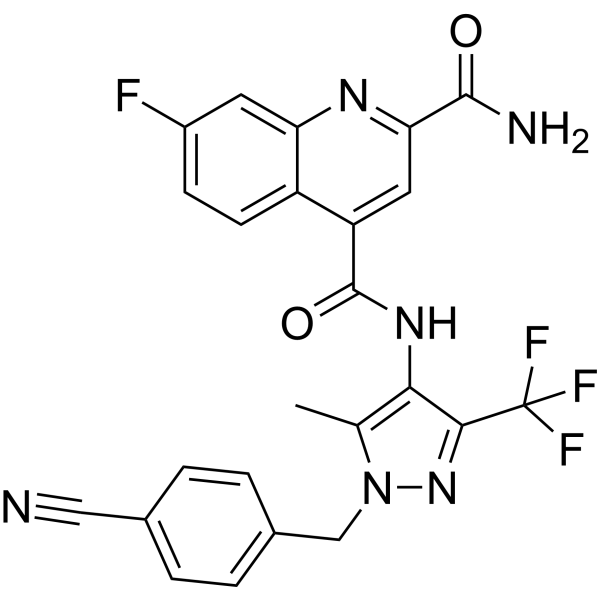
HY-100017
BAY-876GLUT1 Inhibitor -
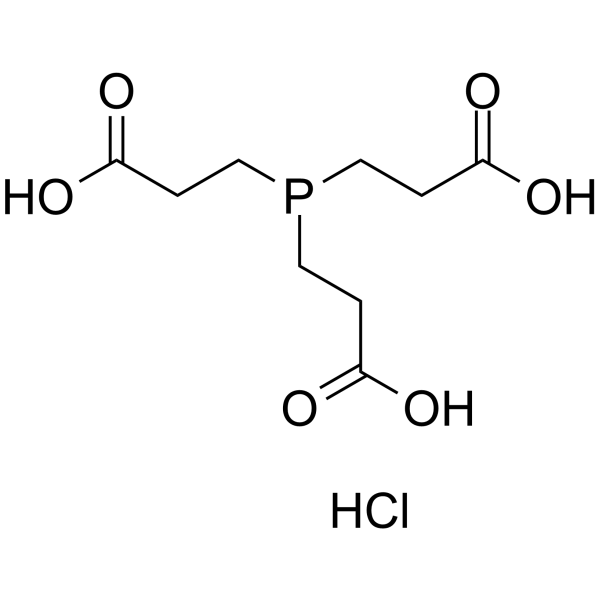
HY-W011500
TCEP hydrochlorideNon-Thiol Reducing Agent -
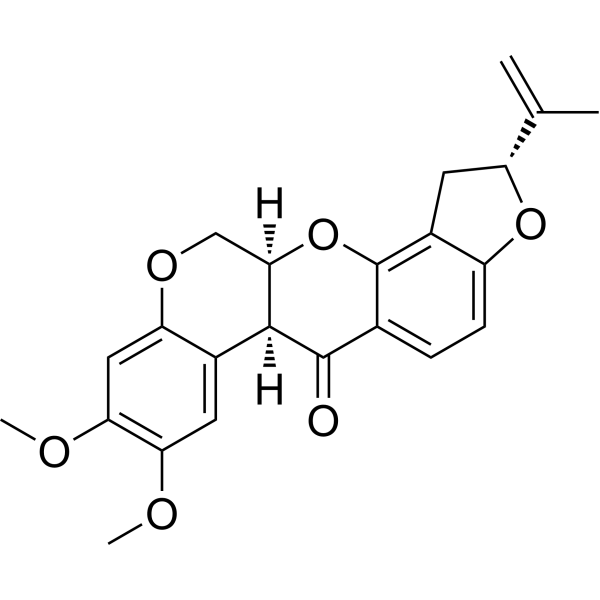
HY-B1756
RotenoneMitochondrial Complex I Inhibitor -
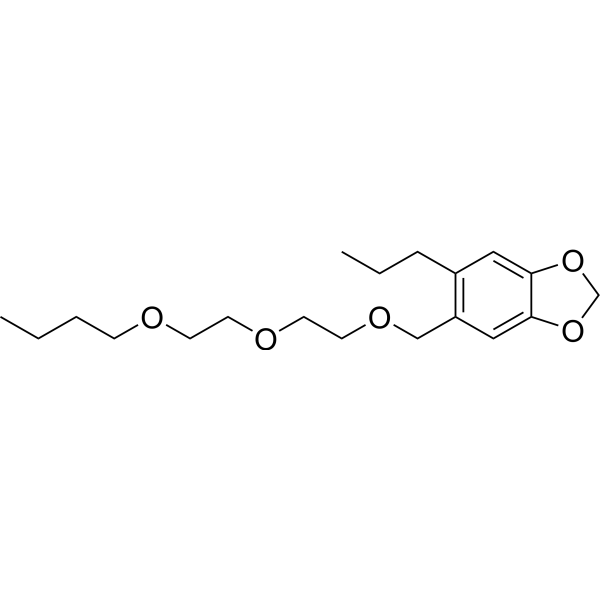
HY-B1198
Piperonyl butoxidePesticide inhibitor -
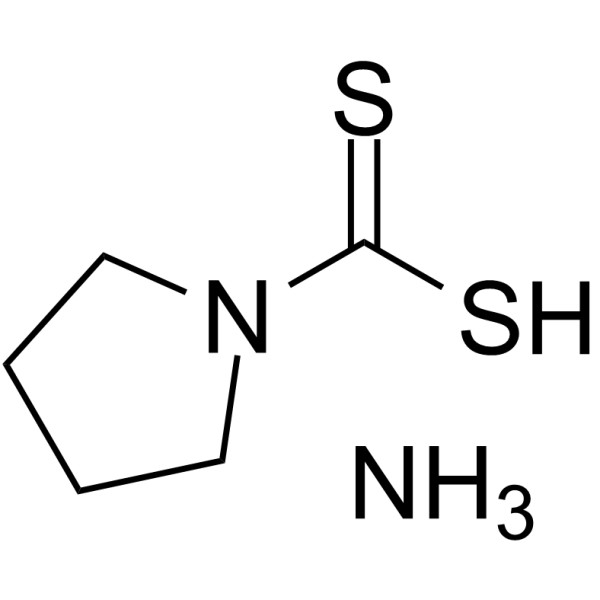
HY-18738
Pyrrolidinedithiocarbamate ammoniumSelective NF-κB Inhibitor -
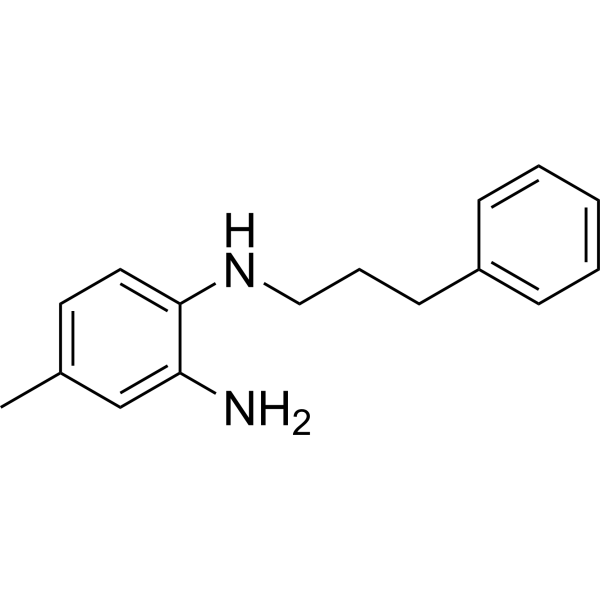
HY-13982
JSH-23NF-κB Inhibitor -
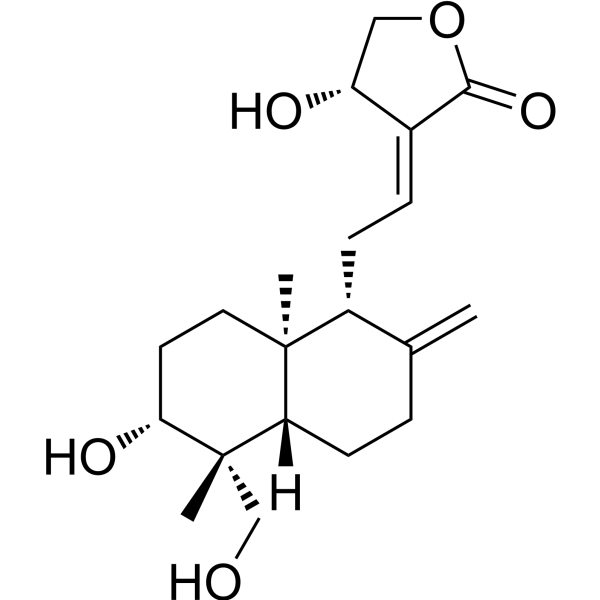
HY-N0191
AndrographolideNF-κB Inhibitor -
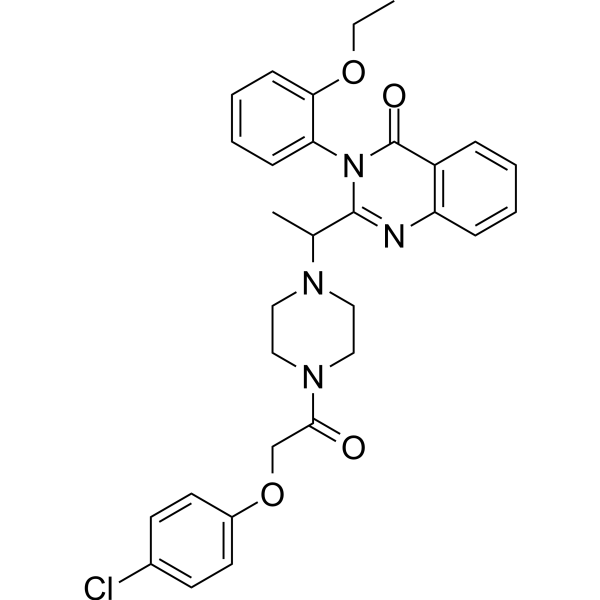
HY-15763
ErastinFerroptosis Inducer -
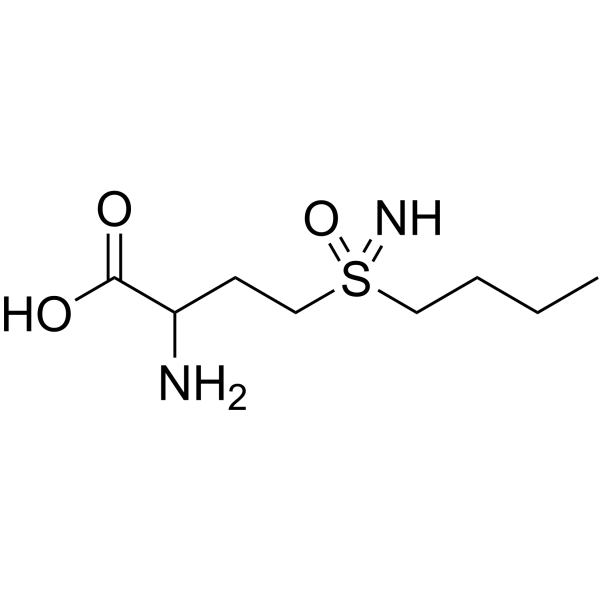
HY-106376
DL-Buthionine-(S,R)-sulfoximineGlutamylcysteine Synthetase Inhibitor -
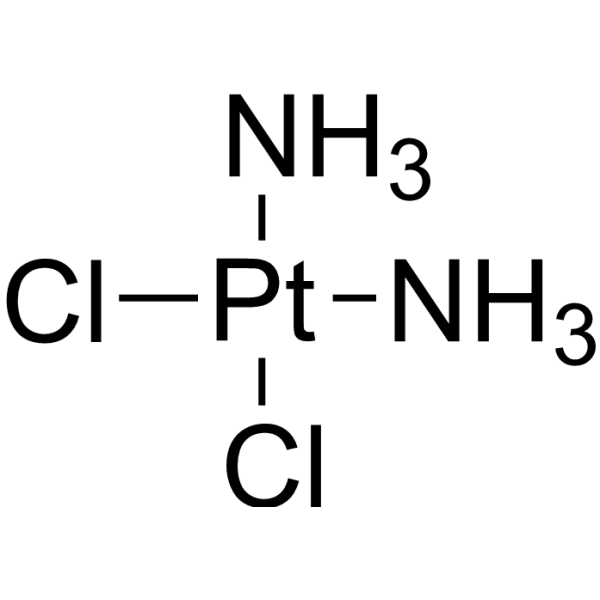
HY-17394
CisplatinDNA Alkylator -
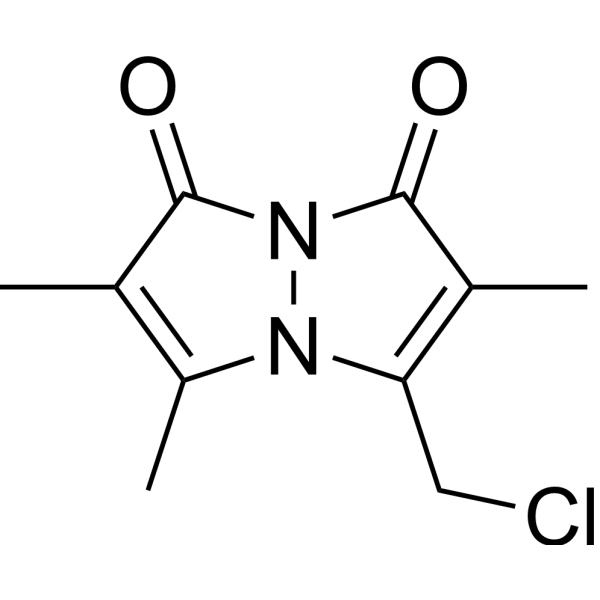
HY-101899
MonochlorobimaneGSH Fluorescent Dye -
HY-18935
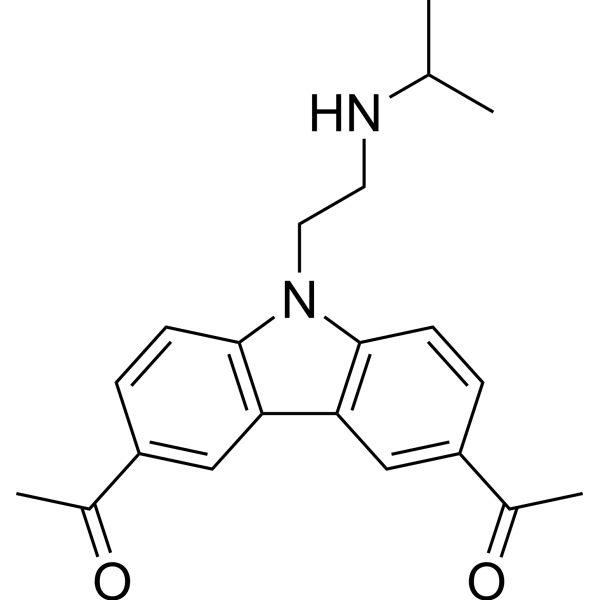
CBL0137FACT Inhibitor
Publications Citing Use of MedChemExpress (MCE) Diethyl maleate
More

Biological Activity
Description
In Vitro
Diethyl maleate (0.025-0.1 mM; 24 h) increased glutathione (GSH) levels by 218% and enhanced cystine/glutamate uptake in bovine pulmonary artery endothelial cells via the sodium-independent transporter Xc-[3].
Diethyl maleate (0.025 mM; 24 h) upregulated GSH synthesis via a protein/RNA-dependent mechanism, with the strongest stimulation at 80% oxygen tension3].
Diethyl maleate (0.025 mM; 10 min) increased cystine/glutamate uptake in endothelial cells by 723% and 345%, respectively[3].
MedChemExpress (MCE) has not independently confirmed the accuracy of these methods. They are for reference only. Further protocols information, click here.
In Vivo
Diethyl maleate (4.6 mmol/kg; ip; single; 24 h) did not enhance hyperoxic toxicity after tissue GSH levels were restored[2]. Diethyl maleate (4.6 mmol/kg; ip; single + equimolar GSH supplementation 90 min later) reversed GSH depletion and restored survival time in hyperoxia-exposed rats[2].
MedChemExpress (MCE) has not independently confirmed the accuracy of these methods. They are for reference only.


Chemical Information
-
CAS No. 141-05-9
-
Appearance Liquid (Density: 1.0690 g/cm3)
-
Molecular Weight 172.18
-
Formula C8H12O4
-
Color Colorless to light yellow
-
SMILES
O=C(OCC)/C=C\C(OCC)=O
-
Synonyms
Maleic acid diethyl ester
-
Shipping
Room temperature in continental US; may vary elsewhere.
-
Storage
Pure form -20°C 3 years 4°C 2 years In solvent -80°C 6 months -20°C 1 month


Publications (1)
-
Journal Impact Factor
-
Most Recent
-
Insect Sci
Fungi on the cuticle surface increase the resistance of Aedes albopictus to deltamethrin. [Abstract]2025 Jan 19. PMID: 39828985


Solvent & Solubility
In Vitro:
Ethanol : ≥ 100 mg/mL (580.79 mM)
DMSO : 100 mg/mL (580.79 mM; Need ultrasonic; Hygroscopic DMSO has a significant impact on the solubility of product, please use newly opened DMSO)
* "≥" means soluble, but saturation unknown.
Please refer to the solubility information to select the appropriate solvent. Once prepared, please aliquot and store the solution to prevent product inactivation from repeated freeze-thaw cycles.
Storage method and period of stock solution: -80°C, 6 months; -20°C, 1 month. When stored at -80°C, please use it within 6 months. When stored at -20°C, please use it within 1 month.
Please refer to the solubility information to select the appropriate solvent. Once prepared, please aliquot and store the solution to prevent product inactivation from repeated freeze-thaw cycles.
Storage method and period of stock solution: -80°C, 6 months; -20°C, 1 month. When stored at -80°C, please use it within 6 months. When stored at -20°C, please use it within 1 month.
Concentration (start) × Volume (start) = Concentration (final) × Volume (final)
In Vivo:
Select the appropriate dissolution method based on your experimental animal and administration route.
- For the following dissolution methods, please ensure to first prepare a clear stock solution using an In Vitro approach and then sequentially add co-solvents:
- To ensure reliable experimental results, the clarified stock solution can be appropriately stored based on storage conditions. As for the working solution for In Vivo experiments, it is recommended to prepare freshly and use it on the same day.
- The percentages shown for the solvents indicate their volumetric ratio in the final prepared solution. If precipitation or phase separation occurs during preparation, heat and/or sonication can be used to aid dissolution.
Add each solvent one by one: 10% DMSO 40% PEG300 5% Tween-80 45% Saline
Solubility: ≥ 9.09 mg/mL (52.79 mM); Clear solution
This protocol yields a clear solution of ≥ 9.09 mg/mL (saturation unknown).
Taking 1 mL working solution as an example, add 100 μL DMSO stock solution (90.9 mg/mL) to 400 μL PEG300, and mix evenly; then add 50 μL Tween-80 and mix evenly; then add 450 μL Saline to adjust the volume to 1 mL.
Preparation of Saline: Dissolve 0.9 g sodium chloride in ddH₂O and dilute to 100 mL to obtain a clear Saline solution.
In Vivo Dissolution Calculator
Please enter the basic information of animal experiments:
-
-
-
-
Recommended: Prepare an additional quantity of animals to account for potential losses during experiments.
Please enter your animal formula composition:
-
%DMSO +
Recommended: Keep the proportion of DMSO in working solution below 2% if your animal is weak.
-
%+
-
+%Tween-80 + +
-
%Saline +
The co-solvents required include: DMSO, . All of co-solvents are available by MedChemExpress (MCE). , Tween 80. All of co-solvents are available by MedChemExpress (MCE).
Working solution concentration: 0.22 mg/mL
Method for preparing stock solution: mg drug dissolved in μL DMSO. Stock solution concentration: mg/mL.
1. Take μL DMSO stock solution;
2. Add μL .
μL , mix evenly;
3. Then add μL Tween 80, mix evenly;
4. Then add μL
Please ensure that the stock solution in the first step is dissolved to a clear state, and add co-solvents in sequence. You can use ultrasonic heating (ultrasonic cleaner, recommended frequency 20-40 kHz), vortexing, etc. to assist dissolution.

Protocols
-
ROS/oxidative-stress fluorescent staining
ROS/oxidative-stress fluorescent staining uses cell-permeant fluorogenic probes that become fluorescent after oxidation inside cells or tissues; commonly used examples include DCFH-DA/DCFDA for broad cellular oxidant detection, DHE for superoxide-related signal detection, MitoSOX for mitochondrial superoxide-related signal detection, and CellROX probes for oxidative-stress-associated fluorescence readouts. The assay detects probe oxidation rather than a single ROS species unless the probe and analysis method have been chemically validated for that species. DCFH-DA enters cells, is deacetylated by intracellular esterases to DCFH, and produces fluorescent DCF after oxidation, so the readout is used as an operational measure of total cellular oxidative stress rather than a species-specific ROS measurement. DHE and MitoSOX can report superoxide-related oxidation, but red fluorescence alone can include non-specific ethidium-like oxidation products; HPLC or optimized spectral approaches are


Purity & Documentation
-
Data Sheet (274 KB)
-
SDS (393 KB)
- English - EN (393 KB)
- Français - FR (393 KB)
- Deutsch - DE (393 KB)
- Norwegian - NO (393 KB)
- Español - ES (393 KB)
- Swedish - SV (393 KB)
- Italian - IT (393 KB)
- Korean - KR (393 KB)
- Portuguese - PT (393 KB)
-
Handling Instructions (2659 KB)
References
[1]. Andrea Gille, et al. Nuclear trapping of inactive FOXO1 by the Nrf2 activator diethyl maleate. Redox Biol. 2019 Jan;20:19-27. [Content Brief]
[2]. Weber CA, et al. Depletion of tissue glutathione with diethyl maleate enhances hyperbaric oxygen toxicity. Am J Physiol. 1990 Jun;258(6 Pt 1):L308-12. [Content Brief]
[3]. Deneke SM, et al. Increase in endothelial cell glutathione and precursor amino acid uptake by diethyl maleate and hyperoxia. Am J Physiol. 1989 Oct;257(4 Pt 1):L265-71. [Content Brief]


Complete Stock Solution Preparation Table
Please refer to the solubility information to select the appropriate solvent. Once prepared, please aliquot and store the solution to prevent product inactivation from repeated freeze-thaw cycles.
Storage method and period of stock solution: -80°C, 6 months; -20°C, 1 month. When stored at -80°C, please use it within 6 months. When stored at -20°C, please use it within 1 month.
| Optional Solvent | Concentration Solvent Mass | 1 mg | 5 mg | 10 mg | 25 mg |
|---|---|---|---|---|---|
| Ethanol / DMSO | 1 mM | 5.8079 mL | 29.0394 mL | 58.0788 mL | 145.1969 mL |
| 5 mM | 1.1616 mL | 5.8079 mL | 11.6158 mL | 29.0394 mL | |
| 10 mM | 0.5808 mL | 2.9039 mL | 5.8079 mL | 14.5197 mL | |
| 15 mM | 0.3872 mL | 1.9360 mL | 3.8719 mL | 9.6798 mL | |
| 20 mM | 0.2904 mL | 1.4520 mL | 2.9039 mL | 7.2598 mL | |
| 25 mM | 0.2323 mL | 1.1616 mL | 2.3232 mL | 5.8079 mL | |
| 30 mM | 0.1936 mL | 0.9680 mL | 1.9360 mL | 4.8399 mL | |
| 40 mM | 0.1452 mL | 0.7260 mL | 1.4520 mL | 3.6299 mL | |
| 50 mM | 0.1162 mL | 0.5808 mL | 1.1616 mL | 2.9039 mL | |
| 60 mM | 0.0968 mL | 0.4840 mL | 0.9680 mL | 2.4199 mL | |
| 80 mM | 0.0726 mL | 0.3630 mL | 0.7260 mL | 1.8150 mL | |
| 100 mM | 0.0581 mL | 0.2904 mL | 0.5808 mL | 1.4520 mL |


Diethyl maleate Related Classifications
HY-Y1147 Related Classifications
 Powered by Bioz