Others
-
Others Related Products (76625)
Related Products (76625)

-
FastTaq DNA Polymerase(5'→3' exo-)
 0 ImagesCat. No.: HY-E70404
FastTaq DNA Polymerase (5'→3' exo-) is a modified DNA polymerase based on Taq DNA Polymerase. FastTaq DNA Polymerase (5'→3' exo-) lacks the 5'→3' exonuclease activity of wild-type Taq. It retains the 5'→3' DNA polymerase activity of wild-type Taq.
-
Collagenase/Neutral protease 2 (animal free)
 0 ImagesCat. No.: HY-E70531
Collagenase/Neutral protease 2 (animal free) is an animal-free mixture of collagenase and neutral protease that can be used for stem cell and other primary cell isolation and bioprocessing applications without the introduction of potential animal-borne pathogens. It has higher casein activity than Collagenase/Neutral Protease 1 (animal free).
-
Endonuclease IV
 0 ImagesCat. No.: HY-E70577CAS No.: 63363-78-0
DNA repair enzyme. Endonuclease IV has endonuclease activity at AP sites, 3' phosphodiesterase activity that can remove a variety of ligation-blocking lesions from the 3' end of DNA, endonuclease activity on oxidative DNA lesions, and 3' to 5' exonuclease activity.
-
Human CES1 Enzyme
 0 ImagesCat. No.: HY-E70600
Human CES1 Enzyme is a recombinantly expressed CES1 enzyme. Human CES1 Enzyme, an enzyme responsible for the hydrolysis of ester- and amide-containing molecules, is mainly expressed in the liver where it is crucial for the processing of active metabolites and is also involved in trans-esterification reactions.

-
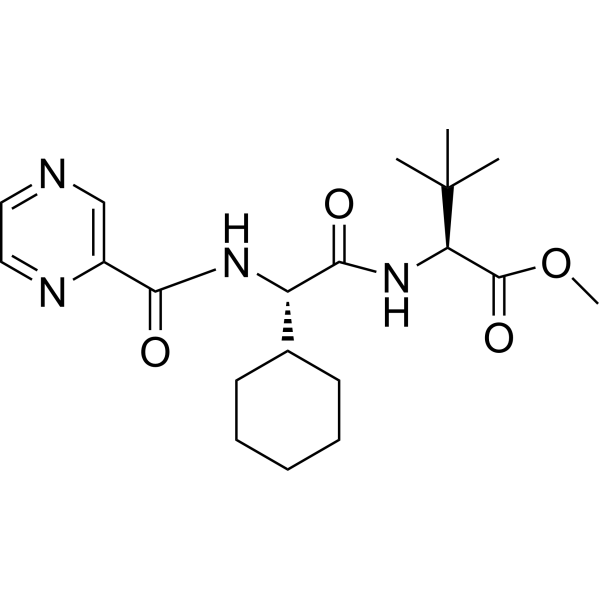
(2S)-Methyl 2-(2-cyclohexyl-2-(pyrazine-2-carboxamido)acetamido)-3,3-dimethylbutanoate
 0 Images
(2S)-Methyl 2-(2-cyclohexyl-2-(pyrazine-2-carboxamido)acetamido)-3,3-dimethylbutanoate is a valine derivative.
-
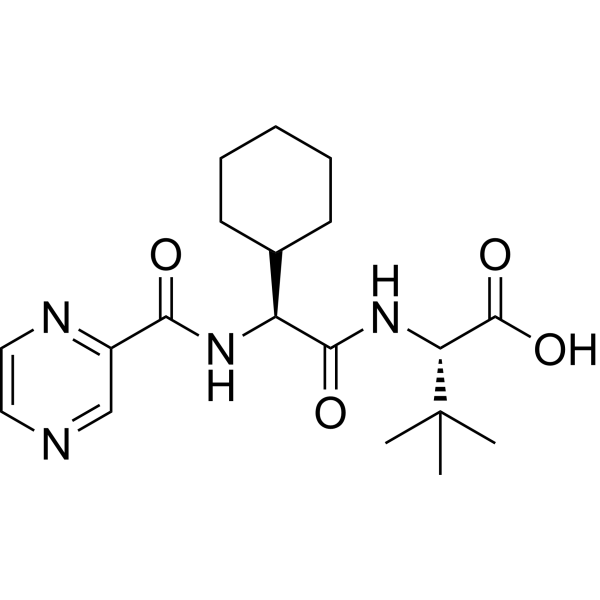
(S)-2-((S)-2-Cyclohexyl-2-(pyrazine-2-carboxamido)acetamido)-3,3-dimethylbutanoic acid
 0 Images
(S)-2-((S)-2-Cyclohexyl-2-(pyrazine-2-carboxamido)acetamido)-3,3-dimethylbutanoic acid is a valine derivative.
-
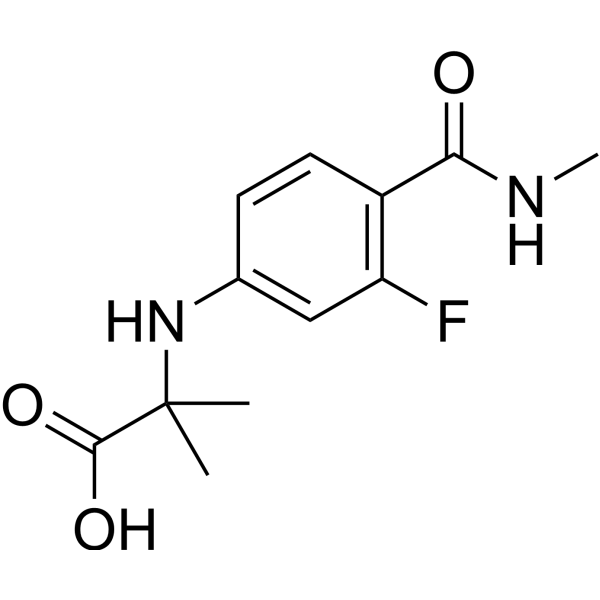
2-((3-Fluoro-4-(methylcarbamoyl)phenyl)amino)-2-methylpropanoic acid
 0 Images
2-((3-Fluoro-4-(methylcarbamoyl)phenyl)amino)-2-methylpropanoic acid is an alanine derivative.
-
2-Chloro-4-hydroxypyridine
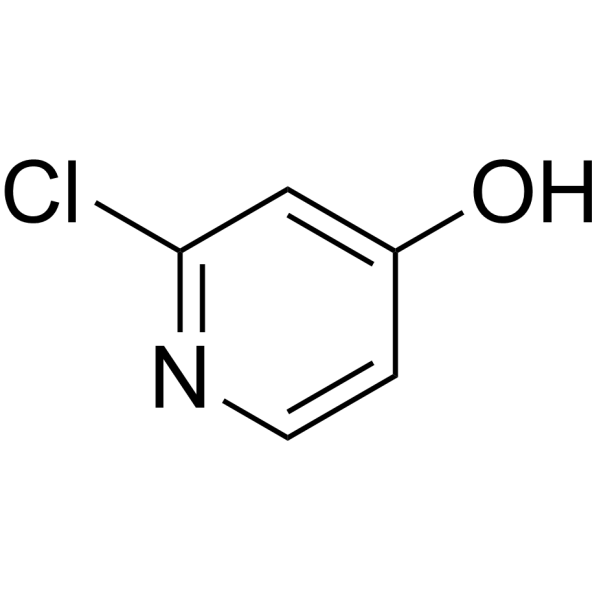 0 ImagesCat. No.: HY-I0304CAS No.: 17368-12-6Synonyms: 2-Chloro-4-pyridinol
2-Chloro-4-hydroxypyridine is a biochemical reagent that can be used as a biological material or organic compound for life science related research.
-
Sofosbuvir impurity N
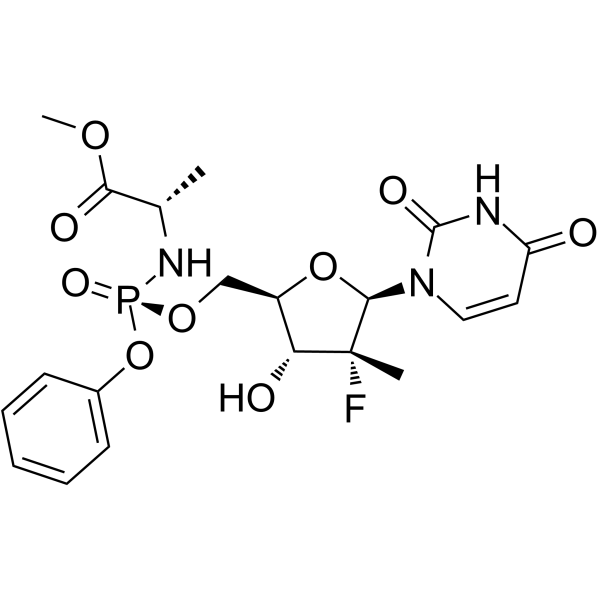 0 ImagesCat. No.: HY-I0513CAS No.: 1394157-34-6
Sofosbuvir impurity N, an diastereoisomer of Sofosbuvir, is the impurity of Sofosbuvir. Sofosbuvir (PSI-7977) is an inhibitor of HCV RNA replication, demonstrates potent anti-hepatitis C virus activity.
-
(R)-2-formamido-4-methylpentanoic acid
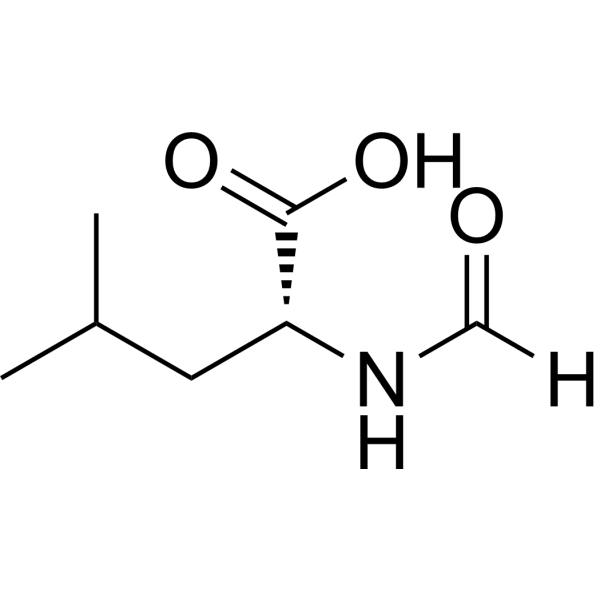 0 ImagesCat. No.: HY-I0630CAS No.: 44978-39-4
(R)-2-formamido-4-methylpentanoic acid is a leucine derivative.

-
1-Methyl-3-pyrrolidinol
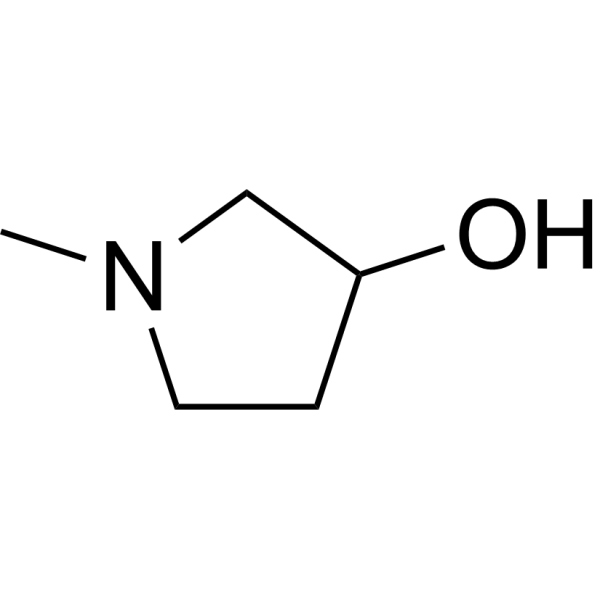 0 Images
1-Methyl-3-pyrrolidinol is a biochemical reagent that can be used as a biological material or organic compound for life science related research.
-
SCH 51048
 0 Images
SCH 51048 is a compound that can produce active metabolites, and its active metabolites have antifungal activity. Through metabolic studies and activity screening of the compound, metabolites and compounds with better activity were discovered.
-
D-Phe-OMe monohydrochloride
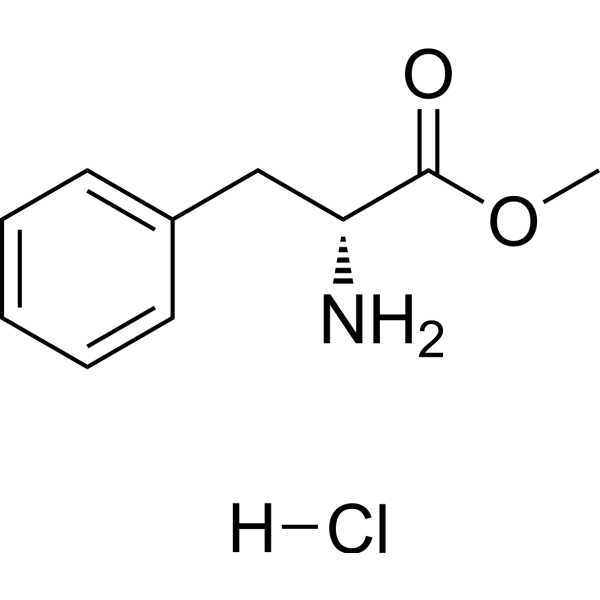 0 ImagesCat. No.: HY-I0924ACAS No.: 13033-84-6Synonyms: Methyl (R)-phenylalaninate hydrochloride; Methyl D-phenylalaninate hydrochloride
D-Phe-OMe monohydrochloride is a phenylalanine derivative.
-
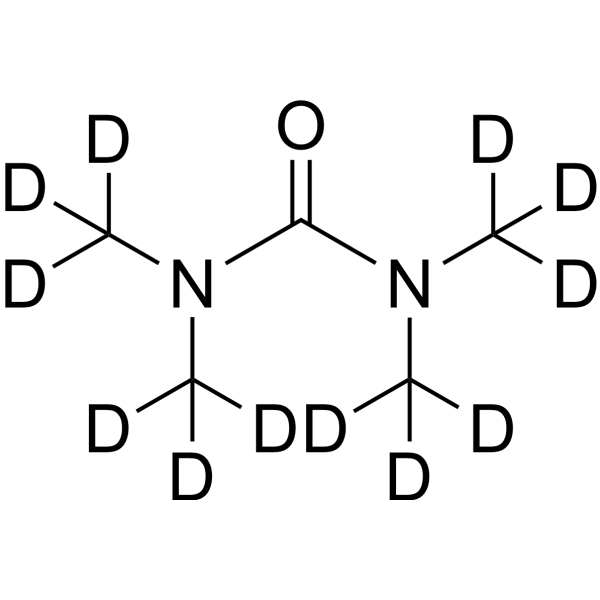
1,1,3,3-Tetramethylurea-d12
 0 Images
1,1,3,3-Tetramethylurea-d12 is the deuterium labeled 1,1,3,3-Tetramethylurea.
-
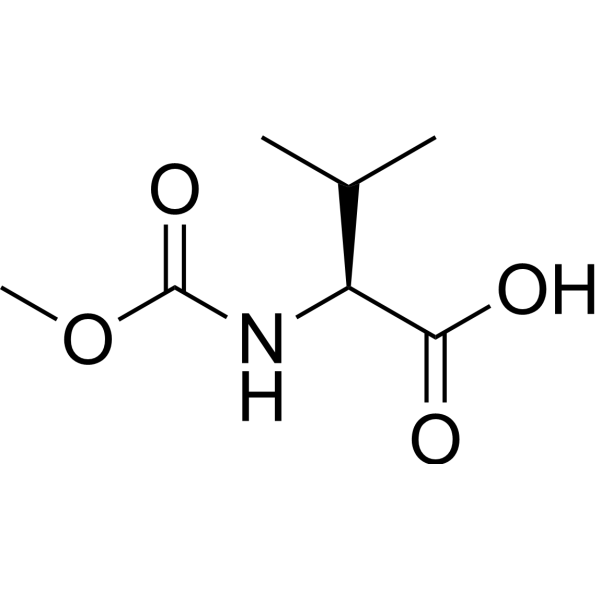
MOC-Val-OH
 0 Images
MOC-Val-OH is a valine derivative.
-
Indole-3-butyric acid-d2
 0 ImagesCat. No.: HY-N0186S3Purity: 99.79%Synonyms: Indolebutyric acid-d2
Indole-3-butyric acid-d2 (Indolebutyric acid-d2) is the deuterium labeled Indole-3-butyric acid (HY-N0186). Indole-3-butyric acid (3-indolebutyric acid) is a plant growth auxin and a good rooting agent. It can promote herbs and woody ornamental plant rooting and used for improving fruit rate. Indole 3-butyric acid is an auxin precursor, and is converted to indole 3-acetic acid (IAA) in a peroxisomal β-oxidation process.
-
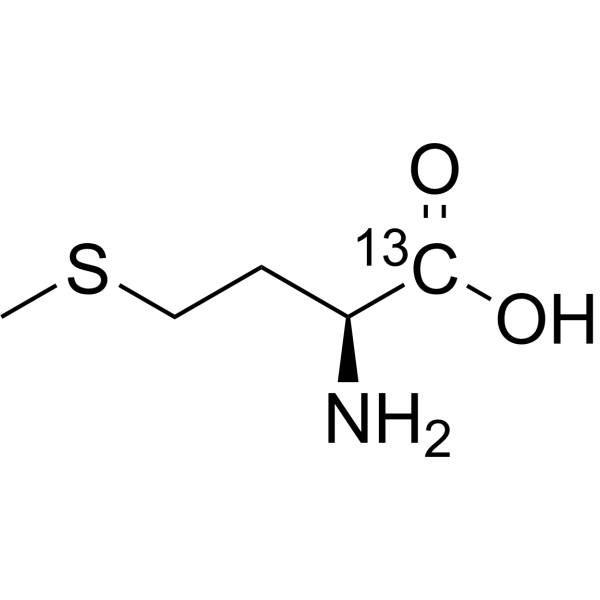
L-Methionine-1-13C
 0 Images
L-Methionine-1-13C is the 13C-labeled L-Methionine. L-Methionine is the L-isomer of Methionine, an essential amino acid for human development. Methionine acts as a hepatoprotectant.