Cholinesterase (ChE)
Cholinesterase (ChE) is a family of enzymes present in the central nervous system, particularly in nervous tissue, muscle and red cells, which catalyze the hydrolysis of the neurotransmitter acetylcholine into choline and acetic acid, a reaction necessary to allow a cholinergic neuron to return to its resting state after activation. It is one of many important enzymes needed for the proper functioning of the nervous systems of humans.
There are two types: acetylcholinesterase (AChE, acetylcholine hydrolase) and butyrylcholinesterase (BChE, acylcholine acylhydrolase), also known as nonspecific cholinesterase or pseudocholinesterase. AChE is primarily found in the blood on red blood cell membranes, in neuromuscular junctions, and in neural synapses, while BChE is produced in the liver and found primarily in plasma. The difference between the two types of cholinesterase is their relative preferences for substrates: AChE hydrolyzes acetylcholine faster while BChE hydrolyzes butyrylcholine faster.
Cholinesterase (ChE) Isoform Specific Products
All Product Categories
-
Cholinesterase (ChE) Inhibitors
(912)
View all products
-
Cholinesterase (ChE) Agonists
(5)
View all products
-
Cholinesterase (ChE) Antagonists
(10)
View all products
-
Cholinesterase (ChE) Activators
(32)
View all products
-
Cholinesterase (ChE) Modulators
(10)
View all products
-
Cholinesterase (ChE) Chemical
(1)
View all products
-
Cholinesterase (ChE) Inducer
(1)
View all products
-
Cholinesterase (ChE) Controls
(6)
View all products
-
Cholinesterase (ChE) Substrates
(2)
View all products
-
Cholinesterase (ChE) Related Products (1060)
Related Products (1060)

-
Antibodies (2)
-
Cholinesterase (ChE) Isoform Comparison
-
Territrem C
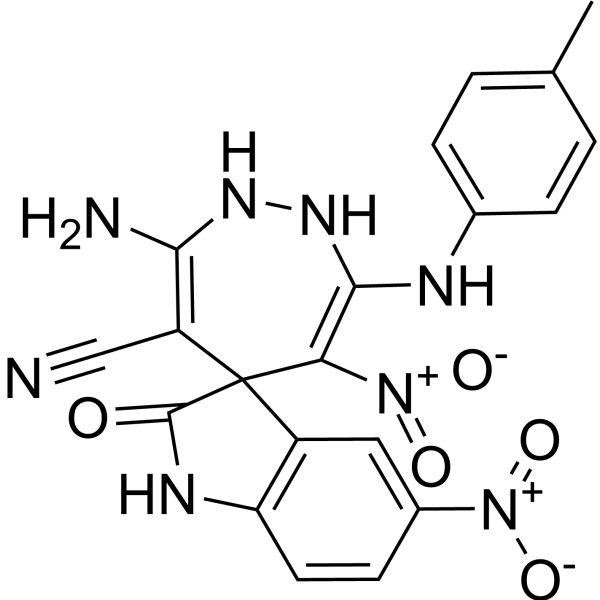
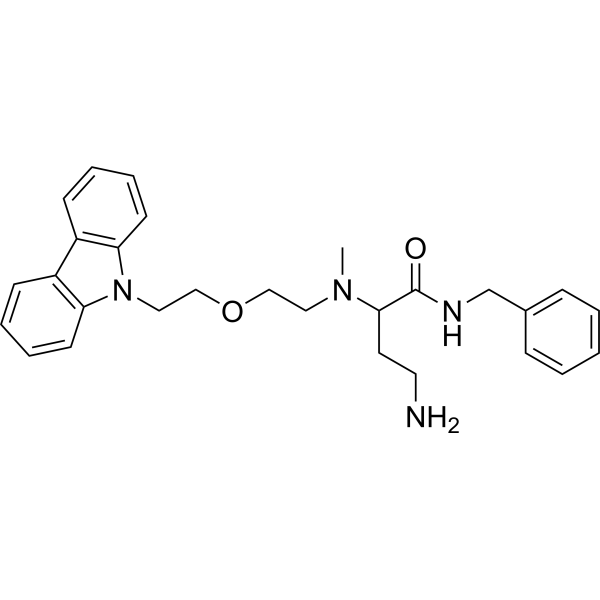
 0 ImagesCat. No.: HY-N16447CAS No.: 89020-33-7Territrem C is an acetylcholinesterase (AchE) inhibitor with an IC50 value of 0.23 μM. Territrem C, which belongs to α-pyrone meroterpenoids, can be isolated and produced from the fungus Penicillium sp. SK5GW1L.
-
Aβ-IN-5
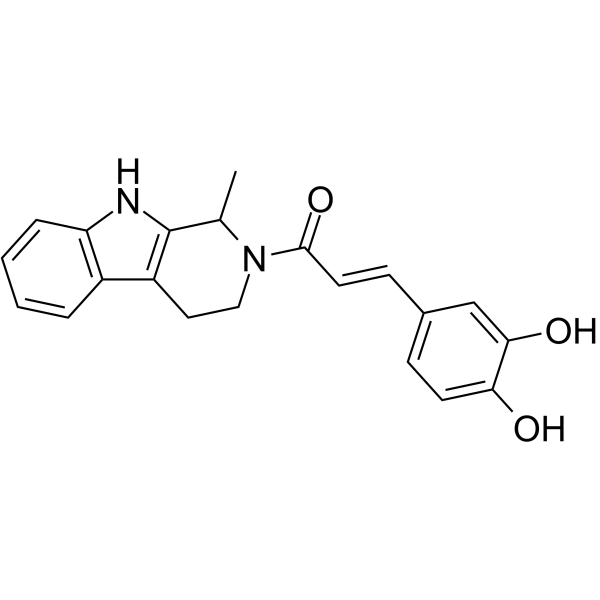 0 ImagesCat. No.: HY-147980CAS No.: 2417977-65-0Aβ-IN-5 (Compound e12) is an orally active Aβ aggregation inhibitor. Aβ-IN-5 also inhibits AChE and BuChE with IC50 values of 21.29 μM and 1.32 μM, respectively. Aβ-IN-5 shows excellent neuroprotective effects and low neurotoxicity.
-
AChE/BChE-IN-8
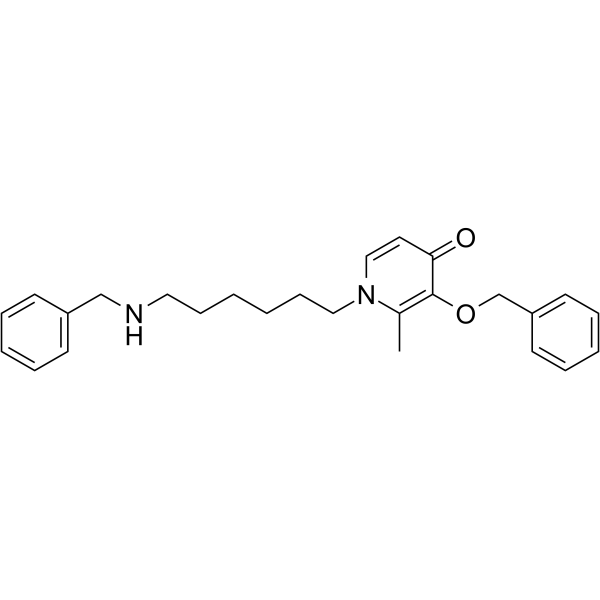 0 ImagesCat. No.: HY-146668CAS No.: 2421120-96-7
-
RX 67668
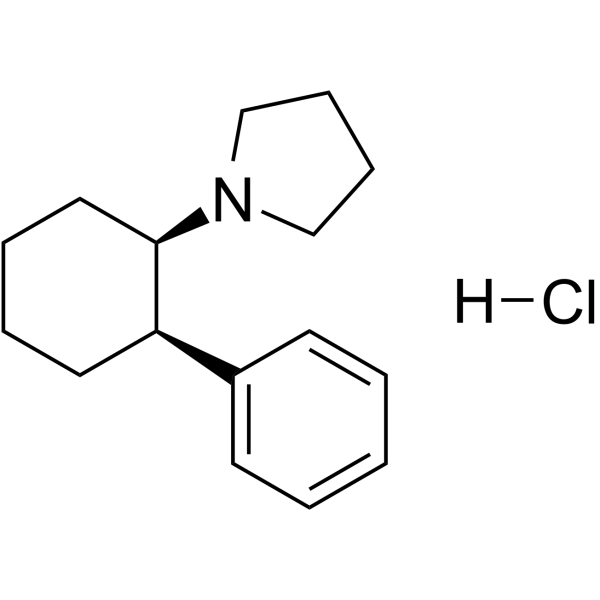 0 ImagesCat. No.: HY-124047CAS No.: 40709-76-0RX 67668 is a potent cholinesterase inhibitor with an IC50 of 5 μM for both acetylcholinesterase (AChE) and butyrylcholinesterase. RX 67668 can reverse the neuromuscular blockade induced by D-tubocurarine. RX 67668 is a muscle relaxant used to relieve skeletal muscle fatigue.
-
Lanuginosine
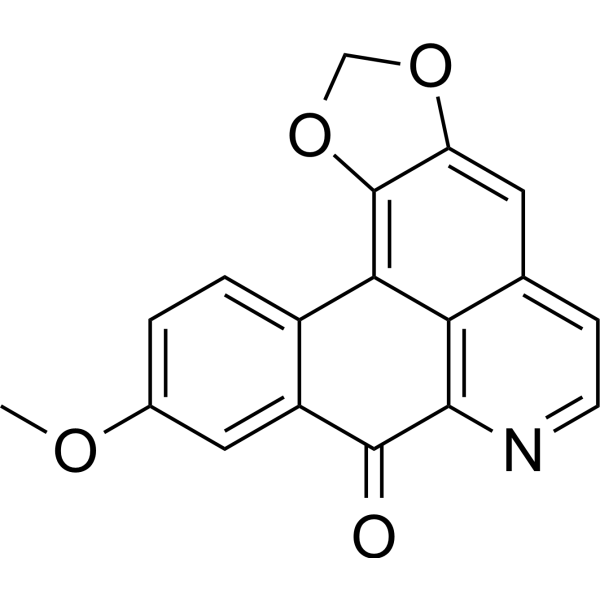 0 ImagesLanuginosine is an alkaloid. Lanuginosine can be isolated from the stems of Xylopia laevigata (Annonaceae) and the leaves of Magnolia grandiflora. Lanuginosine induces Apoptosis. Lanuginosine inhibits AChE (IC50: 10.9 μM). Lanuginosine inhibits Aβ aggregation. Lanuginosine exhibits anticancer activity against hepatocellular carcinoma, human promyelocytic leukemia, human chronic myeloid leukemia, melanoma, and brain tumors. Lanuginosine can be used in the research of Alzheimer's disease.
-
AChE/BChE/MAO-B-IN-3
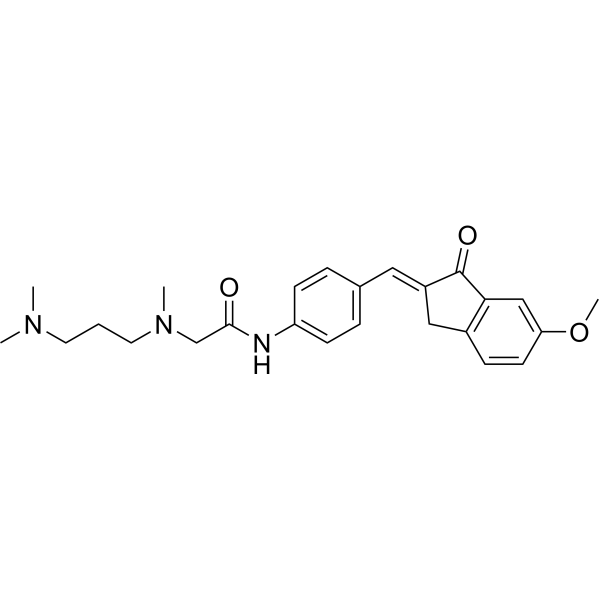 0 ImagesCat. No.: HY-152113AChE/BChE/MAO-B-IN-3, an indan-1-one derivative, is a potent MAO-B inhibitor with an IC50 of 0.0359 μM for human MAO-B. AChE/BChE/MAO-B-IN-3 is a potent AChE and BChE enzyme inhibitor, with IC50s of 0.0473 μM and 0.0782 μM for human AChE and BChE enzyme, respectively. AChE/BChE/MAO-B-IN-3 shows significant antioxidant activity and has the potential for Alzheimer's disease (AD) research.
-
Dehydrogeijerin
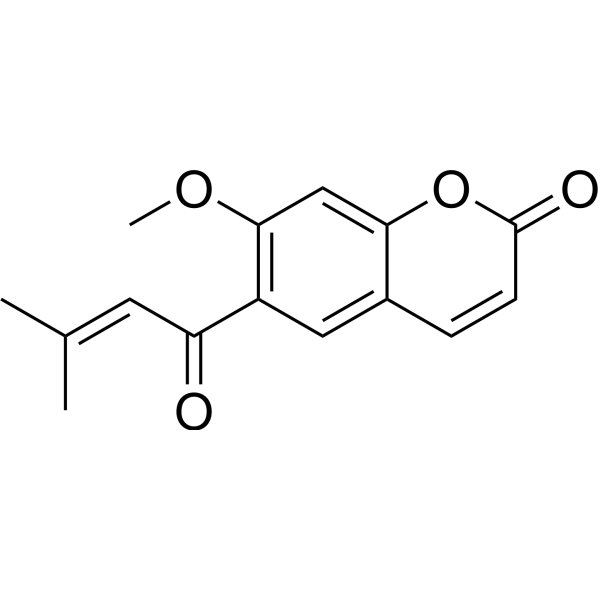 0 ImagesCat. No.: HY-N8414CAS No.: 16850-91-2Dehydrogeijerin is an inhibitor of acetylcholinesterase with an IC50 of 9.7 μM. Dehydrogeijerin can be used in study Alzheimer’s disease.
-
Ilicicolin C
 0 ImagesCat. No.: HY-119609CAS No.: 22562-67-0Ilicicolin C exhibits antibacterial activity against Pseudomonas syringae with IC50 of 28.5 µg/mL. Ilicicolin C exhibits weak inhibitory activities against acetylcholinesterase (AChE) and β-glucuronidase with IC50 of 30-43 µg/mL. Ilicicolin C exhibits weak cytoxicity in human lung fibroblasts with IC50 of 64-120 µg/mL. Ilicicolin C affects seed germination and root tip growth of lettuce.
-
AChE-IN-86
 0 ImagesCat. No.: HY-173263CAS No.: 3078693-67-8AChE-IN-86 (Compound 6f) is an inhibitor of enzyme acetylcholinesterase (AChE) with IC50 values of 25.33 μg/mL. AChE-IN-86 exerts inhibitory activity against AChE through forming hydrogen bonds, π-π and π-alkyl interactions with amino acid residues at the key catalytic sites of AChE. AChE-IN-86 can be used for Alzheimer's disease study.
-
hBChE-IN-2
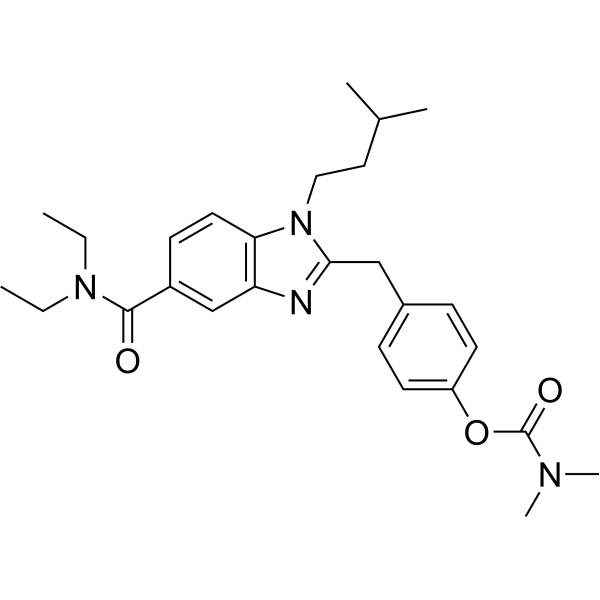 0 ImageshBChE-IN-2 (compound 15d) is a butyrylcholinesterase (BChE) inhibitor (IC50 of 0.62 μM) and a cannabinoid receptor 2 (CB2R) agonist. hBChE-IN-2 has neuroprotection activities.
-
Paecilomide
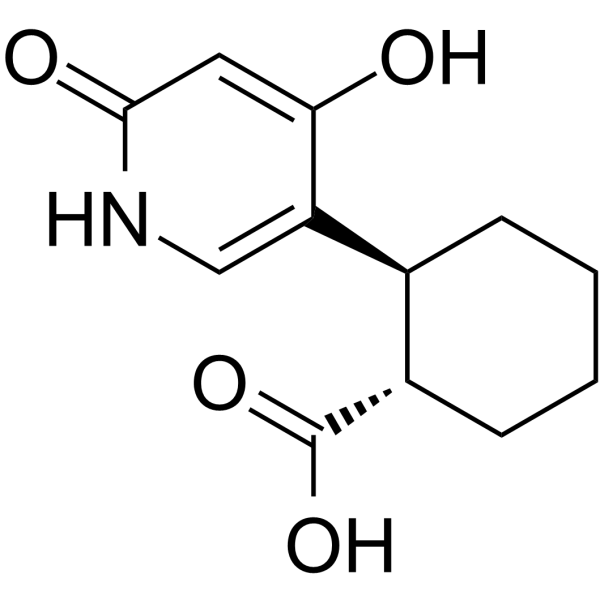 0 ImagesCat. No.: HY-N10209CAS No.: 1538575-22-2Paecilomide is a pyridone alkaloid and acetylcholinesterase inhibitor.
-
Y13g
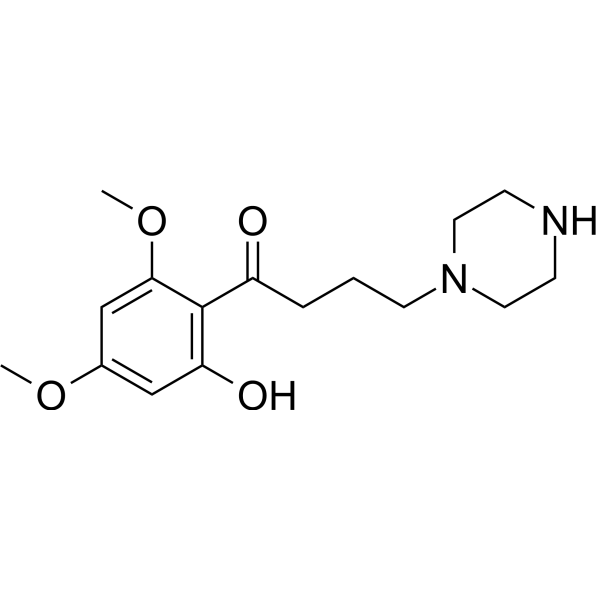 0 ImagesCat. No.: HY-115910CAS No.: 2766380-73-6
-
Dimethyl sulfoxide (suitable for HPLC)
 0 ImagesDimethyl sulfoxide (suitable for HPLC) is an aprotic solvent that can dissolve water-insoluble therapeutic and toxic agents. Dimethyl sulfoxide (DMSO) has a strong affinity for water and has the ability to rapidly penetrate or enhance the penetration of other substances through biological membranes. Dimethyl sulfoxide also has potential free radical scavenging and anticholinesterase effects and may affect coagulation activity. Dimethyl sulfoxide also induces histamine release from mast cells but is thought to have low systemic toxicity. Dimethyl sulfoxide (suitable for HPLC) is suitable for HPLC.
-
AChE/Aβ-IN-2
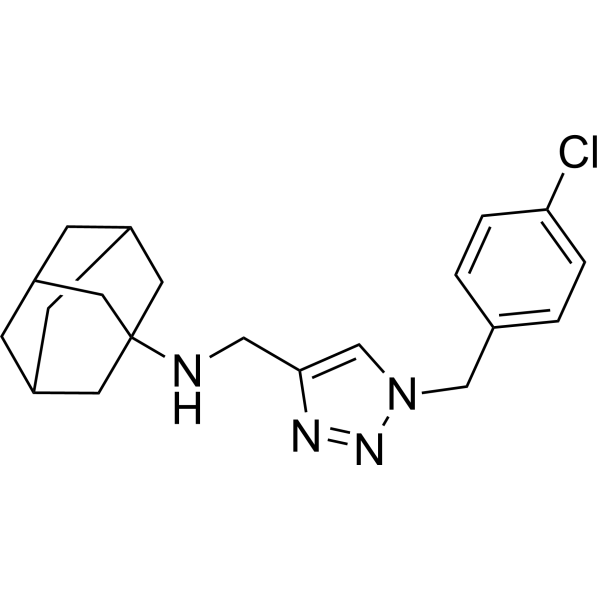 0 ImagesCat. No.: HY-155735AChE/Aβ-IN-2 (compound 33) is a potent and orally active inhibitor of acetylcholinesterase (AChE) with IC50 of 135 nM, as well as an antagonist of NMDA receptor (GluN1-1b/GluN2B subunit combination) with IC50 of 5.054 μM. AChE/Aβ-IN-2 also inhibits Aβ aggregation and shows good blood-brain barrier permeability. AChE/Aβ-IN-2 improves cognitive and spatial memory impairment in rats model.
-
AChE-IN-25
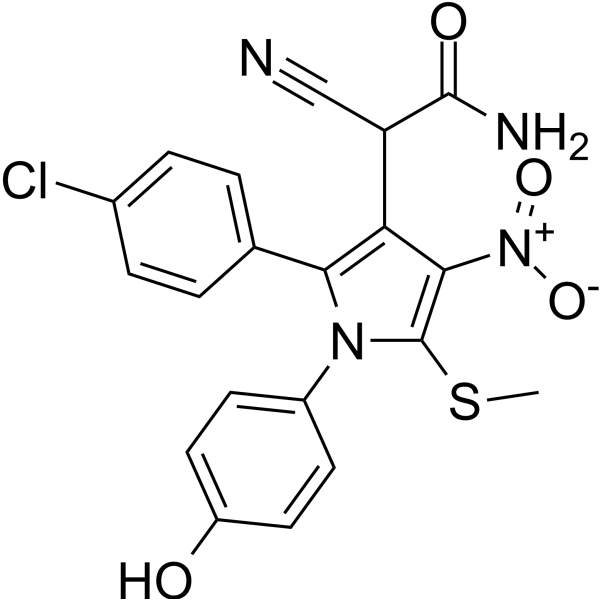 0 ImagesCat. No.: HY-151338CAS No.: 2835538-69-5AChE-IN-25 is a potent, selective and uncompetitive acetylcholinesterase (AChE) inhibitor (IC50=2.95 µM). AChE-IN-25 can be used in Alzheimer's disease research.
-
Temephos-d12
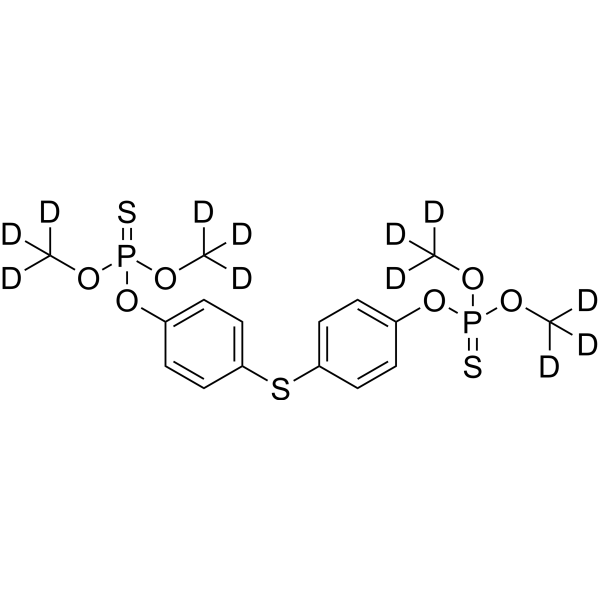 0 ImagesCat. No.: HY-B1120SCAS No.: 1219795-39-7Synonyms: Temefos-d12Temephos-d12 is the deuterium labeled Temephos. Temephos (Temefos) is an orally active, blood-brain barrier-permeable organophosphate insecticide and AChE inhibitor. By irreversibly inhibiting AChE to induce cholinergic overactivation, Temephos effectively blocks larval development of Aedes aegypti (yellow fever mosquito) and Aedes albopictus (Asian tiger mosquito), and is commonly used in studies related to Dengue Virus, Zika Virus and other relevant pathogens. Temephos exhibits genotoxicity and neurodevelopmental toxicity, and may also cause liver injury, reproductive system abnormalities and cholinergic poisoning symptoms in mammals. Temephos tends to accumulate in adipose tissues and aquatic organisms, and is excreted via feces after metabolism through oxidation and hydrolysis. Note that CYP-mediated metabolic detoxification may reduce the actual larvicidal efficacy of Temephos against some mosquito species. Temephos can be used in research related to dengue fever, Zika virus disease, chikungunya and dracunculiasis.
-
BChE/p38-α MAPK-IN-1
 0 ImagesCat. No.: HY-175655CAS No.: 3077831-11-6BChE/p38-α MAPK-IN-1 is a selective dual inhibitor of hBChE (IC50 = 772 nM) and p38α MAPK (IC50 = 191 nM). BChE/p38-α MAPK-IN-1 reduces the production of pro-inflammatory cytokines (IL-1β, IL-6, IL-8, TNF-α) in cells. BChE/p38-α MAPK-IN-1 improves Scopolamine (HY-N0296)-induced cognitive impairment, as well as alleviates LPS (HY-D1056)-induced spatial learning impairment and exerts anti-neuroinflammatory effects in mice. BChE/p38-α MAPK-IN-1 can be used for the study of Alzheimer’s disease (AD) by targeting both cholinergic deficit and neuroinflammation.
-
AChE-IN-37
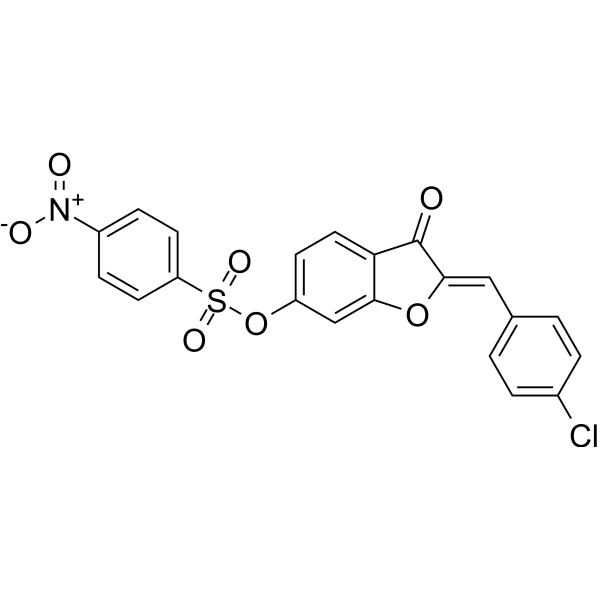 0 ImagesAChE-IN-37 (compound A2) is anacetylcholinesterase inhibitorswith an IC50 of 0.23 μM. AChE-IN-37 effects ROS levels and gene expression of NRF2.