



Cholinesterase (ChE)
Cholinesterase (ChE) is a family of enzymes present in the central nervous system, particularly in nervous tissue, muscle and red cells, which catalyze the hydrolysis of the neurotransmitter acetylcholine into choline and acetic acid, a reaction necessary to allow a cholinergic neuron to return to its resting state after activation. It is one of many important enzymes needed for the proper functioning of the nervous systems of humans.
There are two types: acetylcholinesterase (AChE, acetylcholine hydrolase) and butyrylcholinesterase (BChE, acylcholine acylhydrolase), also known as nonspecific cholinesterase or pseudocholinesterase. AChE is primarily found in the blood on red blood cell membranes, in neuromuscular junctions, and in neural synapses, while BChE is produced in the liver and found primarily in plasma. The difference between the two types of cholinesterase is their relative preferences for substrates: AChE hydrolyzes acetylcholine faster while BChE hydrolyzes butyrylcholine faster.
Cholinesterase (ChE) Isoform Specific Products
All Product Categories
-
Cholinesterase (ChE) Inhibitors
(913)
View all products
-
Cholinesterase (ChE) Agonists
(5)
View all products
-
Cholinesterase (ChE) Antagonists
(10)
View all products
-
Cholinesterase (ChE) Activators
(32)
View all products
-
Cholinesterase (ChE) Modulators
(10)
View all products
-
Cholinesterase (ChE) Chemical
(1)
View all products
-
Cholinesterase (ChE) Inducer
(1)
View all products
-
Cholinesterase (ChE) Controls
(6)
View all products
-
Cholinesterase (ChE) Substrates
(2)
View all products
-
Cholinesterase (ChE) Related Products (1062)
Related Products (1062)

-
Antibodies (2)
-
Cholinesterase (ChE) Isoform Comparison
-
Monometacrine
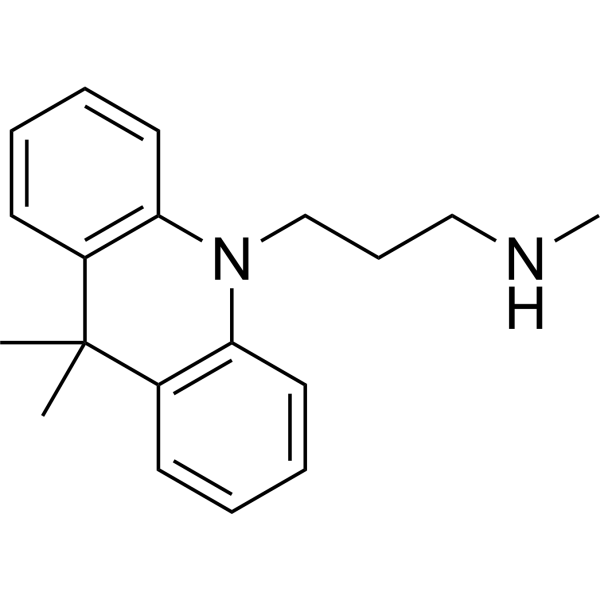 0 ImagesMonometacrine is a cholesterol esterase inhibitor. Monometacrine has antidepressant effect.
-
Stacofylline hydrochloride
 0 ImagesCat. No.: HY-106412ACAS No.: 138472-18-1Synonyms: S 9977Stacofylline hydrochloride (S 9977), a Xanthine (HY-W017389) derivative, is a potent AChE inhibitor with an IC50 of 5-50 nM. Stacofylline shows anti-amnesic and promnesic activities.
-
Decaffeoylacteoside
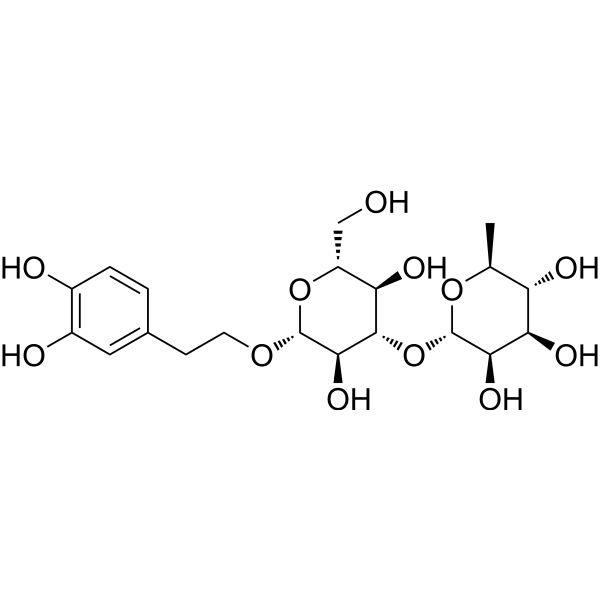 0 ImagesCat. No.: HY-N8764CAS No.: 61548-34-3Synonyms: Decaffeoylverbascoside; VerbasosideDecaffeoylacteoside is an inhibitor of AChE/BChE/LOX with moderate activity.
-
AChE-IN-108
 0 ImagesCat. No.: HY-181744AChE-IN-108 is a potent mixed-type acetylcholinesterase (AChE) inhibitor with an in vitro IC50 of 0.17 nM. AChE-IN-108 acts on both free AChE and the enzyme-substrate complex to exert mixed-type inhibition. AChE-IN-108 can be used for the study of acetylcholinesterase inhibition in Alzheimer’s disease (AD).
-
AChE-IN-119
 0 ImagesCat. No.: HY-184796AChE-IN-119 is a selective acetylcholinesterase (AChE) inhibitor with an IC50 of 0.0641 μM and a Ki of 0.01648 μM. AChE-IN-119 exerts antioxidant effects by scavenging DPPH free radicals. AChE-IN-119 exhibits mixed-type inhibition and interacts with both the catalytic active site and the peripheral anionic site of acetylcholinesterase. AChE-IN-119 can be used for the research of Alzheimer's disease.
-
AChE-IN-15
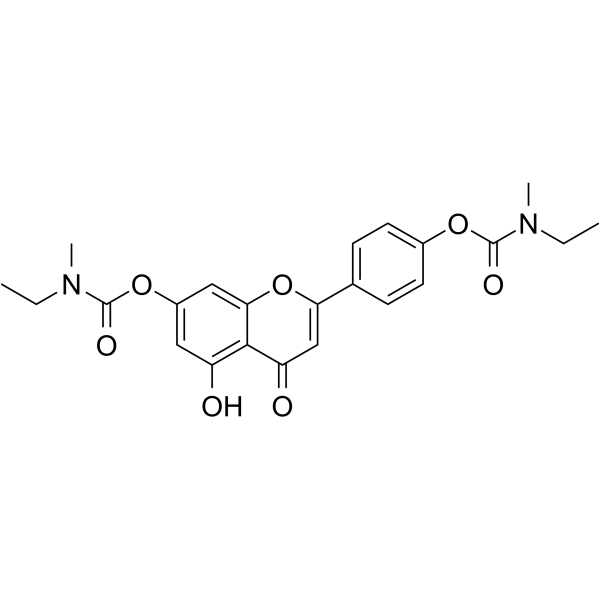 0 ImagesCat. No.: HY-146039CAS No.: 2242792-25-0AChE-IN-15 (Compound 3d) is a reversible human acetylcholinesterase (huAChE) (IC50=6.8 μM) and human butyrylcholinesterase (huBChE) (IC50=16.1 μM) inhibitor. AChE-IN-15 shows significant antioxidant potency, AChE-IN-15 can be used for the research of Alzheimer’s disease.
-
AChE/BChE/MAO-A-IN-2
 0 ImagesCat. No.: HY-184159AChE/BChE/MAO-A-IN-2 is an AChE, BChE, and MAO-A inhibitor with IC50 values of 104.28 nM, 23.04 nM, and 215.50 nM, respectively. AChE/BChE/MAO-A-IN-2 exhibits selective antiproliferative activity against cancer cells and low toxicity toward normal cells. AChE/BChE/MAO-A-IN-2 can be used for the research of alzheimer's disease, neuroblastoma.
-
Fenobucarb (Standard)
 0 ImagesFenobucarb (Standard) is the analytical standard of Fenobucarb. This product is intended for research and analytical applications. Fenobucarb is a carbamate insecticide. Fenobucarb induces zebrafish developmental neurotoxicity through pathways involved in inflammation, oxidative stress, degeneration and apoptosis. Fenobucarb is a possible risk factor to cardiovascular and cerebrovascular systems in animals.
-
AChE-IN-29
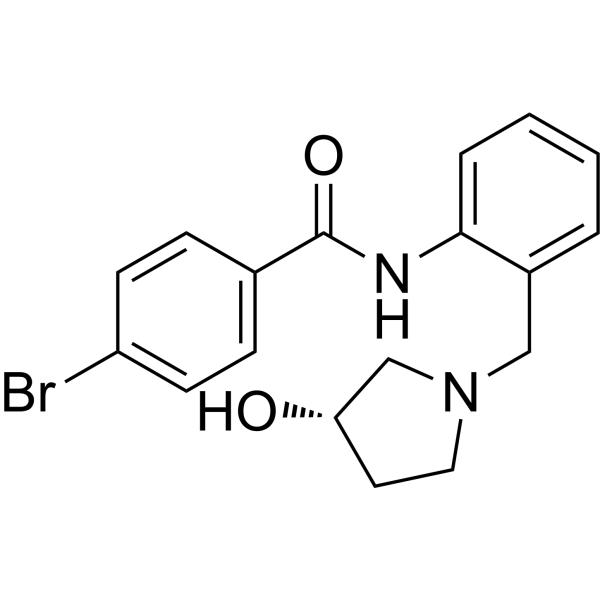 0 ImagesCat. No.: HY-149817CAS No.: 3041113-91-8AChE-IN-29, 3-OH pyrrolidine derivative, is an cholinesterase (ChE) inhibitor. AChE-IN-29 has cholinesterase inhibitory activity for hAChE, eeAChE and eqBChE with IC50 values of 0.25 μM, 0.23 μM and 0.72 μM, respectively. AChE-IN-29 can be used for the research of Alzheimer's disease.
-
SSZ
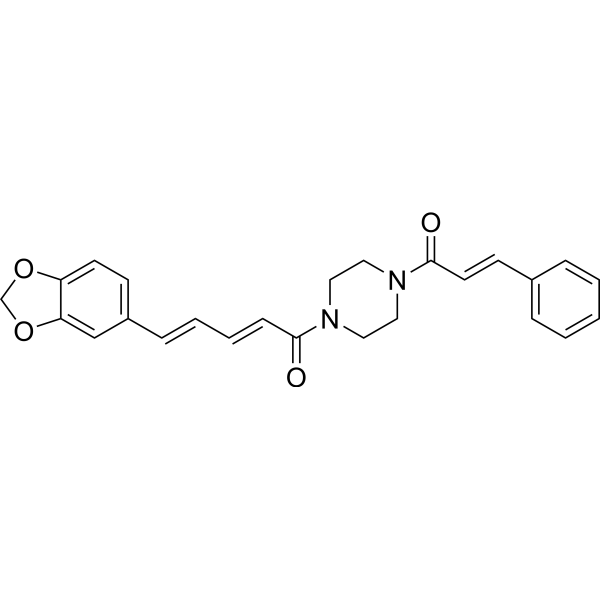
 0 ImagesSSZ is a multi-target inhibitor, which targets multiple pathological mechanisms of Alzheimer's disease (AD). SSZ targets acetylcholinesterase, butyrylcholinesterase, β-site amyloid precursor protein cleavage enzyme 1 (BACE1), and γ-secretase. SSZ ameliorates Alzheimer’s diseases and exhibits neuroprotective effect in mice.
-
AChE/MAO-B-IN-9
 0 ImagesCat. No.: HY-181861CAS No.: 2341935-88-2AChE/MAO-B-IN-9 (Compound E12) is an orally active, selective, reversible, non-competitive AChE and MAO-B inhibitor, with an IC50 of 0.156 μM against electric eel AChE. AChE/MAO-B-IN-9 inhibits Aβ40/42 fibril formation, promotes Aβ fibril depolymerization, and inhibits Tau protein fibril formation. AChE/MAO-B-IN-9 exerts antioxidant and neuroprotective effects, and improves scopolamine (HY-N0296)-induced memory impairment in mice. AChE/MAO-B-IN-9 can be used for the research of Alzheimer's disease.
-
Gypsogenin (Standard)
 0 ImagesCat. No.: HY-121382RCAS No.: 639-14-5Cinosulfuron (Standard) is the analytical standard of Cinosulfuron. This product is intended for research and analytical applications. Gypsogenin is a selective mixed-type BChE inhibitor (Ki=19.99 μM) that also exhibits significant cytotoxicity against various human cancer cell lines. Gypsogenin inhibits tumor growth by inducing cell cycle arrest and triggering apoptosis. Gypsogenin displays antibacterial activity against bacteria such as Bacillus subtilis and Bacillus thuringiensis, and often serves as a key parent nucleus for the synthesis of anticancer compounds. Gypsogenin is widely used in research on Alzheimer's disease and various cancers including colon cancer, melanoma, and leukemia.
-
BuChE-IN-11
 0 ImagesCat. No.: HY-163746BuChE-IN-11 (Compound 3b-1) is an selective BuChE inhibitor with an IC50 of 0.44 μM for hBuChE. BuChE-IN-11 has high blood-brain barrier permeability and exhibits strong antioxidant activity due to its free radical scavenging properties. BuChE-IN-11 interacts with the choline binding site, acetyl binding site, and peripheral anionic site, exhibiting submicromolar BuChE inhibitory activity and preventing β-amyloid (Aβ) self-aggregation. BuChE-IN-11 holds promise for research in the field of Alzheimer's disease.
-
AChE-IN-88
 0 ImagesCat. No.: HY-176439CAS No.: 2758789-03-4AChE-IN-88 (Compound 26) is a novel pyridazine derivative. AChE-IN-88 is an orally active multi-target ligand for Alzheimer's disease (AD) that inhibits both acetylcholinesterase (AChE) and amyloid β protein (Aβ) aggregation (pIC50: 7.16).
-
(-)-Huperzine A-d4 hydrochloride
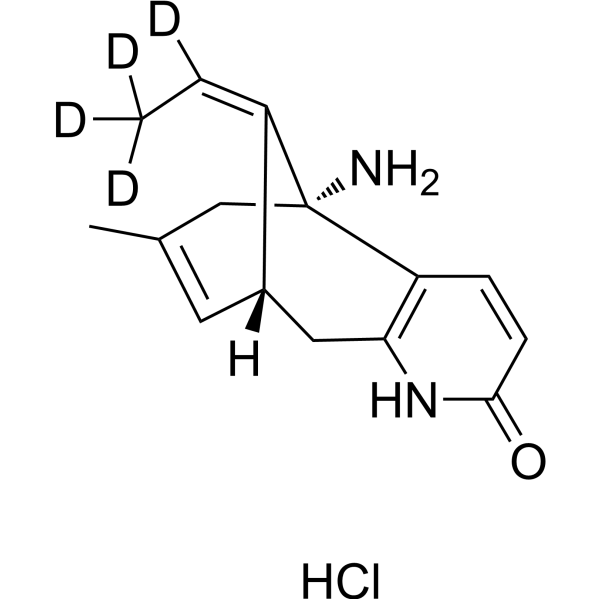 0 ImagesCat. No.: HY-17387S1Synonyms: Huperzine A-d4(-)-Huperzine A-d4 hydrochloride is deuterated labeled (-)-Huperzine A (HY-17387). (-)-Huperzine A (Huperzine A) is an alkaloid isolated from Huperzia serrata, with neuroprotective activity. (-)-Huperzine A is a potent, highly specific, reversible and blood-brain barrier penetrant inhibitor of acetylcholinesterase (AChE), with an IC50 of 82 nM. (-)-Huperzine A also is non-competitive antagonist of N-methyl-D-aspartate glutamate (NMDA) receptor. (-)-Huperzine A is developed for the research of neurodegenerative diseases, including Alzheimer’s disease.
-
AChE-IN-36
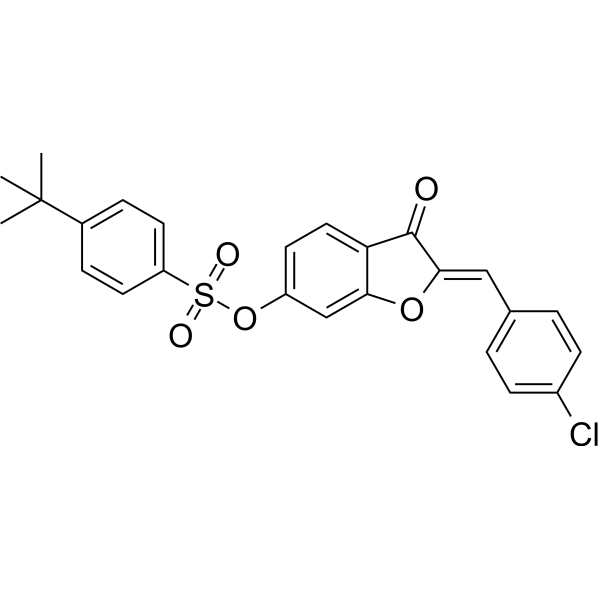 0 ImagesCat. No.: HY-155749CAS No.: 2978753-66-9AChE-IN-36 (compound A4) is anacetylcholinesterase inhibitorswith an IC50 of 0.04 μM. AChE-IN-36 effects ROS levels and gene expression of NRF2.




