



Amyloid-β
β-amyloid peptide; Aβ; Abeta
Amyloid-β (Aβ) denotes peptides of 36–43 amino acids that are crucially involved in Alzheimer's disease as the main component of theamyloid plaques found in the brains of Alzheimer patients. The peptides result from the amyloid precursor protein (APP), which is being cut by certain enzymes to yield Aβ. Amyloid-β molecules can aggregate to form flexible soluble oligomers which may exist in several forms. Amyloid-β peptide is due to overproduction of Aβ and/or the failure of clearance mechanisms. Amyloid-β self-aggregates into oligomers, which can be of various sizes, and forms diffuse and neuritic plaques in the parenchyma and blood vessels. Amyloid-β oligomers and plaques are potent synaptotoxins, block proteasome function, inhibit mitochondrial activity, alter intracellular Ca2+levels and stimulate inflammatory processes. Loss of the normal physiological functions of Aβ is also thought to contribute to neuronal dysfunction.
All Product Categories
-
Amyloid-β Inhibitors
(469)
View all products
-
Amyloid-β Agonists
(2)
View all products
-
Amyloid-β Antagonists
(5)
View all products
-
Amyloid-β Activators
(5)
View all products
-
Amyloid-β Modulators
(4)
View all products
-
Amyloid-β Chemicals
(7)
View all products
-
Amyloid-β Inducers
(5)
View all products
-
Amyloid-β Degraders
(6)
View all products
-
Amyloid-β Controls
(3)
View all products
-
Amyloid-β Substrate
(1)
View all products
-
Amyloid-β Ligands
(11)
View all products
-
Amyloid-β 관련 제품 (745)
관련 제품 (745)

-
Antibodies (9)
-
AZ3971
 0 ImagesCat. No.: HY-125405CAS No.: 1260248-03-0AZ3971 is an orally active, blood-brain barrier permeable BACE1 inhibitor that does not affect the activity of γ-secretase. AZ3971 reduces the production of Aβ. AZ3971 can be used for the research of Alzheimer's disease.
-
β-Amyloid (1-34)
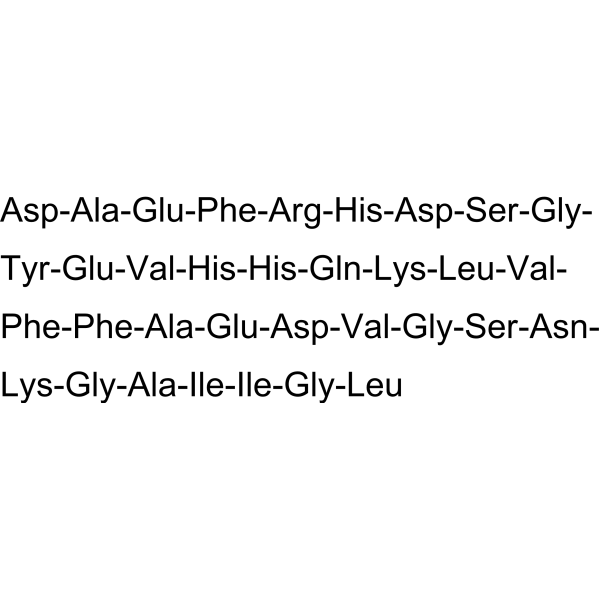 0 ImagesCat. No.: HY-P1867CAS No.: 186359-65-9β-Amyloid (1-34) is a β-Amyloid peptide consists of 34 amino acid.
-
D-Trp-Aib
 0 ImagesCat. No.: HY-114613CAS No.: 1123071-24-8D-Trp-Aib is a dipeptide and amyloid-β inhibitor with a Kd of 29.6 nM. D-Trp-Aib triggers formation of non-toxic, non-β-sheet, amorphous amyloid β clusters from misfolded amyloid β monomers and toxic amyloid β oligomers, and reduces toxic amyloid β1-42 deposits. D-Trp-Aib inhibits amyloid fibril formation of α‑synuclein, IAPP and calcitonin. D-Trp-Aib can be used for the research of Alzheimer's disease.
-
Aβ aggregation-IN-4
 0 ImagesCat. No.: HY-177854CAS No.: 603113-07-1Aβ aggregation-IN-4 can alleviate the neurotoxicity of amyloid-β protein (Aβ) and significantly reduce the level of oligomeric complexes of Aβ (Aβ-OCs). Aβ aggregation-IN-4 does not decrease the level of amyloid-β protein (Aβ). Aβ aggregation-IN-4 attenuates Aβ oligomerization and prevents oligomer-induced death of primary cortical neurons. Aβ aggregation-IN-4 can be used for the study of Alzheimer’s disease (AD).
-
Aβ-IN-7
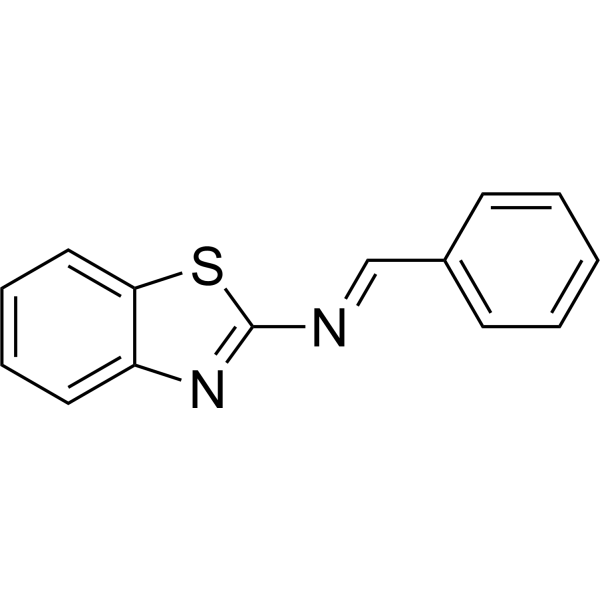 0 ImagesCat. No.: HY-149582CAS No.: 69791-41-9
-
β-Amyloid-15N (1-40) TFA
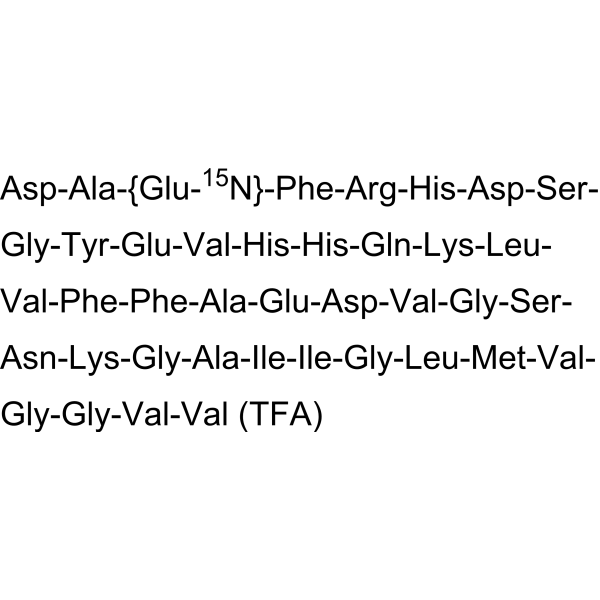 0 ImagesCat. No.: HY-P0265ASSynonyms: Amyloid Beta-Peptide-15N (1-40) (human) TFA; Amyloid β-Peptide-15N (1-40) (human) TFAβ-Amyloid-15N (1-40) (TFA) is the 15N-labledβ-Amyloid (1-40) (TFA). β-Amyloid (1-40) is a primary protein in plaques found in the brains of patients with Alzheimer's disease.
-
RERMS
 0 ImagesCat. No.: HY-P10613CAS No.: 148914-08-3RERMS are bioactive peptides produced from the active regions of amyloid-β and A4 protein precursors that promote fibroblast growth and can be used in the study of neurodegenerative diseases.
-
Dyclonine-d9 hydrochloride
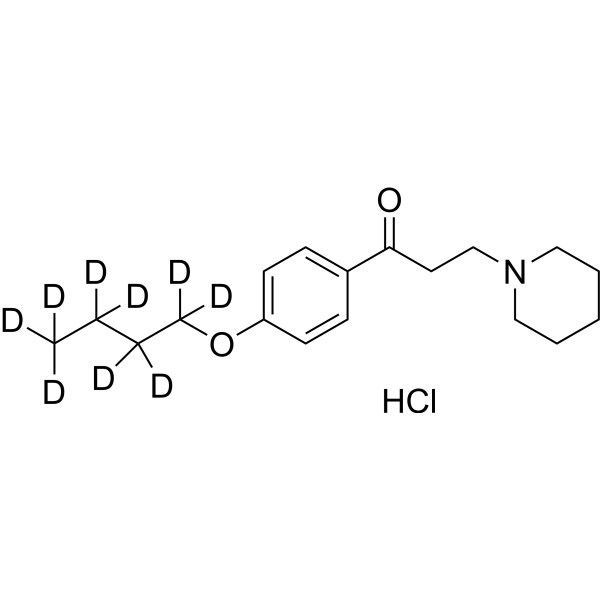 0 ImagesCat. No.: HY-B0364ASSynonyms: Dyclocaine-d9 hydrochlorideDyclonine-d9 hydrochloride (Dyclocaine-d9 hydrochloride) is the deuterated-labeled Dyclonine hydrochloride (HY-B0364A). Dyclonine hydrochloride (Dyclocaine hydrochloride) is an orally active, blood-brain barrier-permeable piperidine phenylacetone small molecule commonly used as a local anesthetic. Dyclonine hydrochloride acts as a highly selective allosteric antagonist of TRPV3; it also reversibly inhibits G9a, ALDH2 and ALDH3A1, non-competitively blocks AChE. Dyclonine hydrochloride activates the Nrf2/ARE pathway, relieves the epigenetic silencing of FXN, blocks Aβ42 aggregation, and promotes remyelination and reparative polarization of microglia. Dyclonine hydrochloride alleviates pruritus via TRPV3 inhibition; it is used in studies of neurodegenerative disease models based on its AChE inhibitory, antioxidant and remyelinating effects; it sensitizes drug-resistant tumors through ALDH inhibition, and combined use with protease inhibitors induces more tumor cell apoptosis; it inhibits Candida albicans in vitro. Dyclonine hydrochloride can be used for research on multiple diseases including neurodegenerative diseases, cancer and pruritic dermatitis.

-
BuChE-IN-20
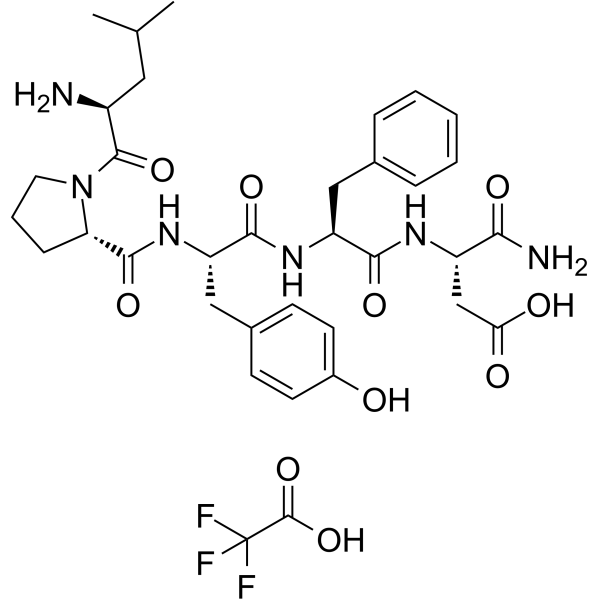
 0 ImagesCat. No.: HY-172782BuChE-IN-20 is a selective butyrylcholinesterase (hBuChE) inhibitor (IC50 = 0.13 μM) with BBB permeability. BuChE-IN-20 is a L-Tryptophan derivative. BuChE-IN-20 possesses neuroprotective properties by inhibiting the production of nitric oxide (NO) and lowering the levels of ROS. BuChE-IN-20 is proficient in inhibiting the self-aggregation of amyloid-beta (Aβ) peptides. BuChE-IN-20 can be used in research for Alzheimer’s disease.
-
PH-46A
 0 ImagesCat. No.: HY-120804CAS No.: 1380445-04-4PH-46A is an indane dimer with anti-inflammatory activity. PH-46A can reduced histological damage and serum amyloid A (SAA) levels in colitis mice.
-
TML-6-d3
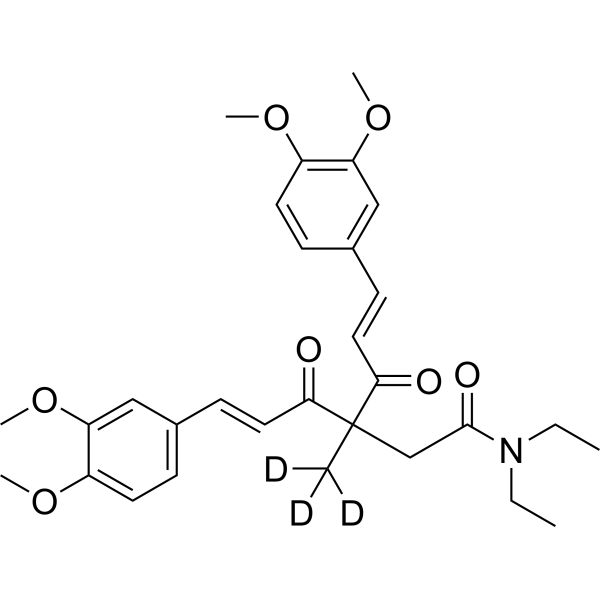 0 ImagesCat. No.: HY-137315SCAS No.: 2673270-28-3
-
TRV-1387
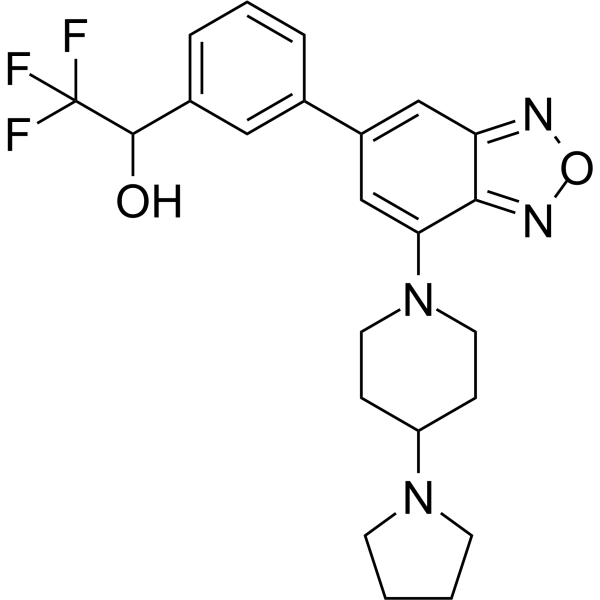 0 ImagesCat. No.: HY-153431CAS No.: 1569645-63-1TRV-1387 is a benzofurazan that inhibits the aggregation of tau and amyloid-β.
-
Phenchlobenpyrrone
 0 ImagesCat. No.: HY-119492CAS No.: 215036-81-0Phenchlobenpyrrone is a highly selective neuronal calcium antagonist that crosses the blood-brain barrier. Phenchlobenpyrrone mildly inhibits AChE activity. Phenchlobenpyrrone inhibits Aβ aggregation and promotes the clearance of Aβ oligomers. Phenchlobenpyrrone reduces abnormal phosphorylation of Tau protein. Phenchlobenpyrrone may be used in research on Alzheimer's disease.
-
CDy11
 0 ImagesCat. No.: HY-D3192CAS No.: 2028316-07-4CDy11 is a fluorescent probe and amyloid-binding dye (λex=590 nm; λem=612 nm), with a Ka of 29 μM for Pseudomonas aeruginosa Fap. CDy11 specifically recognizes amyloid fibrils in bacterial biofilms and exhibits significantly enhanced fluorescence upon binding to the target. CDy11 shows no staining effect on amyloid-deficient mutant strains, planktonic cells or protein monomers. CDy11 supports in vivo imaging of Pseudomonas aeruginosa biofilms in mouse implant and corneal infection models. CDy11 is widely used in studies of Staphylococcus aureus biofilm infections, dental caries, and Pseudomonas aeruginosa-associated implant and corneal infections.
-
D-687
 0 ImagesCat. No.: HY-169196CAS No.: 2276762-06-0D-687 is an inhibitor of Tau and Aβ. D-687 can reverse Aβ1–42-induced toxicity in SH-SH5Y cells and has significant neuroprotective properties.
-
Glutaminyl Cyclase Inhibitor 5
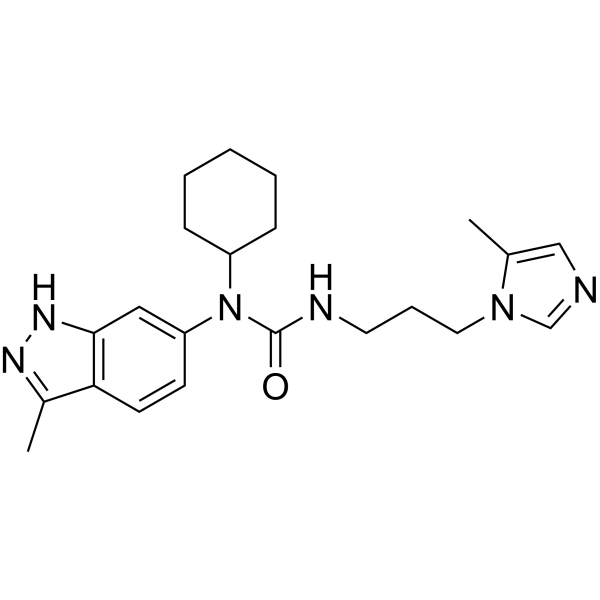 0 ImagesCat. No.: HY-152031CAS No.: 3033553-63-5Glutaminyl Cyclase Inhibitor 5 (Compound 71) is a potent and selective human glutaminyl cyclase (hQC) inhibitor with an IC50 of 3.2 nM.
-
β-Amyloid-15N (1-42), human TFA
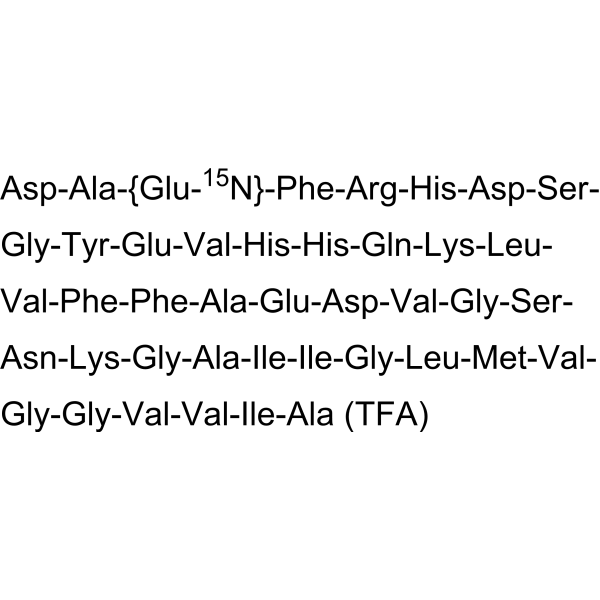 0 ImagesCat. No.: HY-P1363SSynonyms: Amyloid β-peptide-15N (1-42) (human) TFAβ-Amyloid-15N (1-42), human (TFA) is the 15N-labledβ-Amyloid (1-42) (TFA). β-Amyloid (1-42), human TFA (Amyloid β-Peptide (1-42) (human) TFA) is a 42-amino acid peptide which plays a key role in the pathogenesis of Alzheimer disease.
-
Scyllo-Inositol-d6
 0 ImagesCat. No.: HY-W707693CAS No.: 115268-26-3Scyllo-Inositol-d6 is the deuterium labeled Scyllo-Inositol (HY-W010041). Scyllo-Inositol is an inhibitor that targets the aggregation of misfolded proteins (such as α-synuclein and Amyloid-β), is orally effective, and can cross the blood-brain barrier. Scyllo-Inositol can selectively bind to and stabilize non-toxic oligomers, preventing them from converting into toxic fibers, exerting protein homeostasis regulation and neuroprotective activity. Scyllo-Inositol binds to the hydrophobic region of pathogenic proteins, inhibits protein aggregation, and promotes lysosome- and proteasome-mediated degradation pathways, thereby reducing neurotoxicity. Scyllo-Inositol can be used in the study of neurodegenerative diseases such as Parkinson's disease, Alzheimer's disease, and Huntington's disease.




