



Bacterial
Anything that destroys bacteria or suppresses their growth or their ability to reproduce. Heat, chemicals such as chlorine, and antibiotic drugs all have antibacterial properties. Many antibacterial products for cleaning and handwashing are sold today. Such products do not reduce the risk for symptoms of viral infectious diseases in otherwise healthy persons. This does not preclude the potential contribution of antibacterial products to reducing symptoms of bacterial diseases in the home.
All Product Categories
-
Bacterial Inhibitors
(7553)
View all products
-
Bacterial Agonists
(3)
View all products
-
Bacterial Antagonists
(9)
View all products
-
Bacterial Activators
(25)
View all products
-
Bacterial Modulators
(27)
View all products
-
Bacterial Chemicals
(2)
View all products
-
Bacterial Inducers
(6)
View all products
-
Bacterial Controls
(14)
View all products
-
Bacterial Substrates
(2)
View all products
-
Bacterial Ligand
(1)
View all products
-
Bacterial Related Products (8893)
Related Products (8893)

-
Antibodies (14)
-
Related Compound Screening Libraries (1)

-
Iturin A-2
 0 ImagesCat. No.: HY-P10785CAS No.: 83785-07-3Iturin A-2 is a cyclic lipopeptide discovered in B. subtilis and exhibits inhibitory activity against the plant pathogenic fungus P. expansum (MIC = 8 µg/disk). Iturin A-2 is cytotoxic to MCF-7 and BT474 breast cancer cells, as well as HeLa cervical cancer cells, with IC50 values of 66.81, 95.04, and 77.5 µg/mL, respectively. In greenhouse studies, Iturin A-2 at concentrations of 100 and 300 mg/kg Iturin A-2 reduces the lesion area of southern corn leaf blight caused by B. maydis, and in field studies, concentrations of 300 and 500 mg/kg Iturin A-2 reduce the incidence of the disease. Iturin A-2 (12.5 µg/mL) inhibits cell division, but not nuclear division, in isolated fertilized starfish eggs.
-
Anhydrofulvic acid
 0 ImagesCat. No.: HY-N16397CAS No.: 95730-85-1Anhydrofulvic acid is a polyketide with antibacterial activity (notably against MRSA, MIC=8 mg/mL). Anhydrofulvic acid is promising for research of Gram-positive infections (e.g., skin, bloodstream).
-
OTB-658
 0 ImagesCat. No.: HY-187914CAS No.: 2245791-50-6OTB-658 is a conformationally restricted oxazolidinone antibacterial candidate that exhibits bacteriostatic activity against Mycobacterium tuberculosis. OTB-658 enters macrophages and inhibits intracellular M. tuberculosis growth. OTB-658 exhibits dose-dependent antibacterial activity. OTB-658 is used in research related to tuberculosis and drug-resistant tuberculosis.
-
SCH 34343 sodium
 0 ImagesCat. No.: HY-111019ACAS No.: 94392-35-5SCH 34343 sodium is a potent β-lactam Antibiotic with bactericidal activity against Streptococcus pneumoniae, viridans streptococci, streptococci of groups A, B, C and G, and Str. bovis.
-
Mtb-IN-4
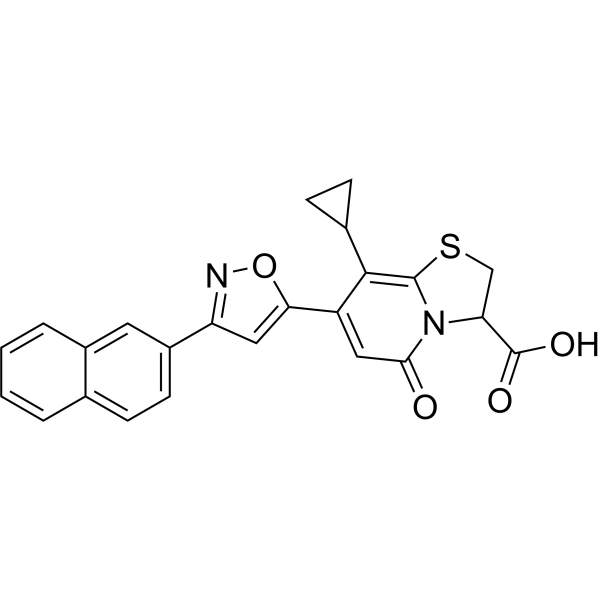 0 ImagesCat. No.: HY-155720CAS No.: 2306039-13-2Mtb-IN-4 (compound 17h) is a nontoxic isoxazole, with anti-Mycobacterium tuberculosis (Mtb) activity (IC50=0.70 μM). Mtb-IN-4 inhibits Mtb respiration and biofilm formation in macrophage, and enhances antibiotic isoniazid (INH) inhibition against INH-resistant Mtb mutant.
-
Antibacterial agent 38
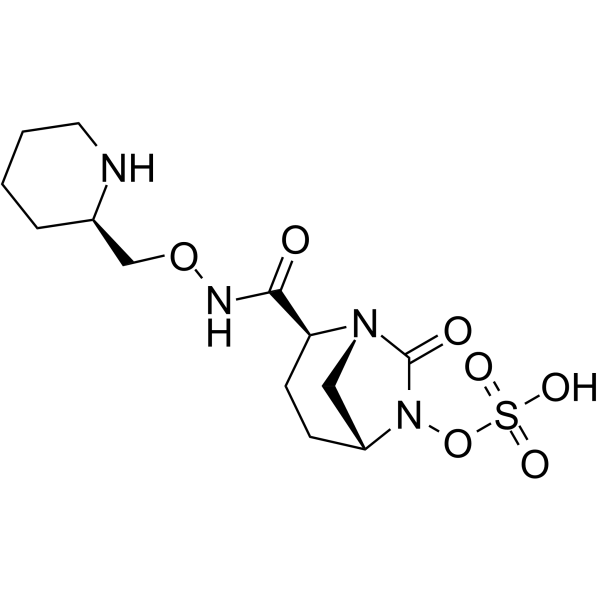 0 ImagesCat. No.: HY-139755CAS No.: 1452459-12-9Antibacterial agent 38 is an antibacterial agent extracted from patent WO2015063714A1, compound C. Antibacterial agent 38 can be used for the research of bacterial infections.
-
Balteatide
 0 ImagesCat. No.: HY-P10538CAS No.: 1630816-52-2Balteatide is an antimicrobial peptide, which can be found in skin secretion of Phyllomedusa baltea. Balteatide inhibits the gram-positive Staphylococcus aureus (MIC=435 μM), the gram-negative Escherichia coli (MIC=109 μM), and Candida albicans (MIC=27 μM). Balteatide lacks hemolytic activity (at 512 mg/L) and myotropic activity.
-
Geranyl isobutyrate
 0 ImagesCat. No.: HY-W012346CAS No.: 2345-26-8Geranyl isobutyrate is a synthetic α,β‑unsaturated branched‑chain aliphatic ester and a geraniol derivative. Geranyl isobutyrate acts as a food and feed flavouring agent and a biologically active antimicrobial compound. Geranyl isobutyrate shows antimicrobial activity against Gram‑positive and most Gram‑negative bacteria.
-
Crabrolin
 0 ImagesCat. No.: HY-P10681CAS No.: 93207-22-8Crabrolin is a tridecapeptide that can be extracted from the venom of the European hornet (Vespa crabro). Crabrolin shows MIC/MBC of 2/2, 16/64, 4/8 μM, for S. aureus (NCTC 10788), MRSA (NCTC 12493) and E. faecium (NTCC 12697), respectively.
-
Ceclazepide
 0 ImagesCat. No.: HY-109028CAS No.: 1801749-44-9Synonyms: TR2-ACeclazepide (TR2-A), a CCK2R antagonist, is an orally active Mycobacterium abscessus inhibitor. Ceclazepide inhibits acid secretion in rats. Ceclazepide effectively suppresses the growth of M. abscessus wild-type strain and multiple subspecies. Ceclazepide inhibits M. abscessus growth within macrophages without causing harm.
-
Oxyclozanide (Standard)
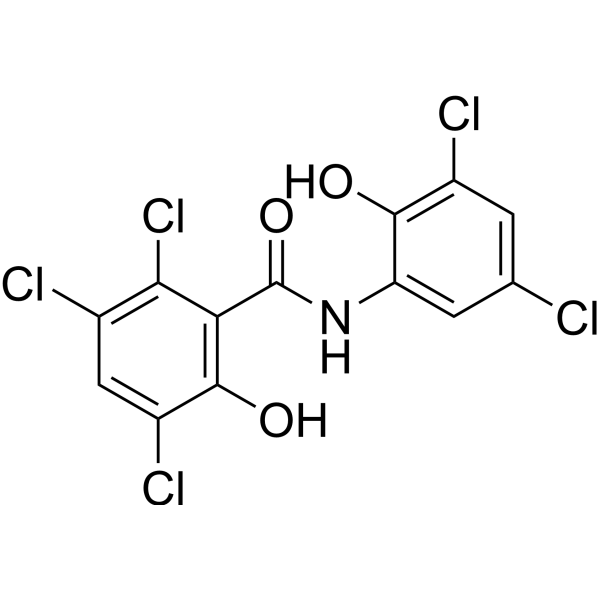 0 ImagesOxyclozanide (Standard) is the analytical standard of Oxyclozanide. This product is intended for research and analytical applications. Oxyclozanide is an orally active salicylanilide anthelmintic agent that mainly acts by uncoupling oxidative phosphorylation in flukes. Oxyclozanide shows good anti-adenovirus, anti-biofilm, antifungal, and antibacterial activity.
-
Buforin IIb
 0 ImagesCat. No.: HY-P12127CAS No.: 233273-63-7Synonyms: BF2-BBuforin IIb (BF2-B) is an anticancer peptide, as well as an Antibacterial and Antifungal agent. Buforin IIb is derived from histone H2A. Buforin IIb activates SAPK/JNK and p38 MAPK. Buforin IIb induces mitochondria-dependent Apoptosis. Buforin IIb achieves selective targeting by interacting with gangliosides on the surface of cancer cells, and can penetrate cancer cell membranes without causing damage. Buforin IIb exhibits antibacterial activity against Gram-negative bacteria, Gram-positive bacteria and fungi. Buforin IIb can be used in the research of cervical cancer, as well as cancers including leukemia, central nervous system cancer, ovarian cancer, breast cancer, melanoma, colon cancer, non-small cell lung cancer, renal cancer and prostate cancer.
-
Cefcanel daloxate
 0 ImagesCat. No.: HY-129914CAS No.: 97275-40-6Synonyms: KY-109 free baseCefcanel daloxate (KY-109 (free base)) is an orally active cephalosporin prodrug against Gram-positive bacteria and Haemophilus influenzae. Cefcanel daloxate is promising for research of uremia.
-
Ethylenediaminetetraacetic acid disodium dihydrate (Standard)
 0 ImagesSynonyms: EDTA disodium dihydrate (Standard)Ethylenediaminetetraacetic acid (disodium dihydrate) (Standard) is the analytical standard of Ethylenediaminetetraacetic acid (disodium dihydrate). This product is intended for research and analytical applications. Ethylenediaminetetraacetic acid (EDTA) disodium dehydrate is a kind of metal chelating agent (binds to bivalent and trivalent metal cations, including calcium). Ethylenediaminetetraacetic acid disodium dehydrate has antibacterial, anti-inflammatory, antioxidant, anti-hypercalcemia and anticoagulant activities. Ethylenediaminetetraacetic acid disodium dehydrate decreases the metal ion-catalyzed oxidative damage to proteins, and allows maintenance of reducing environment during protein purification. Ethylenediaminetetraacetic acid disodium dehydrate can alleviate the liver fibrosis. Ethylenediaminetetraacetic acid disodium dehydrate can be used for coronary artery disease and neural system disease research[4].

-
Golotimod TFA
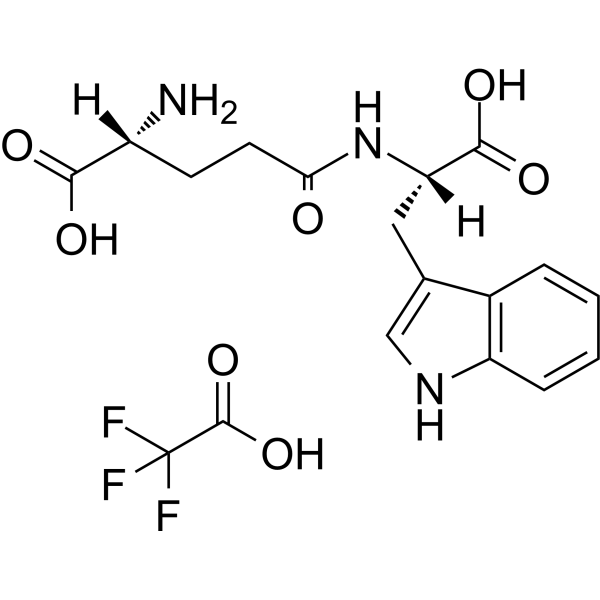 0 ImagesCat. No.: HY-14743ACAS No.: 2828433-07-2Synonyms: SCV 07 TFA; Gamma-D-glutamyl-L-tryptophan TFAGolotimod TFA (SCV 07 TFA), an immunomodulating peptide with antimicrobial activity, significantly increases the efficacy of antituberculosis therapy, stimulates thymic and splenic cell proliferation, and improves macrophage function. Golotimod TFA (SCV 07 TFA) inhibits STAT3 signaling and modulates the duration and severity of oral mucositis in animal models that received radiation or a combination of radiation and Cisplatin. Golotimod TFA (SCV 07 TFA) is also a potential therapeutic for recurrent genital herpes simplex virus type 2 (HSV-2).
-
Dapdiamide A acetate
 0 ImagesCat. No.: HY-N5197ADapdiamide A acetate is an Antibiotic. Dapdiamide A acetate is isolated from P. agglomerans. Dapdiamide A acetate targets the plant pathogen Erwinia amylovora. Dapdiamide A acetate can be used for the research of fire blight.
-
N-Desmethyl clomipramine
 0 ImagesN-Desmethyl clomipramine (Desmethylclomipramine; Norclomipramine) is the orally active major active metabolite of the tricyclic antidepressant Clomipramine (HY-B0457A), possessing multiple activities including anti-inflammatory, antioxidant, antibacterial, and antiparasitic effects. N-Desmethyl clomipramine blocks autophagosome-lysosome fusion, leading to the accumulation of LC3-II, p62, ATG7, WIPI2, and ATG5-12, reactivates the p53/p21 pathway, induces apoptosis through C-PARP and C-CAS3, and inhibits the proliferation, migration, and invasion of renal cancer cells. N-Desmethyl clomipramine inhibits LdTOPIA, inducing R-loop accumulation in the nucleus of Leishmania, ultimately causing parasite death. N-Desmethyl clomipramine can be used for research on depression, metastatic renal cell carcinoma, and leishmaniasis.
-
Ethambutol-d10
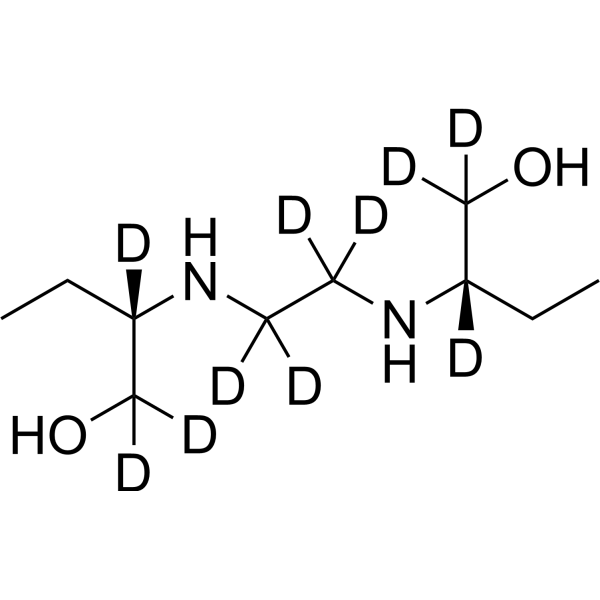 0 ImagesSynonyms: Emb-d10Ethambutol-d10 is the deuterium labeled Ethambutol. Ethambutol is a bacteriostatic antimycobacterial agent, which obstructs the formation of cell wall by inhibiting arabinosyl transferases.




