



Ciprofloxacin GMP is Ciprofloxacin (HY-B0356) produced by using GMP guidelines. GMP small molecules works appropriately as an auxiliary reagent for cell therapy manufacture. Ciprofloxacin (Bay-09867) is an orally active, blood-brain barrier permeable fluoroquinolone antibacterial agent. Ciprofloxacin exerts bactericidal effects primarily by inhibiting topoisomerase II and IV. Ciprofloxacin inhibits the proliferation of human dental pulp stem cells and chondrocytes from young rats, and also activates the Akt signaling pathway and upregulates markers such as β-catenin and Nanog to maintain the morphological characteristics of stem cells. Ciprofloxacin induces significant neurotoxicity and tissue damage, including reducing serotonin and glutathione levels in the brain, inducing oxidative stress and depression-like behaviors, and causing articular cartilage damage. Ciprofloxacin can be applied to research related to infections of necrotic young permanent teeth and neurotoxicity.
For research use only. We do not sell to patients.
- CAS No.: 85721-33-1
- Formula: C17H18FN3O3
- Molecular Weight:331.34
-
Storage:
Please store the product under the recommended conditions in the Certificate of Analysis.


To place orders, for customer services and technical support, please contact: MedChemExpress USA
Tel: 609-228-6898 E-mail: [email protected] [email protected]


-
 Biological Activity
-
Chemical Information
- Protocols
- Purity & Documentation
- References
-
 Help & FAQs


-
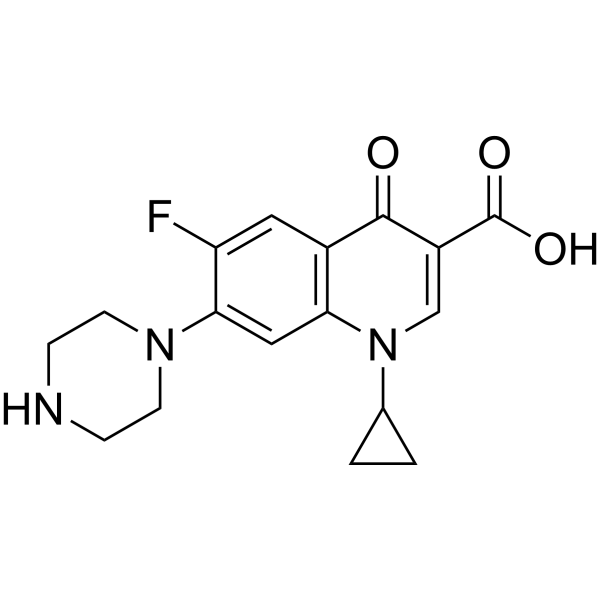
HY-B0356
CiprofloxacinTopoisomerase IV Inhibitor -

HY-B0356R
Ciprofloxacin (Standard)Reference Standard -
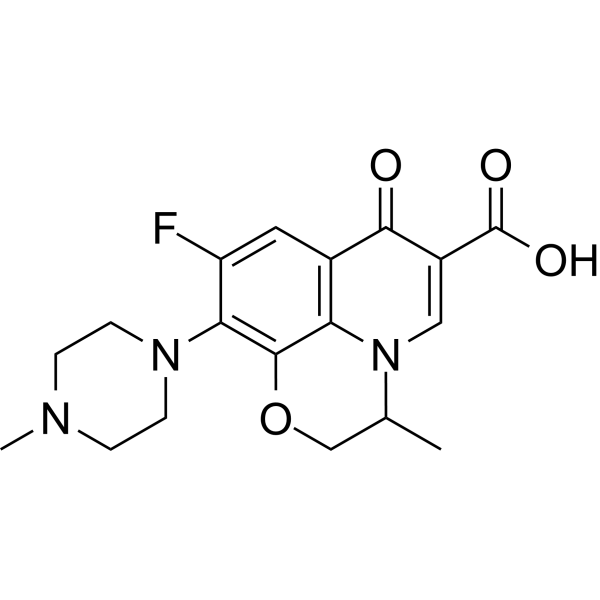
HY-B0125
OfloxacinBacterial Inhibitor -
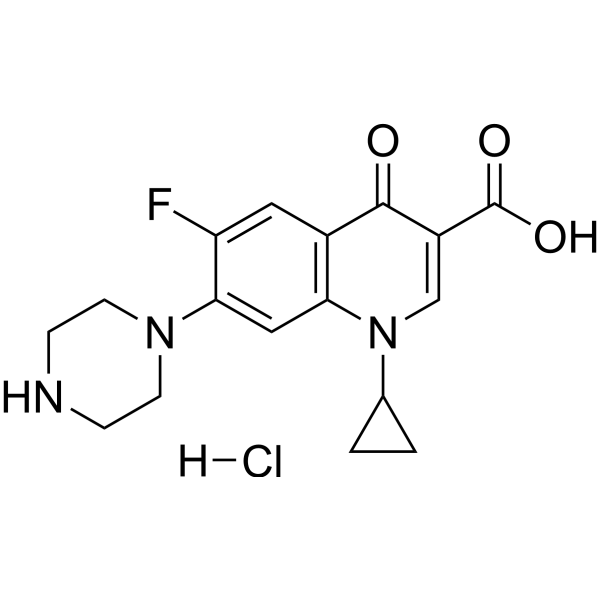
HY-B0356A
Ciprofloxacin monohydrochlorideTopoisomerase IV Inhibitor -

HY-B0125R
Ofloxacin (Standard)Bacterial Inhibitor -
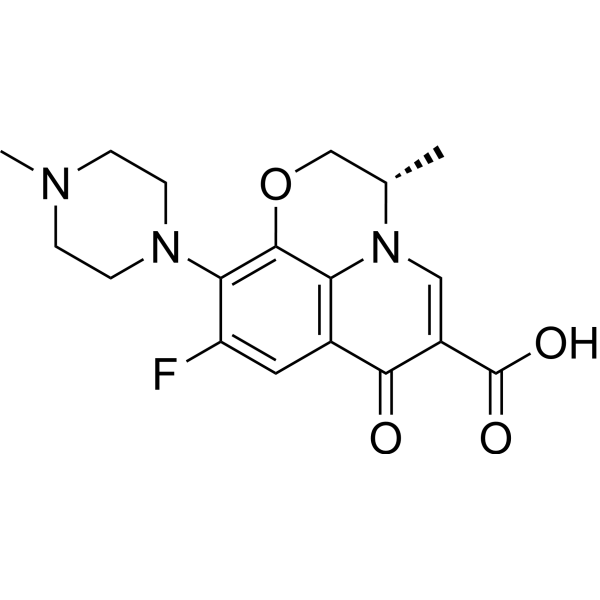
HY-B0330
LevofloxacinDNA Gyrase/Topoisomerase Inhibitor -
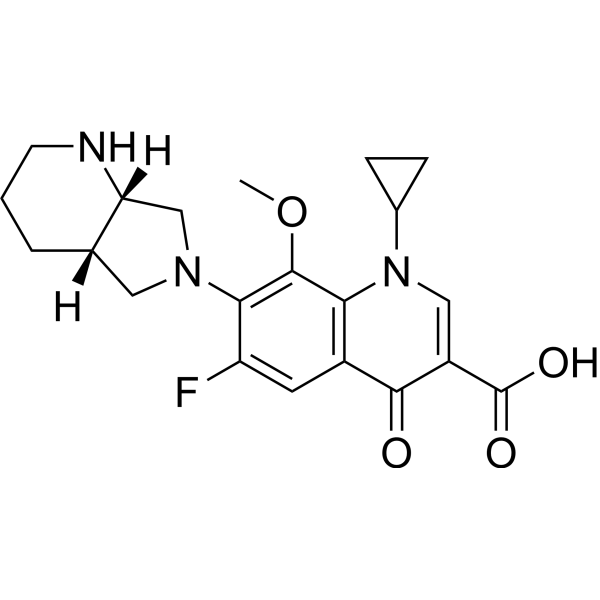
HY-66011A
MoxifloxacinAntibacterial Agent -
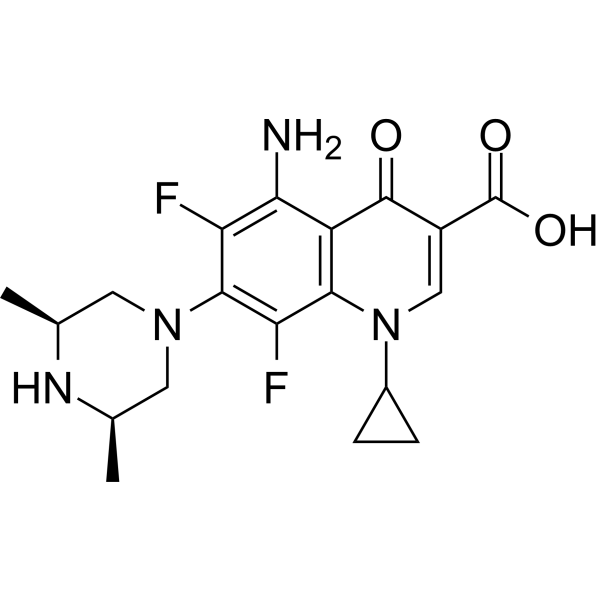
HY-B0308
SparfloxacinBacterial Inhibitor -
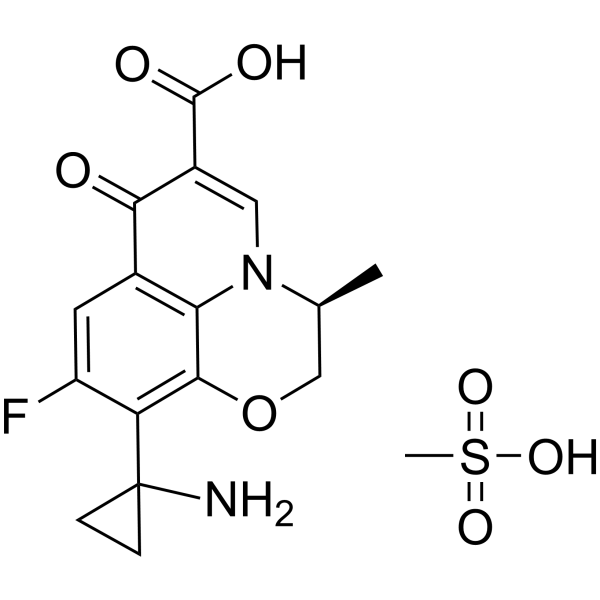
HY-B0724A
Pazufloxacin mesylateAntimicrobial Agent -

HY-B0330R
Levofloxacin (Standard)DNA Gyrase/Topoisomerase Inhibitor -
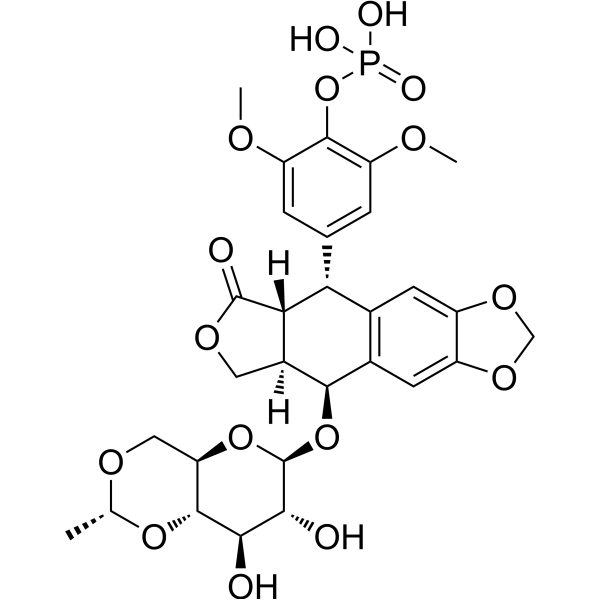
HY-13630
Etoposide phosphateTopoisomerase II Inhibitor -
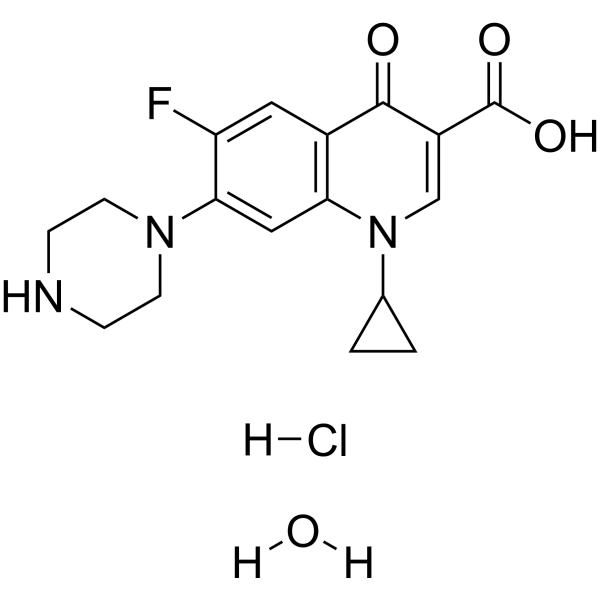
HY-B0356B
Ciprofloxacin hydrochloride monohydrateTopoisomerase IV Inhibitor
All Topoisomerase Isoforms
More

Biological Activity
Description
Cellular Effect
|
Cell Line

|
Type | Value | Description | References |
|---|---|---|---|---|
| A-431 | IC50 |
135 μM
Compound: 1
|
Inhibition of human A431 cell proliferation by MTT assay
Inhibition of human A431 cell proliferation by MTT assay
|
[PMID: 19595598] |
| A-431 | IC50 |
137 μM
Compound: Ciprofloxacin
|
Cytotoxicity against human A431 cells assessed as reduction in cell viability by MTT assay
Cytotoxicity against human A431 cells assessed as reduction in cell viability by MTT assay
|
[PMID: 30660827] |
| A-431 | IC50 |
128 μM
Compound: CFX
|
Anticancer activity against human A-431 cells assessed as reduction in cell viability incubated for 72 hrs by MTT assay
Anticancer activity against human A-431 cells assessed as reduction in cell viability incubated for 72 hrs by MTT assay
|
[PMID: 31881454] |
| A549 | IC50 |
280 μM
Compound: 1
|
Antitumor activity against human A549 cells after 5 days by MTT assay
Antitumor activity against human A549 cells after 5 days by MTT assay
|
[PMID: 19595598] |
| A549 | IC50 |
100 μM
Compound: Ciprofloxacin
|
Antiproliferative activity against human A549 cells after 24 hrs by BrdU incorporation assay
Antiproliferative activity against human A549 cells after 24 hrs by BrdU incorporation assay
|
[PMID: 27555286] |
| A549 | IC50 |
302 nM
Compound: Ciprofloxacin
|
Antiproliferative activity against human A549 cells after 72 hrs by MTT assay
Antiproliferative activity against human A549 cells after 72 hrs by MTT assay
|
[PMID: 30660827] |
| A549 | IC50 |
0.33 mM
Compound: CFX
|
Antitumor activity against human A549 cells assessed as reduction in cell viability incubated for 4 hrs by MTT assay
Antitumor activity against human A549 cells assessed as reduction in cell viability incubated for 4 hrs by MTT assay
|
[PMID: 31881454] |
| B-cell | IC50 |
123 μM
Compound: ciprofloxacin
|
Antiproliferative activity against Theileria parva-induced proliferation of bovine B lymphocyte assessed as inhibition of [3H]thymidine uptake after 48 hrs
Antiproliferative activity against Theileria parva-induced proliferation of bovine B lymphocyte assessed as inhibition of [3H]thymidine uptake after 48 hrs
|
[PMID: 19075064] |
| C8166 | EC50 |
100 μM
Compound: CPX, ciprofloxacin
|
In vitro antiviral activity against HIV-1 IIIB in C8166 (human CD4) cells.
In vitro antiviral activity against HIV-1 IIIB in C8166 (human CD4) cells.
|
[PMID: 11020296] |
| CAPAN-1 | IC50 |
100 μM
Compound: Ciprofloxacin
|
Cytotoxicity against human Capan1 cells assessed as reduction in cell viability by MTT assay
Cytotoxicity against human Capan1 cells assessed as reduction in cell viability by MTT assay
|
[PMID: 30660827] |
| CHO | CC50 |
512 μM
Compound: CPFX
|
Cytotoxicity against CHO cells assessed as reduction in cell viability incubated for 72 hrs by MTT assay
Cytotoxicity against CHO cells assessed as reduction in cell viability incubated for 72 hrs by MTT assay
|
[PMID: 31525660] |
| CHO | IC50 |
150 μM
Compound: Ciprofloxacin
|
Cytotoxicity against CHO cells assessed as reduction in cell viability
Cytotoxicity against CHO cells assessed as reduction in cell viability
|
[PMID: 30660827] |
| CHO | IC50 |
150 μM
Compound: CFX
|
Cytotoxicity against Chinese hamster CHO cells assessed as reduction in cell viability by MTT assay
Cytotoxicity against Chinese hamster CHO cells assessed as reduction in cell viability by MTT assay
|
[PMID: 31881454] |
| CT26 | IC50 |
0.33 mM
Compound: CFX
|
Antitumor activity against mouse CT26 cells assessed as reduction in cell viability incubated for 4 hrs by MTT assay
Antitumor activity against mouse CT26 cells assessed as reduction in cell viability incubated for 4 hrs by MTT assay
|
[PMID: 31881454] |
| EJ | IC50 |
202 μM
Compound: 1
|
Inhibition of human EJ cell proliferation by MTT assay
Inhibition of human EJ cell proliferation by MTT assay
|
[PMID: 19595598] |
| EJ | IC50 |
137 μM
Compound: Ciprofloxacin
|
Cytotoxicity against human EJ cells assessed as reduction in cell viability by MTT assay
Cytotoxicity against human EJ cells assessed as reduction in cell viability by MTT assay
|
[PMID: 30660827] |
| EJ | IC50 |
128 μM
Compound: CFX
|
Anticancer activity against human EJ cells assessed as reduction in cell viability incubated for 72 hrs by MTT assay
Anticancer activity against human EJ cells assessed as reduction in cell viability incubated for 72 hrs by MTT assay
|
[PMID: 31881454] |
| HaCaT | IC50 |
222.1 μM
Compound: CP
|
Cytotoxicity against human HaCaT cells assessed as reduction in cell viability incubated for 72 hrs by MTT assay
Cytotoxicity against human HaCaT cells assessed as reduction in cell viability incubated for 72 hrs by MTT assay
|
[PMID: 31678743] |
| HBL-100 | IC50 |
10.28 μM
Compound: C; Cip
|
Cytotoxicity against human HBL-100 cells assessed as reduction in cell viability incubated for 72 hrs by MTT assay
Cytotoxicity against human HBL-100 cells assessed as reduction in cell viability incubated for 72 hrs by MTT assay
|
[PMID: 34319100] |
| HEK-293T | CC50 |
60 μg/mL
Compound: Ciprofloxacin
|
Cytotoxicity against HEK293T cells assessed as reduction in cell viability measured after 24 hrs by MTT assay
Cytotoxicity against HEK293T cells assessed as reduction in cell viability measured after 24 hrs by MTT assay
|
[PMID: 27720324] |
| HeLa | EC50 |
0.03 μM
Compound: Ciprofloxacin
|
Inhibitory activity against HeLa cell Topoisomerase II
Inhibitory activity against HeLa cell Topoisomerase II
|
10.1016/0960-894X(95)00160-U |
| HeLa | IC50 |
290 μg/mL
Compound: Ciprofloxacin
|
Antiproliferative effect against HeLa cells after 48 hrs
Antiproliferative effect against HeLa cells after 48 hrs
|
[PMID: 17088489] |
| HeLa | IC50 |
120 μg/mL
Compound: Ciprofloxacin
|
Inhibition of metabolic activity in HeLa cells assessed as MTT reduction after 48 hrs
Inhibition of metabolic activity in HeLa cells assessed as MTT reduction after 48 hrs
|
[PMID: 17088489] |
| HeLa | IC50 |
800 μM
Compound: 1
|
Inhibition of human HeLa cell proliferation assessed as bromodeoxyuridine incorporation during DNA synthesis after 48 hrs by ELISA
Inhibition of human HeLa cell proliferation assessed as bromodeoxyuridine incorporation during DNA synthesis after 48 hrs by ELISA
|
[PMID: 19595598] |
| HeLa | IC50 |
270 μM
Compound: 1
|
Inhibition of human HeLa cell proliferation
Inhibition of human HeLa cell proliferation
|
[PMID: 19595598] |
| HeLa | IC50 |
100 μM
Compound: Ciprofloxacin
|
Cytotoxicity against human HeLa cells after 24 hrs by LDH release assay
Cytotoxicity against human HeLa cells after 24 hrs by LDH release assay
|
[PMID: 27018907] |
| Hep 3B2 | IC50 |
100 μM
Compound: Ciprofloxacin
|
Cytotoxicity against human Hep3B cells assessed as reduction in cell viability by MTT assay
Cytotoxicity against human Hep3B cells assessed as reduction in cell viability by MTT assay
|
[PMID: 30660827] |
| HEp-2 | CC50 |
100 μM
Compound: Ciprofloxacin
|
Cytotoxicity against Hep2 cell line
Cytotoxicity against Hep2 cell line
|
[PMID: 16337789] |
| HEp-2 | CC50 |
100 μM
Compound: Ciprofloxacin
|
Cytotoxicity against human Hep2 laryngeal carcinoma cell line
Cytotoxicity against human Hep2 laryngeal carcinoma cell line
|
[PMID: 16337791] |
| HEp-2 | CC50 |
100 μM
Compound: CIP
|
Cytotoxicity against human Hep2 cell line after 72 hrs
Cytotoxicity against human Hep2 cell line after 72 hrs
|
[PMID: 17228862] |
| HEp-2 | CC50 |
100 μM
Compound: CIP
|
Cytotoxicity against human Hep2 cells after 72 hrs by alamar blue assay
Cytotoxicity against human Hep2 cells after 72 hrs by alamar blue assay
|
[PMID: 21425851] |
| HEp-2 | CC50 |
100 μM
Compound: CIP
|
Cytotoxicity against human Hep2 cell line after 72 hrs
Cytotoxicity against human Hep2 cell line after 72 hrs
|
[PMID: 21443219] |
| HepG2 | IC50 |
37.47 μg/mL
Compound: Ciprofloxacin (CPFX)
|
Cytotoxicity was determined for the compound in HepG2 cell line
Cytotoxicity was determined for the compound in HepG2 cell line
|
[PMID: 14980680] |
| HepG2 | CC50 |
100 μM
Compound: CIP
|
Cytotoxicity against human HepG2 cells after 72 hrs
Cytotoxicity against human HepG2 cells after 72 hrs
|
[PMID: 17228862] |
| HepG2 | IC50 |
0.5 mM
Compound: CPX, B-H
|
Cytotoxicity against human HepG2 cells measured after overnight incubation by MTT assay
Cytotoxicity against human HepG2 cells measured after overnight incubation by MTT assay
|
[PMID: 21855181] |
| HepG2 | IC50 |
27 μM
Compound: Ciprofloxacin
|
Cytotoxicity against human HepG2 cells assessed as reduction in cell viability after 7 days by MTT assay
Cytotoxicity against human HepG2 cells assessed as reduction in cell viability after 7 days by MTT assay
|
[PMID: 28237557] |
| HepG2 | CC50 |
138.6 μg/mL
Compound: CPX
|
Cytotoxicity in human HepG2 cells assessed as reduction in cell viability incubated for 24 hrs by ATP bioluminescence assay
Cytotoxicity in human HepG2 cells assessed as reduction in cell viability incubated for 24 hrs by ATP bioluminescence assay
|
[PMID: 30067360] |
| HepG2 | IC50 |
128 μg/mL
Compound: CIP
|
Cytotoxicity against human HepG2 cells after 24 hrs by cell titre-glo assay
Cytotoxicity against human HepG2 cells after 24 hrs by cell titre-glo assay
|
[PMID: 27499455] |
| HepG2 | IC50 |
128 μg/mL
Compound: CIP
|
Cytotoxicity against human HepG2 cells assessed as reduction in cell viability for 24 hrs by Celltiter-Glo assay
Cytotoxicity against human HepG2 cells assessed as reduction in cell viability for 24 hrs by Celltiter-Glo assay
|
[PMID: 35231579] |
| HepG2 | IC50 |
170 μg/mL
Compound: Ciprofloxacin
|
Cytotoxicity against human HepG2 cells incubated for 40 hrs by celltiter-glo luminescent cell viability assay
Cytotoxicity against human HepG2 cells incubated for 40 hrs by celltiter-glo luminescent cell viability assay
|
[PMID: 38157595] |
| HL-60 | IC50 |
150 μM
Compound: Ciprofloxacin
|
Cytotoxicity against human HL60 cells assessed as reduction in cell viability
Cytotoxicity against human HL60 cells assessed as reduction in cell viability
|
[PMID: 30660827] |
| HL-60 | IC50 |
100 μM
Compound: Ciprofloxacin
|
Cytotoxicity against human HL60 cells assessed as reduction in cell viability by MTT assay
Cytotoxicity against human HL60 cells assessed as reduction in cell viability by MTT assay
|
[PMID: 30660827] |
| HL-60 | IC50 |
302 nM
Compound: Ciprofloxacin
|
Antiproliferative activity against human HL60 cells after 72 hrs by MTT assay
Antiproliferative activity against human HL60 cells after 72 hrs by MTT assay
|
[PMID: 30660827] |
| HL-60 | IC50 |
150 μM
Compound: CFX
|
Cytotoxicity against human HL-60 cells assessed as reduction in cell viability by MTT assay
Cytotoxicity against human HL-60 cells assessed as reduction in cell viability by MTT assay
|
[PMID: 31881454] |
| K562 | IC50 |
150 μM
Compound: 1
|
Inhibition of human K562 cell proliferation by sulphorodhamine B assay
Inhibition of human K562 cell proliferation by sulphorodhamine B assay
|
[PMID: 19595598] |
| KB | IC50 |
160 μM
Compound: 1
|
Inhibition of human KB cell proliferation by MTT assay
Inhibition of human KB cell proliferation by MTT assay
|
[PMID: 19595598] |
| KB | IC50 |
128 μM
Compound: CFX
|
Anticancer activity against human KB cells assessed as reduction in cell viability incubated for 72 hrs by MTT assay
Anticancer activity against human KB cells assessed as reduction in cell viability incubated for 72 hrs by MTT assay
|
[PMID: 31881454] |
| L02 | IC50 |
4.05 μg/mL
Compound: Ciprofloxacin
|
Cytotoxicity against human L02 cells after 72 hrs by CCK-8 assay
Cytotoxicity against human L02 cells after 72 hrs by CCK-8 assay
|
[PMID: 35398730] |
| L02 | IC50 |
12.23 μM
Compound: Ciprofloxacin
|
Cytotoxicity against human L02 cells after 72 hrs by CCK-8 assay
Cytotoxicity against human L02 cells after 72 hrs by CCK-8 assay
|
[PMID: 35398730] |
| L02 | IC50 |
64 μg/mL
Compound: Cip
|
Cytotoxicity against human L02 cells assessed as inhibition of cell growth incubated for 24 hrs by MTT assay
Cytotoxicity against human L02 cells assessed as inhibition of cell growth incubated for 24 hrs by MTT assay
|
[PMID: 38096652] |
| L1210 | IC50 |
150 μM
Compound: Ciprofloxacin
|
Cytotoxicity against mouse L1210 cells assessed as reduction in cell viability
Cytotoxicity against mouse L1210 cells assessed as reduction in cell viability
|
[PMID: 30660827] |
| L1210 | IC50 |
100 μM
Compound: Ciprofloxacin
|
Cytotoxicity against mouse L1210 cells assessed as reduction in cell viability by MTT assay
Cytotoxicity against mouse L1210 cells assessed as reduction in cell viability by MTT assay
|
[PMID: 30660827] |
| L1210 | IC50 |
150 μM
Compound: CFX
|
Cytotoxicity against mouse L1210 cells assessed as reduction in cell viability by MTT assay
Cytotoxicity against mouse L1210 cells assessed as reduction in cell viability by MTT assay
|
[PMID: 31881454] |
| LoVo | IC50 |
89 μM
Compound: 1
|
Antitumor activity against human LoVo cells after 5 days by MTT assay
Antitumor activity against human LoVo cells after 5 days by MTT assay
|
[PMID: 19595598] |
| MC3T3-E1 | IC50 |
120 μM
Compound: 1
|
Inhibition of mouse MC3T3-E1 cell proliferation after 48 to 72 hrs
Inhibition of mouse MC3T3-E1 cell proliferation after 48 to 72 hrs
|
[PMID: 19595598] |
| MCF-10A | IC50 |
300 μM
Compound: Ciprofloxacin
|
Cytotoxicity against human MCF10A cells after 48 hrs by WST1 assay
Cytotoxicity against human MCF10A cells after 48 hrs by WST1 assay
|
[PMID: 24513049] |
| MCF7 | IC50 |
476 μM
Compound: 1
|
Antitumor activity against human MCF7 cells after 5 days by MTT assay
Antitumor activity against human MCF7 cells after 5 days by MTT assay
|
[PMID: 19595598] |
| MCF7 | IC50 |
199 μM
Compound: 1
|
Inhibition of human MCF7 cell proliferation by MTT assay
Inhibition of human MCF7 cell proliferation by MTT assay
|
[PMID: 19595598] |
| MCF7 | IC50 |
76 μM
Compound: 1
|
Inhibition of human MCF7 cell proliferation after 5 days by MTT assay
Inhibition of human MCF7 cell proliferation after 5 days by MTT assay
|
[PMID: 19595598] |
| MCF7 | IC50 |
100 μM
Compound: Ciprofloxacin
|
Cytotoxicity against human MCF7 cells assessed as reduction in cell viability by MTT assay
Cytotoxicity against human MCF7 cells assessed as reduction in cell viability by MTT assay
|
[PMID: 30660827] |
| MCF7 | CC50 |
60 μg/mL
Compound: Ciprofloxacin
|
Cytotoxicity against human MCF7 cells assessed as reduction in cell viability measured after 24 hrs by MTT assay
Cytotoxicity against human MCF7 cells assessed as reduction in cell viability measured after 24 hrs by MTT assay
|
[PMID: 27720324] |
| MCF7 | IC50 |
8.85 μM
Compound: C; Cip
|
Antitumor activity against human MCF7 cells assessed as cell growth inhibition incubated for 72 hrs by MTT assay
Antitumor activity against human MCF7 cells assessed as cell growth inhibition incubated for 72 hrs by MTT assay
|
[PMID: 34319100] |
| MCF7 | IC50 |
128 μM
Compound: CFX
|
Anticancer activity against human MCF7 cells assessed as reduction in cell viability incubated for 72 hrs by MTT assay
Anticancer activity against human MCF7 cells assessed as reduction in cell viability incubated for 72 hrs by MTT assay
|
[PMID: 31881454] |
| MG-63 | IC50 |
160 μg/mL
Compound: Ciprofloxacin
|
Antiproliferative effect against MG63 cells assessed as BrdU incorporation into DNA after 48 hrs after 48 hrs
Antiproliferative effect against MG63 cells assessed as BrdU incorporation into DNA after 48 hrs after 48 hrs
|
[PMID: 17088489] |
| MG-63 | IC50 |
150 μg/mL
Compound: Ciprofloxacin
|
Inhibition of metabolic activity in MG63 cells assessed as MTT reduction after 48 hrs
Inhibition of metabolic activity in MG63 cells assessed as MTT reduction after 48 hrs
|
[PMID: 17088489] |
| MG-63 | IC50 |
480 μM
Compound: 1
|
Inhibition of human MG63 cell proliferation assessed as bromodeoxyuridine incorporation during DNA synthesis after 48 hrs by ELISA
Inhibition of human MG63 cell proliferation assessed as bromodeoxyuridine incorporation during DNA synthesis after 48 hrs by ELISA
|
[PMID: 19595598] |
| MRC5 | IC50 |
181 μM
Compound: Ciprofloxacin
|
Cytotoxicity against human MRC5 cells
Cytotoxicity against human MRC5 cells
|
[PMID: 24206766] |
| MRC5 | IC50 |
53.4 μg/mL
Compound: CPF
|
Cytotoxicity against human MRC5 cells assessed as reduction in cell viability incubated for 48 hrs by MTT assay
Cytotoxicity against human MRC5 cells assessed as reduction in cell viability incubated for 48 hrs by MTT assay
|
[PMID: 31431360] |
| MT4 | CC50 |
60 μM
Compound: Ciprofloxacin
|
Concentration required to reduce the viability of mock-infected MT-4 cells by 50%
Concentration required to reduce the viability of mock-infected MT-4 cells by 50%
|
[PMID: 10397494] |
| NCI-H460 | IC50 |
60 μM
Compound: 1
|
Inhibition of human NCI-H460 cell proliferation by sulphorodhamine B assay
Inhibition of human NCI-H460 cell proliferation by sulphorodhamine B assay
|
[PMID: 19595598] |
| NIH3T3 | IC50 |
1000 μM
Compound: 1
|
Inhibition of mouse NIH/3T3 cell proliferation by MTT assay
Inhibition of mouse NIH/3T3 cell proliferation by MTT assay
|
[PMID: 19595598] |
| NIH3T3 | IC50 |
200 μM
Compound: Ciprofloxacin
|
Cytotoxicity against mouse NIH/3T3 cells after 48 hrs by SRB assay
Cytotoxicity against mouse NIH/3T3 cells after 48 hrs by SRB assay
|
[PMID: 23711920] |
| NIH3T3 | IC50 |
305.77 μg/mL
Compound: Ciprofloxacin
|
Cytotoxicity against mouse NIH/3T3 cells assessed as reduction in cell proliferation after 24 hrs by MTT assay
Cytotoxicity against mouse NIH/3T3 cells assessed as reduction in cell proliferation after 24 hrs by MTT assay
|
[PMID: 28174104] |
| Osteoblast | IC50 |
170 μg/mL
Compound: Ciprofloxacin
|
Antiproliferative effect against primary human osteoblasts assessed as BrdU incorporation into DNA after 48 hrs
Antiproliferative effect against primary human osteoblasts assessed as BrdU incorporation into DNA after 48 hrs
|
[PMID: 17088489] |
| Osteoblast | IC50 |
400 μg/mL
Compound: Ciprofloxacin
|
Inhibition of metabolic activity in primary human osteoblasts assessed as MTT reduction after 48 hrs
Inhibition of metabolic activity in primary human osteoblasts assessed as MTT reduction after 48 hrs
|
[PMID: 17088489] |
| PBMC | IC50 |
0.5 mM
Compound: CPX, B-H
|
Cytotoxicity against human PBMC measured after overnight incubation by MTT assay
Cytotoxicity against human PBMC measured after overnight incubation by MTT assay
|
[PMID: 21855181] |
| PC-3 | IC50 |
143 μM
Compound: 1
|
Antitumor activity against human PC3 cells after 5 days by MTT assay
Antitumor activity against human PC3 cells after 5 days by MTT assay
|
[PMID: 19595598] |
| PC-3 | IC50 |
101.4 μM
Compound: CP
|
Antiproliferative activity against human PC3 cells assessed as reduction in cell viability incubated for 72 hrs by MTT assay
Antiproliferative activity against human PC3 cells assessed as reduction in cell viability incubated for 72 hrs by MTT assay
|
[PMID: 31678743] |
| SH-SY5Y | IC50 |
0.5 mM
Compound: CPX, B-H
|
Cytotoxicity against human SH-SY5Y cells measured after overnight incubation by MTT assay
Cytotoxicity against human SH-SY5Y cells measured after overnight incubation by MTT assay
|
[PMID: 21855181] |
| SK-MEL | IC50 |
196 μM
Compound: 1
|
Inhibition of human SK-MEL cell proliferation by MTT assay
Inhibition of human SK-MEL cell proliferation by MTT assay
|
[PMID: 19595598] |
| SK-MEL3 | IC50 |
137 μM
Compound: Ciprofloxacin
|
Cytotoxicity against human SK-MEL-3 cells assessed as reduction in cell viability by MTT assay
Cytotoxicity against human SK-MEL-3 cells assessed as reduction in cell viability by MTT assay
|
[PMID: 30660827] |
| SK-MEL3 | IC50 |
128 μM
Compound: CFX
|
Anticancer activity against human SK-MEL3 cells assessed as reduction in cell viability incubated for 72 hrs by MTT assay
Anticancer activity against human SK-MEL3 cells assessed as reduction in cell viability incubated for 72 hrs by MTT assay
|
[PMID: 31881454] |
| SMMC-7721 | IC50 |
137 μM
Compound: Ciprofloxacin
|
Cytotoxicity against human SMMC7721 cells assessed as reduction in cell viability by MTT assay
Cytotoxicity against human SMMC7721 cells assessed as reduction in cell viability by MTT assay
|
[PMID: 30660827] |
| SMMC-7721 | IC50 |
100 μM
Compound: Ciprofloxacin
|
Antiproliferative activity against human SMMC7721 cells by MTT assay
Antiproliferative activity against human SMMC7721 cells by MTT assay
|
[PMID: 30660827] |
| Splenocyte | IC50 |
40 μM
Compound: CIPRO
|
Cytotoxicity against concanavalin-stimulated BALB/c mouse splenocytes after 72 hrs by resazurin dye reduction method
Cytotoxicity against concanavalin-stimulated BALB/c mouse splenocytes after 72 hrs by resazurin dye reduction method
|
[PMID: 19908867] |
| SW-620 | IC50 |
200.4 μM
Compound: CP
|
Antiproliferative activity against human SW620 cells assessed as reduction in cell viability incubated for 72 hrs by MTT assay
Antiproliferative activity against human SW620 cells assessed as reduction in cell viability incubated for 72 hrs by MTT assay
|
[PMID: 31678743] |
| SW480 | IC50 |
128 μM
Compound: 1
|
Inhibition of human SW480 cell proliferation by MTT assay
Inhibition of human SW480 cell proliferation by MTT assay
|
[PMID: 19595598] |
| SW480 | IC50 |
160.4 μM
Compound: CP
|
Antiproliferative activity against human SW480 cells assessed as reduction in cell viability incubated for 72 hrs by MTT assay
Antiproliferative activity against human SW480 cells assessed as reduction in cell viability incubated for 72 hrs by MTT assay
|
[PMID: 31678743] |
| SW480 | IC50 |
137 μM
Compound: Ciprofloxacin
|
Cytotoxicity against human SW480 cells assessed as reduction in cell viability by MTT assay
Cytotoxicity against human SW480 cells assessed as reduction in cell viability by MTT assay
|
[PMID: 30660827] |
| SW480 | IC50 |
128 μM
Compound: CFX
|
Anticancer activity against human SW480 cells assessed as reduction in cell viability incubated for 72 hrs by MTT assay
Anticancer activity against human SW480 cells assessed as reduction in cell viability incubated for 72 hrs by MTT assay
|
[PMID: 31881454] |
| THP-1 | IC50 |
60.5 μM
Compound: Ciprofloxacin
|
Cytotoxicity against human THP1 cells assessed as cell viability after 72 hrs by MTT assay
Cytotoxicity against human THP1 cells assessed as cell viability after 72 hrs by MTT assay
|
[PMID: 24650715] |
| U-373MG ATCC | IC50 |
96 μM
Compound: 1
|
Antitumor activity against human U373MG cells after 5 days by MTT assay
Antitumor activity against human U373MG cells after 5 days by MTT assay
|
[PMID: 19595598] |
| V79 | IC50 |
380 μg/mL
Compound: 40a
|
Mammalian cell cytotoxicity test in chinese hamster V79 cells (clonogenic cytotoxicity)
Mammalian cell cytotoxicity test in chinese hamster V79 cells (clonogenic cytotoxicity)
|
[PMID: 1469702] |
| V79 | IC50 |
200 μg/mL
Compound: 21 Ciprofloxacin
|
Clonogenic cytotoxicity against Hamster V-79 cells
Clonogenic cytotoxicity against Hamster V-79 cells
|
[PMID: 8145222] |
| V79 | IC50 |
320 μg/mL
Compound: 22
|
Clonogenic cytotoxicity against Chinese hamster V-79 cells
Clonogenic cytotoxicity against Chinese hamster V-79 cells
|
[PMID: 7473575] |
| V79 | IC50 |
1000 μM
Compound: 1
|
Inhibition of chinese hamster V79 cell proliferation assessed as bromodeoxyuridine incorporation during DNA synthesis after 48 hrs by ELISA
Inhibition of chinese hamster V79 cell proliferation assessed as bromodeoxyuridine incorporation during DNA synthesis after 48 hrs by ELISA
|
[PMID: 19595598] |
| V79-4 | IC50 |
58.55 μg/mL
Compound: Ciprofloxacin (CPFX)
|
Cytotoxicity was determined for the compound in V79-4 cell line
Cytotoxicity was determined for the compound in V79-4 cell line
|
[PMID: 14980680] |
| Vero | IC50 |
188.5 μM
Compound: Ciprofloxacin
|
Cytotoxicity against african green monkey Vero cells after 72 hrs by MTT assay
Cytotoxicity against african green monkey Vero cells after 72 hrs by MTT assay
|
[PMID: 19131245] |
| Vero | CC50 |
600.8 μM
Compound: CPFX
|
Cytotoxicity against african green monkey Vero cells after 72 hrs by MTT assat
Cytotoxicity against african green monkey Vero cells after 72 hrs by MTT assat
|
[PMID: 21146257] |
| Vero | IC50 |
192 μM
Compound: Ciprofloxacin
|
Cytotoxicity against african green monkey Vero cells
Cytotoxicity against african green monkey Vero cells
|
[PMID: 24206766] |
| Vero | CC50 |
128 μg/mL
Compound: CPFX
|
Cytotoxicity against African green monkey Vero cells assessed as reduction in cell viability after 72 hrs by MTT assay
Cytotoxicity against African green monkey Vero cells assessed as reduction in cell viability after 72 hrs by MTT assay
|
[PMID: 30025351] |
| Vero | CC50 |
128 μg/mL
Compound: Ciprofloxacin
|
Cytotoxicity in African green monkey Vero cells
Cytotoxicity in African green monkey Vero cells
|
[PMID: 31358466] |
| Vero | CC50 |
512 μg/mL
Compound: CPFX
|
Cytotoxicity against African green monkey Vero cells assessed as reduction in cell viability after 72 hrs by MTT assay
Cytotoxicity against African green monkey Vero cells assessed as reduction in cell viability after 72 hrs by MTT assay
|
[PMID: 30690301] |
| WI-38 | IC50 |
100 μM
Compound: Ciprofloxacin
|
Antiproliferative activity against human WI38 cells after 24 hrs by BrdU incorporation assay
Antiproliferative activity against human WI38 cells after 24 hrs by BrdU incorporation assay
|
[PMID: 27555286] |
In Vitro
Ciprofloxacin (GMP) (2.5-10 μg/mL; 24-72 h) preserves the stem cell-like spindle morphology of immortalized human dermal papilla cells, and concentrations of 5 and 10 μg/mL for 72 h significantly increase cell aggregation size and number[1].
Ciprofloxacin (GMP) (10 μg/mL; 72 h) preserves CD133 stem cell marker expression and prevents increased procollagen type I fibroblast marker expression in immortalized human dermal papilla cells[1].
Ciprofloxacin (GMP) (10 μg/mL; 24-72 h) prevents time-dependent loss of CD133, integrin β1, and ALDH1A1 stem cell markers and increases in procollagen type I fibroblast marker in immortalized human dermal papilla cells; concentrations of 2.5-10 μg/mL for 72 h modulate these markers in a dose-dependent manner[1].
Ciprofloxacin (GMP) (2.5-10 μg/mL; 72 h) activates the Akt/GSK3β/β-catenin pathway in immortalized human dermal papilla cells in vitro in a dose-dependent manner, increasing activated Akt, inactivated GSK3β, and β-catenin levels[1].
Ciprofloxacin (GMP) (2.5-10 μg/mL; 72 h) activates the Akt/GSK3β/β-catenin pathway and upregulates EMT transcription factors (ZEB1, Snail) in primary human dermal papilla cells in vitro in a dose-dependent manner[1].
MedChemExpress (MCE) has not independently confirmed the accuracy of these methods. They are for reference only.
-
Cell Line:immortalized human dermal papilla cells (DPCs)
-
Concentration:2.5-10 μg/mL
-
Incubation Time:72 h
-
Result:Increased levels of phosphorylated (activated) Akt (Ser 473), phosphorylated (inactivated) GSK3β (Ser 9), and β-catenin in a dose-dependent manner, with total Akt and GSK3β levels unchanged.\nSignificantly upregulated ZEB1, Snail, N-cadherin, vimentin, phosphorylated Erk (Thr 202/Tyr 204), Nanog, and Oct-4 in a dose-dependent manner, with minimal change in Slug levels.
Parmacokinetics
In Vivo
MedChemExpress (MCE) has not independently confirmed the accuracy of these methods. They are for reference only.
-
Animal Model:Sprague-Dawley (SD) (male, 4-week-old, drug-induced knee joint articular cartilage damage)[2]
-
Dosage:400 mg/kg; 800 mg/kg; 1200 mg/kg
-
Administration:i.g.; daily; 7 days
-
Result:Showed no obvious cartilage alterations at 400 mg/kg.
Caused severe cartilage lesions including matrix swelling and chondrocyte loss, and significantly decreased femoral condyle cartilage thickness compared to controls at 800 mg/kg or 1200 mg/kg.
Produced a maximum serum concentration (Cmax) of 9.6 mg/L, area under the plasma concentration-time curve (AUC0-∞) of 48.1 mg·h·L-1, and cartilage concentration of 7.4 μg·g-1 at 400 mg/kg on day 1.
Produced a Cmax of 16.3 mg/L, AUC0-∞ of 97.2 mg·h·L-1, and cartilage concentration of 13.4 μg·g-1 at 800 mg/kg on day 1.
Produced a Cmax of 21.8 mg/L, AUC0-∞ of 143.1 mg·h·L-1, and cartilage concentration of 20.3 μg·g-1 at 1200 mg/kg on day 1.
Produced a Cmax of 9.4 mg/L and AUC0-∞ of 51.1 mg·h·L-1 at 400 mg/kg on day 6.
Produced a Cmax of 15.2 mg/L and AUC0-∞ of 95.4 mg·h·L-1 at 800 mg/kg on day 6.
Produced a Cmax of 23.7 mg/L and AUC0-∞ of 148.8 mg·h·L-1 at 1200 mg/kg on day 6.
Demonstrated similar Cmax and AUC0-∞ values on day 1 and day 6, indicating no drug accumulation with repeated dosing.


Chemical Information
-
CAS No. 85721-33-1
-
Molecular Weight 331.34
-
Formula C17H18FN3O3
-
SMILES
O=C(C1=CN(C2CC2)C3=C(C=C(F)C(N4CCNCC4)=C3)C1=O)O
-
Synonyms
Bay-09867 (GMP)
-
Shipping
Room temperature in continental US; may vary elsewhere.
-
Storage
Please store the product under the recommended conditions in the Certificate of Analysis.


Purity & Documentation
References
[1]. Kiratipaiboon C, et al. Ciprofloxacin Improves the Stemness of Human Dermal Papilla Cells. Stem Cells Int. 2016;2016:5831276. [Content Brief]
[3]. Kamocki K, et al. Effects of ciprofloxacin-containing antimicrobial scaffolds on dental pulp stem cell viability-In vitro studies. Arch Oral Biol. 2015;60(8):1131-1137. [Content Brief]
[4]. Ilgin S, et al. Ciprofloxacin-induced neurotoxicity: evaluation of possible underlying mechanisms. Toxicol Mech Methods. 2015;25(5):374-381. [Content Brief]

Calculators
Concentration (start) × Volume (start) = Concentration (final) × Volume (final)


Ciprofloxacin (GMP) Related Classifications
HY-B0356G Related Classifications
 Powered by Bioz
Keywords