



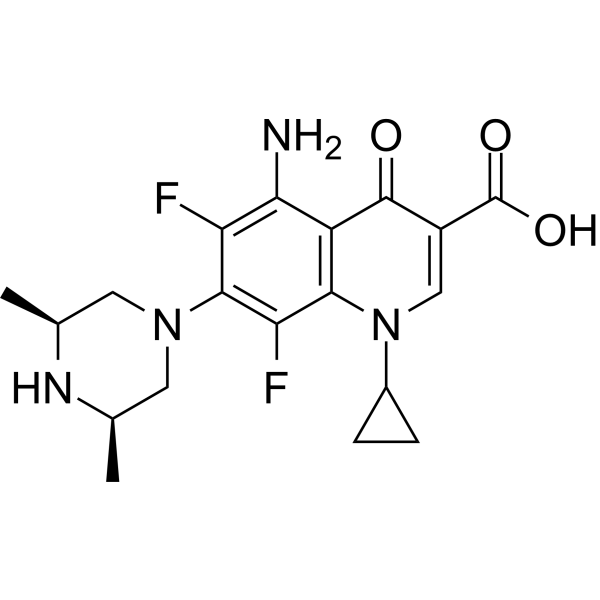
Sparfloxacin
Based on 1 publication(s) in Google Scholar
Sparfloxacin (CI-978) is a fluoroquinolone antibiotic, shows broad and potent antibacterial activity.
Nur für Forschungszwecke. Wir verkaufen nicht an Patienten.
- Reinheit : 99.95%
- CAS. Nr.: 110871-86-8
- Formel: C19H22F2N4O3
- Molecular Weight:392.40
-
Speicherung:
4°C, protect from light
* In solvent : -80°C, 6 months; -20°C, 1 month (protect from light)

To place orders, for customer services and technical support, please contact: MedChemExpress USA
Tel: 609-228-6898 E-mail: [email protected] [email protected]


-
 Biologische Aktivität
-
Chemical Information
-
Lösungsmittel & Löslichkeit
- Protokoll
- Reinheit & Dokumentation
- Verweise
-
 Help & FAQs


-
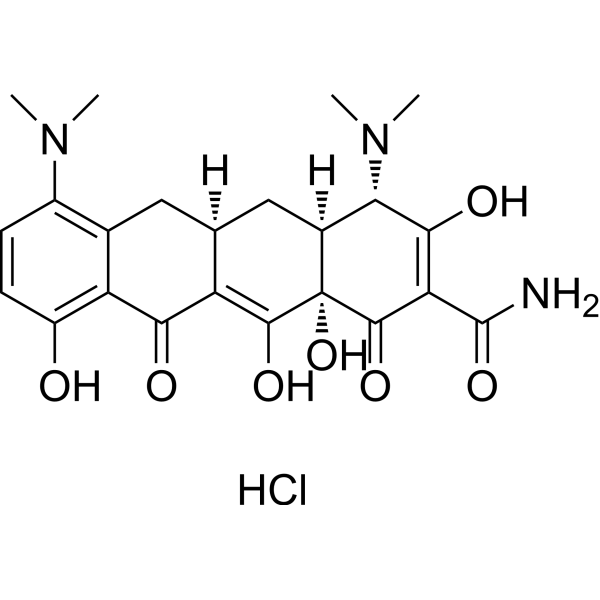
HY-17412
Minocycline hydrochlorideHIF-1α/Glutamate Inhibitor -
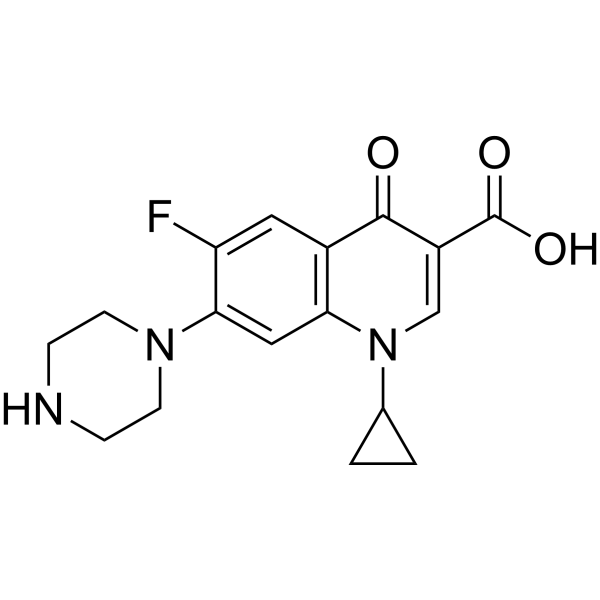
HY-B0356
CiprofloxacinTopoisomerase IV Inhibitor -
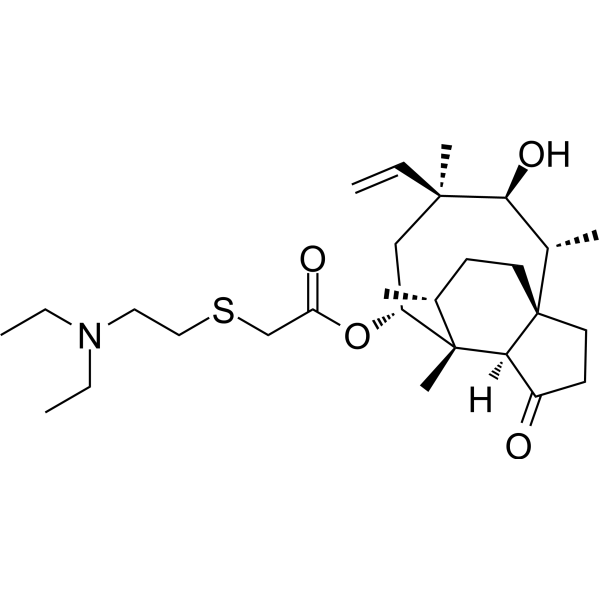
HY-B2060
TiamulinAntibiotic -
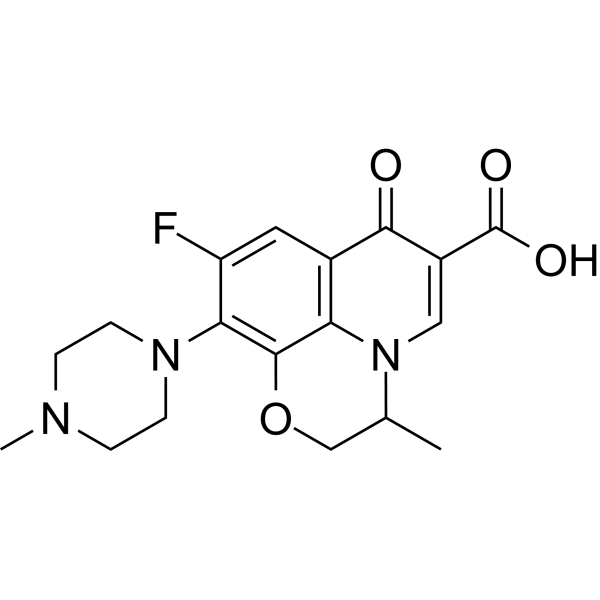
HY-B0125
OfloxacinBacterial Inhibitor -
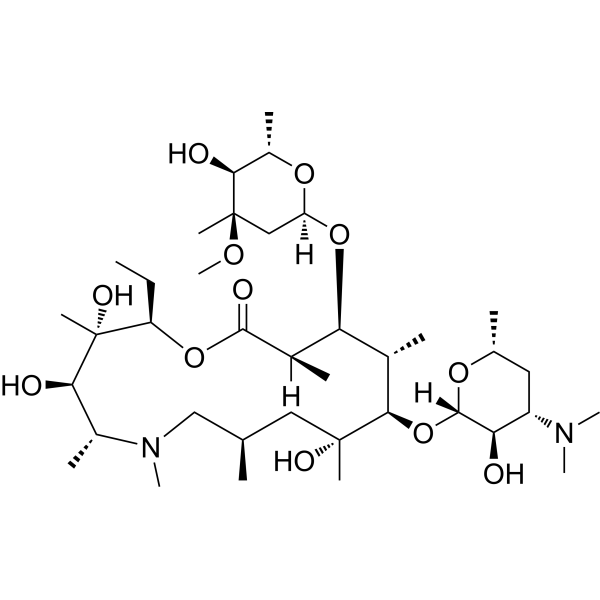
HY-17506
Azithromycin -
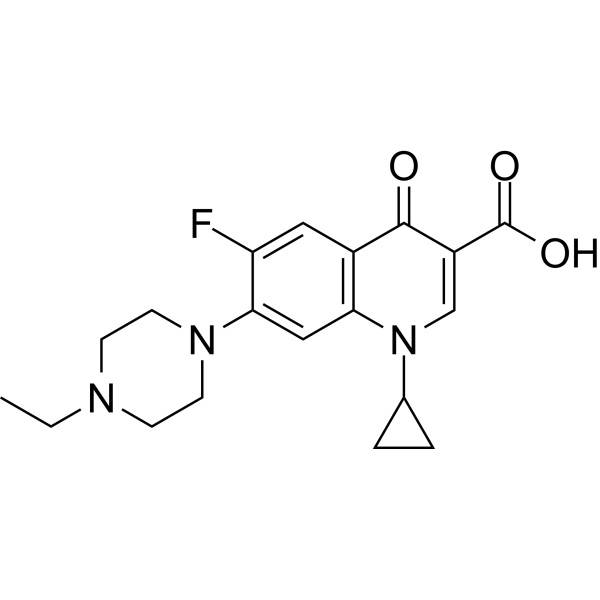
HY-B0502
EnrofloxacinBacterial Inhibitor -
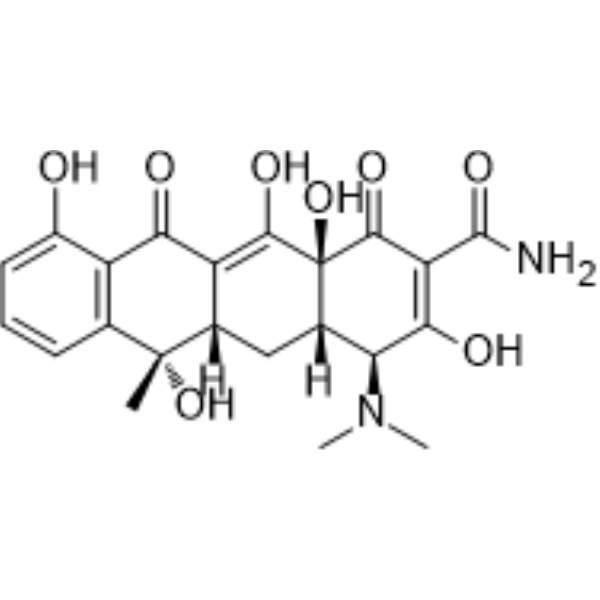
HY-A0107
TetracyclineAntibiotic -

HY-B0125R
Ofloxacin (Standard)Bacterial Inhibitor -
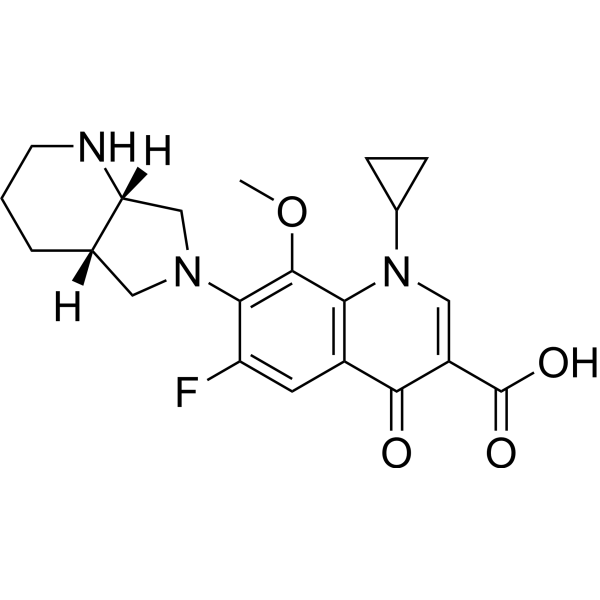
HY-66011A
MoxifloxacinAntibacterial Agent -
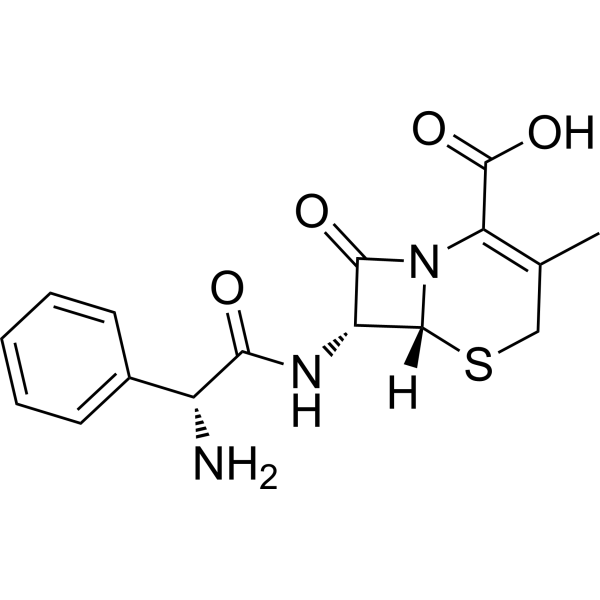
HY-B0200
CephalexinCephalosporin Antibiotic -
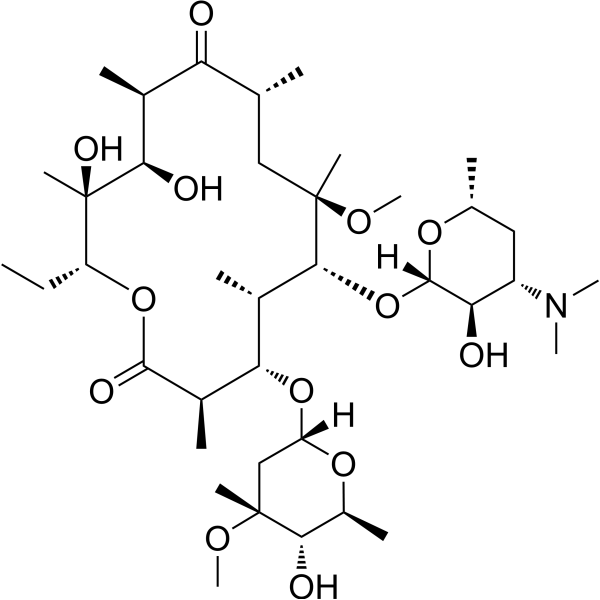
HY-17508
ClarithromycinAntimicrobial Agent -
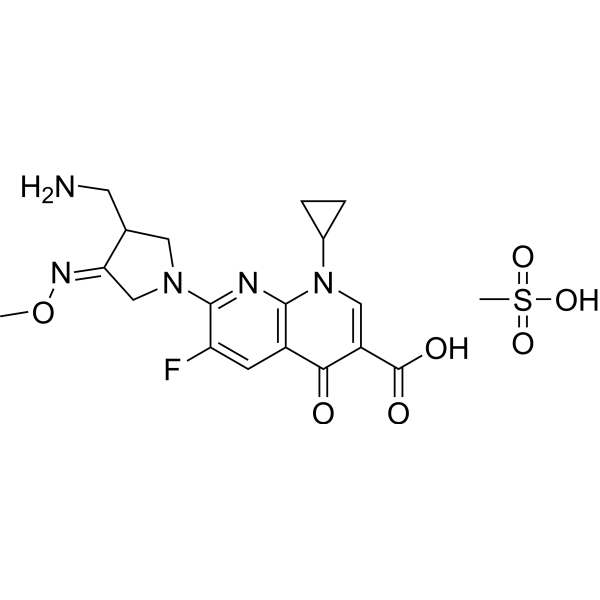
HY-B1050
Gemifloxacin mesylateAntibacterial Agent
Publications Citing Use of MedChemExpress (MCE) Sparfloxacin
MoreAlle Antibiotic Isoform-spezifische Produkte anzeigen
More

Biologische Aktivität
Beschreibung
IC50 & Target
|
Quinolone |
Cellular Effect
|
Cell Line

|
Type | Value | Description | References |
|---|---|---|---|---|
| CHO | IC50 |
88.8 μM
Compound: sparfloxacin
|
Inhibition of Cav1.2 current measured using QPatch automatic path clamp system in CHO cells expressing Cav1.2, beta-2 and alpha-2/delta-1 subunits
Inhibition of Cav1.2 current measured using QPatch automatic path clamp system in CHO cells expressing Cav1.2, beta-2 and alpha-2/delta-1 subunits
|
[PMID: 23812503] |
| HEK293 | IC50 |
>250 μM
Compound: Sparfloxacin
|
Binding affinity to human ERG F656A tetrameric mutant expressed in HEK293 cells assessed as inhibition of tail current measured upon repolarization to -120 mV by patch clamp method
Binding affinity to human ERG F656A tetrameric mutant expressed in HEK293 cells assessed as inhibition of tail current measured upon repolarization to -120 mV by patch clamp method
|
[PMID: 23711922] |
| HEK293 | IC50 |
>250 μM
Compound: Sparfloxacin
|
Binding affinity to human ERG Y652A tetrameric mutant expressed in HEK293 cells assessed as inhibition of tail current measured upon repolarization to -40 mV by patch clamp method
Binding affinity to human ERG Y652A tetrameric mutant expressed in HEK293 cells assessed as inhibition of tail current measured upon repolarization to -40 mV by patch clamp method
|
[PMID: 23711922] |
| HEK293 | IC50 |
127.6 μM
Compound: Sparfloxacin
|
Binding affinity to human ERG Y652A tandem dimeric mutant expressed in HEK293 cells assessed as inhibition of tail current measured upon repolarization to -40 mV by patch clamp method
Binding affinity to human ERG Y652A tandem dimeric mutant expressed in HEK293 cells assessed as inhibition of tail current measured upon repolarization to -40 mV by patch clamp method
|
[PMID: 23711922] |
| HEK293 | IC50 |
21.7 μM
Compound: Sparfloxacin
|
Binding affinity to wild type human ERG expressed in HEK293 cells assessed as inhibition of tail current measured upon repolarization to -40 mV by patch clamp method
Binding affinity to wild type human ERG expressed in HEK293 cells assessed as inhibition of tail current measured upon repolarization to -40 mV by patch clamp method
|
[PMID: 23711922] |
| HEK293 | IC50 |
33.6 μM
Compound: Sparfloxacin
|
Binding affinity to human ERG F656A tandem dimeric mutant expressed in HEK293 cells assessed as inhibition of tail current measured upon repolarization to -120 mV by patch clamp method
Binding affinity to human ERG F656A tandem dimeric mutant expressed in HEK293 cells assessed as inhibition of tail current measured upon repolarization to -120 mV by patch clamp method
|
[PMID: 23711922] |
| HEK293 | IC50 |
46.9 μM
Compound: Sparfloxacin
|
Binding affinity to human ERG S624A tetrameric mutant expressed in HEK293 cells assessed as inhibition of tail current measured upon repolarization to -40 mV by patch clamp method
Binding affinity to human ERG S624A tetrameric mutant expressed in HEK293 cells assessed as inhibition of tail current measured upon repolarization to -40 mV by patch clamp method
|
[PMID: 23711922] |
| HeLa | IC50 |
265 μM
Compound: Sparfloxacin
|
Inhibition of human HeLa cell proliferation
Inhibition of human HeLa cell proliferation
|
[PMID: 19595598] |
| NIH3T3 | IC50 |
122 μM
Compound: Sparfloxacin
|
Inhibition of mouse NIH/3T3 cell proliferation by MTT assay
Inhibition of mouse NIH/3T3 cell proliferation by MTT assay
|
[PMID: 19595598] |
| V79 | IC50 |
370 μg/mL
Compound: 20d
|
Clonogenic cytotoxicity against Chinese hamster V-79 cells
Clonogenic cytotoxicity against Chinese hamster V-79 cells
|
[PMID: 7473575] |
In Vitro
Sparfloxacin (CI-978) shows broad and potent antibacterial activity. Its MICs for 90% of the strains tested are 0.1 to 0.78 μg/ml against gram-positive organisms, such as members of the genera Staphylococcus , Streptococcus and Enterococcus , and 0.0125 to 1.56 μg/ml against gram-negative organisms, such as members of the family Enterobacteriaceae and the genera Pseudomona . Its MICs are 0.025 to 0.78 μg/ml against glucose nonfermenters, 0.2 to 0.78 μg/ml against anaerobes, 0.0125 to 0.05 μg/ml against Legionella. Sparfloxacin (CI-978) showed good oral efficacy against systemic infections with Staphylococcus aureus , Streptococcus pyogenes , Streptococcus pneumoniae , Escherichia coli , and Pseudomonas aeruginosa in mice[1]. Sparfloxacin targets DNA gyrase and inhibits DNA synthesis[2].
MedChemExpress (MCE) has not independently confirmed the accuracy of these methods. They are for reference only.


Chemical Information
-
CAS. Nr. 110871-86-8
-
Appearance Solid
-
Molecular Weight 392.40
-
Formel C19H22F2N4O3
-
Color Light yellow to yellow
-
SMILES
O=C(C1=CN(C2CC2)C3=C(C(N)=C(F)C(N4C[C@H](C)N[C@H](C)C4)=C3F)C1=O)O
-
Synonyms
CI-978; AT-4140
-
Versand
Room temperature in continental US; may vary elsewhere.
-
Speicherung
4°C, protect from light
* In solvent : -80°C, 6 months; -20°C, 1 month (protect from light)


Publications (1)
-
Journal Impact Factor
-
Most Recent
-
Molecules
2026 Mar 5;31(5):864. PMID: 41828851


Lösungsmittel & Löslichkeit
In Vitro:
0.1 M NaOH : 50 mg/mL (127.42 mM; ultrasonic and adjust pH to 11 with NaOH)
DMSO : 5 mg/mL (12.74 mM; ultrasonic and warming and heat to 60°C; Hygroscopic DMSO has a significant impact on the solubility of product, please use newly opened DMSO)
H2O : < 0.1 mg/mL (insoluble)
Please refer to the solubility information to select the appropriate solvent. Once prepared, please aliquot and store the solution to prevent product inactivation from repeated freeze-thaw cycles.
Storage method and period of stock solution: -80°C, 6 months; -20°C, 1 month (protect from light). When stored at -80°C, please use it within 6 months. When stored at -20°C, please use it within 1 month.
Please refer to the solubility information to select the appropriate solvent. Once prepared, please aliquot and store the solution to prevent product inactivation from repeated freeze-thaw cycles.
Storage method and period of stock solution: -80°C, 6 months; -20°C, 1 month (protect from light). When stored at -80°C, please use it within 6 months. When stored at -20°C, please use it within 1 month.
Konzentration (Stammlösung) × Volumen (Stammlösung) = Konzentration (Ziellösung) × Volumen (Ziellösung)


Reinheit & Dokumentation
-
Data Sheet (275 KB)
-
SDS (394 KB)
- English - EN (394 KB)
- Français - FR (394 KB)
- Deutsch - DE (394 KB)
- Norwegian - NO (394 KB)
- Español - ES (394 KB)
- Swedish - SV (394 KB)
- Italian - IT (394 KB)
- Korean - KR (394 KB)
- Portuguese - PT (394 KB)
-
Handling Instructions (2659 KB)
Verweise
[1]. Nakamura, S., et al., In vitro and in vivo antibacterial activities of AT-4140, a new broad-spectrum quinolone. Antimicrob Agents Chemother, 1989. 33(8): p. 1167-73. [Content Brief]
[2]. Pan, X.S. and L.M. Fisher, Targeting of DNA gyrase in Streptococcus pneumoniae by sparfloxacin: selective targeting of gyrase or topoisomerase IV by quinolones. Antimicrob Agents Chemother, 1997. 41(2): p. 471-4. [Content Brief]


Complete Stock Solution Preparation Table
Please refer to the solubility information to select the appropriate solvent. Once prepared, please aliquot and store the solution to prevent product inactivation from repeated freeze-thaw cycles.
Storage method and period of stock solution: -80°C, 6 months; -20°C, 1 month (protect from light). When stored at -80°C, please use it within 6 months. When stored at -20°C, please use it within 1 month.
| Optional Solvent | Concentration Solvent Mass | 1 mg | 5 mg | 10 mg | 25 mg |
|---|---|---|---|---|---|
| DMSO / 0.1 M NaOH | 1 mM | 2.5484 mL | 12.7421 mL | 25.4842 mL | 63.7105 mL |
| 5 mM | 0.5097 mL | 2.5484 mL | 5.0968 mL | 12.7421 mL | |
| 10 mM | 0.2548 mL | 1.2742 mL | 2.5484 mL | 6.3711 mL | |
| 0.1 M NaOH | 15 mM | 0.1699 mL | 0.8495 mL | 1.6989 mL | 4.2474 mL |
| 20 mM | 0.1274 mL | 0.6371 mL | 1.2742 mL | 3.1855 mL | |
| 25 mM | 0.1019 mL | 0.5097 mL | 1.0194 mL | 2.5484 mL | |
| 30 mM | 0.0849 mL | 0.4247 mL | 0.8495 mL | 2.1237 mL | |
| 40 mM | 0.0637 mL | 0.3186 mL | 0.6371 mL | 1.5928 mL | |
| 50 mM | 0.0510 mL | 0.2548 mL | 0.5097 mL | 1.2742 mL | |
| 60 mM | 0.0425 mL | 0.2124 mL | 0.4247 mL | 1.0618 mL | |
| 80 mM | 0.0319 mL | 0.1593 mL | 0.3186 mL | 0.7964 mL | |
| 100 mM | 0.0255 mL | 0.1274 mL | 0.2548 mL | 0.6371 mL |


Sparfloxacin Related Classifications
HY-B0308 Related Classifications
 Powered by Bioz