



Streptococcus Pneumoniae Infection
-
Streptococcus Pneumoniae Infection (24)

- 1
- 2
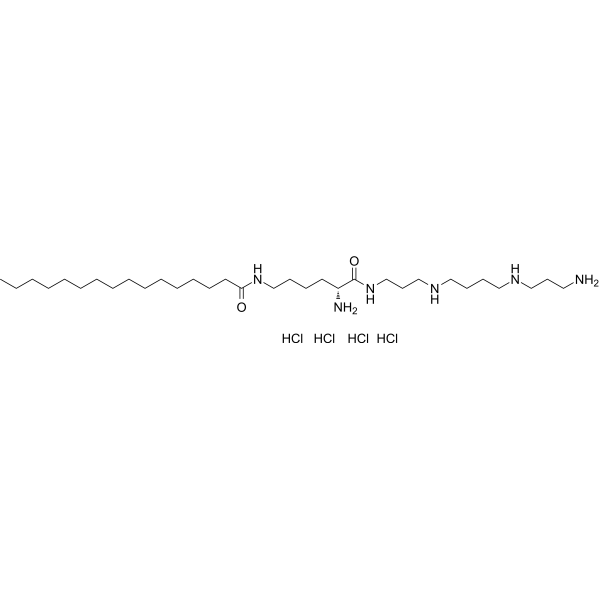
- Formula: C32H72Cl4N6O2
- Molecular Weight: 714.77
AMXT-1501 tetrahydrochloride is a Bacterial agent and polyamine transport system inhibitor. AMXT-1501 tetrahydrochloride targets membrane phospholipids and exhibits antibacterial activity against a variety of Gram-positive and Gram-negative multidrug-resistant bacteria. AMXT-1501 tetrahydrochloride inhibits capsular biosynthesis in Streptococcus pneumoniae. AMXT-1501 tetrahydrochloride targets ornithine decarboxylase and polyamines to inhibit the proliferation of neuroblastoma cells. AMXT-1501 tetrahydrochloride in combination with DFMO (HY-B0744) induces Apoptosis in neuroblastoma cells. AMXT-1501 tetrahydrochloride is applicable to research related to multidrug-resistant bacterial infections, pneumococcal infections, Streptococcus pneumoniae infections, and neuroblastoma.
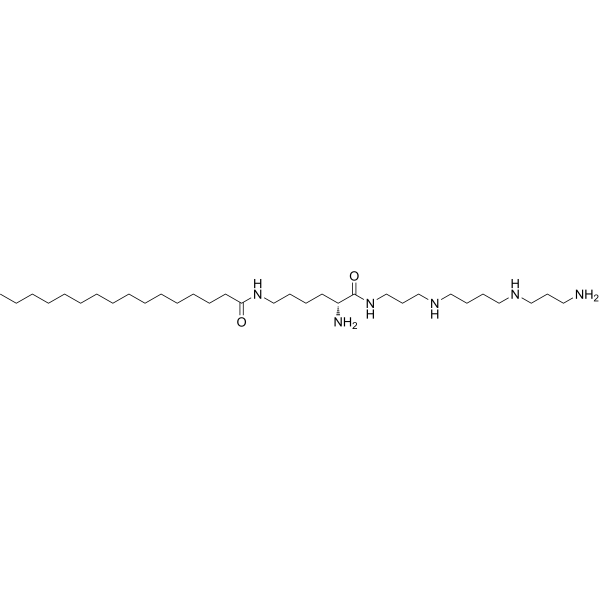
- Formula: C32H68N6O2
- Molecular Weight: 568.92
AMXT-1501 is a Bacterial agent and polyamine transport system inhibitor. AMXT-1501 targets membrane phospholipids and exhibits antibacterial activity against a variety of Gram-positive and Gram-negative multidrug-resistant bacteria. AMXT-1501 inhibits capsular biosynthesis in Streptococcus pneumoniae. AMXT-1501 targets ornithine decarboxylase and polyamines to inhibit the proliferation of neuroblastoma cells. AMXT-1501 in combination with DFMO (HY-B0744) induces Apoptosis in neuroblastoma cells. AMXT-1501 is applicable to research related to multidrug-resistant bacterial infections, pneumococcal infections, Streptococcus pneumoniae infections, and neuroblastoma.
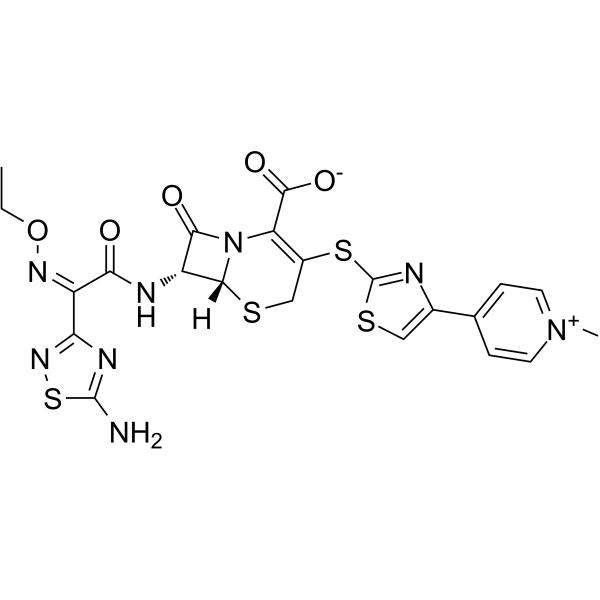
- Formula: C22H20N8O5S4
- Molecular Weight: 604.70
Ceftaroline (T-91825) is a cephalosporin compound and the active form of Ceftaroline fosamil (HY-14737). Ceftaroline exhibits activity against Gram-positive bacteria, Gram-negative bacteria, and some anaerobic bacteria. Ceftaroline binds to penicillin-binding proteins 2 and 2A, thereby inhibiting the synthesis of bacterial peptidoglycan and cell wall, and acts as a bactericide, synergist, and resistance inhibitor. Ceftaroline can be used in research related to complicated skin and soft tissue infections, community-acquired pneumonia, Enterococcus faecalis infective endocarditis, and bacterial infections.
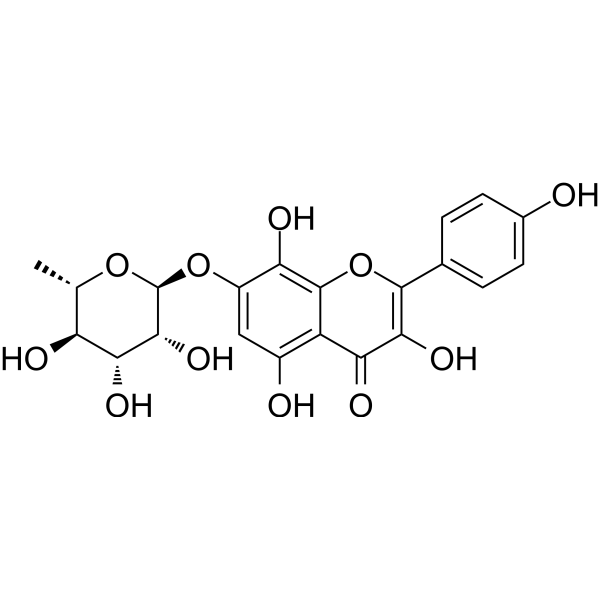
- Formula: C21H20O11
- Molecular Weight: 448.38
Rhodionin is an orally active, multifunctional antivirulence and cytoprotective agent that targets and inhibits Lipase, sortase A (SrtA), CYP2D6 (IC50=0.761 μM), AChE (IC50=2.43-57.5 μM), and DPPH free radicals (IC50=19.49 μM). Rhodionin is isolable from the roots of Rhodiola crenulata. Rhodionin reduces postprandial serum triglyceride levels in mice by inhibiting lipase activity. Rhodionin also binds directly to SrtA to inhibit its transpeptidase activity, thereby reducing the fibrinogen adhesion and surface protein A levels of MRSA, effectively inhibiting biofilm formation and protecting against MRSA-induced cell damage. Rhodionin improves the survival rate of infected mice without affecting MRSA growth, and finds wide application in studies related to hyperlipidemia, exogenous obesity, and pneumonia induced by methicillin-resistant Staphylococcus aureus (MRSA).
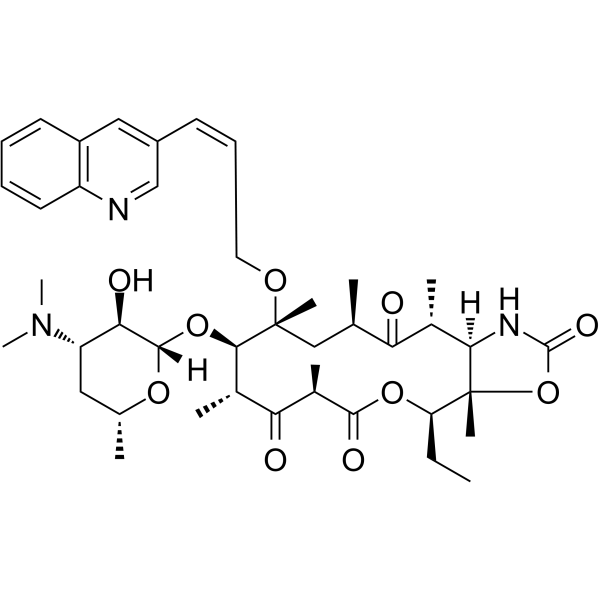
- Formula: C42H59N3O10
- Molecular Weight: 765.93
Cethromycin (ABT-773; Abbott-195773) is an orally effective ketolide antibiotic with broad-spectrum antibacterial activity. Cethromycin binds to domains II/V of the 23S rRNA of the 50S subunit, inhibiting bacterial protein synthesis. Cethromycin can accumulate in lung tissue, alveolar macrophages, epithelial lining fluid, and human polymorphonuclear leukocytes. Cethromycin exhibits potent in vitro activity against a variety of respiratory pathogens, including Mycoplasma pneumoniae. Cethromycin exhibits significant intracellular and pulmonary enrichment and anti-inflammatory effects against mycoplasma pneumonia in mouse models, improving airway obstruction and airway hyperresponsiveness. Cethromycin disrupts the apicoplast and reduces liver-stage parasite burden during the liver stage of Plasmodium berghei. Cethromycin can be used in research related to pneumonia, Staphylococcus aureus infection, gonorrhea, and malaria.

- Formula: C42H53D6N3O10
- Molecular Weight: 771.97
Cethromycin-d6 (ABT-773-d6; Abbott-195773-d6; A-195773-d6) is the d6-labeled Cethromycin (HY-19655). Cethromycin (ABT-773; Abbott-195773) is an orally effective ketolide antibiotic with broad-spectrum antibacterial activity. Cethromycin binds to domains II/V of the 23S rRNA of the 50S subunit, inhibiting bacterial protein synthesis. Cethromycin can accumulate in lung tissue, alveolar macrophages, epithelial lining fluid, and human polymorphonuclear leukocytes. Cethromycin exhibits potent in vitro activity against a variety of respiratory pathogens, including Mycoplasma pneumoniae. Cethromycin exhibits significant intracellular and pulmonary enrichment and anti-inflammatory effects against mycoplasma pneumonia in mouse models, improving airway obstruction and airway hyperresponsiveness. Cethromycin disrupts the apicoplast and reduces liver-stage parasite burden during the liver stage of Plasmodium berghei. Cethromycin can be used in research related to pneumonia, Staphylococcus aureus infection, gonorrhea, and malaria.

- Formula: C20H25N3O4·C4H6O5·1/2H2O
- Molecular Weight: 514.54
Nemonoxacin malate solution is mainly composed of Nemonoxacin malate hemihydrate (HY-14956A). Nemonoxacin (TG-873870) malate is a nonfluorinated quinolone antibiotic. Nemonoxacin malate has broad-spectrum activity against Gram-positive, Gram-negative and atypical pathogens. Nemonoxacin malate can inhibit drug-resistant Streptococcus pneumoniae and Methicillin-resistant Staphylococcus aureus. Nemonoxacin malate can be used for the research of community-acquired pneumonia.

- Formula: C42H62N6O11S
- Molecular Weight: 859.04
Nafithromycin (WCK 4873) is an orally active ketolide antibiotic with activity against Gram-positive bacteria, Gram-negative bacteria, and atypical respiratory pathogens (including drug-resistant strains). Nafithromycin binds to domains II and V of bacterial 23S rRNA and the peptidyl transferase center of the 50S ribosomal subunit, thereby inhibiting protein synthesis. Nafithromycin can be used in research related to bacterial infections.
- Molecular Weight: 150 kDa
Anti-Mouse CD209b Antibody (22D1) is an anti-mouse CD209b IgG1 antibody inhibitor derived from the host Armenian Hamster. Anti-Mouse CD209b Antibody (22D1) can block SIGN-R1. Anti-Mouse CD209b Antibody (22D1) can be used for the researches of infection, inflammation and immunology, such as toxoplasma infection and pneumonia.
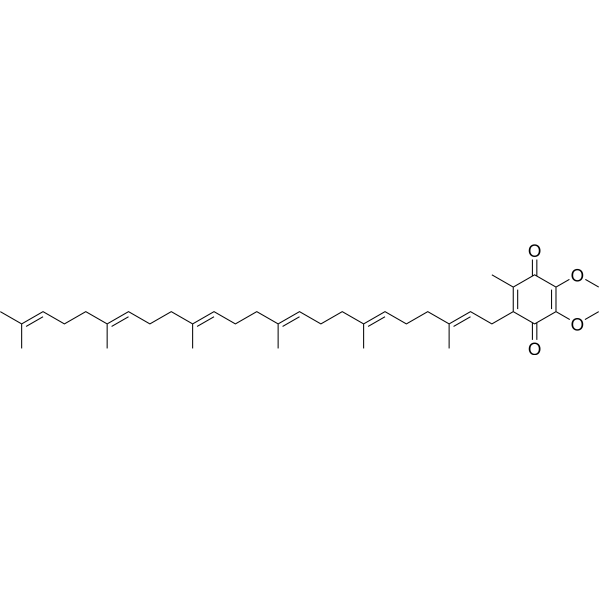
- Formula: C39H58O4
- Molecular Weight: 590.88
Coenzyme Q6 (Ubiquinone 30) is a redox-active benzoquinone lipid and mitochondrial electron carrier. Coenzyme Q6 can be used in research on MASLD, mitochondrial diseases, pneumococcal diseases, and steroid-resistant nephrotic syndrome with FSGS.

- Formula: C22H21ClN8O5S4
- Molecular Weight: 641.17
Ceftaroline hydrochloride is a cephalosporin compound and the active form of Ceftaroline fosamil (HY-14737). Ceftaroline hydrochloride exhibits activity against Gram-positive bacteria, Gram-negative bacteria, and some anaerobic bacteria. Ceftaroline hydrochloride binds to penicillin-binding proteins 2 and 2A, thereby inhibiting the synthesis of bacterial peptidoglycan and cell wall, and acts as a bactericide, synergist, and resistance inhibitor. Ceftaroline hydrochloride can be used in research related to complicated skin and soft tissue infections, community-acquired pneumonia, Enterococcus faecalis infective endocarditis, and bacterial infections.
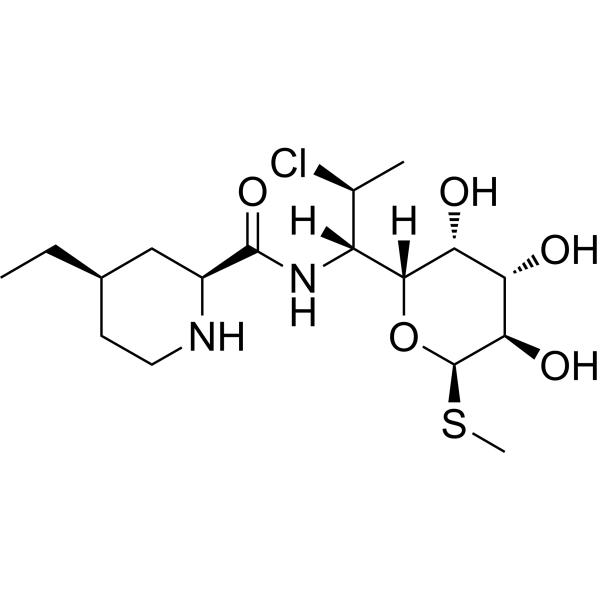
- Formula: C17H31ClN2O5S
- Molecular Weight: 410.96
Pirlimycin is an orally active lincosamide Antibiotic, Clindamycin (HY-B1455) analog, and antimalarial agent. Pirlimycin inhibits Plasmodium growth. Pirlimycin exhibits antibacterial activity against various aerobic bacteria, particularly Staphylococcus and Streptococcus species. Pirlimycin can be used for research on bovine mastitis.

- Formula: C21H24FN3O4
- Molecular Weight: 401.43
DX-619 is an antibacterial agent. DX-619 inhibits bacterial type II topoisomerases, DNA gyrase (GyrA), and topoisomerase IV (GrlA). DX-619 can be used in research related to bacterial infections, pneumonia, and other conditions.

- Formula: C70H94N22O8
- Molecular Weight: 1371.64
Antimicrobial peptide 6b is a cationic macrocyclic antimicrobial peptide. It exhibits broad-spectrum antibacterial and antifungal activities, with a MIC of 1.5-6.2 μg/mL against drug-resistant Gram-positive bacteria, a MIC of 4-25 μg/mL against Gram-negative bacteria, and also shows activity against pathogenic fungi. It acts through a membrane disruption mechanism, has a unique "sandwich" conformation, low hemolytic activity, and can rapidly kill bacteria and eliminate bacterial and fungal biofilms. Antimicrobial peptide 6b can be used in studies of drug-resistant bacterial infections and fungal infections.

- Formula: C20H21F2N3O4
- Molecular Weight: 405.40
DK 507k is an orally active 8-methoxyquinolone Antibacterial agent. DK 507k targets DNA gyrase subunit A (GyrA) and modulates the function of GyrA. DK 507k inhibits the growth of various Gram-positive and Gram-negative bacteria, including Pseudomonas aeruginosa and Methicillin (HY-121544)-resistant Staphylococcus aureus. DK 507k eliminates Penicillin-tolerant Streptococcus pneumoniae from the lungs of mice. DK 507k can be used in research related to sepsis and *Streptococcus pneumoniae* pneumonia.

- Formula: C24H20N4O4
- Molecular Weight: 428.44
ZLWH-67 is a β-Carboline derivative and Antibacterial agent. ZLWH-67 inhibits DNA synthesis, suppresses biofilm formation, and increases reactive oxygen species (ROS) levels. ZLWH-67 exhibits potent in vitro antibacterial activity against MRSA (MIC = 0.5-4 μg/mL), S. epidermidis (MIC = 4 μg/mL), E. faecalis (MIC = 4-8 μg/mL), and S. pneumoniae (MIC = 16 μg/mL). ZLWH-67 displays anti-MRSA effects in murine skin and pneumonia infection models.

- Formula: C76H105N19O10
- Molecular Weight: 1444.77
WK2 is an antibacterial agent. WK2 reduces serum TNF-α production induced by Bacterial infection. WK2 reduces wound size and promotes tissue repair in a skin wound infection model. WK2 exerts anti-inflammatory effects in a pneumonia model. WK2 can be used for research on infectious diseases such as pneumonia caused by bacterial infection.

- Formula: C29H42O6
- Molecular Weight: 486.64
Chinenol A is an antibacterial agent that can be found in the aerial part of Helwingia chinensis. Chinenol A can be used for the research of bacterial infections (staphylococcus aureus infection, mycobacterium tuberculosis infection, streptococcus pneumonia infection).

- Formula: C22H22Cl2N8O5S4
- Molecular Weight: 677.63
Ceftaroline chloride hydrochloride (T-91825 chloride hydrochloride) is a cephalosporin compound and the active form of Ceftaroline fosamil (HY-14737). Ceftaroline chloride hydrochloride exhibits activity against Gram-positive bacteria, Gram-negative bacteria, and some anaerobic bacteria. Ceftaroline chloride hydrochloride binds to penicillin-binding proteins 2 and 2A, thereby inhibiting the synthesis of bacterial peptidoglycan and cell wall, and acts as a bactericide, synergist, and resistance inhibitor. Ceftaroline chloride hydrochloride can be used in research related to complicated skin and soft tissue infections, community-acquired pneumonia, Enterococcus faecalis infective endocarditis, and bacterial infections.

- Formula: C29H45F3N4O7S
- Molecular Weight: 650.75
IDP-73152 mesylate is an orally active bacterial Peptide deformylase inhibitor and Antibiotic. IDP-73152 mesylate exhibits activity against Gram-positive bacteria. IDP-73152 mesylate can be used in the research of infections caused by Streptococcus pneumoniae, Enterococcus faecium and Staphylococcus aureus.
- 1
- 2



