



AMXT-1501
Based on 12 publication(s) in Google Scholar
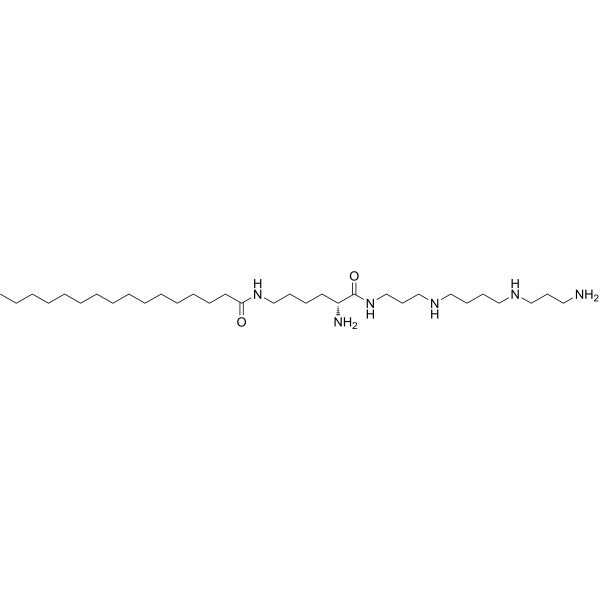
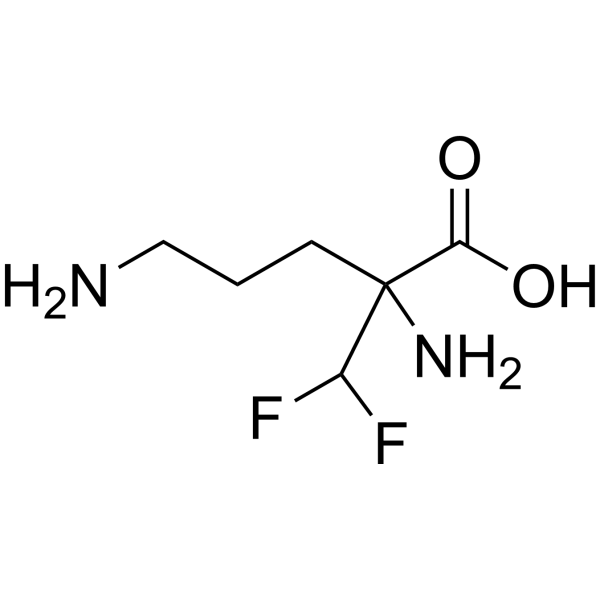
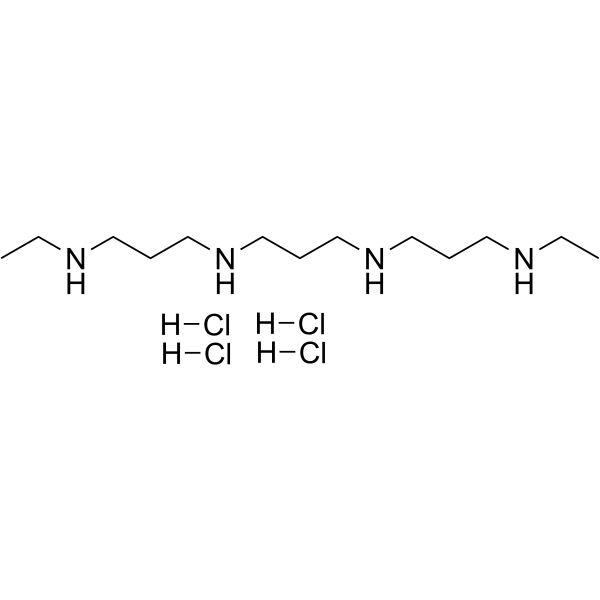
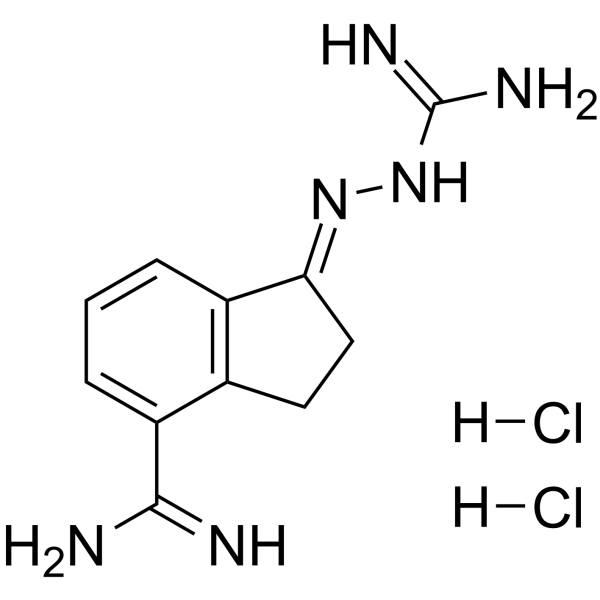
AMXT-1501 is a Bacterial agent and polyamine transport system inhibitor. AMXT-1501 targets membrane phospholipids and exhibits antibacterial activity against a variety of Gram-positive and Gram-negative multidrug-resistant bacteria. AMXT-1501 inhibits capsular biosynthesis in Streptococcus pneumoniae. AMXT-1501 targets ornithine decarboxylase and polyamines to inhibit the proliferation of neuroblastoma cells. AMXT-1501 in combination with DFMO (HY-B0744) induces Apoptosis in neuroblastoma cells. AMXT-1501 is applicable to research related to multidrug-resistant bacterial infections, pneumococcal infections, Streptococcus pneumoniae infections, and neuroblastoma.
연구목적의 판매만을 진행합니다. 환자를 대상으로 한 판매는 하지 않습니다.
- Purity : 99.81%
- CAS No.: 441022-64-6
- 화학식: C32H68N6O2
- 분자량:568.92
-
보관:Powder -20°C, 3 years , 4°C, 2 years ; In solvent -80°C, 6 months , -20°C, 1 month

To place orders, for customer services and technical support, please contact: MedChemExpress USA
Tel: 609-228-6898 E-mail: [email protected] [email protected]


-
 Biological Activity
-
Chemical Information
-
용액&용해도
- Protocol
- 순도&문서
- References
-
 Help & FAQs


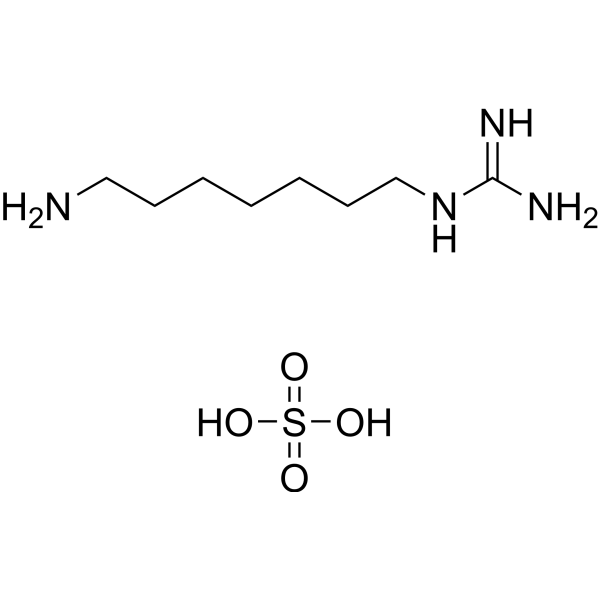
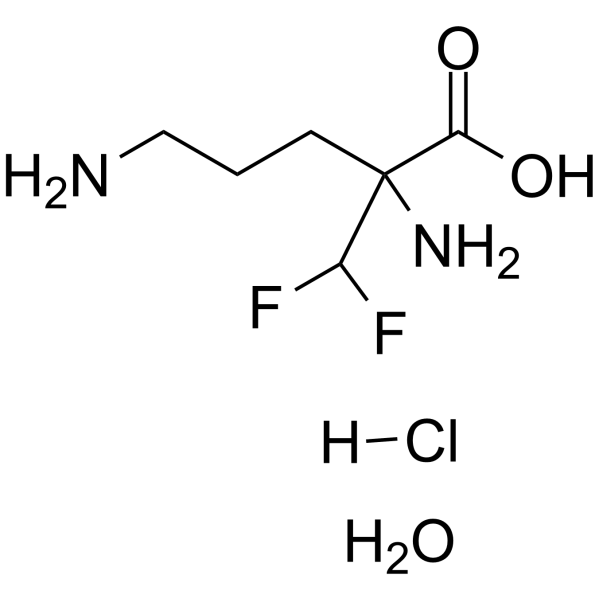
Publications Citing Use of MedChemExpress (MCE) AMXT-1501
More- Immunity. 2025 Aug 12;58(8):2019-2034.e11. [Abstract]
- Nat Immunol. 2026 Jun;27(6):1268-1281. [Abstract]
- Nat Commun. 2024 Mar 19;15(1):2461. [Abstract]
- Cell Death Differ. 2024 Jul;31(7):910-923. [Abstract]
- Neuro Oncol. 2025 Oct 1;27(10):2574-2591. [Abstract]
- Cancer Drug Resist. 2026 Aug 28:9:30.
- Emerg Microbes Infect. 2024 Dec;13(1):2321981. [Abstract]
- Icahn School of Medicine at Mount Sinai. 2025.
- The University of Texas at San Antonio. 2025.
- bioRxiv. 2025 January 26.
- bioRxiv. 2024 Nov 17:2024.08.24.609500. [Abstract]
- Research Square Preprint. 2024 Mar 19.
 Customer Validation & Images

-
Cell Proliferation/Viability Assay
-
WB
-
2D/3D Cell Culture and Differentiation
-
Cell Imaging/Staining


Biological Activity
제품 설명
IC50 & Target
Polyamine transport[1]
Cellular Effect
|
Cell Line

|
Type | Value | Description | References |
|---|---|---|---|---|
| MDA-MB-231 | IC50 |
57 μM
Compound: 11, D-Lys(C(16)acyl)-Spm
|
Cytotoxicity against human MDA-MB-231 cells after 6 days by MTS/PMS dye assay
Cytotoxicity against human MDA-MB-231 cells after 6 days by MTS/PMS dye assay
|
[PMID: 19281226] |
| MDA-MB-231 | IC50 |
62 μM
Compound: 10
|
Cytotoxicity against human MDA-MB-231 cells after 6 days by MTS/PMS dye assay
Cytotoxicity against human MDA-MB-231 cells after 6 days by MTS/PMS dye assay
|
[PMID: 19281226] |
In Vitro
AMXT-1501 (1.56-50 μM) exhibits dose-dependent antibacterial activity against a variety of Gram-positive and Gram-negative multidrug-resistant (MDR) bacterial isolates, with MIC50/MIC90 values ranging from 3.13 to 12.5 μM[1].
AMXT-1501 (8× MIC; 0-24 h) exhibits rapid and potent bactericidal activity against planktonic MRSA, ESBL-producing E. coli, and CR E. coli[1].
AMXT-1501 (1-4× MIC; 0.5-24 h) reduces biofilm formation in a dose-dependent manner in most tested Staphylococcus aureus (MSSA and MRSA) and Enterococcus faecalis strains, causes severe damage to the cell membranes of MRSA and CR E. coli, increases membrane permeability and depolarizes them, thereby leading to bacterial cell death[1].
AMXT-1501 (3.125-50 μg/mL; 90 s) binds directly to the bacterial membrane phospholipids CL and PG[1].
AMXT-1501 (7.4 μM; cultured until OD600 reaches 0.2-0.5) inhibits capsular polysaccharide biosynthesis by 61% in Streptococcus pneumoniae serotype 2 (strain D39), depletes intracellular polyamines and glucuronic acid, and simultaneously increases intracellular glucose levels[2].
AMXT-1501 (7.4 μM) regulates gene expression in Streptococcus pneumoniae D39, thereby enhancing the biosynthesis of polyamines and glucose, inhibiting ATP production and fatty acid synthesis, and upregulating stress response pathways[3].
AMXT-1501 (0.39-50 μM; 48 h) potently inhibits the viability of human neuroblastoma cell lines BE (2)-C, SMS-KCNR and SH-SY5Y in vitro, with IC50 values of 17.69 μM, 17.72 μM and 14.13 μM, respectively[4].
AMXT-1501 (2.5 μM; 96 h) induced apoptosis in BE (2)-C, SMS-KCNR and SH-SY5Y human neuroblastoma cells when used in combination with DFMO[4].
MedChemExpress (MCE) has not independently confirmed the accuracy of these methods. They are for reference only.
-
Cell Line:BE(2)-C, SMS-KCNR, SH-SY5Y
-
Concentration:0.39-50 μM
-
Incubation Time:48 h
-
Result:Induced cytotoxicity with IC50 values of 17.69 μM (BE(2)-C), 17.72 μM (SMS-KCNR), and 14.13 μM (SH-SY5Y).
-
Cell Line:BE(2)-C, SMS-KCNR, SH-SY5Y
-
Concentration:2.5 μM+2.5 mM DFMO
-
Incubation Time:96 h
-
Result:Induced apoptosis.
Reduced the amount of uncleaved PARP and increased the amounts of cleaved PARP and cleaved caspase-3.
In Vivo
AMXT-1501 (20 mg/kg; i.p.; every 12 h; 3 days) significantly improves the survival rate of BALB/c mice with bacterial abdominal infection and reduces the bacterial load of CRE E. coli in their lung and liver tissues[1].
MedChemExpress (MCE) has not independently confirmed the accuracy of these methods. They are for reference only.
-
Animal Model:BALB/c (female, 6-8-week-old, 18-22 g) (S. aureus YUSA145 (MRSA)(1×10⁷ CFU))[1]
-
Dosage:20 mg/kg
-
Administration:i.p.; every 12 h; 3 days
-
Result:Reduced skin abscess areas significantly.
Lowered bacterial loads in abscess tissue (log10 CFU/g) significantly.
-
Animal Model:BALB/c (female, 6-8-week-old, 18-22 g) (E. coli ECO2219 (CRE)(2×10⁹ CFU))[1]
-
Dosage:20 mg/kg
-
Administration:i.p.; every 12 h; 3 days
-
Result:Achieved a 50% survival rate through day 7, which was higher than the survival rate in tigecycline-treated mice.
Lowered bacterial loads in lung tissue (log10 CFU/g) significantly.
Lowered bacterial loads in liver tissue (log10 CFU/g) significantly.
- Research Protocol for Infectious Diseases
- Detection of Apoptosis
- TUNEL staining for apoptotic DNA fragmentation
- Annexin V plus membrane-impermeant dye apoptosis staining
- Apoptosis Solutions
- Gram Staining of Tissue Sections
- Bacterial live/dead nucleic-acid viability staining
- Cell Viability Determination by MTT Colorimetric Assay
Clinical Trial
| NCT Number | Sponsor | Condition | Start Date |
Phase
|
|---|---|---|---|---|
| NCT01329991 | 2011-05 | PHASE1 |


Chemical Information
-
CAS No. 441022-64-6
-
Appearance Solid
-
분자량 568.92
-
화학식 C32H68N6O2
-
Color White to off-white
-
SMILES
CCCCCCCCCCCCCCCC(NCCCC[C@@H](N)C(NCCCNCCCCNCCCN)=O)=O
-
선적
Room temperature in continental US; may vary elsewhere.
-
보관
Powder -20°C 3 years 4°C 2 years In solvent -80°C 6 months -20°C 1 month


Publications (12)
-
Journal Impact Factor
-
Most Recent
-
Immunity
Polyamines regulate adaptive antitumor immunity by functional specialization of regulatory T cells. [Abstract]2025 Aug 12;58(8):2019-2034.e11. PMID: 40749666 -
Nat Immunol
Epigenetic reprogramming of T cell metabolism restores function and enhances anti-tumor immunity in lung cancer. [Abstract]2026 Jun;27(6):1268-1281. PMID: 42120791 -
Nat Commun
Polyamine-mediated ferroptosis amplification acts as a targetable vulnerability in cancer. [Abstract]2024 Mar 19;15(1):2461. PMID: 38504107 -
Cell Death Differ
Anaplastic Lymphoma Kinase signaling stabilizes SLC3A2 expression via MARCH11 to promote neuroblastoma cell growth. [Abstract]2024 Jul;31(7):910-923. PMID: 38858548
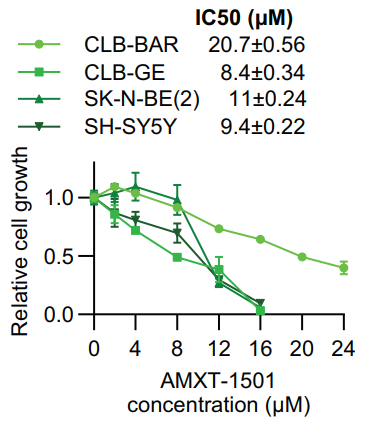
AMXT-1501 purchased from MedChemExpress. Usage Cited in: Cell Death Differ. 2024 Jul;31(7):910-923. [Abstract]
IC50s of AMXT-1501 (4, 8, 12, 16, 20, 24 μM) in CLB-BAR, CLB-GE, SK-N-BE(2) and SH-SY5Y cells after 5 d treatment.
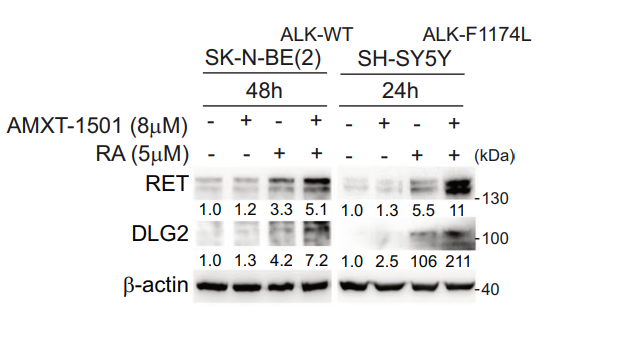
AMXT-1501 purchased from MedChemExpress. Usage Cited in: Cell Death Differ. 2024 Jul;31(7):910-923. [Abstract]
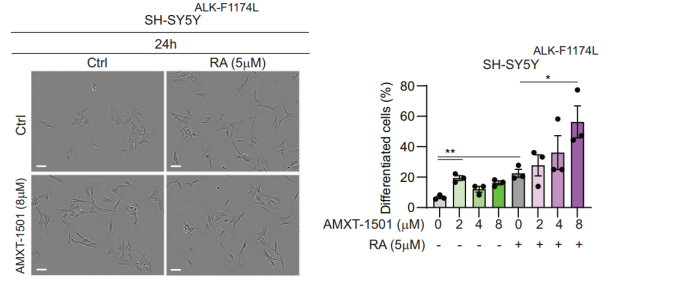
Immunoblot analysis of neuronal differentiation markers (RET and DLG2) in SK-N-BE(2) and SH-SY5Y cells treated with AMXT-1501 (0 or 8 µM) and RA (0 or 5 µM) for 48 h or 24 h .
AMXT-1501 purchased from MedChemExpress. Usage Cited in: Cell Death Differ. 2024 Jul;31(7):910-923. [Abstract]
Cells after AMXT-1501 (0 or 8 µM) and RA (0 or 5 µM) treatment as indicated for 48 h or 24 h.
-
Neuro Oncol
Polyamine acetylation mediates crosstalk between cancer cells and myeloid cells to promote mesenchymal/plurimetabolic states in glioblastoma. [Abstract]2025 Oct 1;27(10):2574-2591. PMID: 40424600 -
-
Emerg Microbes Infect
AMXT-1501 targets membrane phospholipids against Gram-positive and -negative multidrug-resistant bacteria. [Abstract]2024 Dec;13(1):2321981. PMID: 38422452 -
-
-
-
bioRxiv
2024 Nov 17:2024.08.24.609500. PMID: 39253442
AMXT-1501 purchased from MedChemExpress. Usage Cited in: bioRxiv. 2024 Nov 17:2024.08.24.609500. [Abstract]
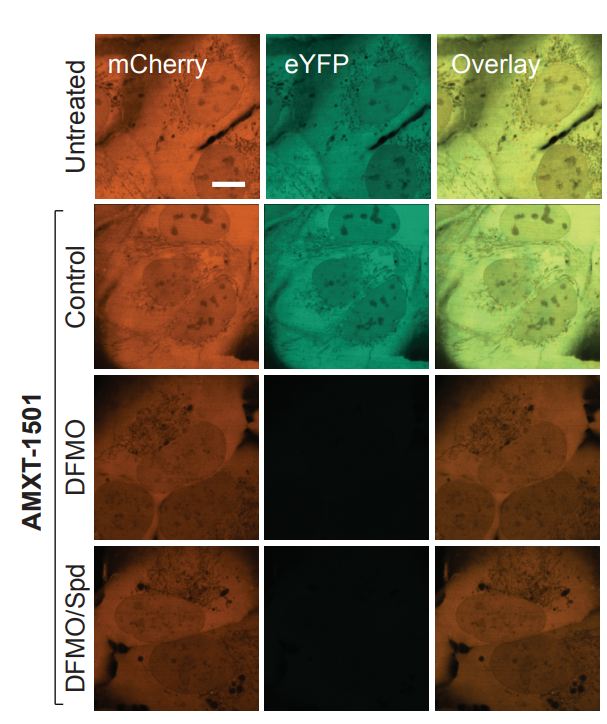
Representative fluorescence images of cells upon indicated treatments. AMXT-1501 (0.5 μM; polyamine import inhibitor), DFMO (1 mM), and spermidine (5 μM).
-


용액&용해도
In Vitro:
H2O : 100 mg/mL (175.77 mM; Need ultrasonic)
Please refer to the solubility information to select the appropriate solvent. Once prepared, please aliquot and store the solution to prevent product inactivation from repeated freeze-thaw cycles.
Storage method and period of stock solution: -80°C, 6 months; -20°C, 1 month. When stored at -80°C, please use it within 6 months. When stored at -20°C, please use it within 1 month.
* Note: If you choose water as the stock solution, please dilute it to the working solution, then filter and sterilize it with a 0.22 μm filter before use.
Please refer to the solubility information to select the appropriate solvent. Once prepared, please aliquot and store the solution to prevent product inactivation from repeated freeze-thaw cycles.
Storage method and period of stock solution: -80°C, 6 months; -20°C, 1 month. When stored at -80°C, please use it within 6 months. When stored at -20°C, please use it within 1 month.
* Note: If you choose water as the stock solution, please dilute it to the working solution, then filter and sterilize it with a 0.22 μm filter before use.
Concentration (start) × Volume (start) = Concentration (final) × Volume (final)


순도&문서
-
Data Sheet (274 KB)
-
SDS (251 KB)
- English - EN (251 KB)
- Français - FR (251 KB)
- Deutsch - DE (251 KB)
- Norwegian - NO (251 KB)
- Español - ES (251 KB)
- Swedish - SV (251 KB)
- Italian - IT (251 KB)
- Korean - KR (251 KB)
- Portuguese - PT (251 KB)
-
Handling Instructions (2659 KB)
References
[1]. Zheng J, et al. AMXT-1501 targets membrane phospholipids against Gram-positive and -negative multidrug-resistant bacteria. Emerg Microbes Infect. 2024;13(1):2321981. [Content Brief]
[2]. Ayoola MB, et al. Difluoromethylornithine (DFMO) and AMXT 1501 inhibit capsule biosynthesis in pneumococci. Sci Rep. 2022;12(1):11804. Published 2022 Jul 12. [Content Brief]
[3]. Ayoola MB, Shack LA, Phanstiel O 4th, Nanduri B. Impact of Difluoromethylornithine and AMXT 1501 on Gene Expression and Capsule Regulation in Streptococcus pneumoniae. Biomolecules. 2024 Feb 2;14(2):178. [Content Brief]
[4]. Samal K, Zhao P, Kendzicky A, Yco LP, McClung H, Gerner E, Burns M, Bachmann AS, Sholler G. AMXT-1501, a novel polyamine transport inhibitor, synergizes with DFMO in inhibiting neuroblastoma cell proliferation by targeting both ornithine decarboxylase and polyamine transport. Int J Cancer. 2013 Sep 15;133(6):1323-33. [Content Brief]


Complete Stock Solution Preparation Table
Please refer to the solubility information to select the appropriate solvent. Once prepared, please aliquot and store the solution to prevent product inactivation from repeated freeze-thaw cycles.
Storage method and period of stock solution: -80°C, 6 months; -20°C, 1 month. When stored at -80°C, please use it within 6 months. When stored at -20°C, please use it within 1 month.
| Optional Solvent | Concentration Solvent Mass | 1 mg | 5 mg | 10 mg | 25 mg |
|---|---|---|---|---|---|
| H2O | 1 mM | 1.7577 mL | 8.7886 mL | 17.5772 mL | 43.9429 mL |
| 5 mM | 0.3515 mL | 1.7577 mL | 3.5154 mL | 8.7886 mL | |
| 10 mM | 0.1758 mL | 0.8789 mL | 1.7577 mL | 4.3943 mL | |
| 15 mM | 0.1172 mL | 0.5859 mL | 1.1718 mL | 2.9295 mL | |
| 20 mM | 0.0879 mL | 0.4394 mL | 0.8789 mL | 2.1971 mL | |
| 25 mM | 0.0703 mL | 0.3515 mL | 0.7031 mL | 1.7577 mL | |
| 30 mM | 0.0586 mL | 0.2930 mL | 0.5859 mL | 1.4648 mL | |
| 40 mM | 0.0439 mL | 0.2197 mL | 0.4394 mL | 1.0986 mL | |
| 50 mM | 0.0352 mL | 0.1758 mL | 0.3515 mL | 0.8789 mL | |
| 60 mM | 0.0293 mL | 0.1465 mL | 0.2930 mL | 0.7324 mL | |
| 80 mM | 0.0220 mL | 0.1099 mL | 0.2197 mL | 0.5493 mL | |
| 100 mM | 0.0176 mL | 0.0879 mL | 0.1758 mL | 0.4394 mL |
* Note: If you choose water as the stock solution, please dilute it to the working solution, then filter and sterilize it with a 0.22 μm filter before use.


AMXT-1501 Related Classifications
HY-124617 Related Classifications
 Powered by Bioz
Keywords
- AMXT-1501
- 441022-64-6
- AMXT1501
- AMXT 1501
- Apoptosis
- Bacterial
- bacterial agent
- polyamine transport system inhibitor
- E. coli
- Enterococcus faecalis
- Staphylococcus aureus
- BE (2)-C cells
- SMS-KCNR cells
- SH-SY5Ycells
- multidrug-resistant bacterial infections
- pneumococcal infections
- Streptococcus pneumoniae infections
- neuroblastoma
- Inhibitor
- inhibitor
- inhibit