



Periodontal Disease
-
Periodontal Disease (14)

- 1
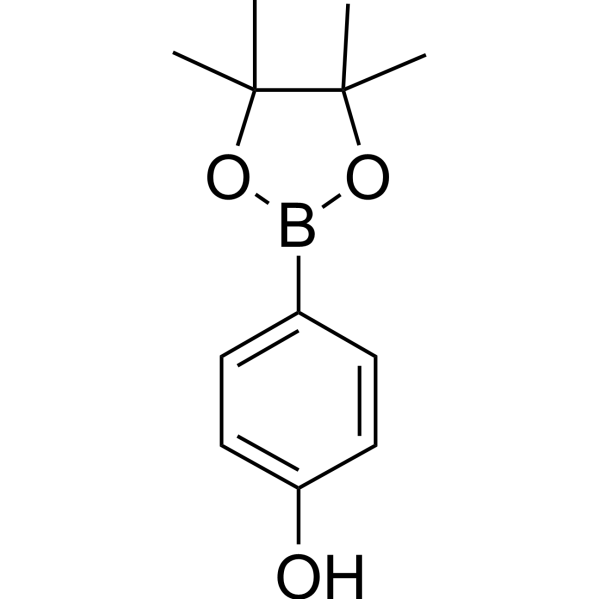
- Formula: C12H17BO3
- Molecular Weight: 220.08
4-Hydroxyphenylboronic acid pinacol ester is a ROS-responsive component. 4-Hydroxyphenylboronic acid pinacol ester can structurally modify hyaluronic acid to prepare ROS-responsive intelligent nanocarriers and compound delivery systems. 4-Hydroxyphenylboronic acid pinacol ester endows hyaluronic acid-based nanocarriers with ROS responsiveness, enabling them to rapidly release the encapsulated Curcumin (HY-N0005) in the presence of reactive oxygen species. 4-Hydroxyphenylboronic acid pinacol ester is applicable to research related to periodontitis. 4-Hydroxyphenylboronic acid pinacol ester can also be used for the synthesis of boronic acid-modified resins.
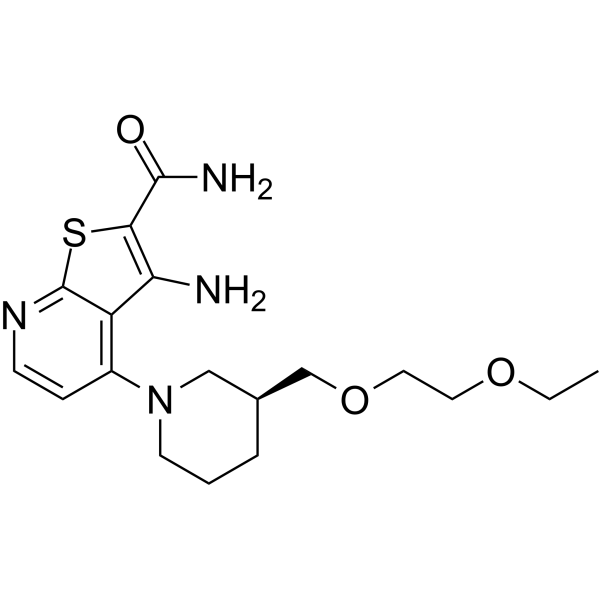
- Formula: C18H26N4O3S
- Molecular Weight: 378.49
DS96432529 is an orally active CDK8 inhibitor with an IC50 of 33 nM. DS96432529 enhances ALPase activity, with an EC200 of 63 nM. DS96432529 inhibits TNF-α-induced activation of the RLR signaling pathway, activates mitophagy, accelerates mineralized nodule formation, and suppresses the proliferation of periodontal ligament stem cells. DS96432529 promotes bone formation, alleviates ligation-induced alveolar bone loss, and increases bone mineral density in ovariectomized animal models. DS96432529 can be used in studies related to periodontitis and osteoporosis.
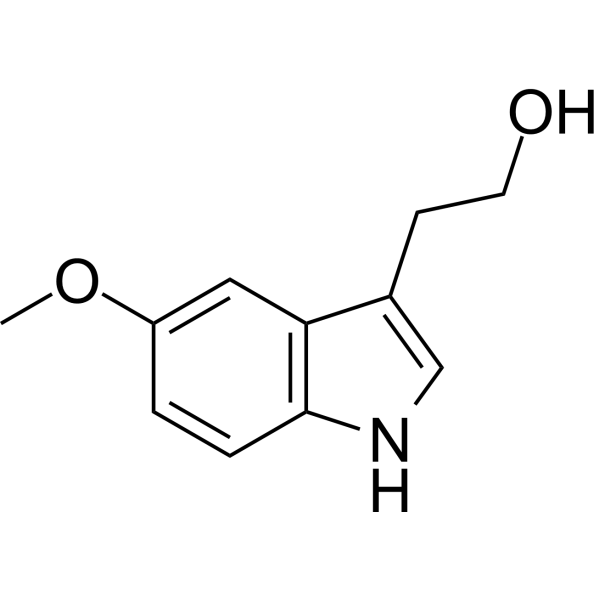
- Formula: C11H13NO2
- Molecular Weight: 191.23
5-Methoxytryptophol is a 5-methoxyindole alcohol structurally homologous to Melatonin (HY-B0075). It is secreted by the mammalian pineal gland and exhibits an inverse circadian rhythm. 5-Methoxytryptophol regulates bone metabolism by activating the ERK1/2 pathway. It reduces the levels of pro-inflammatory cytokines TNF-α and IL-1β, as well as proteolytic enzymes MMP-1 and MMP-2, in serum and dental pulp tissues, thereby ameliorating acute pulpitis. 5-Methoxytryptophol induces rapid sleep in mice, while high doses cause respiratory depression and death. 5-Methoxytryptophol. 5-Methoxytryptophol can be used in studies related to acute pulpitis, hypnosis, and bone metabolism.

- Formula: C28H25N3O
- Molecular Weight: 419.52
Y1693 is an orally active RANKL inhibitor with a Kd of 5.03 μM for hRANKL. Y1693 inhibits the activation of the downstream c-fos/NFATc1 signaling pathway by blocking its interaction with RANK. Y1693 significantly inhibits RANKL-induced osteoclast differentiation, F-actin ring formation and bone resorptive activity, while downregulating the mRNA and protein expressions of TRAP, cathepsin K, c-fos and NFATc1. Y1693 shows no obvious cytotoxicity to bone marrow-derived macrophages and osteoclast precursor cells, and exhibits favorable ADME properties. Y1693 improves ovariectomy-induced osteoporosis in mice and reverses ligation-induced periodontal alveolar bone loss. Y1693 is applicable to research related to osteoporosis and periodontal diseases.
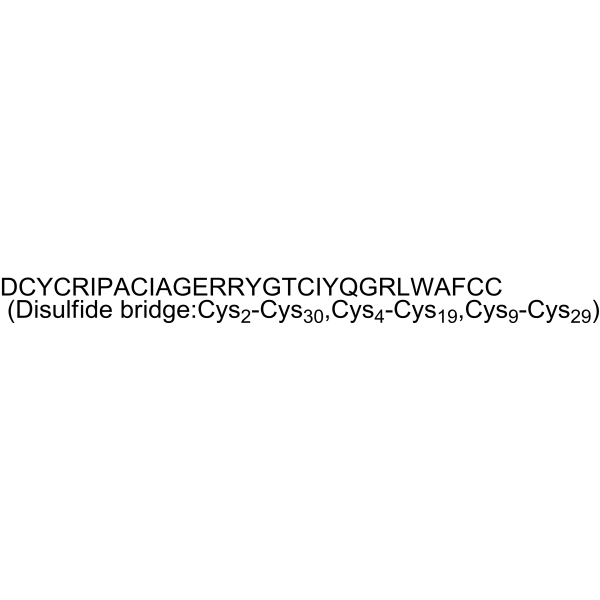
- Formula: C151H222N44O40S6
- Molecular Weight: 3486.04
Defensin HNP-3 human is an α-defensin stored in the azurophilic granules of human neutrophils. Defensin HNP-3 human exerts broad-spectrum bactericidal, antifungal and antiviral activities mainly by forming bacterial membrane pores, and acts as a chemoattractant for monocytes and T cells. Defensin HNP-3 human maintains epithelial integrity to support periodontal tissue homeostasis, and exerts concentration-dependent effects on epithelial cell proliferation, adhesion and bacterial adhesion. Defensin HNP-3 human targets solid tumors and leukemia by inducing single-strand DNA breaks and membrane permeabilization in tumor cells via electrostatic binding and pore formation. Defensin HNP-3 human is abundant in human tongue squamous cell carcinoma and neutrophils infiltrating oral squamous cell carcinoma. Defensin HNP-3 human can be applied to research related to periodontitis and human tongue squamous cell carcinoma.

- Formula: C23H21N7
- Molecular Weight: 395.46
TT-301 is a small-molecule immunomodulator capable of penetrating the blood-brain barrier. TT-301 exerts neuroprotective effects by binding to IL-1β, downregulating STAT3 expression, and modulating the JAK-STAT signaling pathway, thereby inhibiting microglial activation and the release of proinflammatory mediators, and alleviating neuroinflammation and brain edema. TT-301 is used in research on traumatic brain injury, intracerebral hemorrhage, subarachnoid hemorrhage, muscle wasting and atrophy, and periodontal disease.

- Formula: C20H31N3O4
- Molecular Weight: 377.48
RP 59794 is a potent collagenase (collagenase) and broad-spectrum matrix metalloproteinase (MMP) inhibitor. The active stereoisomer of RP 59794 has a Ki of 13 nM against MMP-1 (with native collagen as substrate) and 45 nM (with a synthetic octapeptide as substrate). RP 59794 blocks and partially dissociates TIMP by binding to the active site of collagenase, specifically inhibits the collagen-transmigrating migration of osteoclasts and bone resorption on collagen-coated surfaces, but exerts no effect on cell migration in collagen-free environments, and acts in a time-dependent manner in bone tissues. RP 59794 can be used in studies of arthritis, periodontal disease, corneal ulcers and tumor invasion.

- Formula: C17H18FN3O3
- Molecular Weight: 331.34
Ciprofloxacin GMP is Ciprofloxacin (HY-B0356) produced by using GMP guidelines. GMP small molecules works appropriately as an auxiliary reagent for cell therapy manufacture. Ciprofloxacin (Bay-09867) is an orally active, blood-brain barrier permeable fluoroquinolone antibacterial agent. Ciprofloxacin exerts bactericidal effects primarily by inhibiting topoisomerase II and IV. Ciprofloxacin inhibits the proliferation of human dental pulp stem cells and chondrocytes from young rats, and also activates the Akt signaling pathway and upregulates markers such as β-catenin and Nanog to maintain the morphological characteristics of stem cells. Ciprofloxacin induces significant neurotoxicity and tissue damage, including reducing serotonin and glutathione levels in the brain, inducing oxidative stress and depression-like behaviors, and causing articular cartilage damage. Ciprofloxacin can be applied to research related to infections of necrotic young permanent teeth and neurotoxicity.

- Formula: C16H14Cl2N8O
- Molecular Weight: 405.24
AS2863619 GMP is AS2863619 (HY-126675) produced by using GMP guidelines. GMP small molecules works appropriately as an auxiliary reagent for cell therapy manufacture. AS2863619 is an orally active CDK8/19 inhibitor that also inhibits BMP2, MDA5 and RIG-I receptors. AS2863619 targets Stat5a-CDK8/19 to promote the differentiation of CD4+ T cells into regulatory T cells and induce FOXP3 expression, thereby restoring immune homeostasis and establishing transplant immune tolerance. AS2863619 also enhances the BMP2/SMAD signaling pathway to promote osteogenic differentiation and inhibit adipogenic differentiation. AS2863619 exerts osteoprotective effects by alleviating inflammation-induced impairment of osteogenic function and inducing neutrophil apoptosis (apoptosis). AS2863619 can be applied to research in related fields such as periodontitis-induced bone defects.

- Formula: C19H16O4
- Molecular Weight: 308.33
Moracin G is a plant-derived kinase modulator and receptor ligand that forms stable bindings with multiple key proteins (AKT1, COX2 and Estrogen receptor 1) and competitively inhibits the activity of specific kinases. By binding to MELK to disrupt cell cycle regulation, Moracin G impairs the survival and proliferation of cancer cells, induces cancer cell apoptosis, and thereby exerts anti-tumor potential. Moracin G can be used in research related to periodontitis and breast cancer.

- Formula: C24H22F9NO8
- Molecular Weight: 623.42
Gala-SR (Gala-SR1078) is an RORα agonist. Gala-SR ameliorates rhythm disorders by enhancing the amplitude of the circadian rhythm. Gala-SR can be used for the study of periodontitis.

- Formula: C23H22ClN7
- Molecular Weight: 431.93
TT-301 hydrochloride is a small-molecule immunomodulator capable of penetrating the blood-brain barrier. TT-301 hydrochloride exerts neuroprotective effects by binding to IL-1β, downregulating STAT3 expression, and modulating the JAK-STAT signaling pathway, thereby inhibiting microglial activation and the release of proinflammatory mediators, and alleviating neuroinflammation and brain edema. TT-301 hydrochloride is used in research on traumatic brain injury, intracerebral hemorrhage, subarachnoid hemorrhage, muscle wasting and atrophy, and periodontal disease.

- Formula: C18H26N4O3S
- Molecular Weight: 378.49
DS96432529 (Standard) is the analytical standard of DS96432529 (HY-145121). This product is intended for research and analytical applications. DS96432529 is an orally active CDK8 inhibitor with an IC50 of 33 nM. DS96432529 enhances ALPase activity, with an EC200 of 63 nM. DS96432529 inhibits TNF-α-induced activation of the RLR signaling pathway, activates mitophagy, accelerates mineralized nodule formation, and suppresses the proliferation of periodontal ligament stem cells. DS96432529 promotes bone formation, alleviates ligation-induced alveolar bone loss, and increases bone mineral density in ovariectomized animal models. DS96432529 can be used in studies related to periodontitis and osteoporosis.

- Formula: C21H38N2
- Molecular Weight: 318.55
Pirtenidine free base is a broad-spectrum antibacterial and anti-plaque agent. Pirtenidine free base exhibits bactericidal activity against oral plaque bacteria in vitro and inhibits plaque formation. Pirtenidine free base inhibits the growth, budding, germ tube formation and buccal epithelial cell adhesion of Candida albicans and Saccharomyces cerevisiae, reduces the oxygen uptake rate of yeast, and impairs mitochondrial respiratory function. Pirtenidine free base disrupts the integrity of fungal cell wall and membrane, leading to cytoplasmic leakage, cell shrinkage, and lysis. Pirtenidine free base binds tightly to mucosal surfaces in vivo with low systemic exposure. Pirtenidine free base can be used in studies related to dental plaque, fungal infections and oral candidiasis.
- 1



