CDK8
CDK8 (cyclin-dependent kinase 8) is a transcription-associated kinase that functions within the Mediator kinase module and regulates RNA polymerase II-dependent gene expression through reversible association with the Mediator complex.[1][2] Mechanistically, CDK8 integrates developmental, metabolic, inflammatory, and signal-responsive transcriptional programs by modulating transcription factor activity and enhancer-driven transcriptional output.[2][3] In disease-relevant contexts, dysregulation of CDK8 signaling has been linked to multiple human disorders, particularly cancer, where Mediator kinase activity contributes to transcriptional reprogramming and tumor-promoting gene expression networks.[2][4] Experimental studies further demonstrate that CDK8 and CDK19 regulate intestinal lineage specification through Mediator-dependent control of chromatin-remodeling mechanisms and enhancer function.[5] Compared with the related isoform CDK19, CDK8 is more broadly expressed across tissues, whereas CDK19 shows greater tissue specificity; however, both kinases display highly overlapping transcriptional and phosphoregulatory functions and often act redundantly within the Mediator kinase module.[3] Therefore, genetic disruption of a single paralog frequently produces partial phenotypes, while dual inhibition more closely recapitulates Mediator kinase suppression.[3] For experimental applications, most currently reported Mediator kinase inhibitors target both CDK8 and CDK19, and these compounds are widely used to investigate transcriptional reprogramming, signal-induced gene expression, and therapeutic vulnerabilities in cancer models.[3][4]
References:
- [1]. Fant CB, et al. Regulatory functions of the Mediator kinases CDK8 and CDK19. Transcription. 2019 Apr;10(2):76-90. [Content Brief]
- [2]. Dannappel MV, et al. Molecular and in vivo Functions of the CDK8 and CDK19 Kinase Modules. Front Cell Dev Biol. 2019 Jan 14;6:171. doi: 10.3389/fcell.2018.00171. PMID: 30693281; PMCID: PMC6340071. [Content Brief]
- [3]. Chen M, et al. CDK8 and CDK19: positive regulators of signal-induced transcription and negative regulators of Mediator complex proteins. Nucleic Acids Res. 2023 Aug 11;51(14):7288-7313. doi: 10.1093/nar/gkad538. PMID: 37378433; PMCID: PMC10415139. [Content Brief]
- [4]. Luyties O, et al. The Mediator kinase module: an interface between cell signaling and transcription. Trends Biochem Sci. 2022 Apr;47(4):314-327. doi: 10.1016/j.tibs.2022.01.002. Epub 2022 Feb 19. PMID: 35193797; PMCID: PMC8939868. [Content Brief]
- [5]. Dannappel MV, et al. CDK8 and CDK19 regulate intestinal differentiation and homeostasis via the chromatin remodeling complex SWI/SNF. J Clin Invest. 2022 Oct 17;132(20):e158593. doi: 10.1172/JCI158593. PMID: 36006697; PMCID: PMC9566890. [Content Brief]
-
CDK8 Related Products (57)
Related Products (57)

-
AS2863619
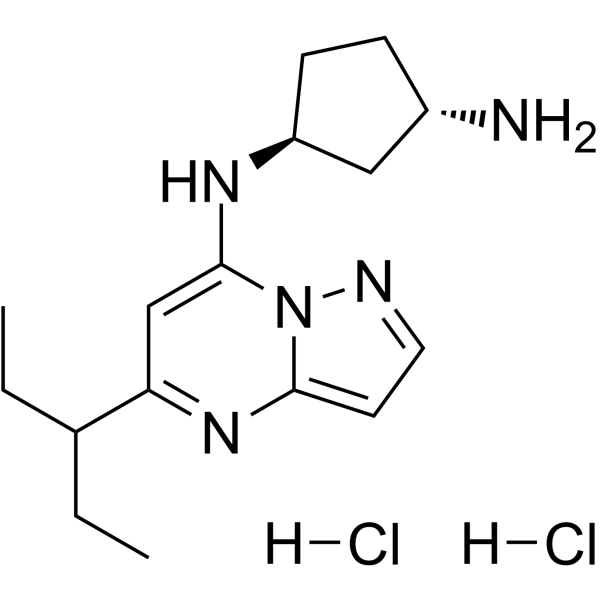
 0 ImagesAS2863619 is an orally active CDK8/19 inhibitor that also inhibits BMP2, MDA5 and RIG-I receptors. AS2863619 targets Stat5a-CDK8/19 to promote the differentiation of CD4+ T cells into regulatory T cells and induce FOXP3 expression, thereby restoring immune homeostasis and establishing transplant immune tolerance. AS2863619 also enhances the BMP2/SMAD signaling pathway to promote osteogenic differentiation and inhibit adipogenic differentiation. AS2863619 exerts osteoprotective effects by alleviating inflammation-induced impairment of osteogenic function and inducing neutrophil apoptosis (apoptosis). AS2863619 can be applied to research in related fields such as periodontitis-induced bone defects.
-
Tambiciclib
 0 ImagesSynonyms: GFH009; JSH-009; SLS009Tambiciclib (GFH009, JSH-009) is an orally active, highly potent and selective CDK9 inhibitor (IC50 = 1 nM), demonstrating >200-fold selectivity over other CDKs, >100-fold selectivity over DYRK1A/B, and excellent selectivity over 468 kinases/mutants. Tambiciclib demonstrates potent in vitro and in vivo antileukemic efficacy in acute myeloid leukemia (AML) mouse models by inhibiting RNA Pol II phosphorylation, downregulating MCL1 and MYC, and inducing apoptosis. Tambiciclib can be used for AML research.
-
Romaciclib monohydrochloride
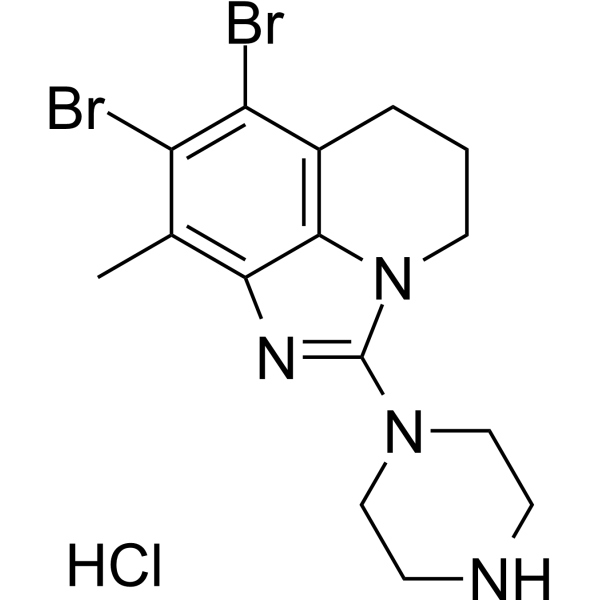 0 ImagesSynonyms: SEL120-34A monohydrochlorideSEL120-34A monohydrochloride is an ATP-competitive and selective CDK8 inhibitor, inhibits kinase activities of CDK8/CycC and CDK19/CycC complexes with IC50s of 4.4 nM and 10.4 nM, respectively, with a Kd of 3 nM for CDK8. SEL120-34A monohydrochloride weakly inhibits CDK9 (calculated IC50=1070 nM), but shows no obvious activity against CDK1, 2, 4, 6, 5, 7. SEL120-34A monohydrochloride inhibits phosphorylation of STAT1 S727 and STAT5 S726. Has anti-tumor activity.
-
DS96432529
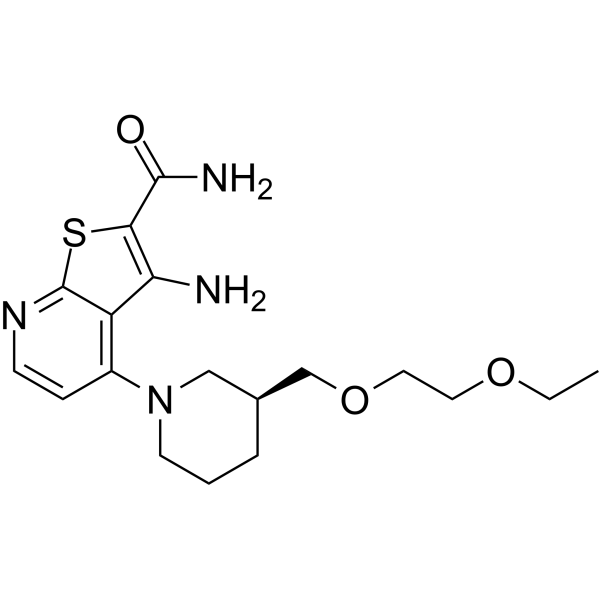 0 ImagesDS96432529 is an orally active CDK8 inhibitor with an IC50 of 33 nM. DS96432529 enhances ALPase activity, with an EC200 of 63 nM. DS96432529 inhibits TNF-α-induced activation of the RLR signaling pathway, activates mitophagy, accelerates mineralized nodule formation, and suppresses the proliferation of periodontal ligament stem cells. DS96432529 promotes bone formation, alleviates ligation-induced alveolar bone loss, and increases bone mineral density in ovariectomized animal models. DS96432529 can be used in studies related to periodontitis and osteoporosis.

-
Senexin A
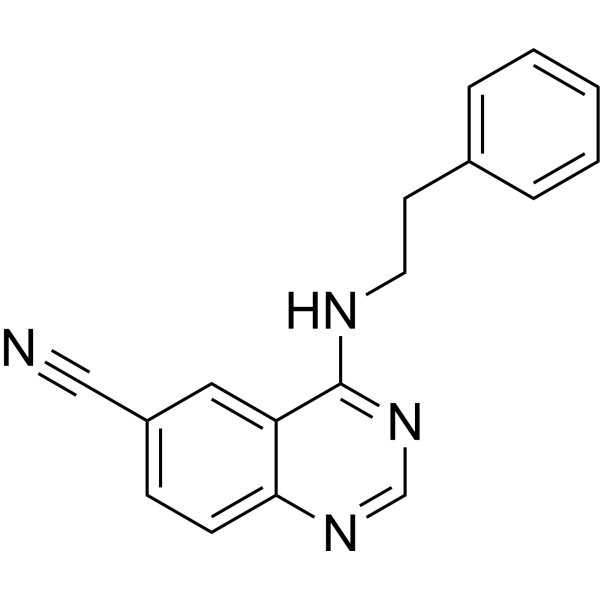 0 ImagesSenexin A is an inhibitor of CDK8/19 (IC50: 280 nM, CDK8) and an inhibitor downstream of p21 transcription. It only inhibits p21-induced transcription but does not inhibit other biological effects of p21. Senexin A inhibits CMV-GFP induction as well as the p21 stimulatory activity of the consensus NF-κB-dependent promoters.
-
AS2863619 free base
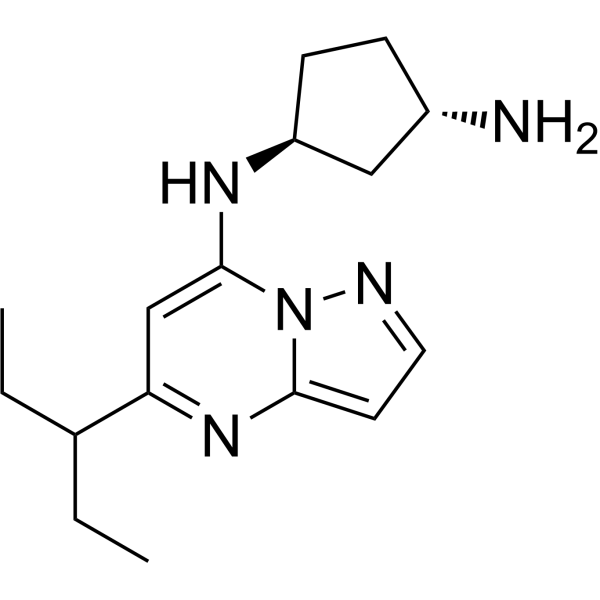
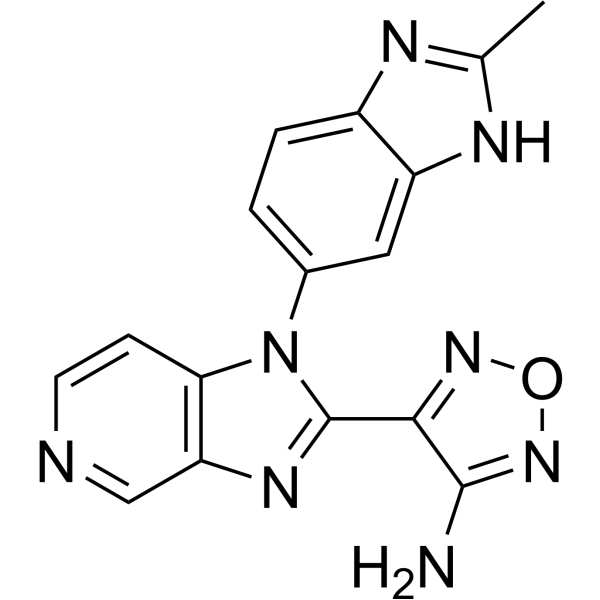 0 ImagesAS2863619 free base is an orally active CDK8/19 inhibitor that also inhibits BMP2, MDA5 and RIG-I receptors. AS2863619 free base targets Stat5a-CDK8/19 to promote the differentiation of CD4+ T cells into regulatory T cells and induce FOXP3 expression, thereby restoring immune homeostasis and establishing transplant immune tolerance. AS2863619 free base also enhances the BMP2/SMAD signaling pathway to promote osteogenic differentiation and inhibit adipogenic differentiation. AS2863619 free base exerts osteoprotective effects by alleviating inflammation-induced impairment of osteogenic function and inducing neutrophil apoptosis (apoptosis). AS2863619 free base can be applied to research in related fields such as periodontitis-induced bone defects.