



CDK19
CDK19 is an alternative enzymatic component of the Mediator kinase module, which contains CDK8 or CDK19, cyclin C, MED12, and MED13 and regulates RNA polymerase II-linked transcriptional programs[1]. Mechanistically, CDK8/19 support signal-induced transcription, including NF-κB-induced transcriptional elongation and expression of IL8, CXCL1, and CXCL2[2]. In intestinal models, CDK8 and CDK19 redundantly regulate lineage specification through SWI/SNF phosphorylation and enhancer colocalization[3]. In hematopoietic and acute myeloid leukemia models, CDK19 regulates proliferation through the p53-p21 pathway[4]. Compared with CDK8, CDK19 shows context-dependent distinction: in the IFN-γ pathway, CDK8 acts through kinase activity, whereas CDK19 functions as a scaffold and regulates different gene sets[5]. However, broader transcriptomic, proteomic, and phosphoproteomic analyses found qualitatively similar CDK8 and CDK19 effects, with differences mainly reflecting expression and activity levels[1]. For experimental applications, selective CDK8/19 inhibitors, PROTAC degraders, and genetic perturbation help define Mediator kinase activity, transcriptional reprogramming, STAT phosphorylation, and therapy-response mechanisms[1][6][7].
References:
- [1]. Chen M, et al. CDK8 and CDK19: positive regulators of signal-induced transcription and negative regulators of Mediator complex proteins. Nucleic Acids Res. 2023 Aug 11;51(14):7288-7313. [Content Brief]
- [2]. Chen M, et al. CDK8/19 Mediator kinases potentiate induction of transcription by NFκB. Proc Natl Acad Sci U S A. 2017 Sep 19;114(38):10208-10213. [Content Brief]
- [3]. Dannappel MV, et al. CDK8 and CDK19 regulate intestinal differentiation and homeostasis via the chromatin remodeling complex SWI/SNF. J Clin Invest. 2022 Oct 17;132(20):e158593. [Content Brief]
- [4]. Zhang Z, et al. CDK19 regulates the proliferation of hematopoietic stem cells and acute myeloid leukemia cells by suppressing p53-mediated transcription of p21. Leukemia. 2022 Apr;36(4):956-969. [Content Brief]
- [5]. Steinparzer I, et al. Transcriptional Responses to IFN-γ Require Mediator Kinase-Dependent Pause Release and Mechanistically Distinct CDK8 and CDK19 Functions. Mol Cell. 2019 Nov 7;76(3):485-499.e8. [Content Brief]
- [6]. Liao JZ, et al. Cdk8/CDK19 promotes mitochondrial fission through Drp1 phosphorylation and can phenotypically suppress pink1 deficiency in Drosophila. Nat Commun. 2024 Apr 18;15(1):3326. [Content Brief]
- [7]. Ding X, et al. Inhibition of CDK8/19 Mediator kinase potentiates HER2-targeting drugs and bypasses resistance to these agents in vitro and in vivo. Proc Natl Acad Sci U S A. 2022 Aug 9;119(32):e2201073119. [Content Brief]
All Product Categories
-
CDK19 Related Products (25)
Related Products (25)

- 1
- 2
-
AS2863619
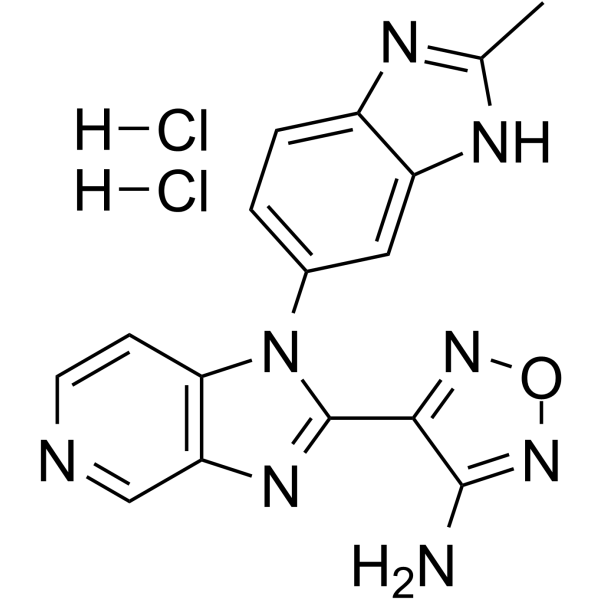 0 ImagesAS2863619 is an orally active CDK8/19 inhibitor that also inhibits BMP2, MDA5 and RIG-I receptors. AS2863619 targets Stat5a-CDK8/19 to promote the differentiation of CD4+ T cells into regulatory T cells and induce FOXP3 expression, thereby restoring immune homeostasis and establishing transplant immune tolerance. AS2863619 also enhances the BMP2/SMAD signaling pathway to promote osteogenic differentiation and inhibit adipogenic differentiation. AS2863619 exerts osteoprotective effects by alleviating inflammation-induced impairment of osteogenic function and inducing neutrophil apoptosis (apoptosis). AS2863619 can be applied to research in related fields such as periodontitis-induced bone defects.
-
Romaciclib monohydrochloride
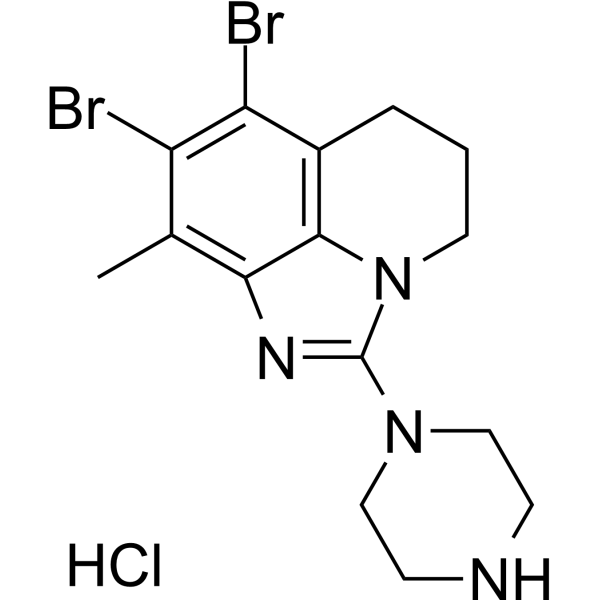 0 ImagesSynonyms: SEL120-34A monohydrochlorideSEL120-34A monohydrochloride is an ATP-competitive and selective CDK8 inhibitor, inhibits kinase activities of CDK8/CycC and CDK19/CycC complexes with IC50s of 4.4 nM and 10.4 nM, respectively, with a Kd of 3 nM for CDK8. SEL120-34A monohydrochloride weakly inhibits CDK9 (calculated IC50=1070 nM), but shows no obvious activity against CDK1, 2, 4, 6, 5, 7. SEL120-34A monohydrochloride inhibits phosphorylation of STAT1 S727 and STAT5 S726. Has anti-tumor activity.
-
Senexin A
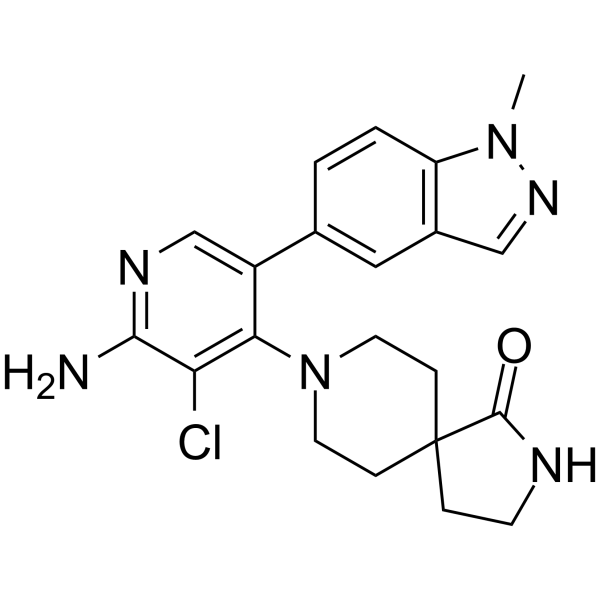
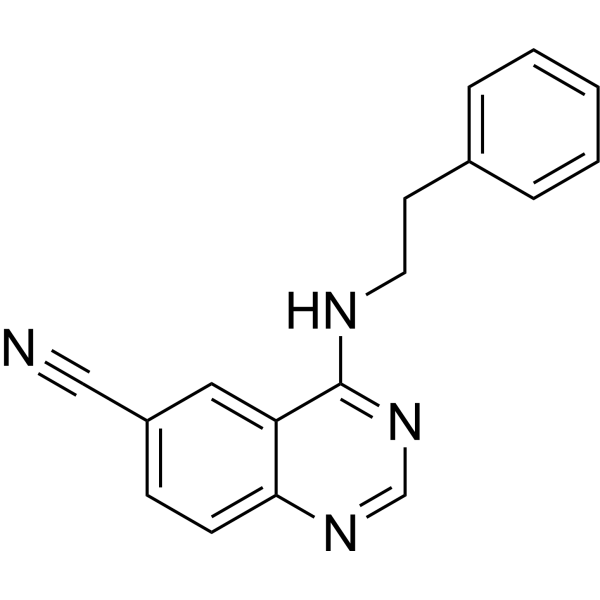 0 ImagesSenexin A is an inhibitor of CDK8/19 (IC50: 280 nM, CDK8) and an inhibitor downstream of p21 transcription. It only inhibits p21-induced transcription but does not inhibit other biological effects of p21. Senexin A inhibits CMV-GFP induction as well as the p21 stimulatory activity of the consensus NF-κB-dependent promoters.

-
CDK8-IN-2
 0 ImagesCat. No.: HY-114178CAS No.: 1879980-97-8
-
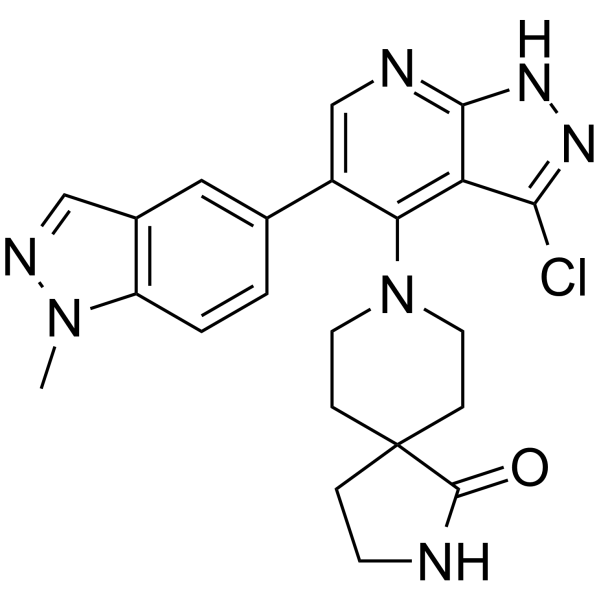
RO8323
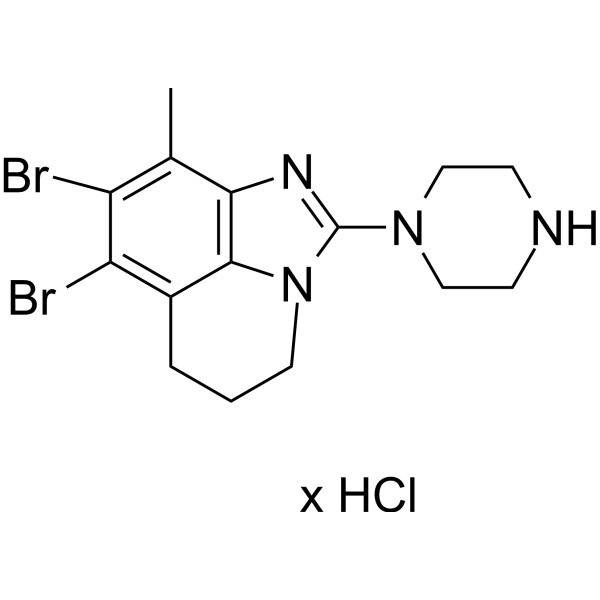
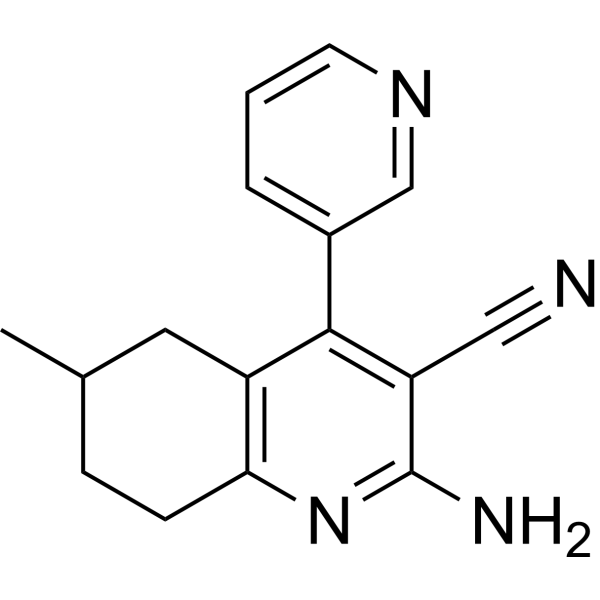
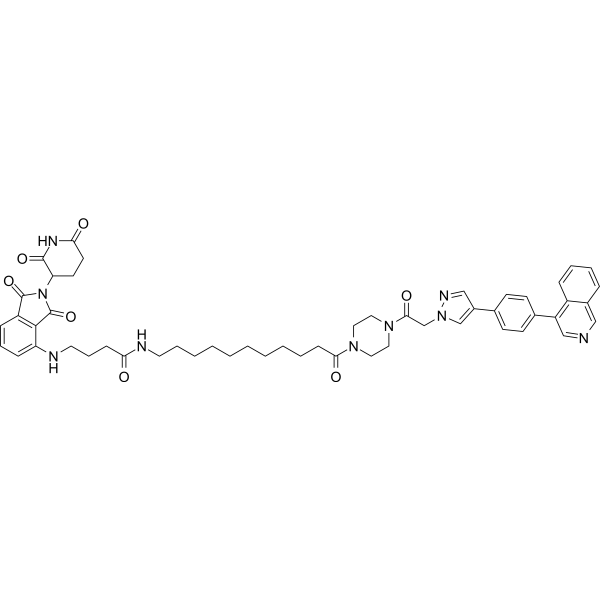
 0 ImagesCat. No.: HY-183074RO8323 is an orally active, selective CDK8/CDK19 inhibitor, with an IC50 of 2 nM against CDK8 and 3 nM against CDK19. RO8323 promotes regulatory T cell differentiation, inhibits effector T cell generation, reverses the Teff/Treg ratio, upregulates IL-10 production in myeloid cells, and suppresses the production of TNF-α, IL-6 and IL-12. RO8323 enhances immune reconstitution and prolongs cardiac allograft survival in a dose-dependent manner. RO8323 can be used in the research of chronic graft-versus-host disease, cardiac allograft rejection, acute graft-versus-host disease and experimental autoimmune encephalomyelitis.
-
AS2863619 free base
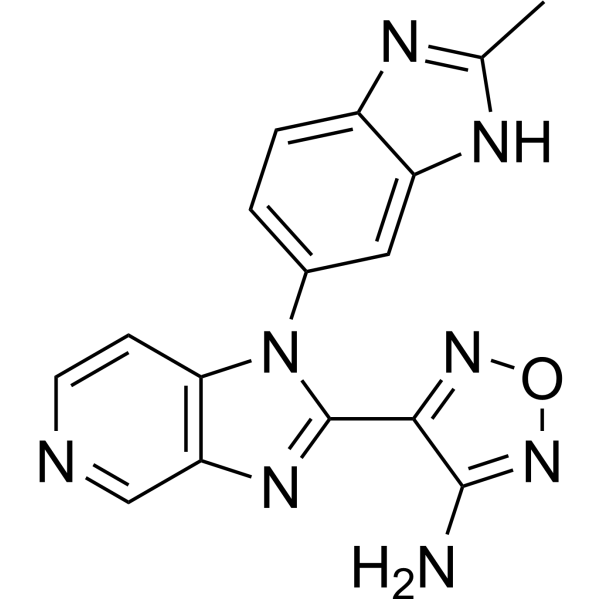 0 ImagesAS2863619 free base is an orally active CDK8/19 inhibitor that also inhibits BMP2, MDA5 and RIG-I receptors. AS2863619 free base targets Stat5a-CDK8/19 to promote the differentiation of CD4+ T cells into regulatory T cells and induce FOXP3 expression, thereby restoring immune homeostasis and establishing transplant immune tolerance. AS2863619 free base also enhances the BMP2/SMAD signaling pathway to promote osteogenic differentiation and inhibit adipogenic differentiation. AS2863619 free base exerts osteoprotective effects by alleviating inflammation-induced impairment of osteogenic function and inducing neutrophil apoptosis (apoptosis). AS2863619 free base can be applied to research in related fields such as periodontitis-induced bone defects.
-
Senexin C
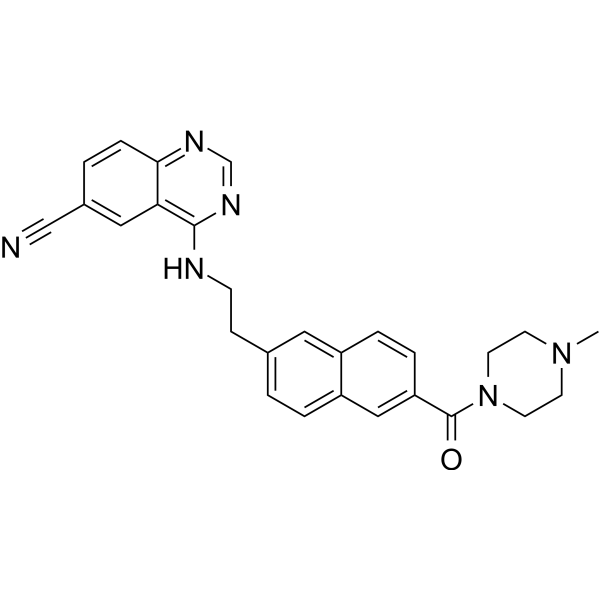
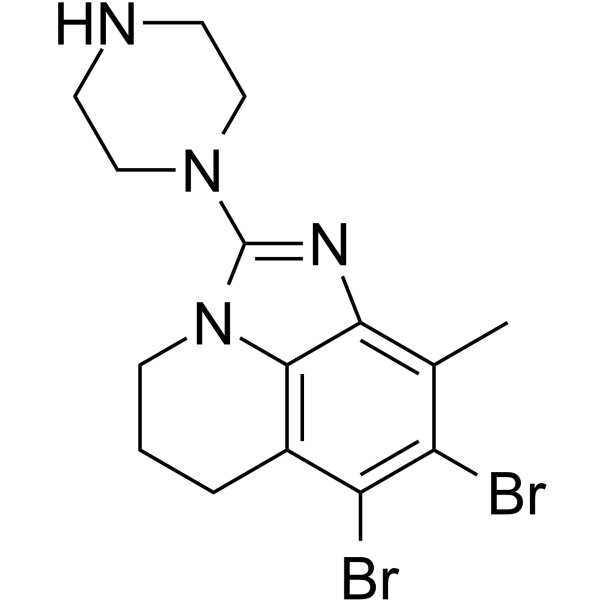
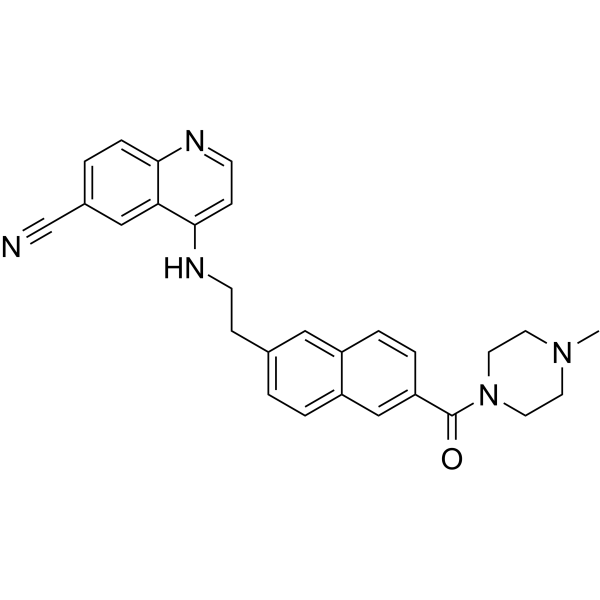 0 ImagesSenexin C is a selective and orally active CDK8/19 inhibitor. Senexin C shows a strong tumor-enrichment pharmacokinetic (PK) profile and tumor-pharmacodynamic (PD) marker responses. Senexin C inhibits the growth of MV4-11 leukemia cells with good tolerability.
-
Senexin A hydrochloride
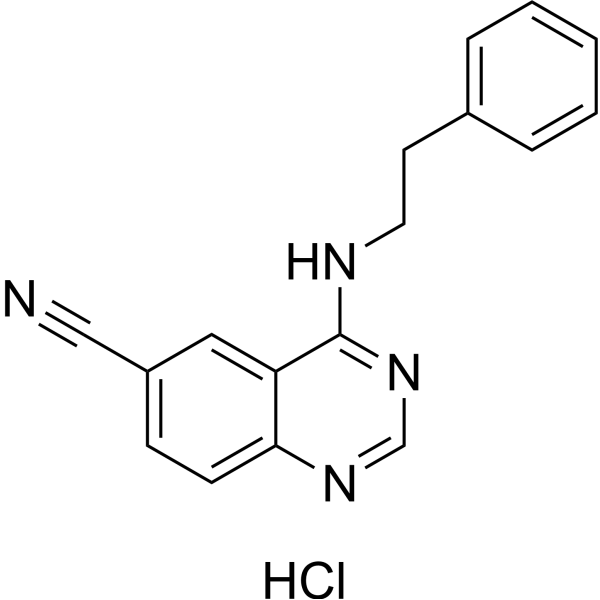 0 ImagesCat. No.: HY-15681ACAS No.: 1780390-76-2Senexin A hydrochloride is an inhibitor of CDK8/19 (IC50: 280 nM, CDK8) and an inhibitor downstream of p21 transcription. It only inhibits p21-induced transcription but does not inhibit other biological effects of p21. Senexin A hydrochloride inhibits CMV-GFP induction as well as the p21 stimulatory activity of the consensus NF-κB-dependent promoters.

-
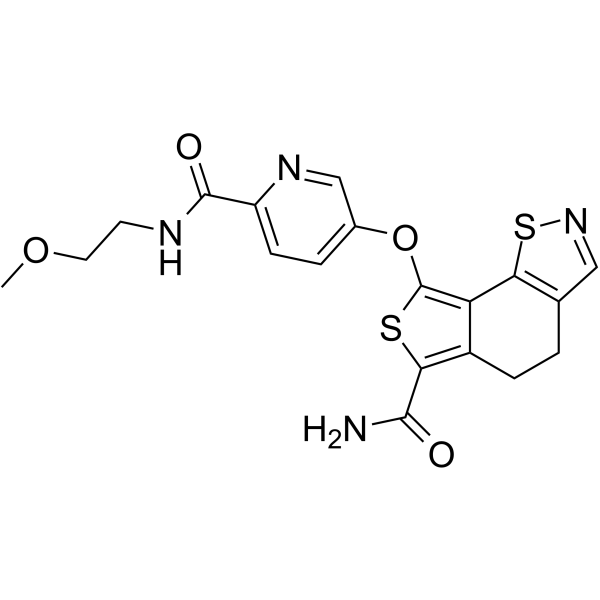
CDK8-IN-20
 0 ImagesCat. No.: HY-180124CDK8-IN-20 (Compound 67j) is a selective, potent and orally active type I CDK8 inhibitor with an IC50 of 70.5 nM. CDK8-IN-20 shows IC50 values of 147.8, 726.9 and 217.4 nM for homologous kinase CDK19, CDK7 and CDK9. CDK8-IN-20 can inhibit the Wnt/β-catenin pathway and downregulate the expression of β-catenin, Cyclin D1, and c-Myc. CDK8-IN-20 can induce ROS production and cause G2/M and S phase arrest. CDK8-IN-20can be used for the research of cancer, such as colon cancer.

- 1
- 2



