



Tambiciclib
Based on 1 publication(s) in Google Scholar
Tambiciclib (GFH009, JSH-009) is an orally active, highly potent and selective CDK9 inhibitor (IC50 = 1 nM), demonstrating >200-fold selectivity over other CDKs, >100-fold selectivity over DYRK1A/B, and excellent selectivity over 468 kinases/mutants. Tambiciclib demonstrates potent in vitro and in vivo antileukemic efficacy in acute myeloid leukemia (AML) mouse models by inhibiting RNA Pol II phosphorylation, downregulating MCL1 and MYC, and inducing apoptosis. Tambiciclib can be used for AML research.
Nos produits utilisent uniquement pour la recherche. Nous ne vendons pas aux patients.
- Pureté : 99.68%
- CAS No.: 2247481-08-7
- Formule: C25H35ClN6O2S
- Masse moléculaire:519.10
-
Stockage:
4°C, protect from light
* In solvent : -80°C, 6 months; -20°C, 1 month (protect from light)


To place orders, for customer services and technical support, please contact: MedChemExpress USA
Tel: 609-228-6898 E-mail: [email protected] [email protected]


-
 Activité biologique
-
Chemical Information
-
Solvant et solubilité
- Protocole
- Pureté et documentation
- Références
-
 Help & FAQs


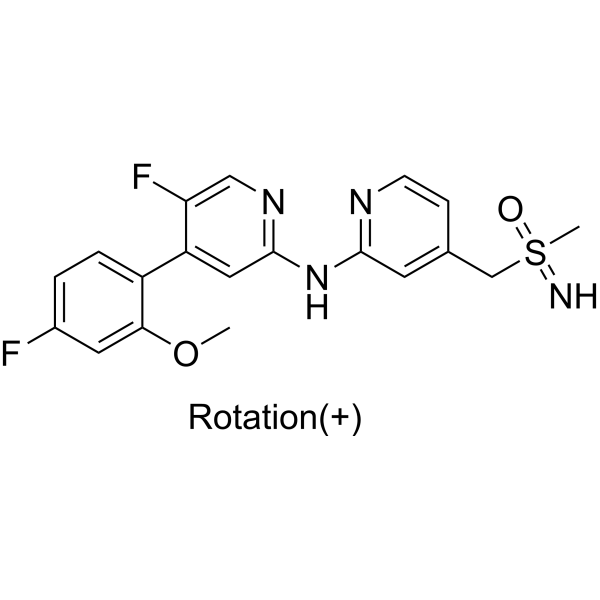
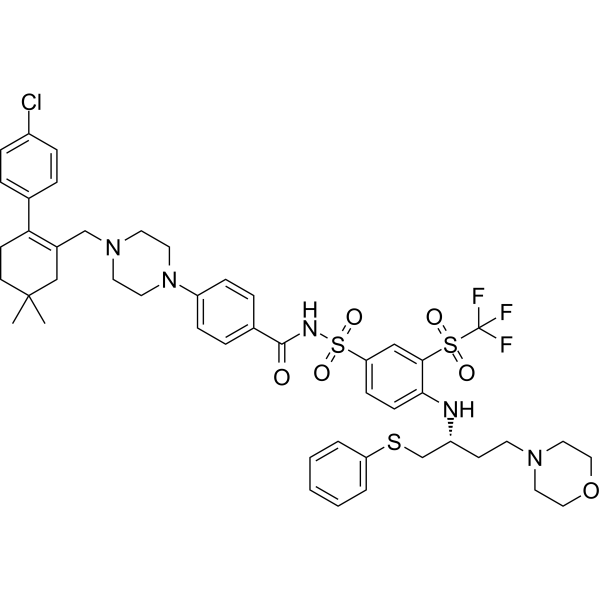
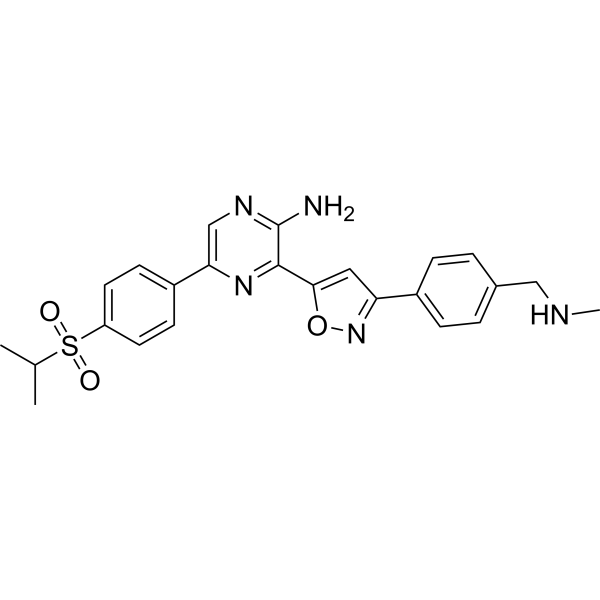
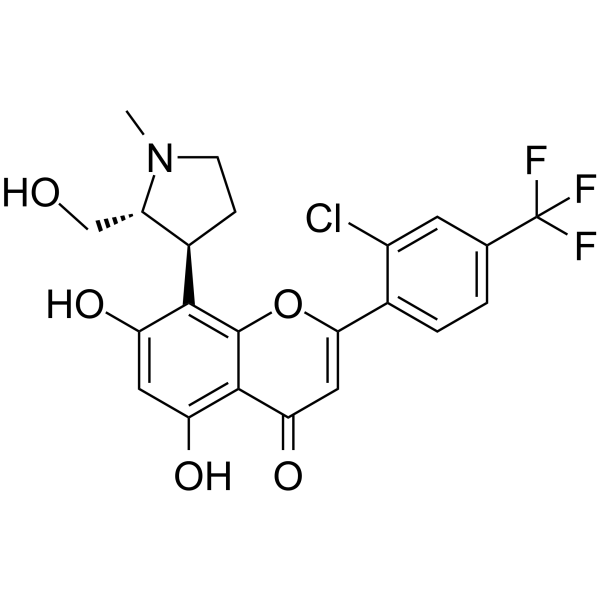
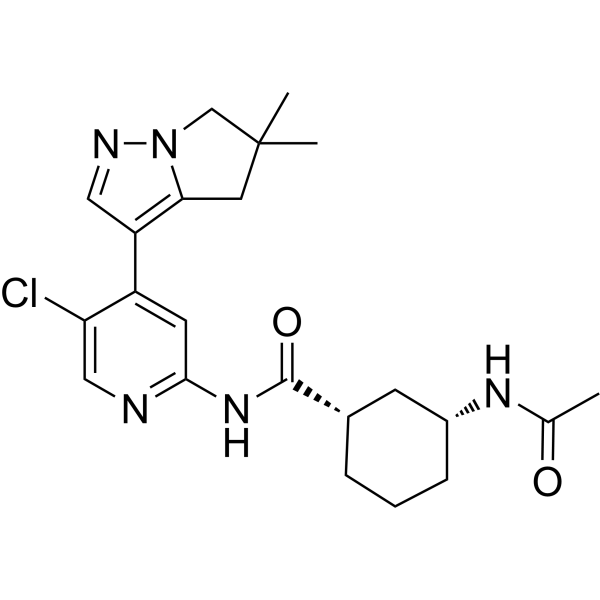
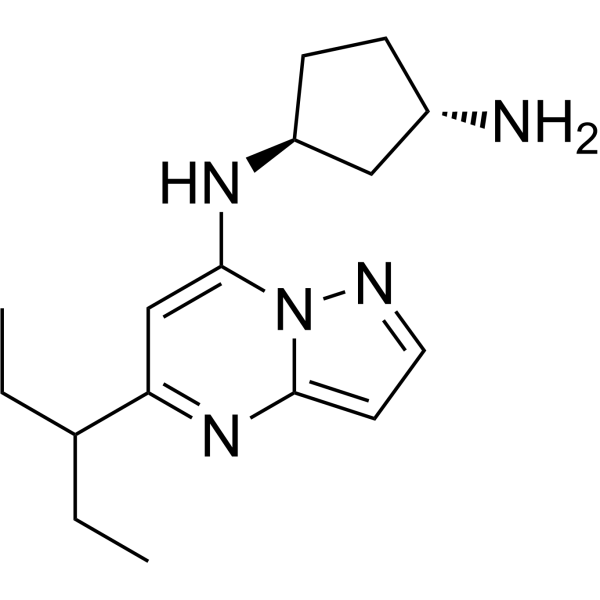
Publications Citing Use of MedChemExpress (MCE) Tambiciclib
MoreVoir tous les produits spécifiques à Isoform Caspase
MoreVoir tous les produits spécifiques à Isoform DNA/RNA Synthesis
More

Activité biologique
Description
IC50 & Target
[1]|
CDK9 1 nM (IC50) |
Cdk1/cyclin B 5410 nM (IC50) |
cdk2/cyclin A 6850 nM (IC50) |
CDK3/cyclin E1 >10000 nM (IC50) |
Cdk5/p25 6950 nM (IC50) |
CDK7/Cyclin H/MNAT1 3700 nM (IC50) |
CDK8/cyclin C >10000 nM (IC50) |
CDK11 >10000 nM (IC50) |
CDK14/Cyclin Y 2710 nM (IC50) |
CDK16/Cyclin Y 195 nM (IC50) |
Cellular Effect
|
Cell Line

|
Type | Value | Description | References |
|---|---|---|---|---|
| MV4-11 | GI50 |
0.014 μM
Compound: 41
|
Antiproliferative activity against human MV4-11 cells after 72 hrs by Celltiter-Glo assay
Antiproliferative activity against human MV4-11 cells after 72 hrs by Celltiter-Glo assay
|
[PMID: 30253346] |
In Vitro
Tambiciclib (JSH009) (72 h) potently inhibits the growth of diverse AML cell lines and patient-derived primary cells (GI50 < 50 nM), but is far less potent against normal peripheral blood mononuclear cells (PBMCs) (GI50 > 10 μM), supporting a favorable safety profile[1].
Tambiciclib (0.03-3 μM, 2 h) potently and dose-dependently inhibits the phosphorylation of RNA Pol II at Ser2 (EC50 < 300 nM) in OCI-AML-3, MV4-11, and HL-60 cells, while showing no effect on the CDK7-mediated phosphorylation of RNA Pol II at Ser5 or CDK9 at Thr186, confirming its high selectivity over CDK7[1].
Tambiciclib (0.03-0.1 μM, 10 h) downregulates MCL1 and MYC expression at the transcriptional level alongside a broader reduction in overall transcription in MV4-11 cells[1].
Tambiciclib (0.01-0.1 μM, 24 h) induces apoptosis in OCI-AML-3, MV4-11, and HL-60 cell lines, as evidenced by the cleavage of caspase-3 and PARP[1].
Tambiciclib (0.01-0.05 μM, 24 h) has no effect on the cell cycle distribution of MV4-11 and OCI-AML-3 cells, consistent with the lack of significant changes in the expression of key cell cycle regulators (E2F1, Cyclin D1, CDC2) in MV4-11 cells[1].
MedChemExpress (MCE) has not independently confirmed the accuracy of these methods. They are for reference only.
-
Cell Line:OCI-AML-3, MV4-11, and HL-60 cells
-
Concentration:0.03, 0.1, 0.3, 1, and 3 μM
-
Incubation Time:2 h
-
Result:Reduced p-RNA Pol II Ser2 and levels in a dose-dependent manner.
Did not affect the phosphorylation levels of RNA Pol II Ser5 or CDK9 Thr186, which are controlled by CDK7, even at a concentration of 3 μM.
Reduced MCL-1 and C-MYC protein levels.
-
Cell Line:MV4-11 cells
-
Concentration:0.03 and 0.1 μM
-
Incubation Time:10 h
-
Result:Decreased MYC and MCL1 mRNA levels in MV4-11 cells.
-
Cell Line:OCI-AML3, MV4-11, and HL-60 cells
-
Concentration:0.01, 0.03, and 0.1 μM
-
Incubation Time:24 h
-
Result:Increased cleaved-caspase3 and cleaved-PARP levels in all three cell lines.
Elicited a markedly weaker PARP cleavage signal in OCI-AML3 cells compared to MV4-11 and HL-60 cells.
Parmacokinetics
In Vivo
Tambiciclib (10 and 15 mg/kg, P.O., daily until endpoint) dose-dependently prolongs overall survival in the MV4-11 cell-derived engraftment mouse model[1].
Tambiciclib (10 and 20 mg/kg, P.O., daily for approximately 2 weeks) displays dose-dependent efficacy against antitumor progression in an AML patient-derived xenograft (PDX) mouse model[1].
MedChemExpress (MCE) has not independently confirmed the accuracy of these methods. They are for reference only.
-
Animal Model:Female NOD-SCID mice (5 weeks old) intravenously injected with MV4-11 cells[1]
-
Dosage:10 and 15 mg/kg
-
Administration:p.o., daily until endpoint
-
Result:Prolonged overall survival in a dose-dependent manner.
Achieved almost 200 days of survival in mice at 15 mg/kg.
-
Animal Model:Balb/c nu mice subcutaneously injected with MV4-11 cells[1]
-
Dosage:10 and 20 mg/kg
-
Administration:p.o., daily for 3 weeks
-
Result:Inhibited tumor growth with TGI of 25.2% at 10 mg/kg.
Almost completely suppressed tumor progression (TGI = 98.7%) at a 20 mg/kg dosage.
Revealed no apparent behavioral changes or body weight loss in mice.
Suppressed proliferation (Ki67) and induced apoptosis in a dose dependent manner.
-
Animal Model:Female NCG mice (5 weeks old) subcutaneously implanted with AML patient tumors[1]
-
Dosage:10 and 20 mg/kg
-
Administration:p.o., daily for approximately 2 weeks
-
Result:Resulted in a TGI of 53.4% without any apparent overall toxicity at 20 mg/kg.
Displayed dose-dependent efficacy against antitumor progression.
Downregulated the phosphorylation of RNA Pol II and Mcl1/MYC protein levels.
Essai clinique
| NCT Number | Sponsor | Condition | Start Date |
Phase
|
|---|---|---|---|---|
| NCT01329991 | Plexxikon| | 2011-05 | PHASE1 |


Chemical Information
-
CAS No. 2247481-08-7
-
Appearance Solid
-
Masse moléculaire 519.10
-
Formule C25H35ClN6O2S
-
Color White to yellow
-
SMILES
COC[C@@H](C)N[C@@H](CC1)CC[C@H]1NC2=CC(C3=CSC(NCC4(CCOCC4)C#N)=N3)=C(Cl)C=N2
-
Synonyms
GFH009; JSH-009; SLS009
-
Livraison
Room temperature in continental US; may vary elsewhere.
-
Stockage
4°C, protect from light
* In solvent : -80°C, 6 months; -20°C, 1 month (protect from light)


Publications (1)
-
Journal Impact Factor
-
Most Recent
-
Acta Pharm Sin B
2023 Sep;13(9):3694-3707. PMID: 37719386


Solvant et solubilité
In Vitro:
DMSO : 100 mg/mL (192.64 mM; Need ultrasonic; Hygroscopic DMSO has a significant impact on the solubility of product, please use newly opened DMSO)
Please refer to the solubility information to select the appropriate solvent. Once prepared, please aliquot and store the solution to prevent product inactivation from repeated freeze-thaw cycles.
Storage method and period of stock solution: -80°C, 6 months; -20°C, 1 month (protect from light). When stored at -80°C, please use it within 6 months. When stored at -20°C, please use it within 1 month.
Please refer to the solubility information to select the appropriate solvent. Once prepared, please aliquot and store the solution to prevent product inactivation from repeated freeze-thaw cycles.
Storage method and period of stock solution: -80°C, 6 months; -20°C, 1 month (protect from light). When stored at -80°C, please use it within 6 months. When stored at -20°C, please use it within 1 month.
Concentration (start) × Volume (start) = Concentration (final) × Volume (final)
In Vivo:
Select the appropriate dissolution method based on your experimental animal and administration route.
- For the following dissolution methods, please ensure to first prepare a clear stock solution using an In Vitro approach and then sequentially add co-solvents:
- To ensure reliable experimental results, the clarified stock solution can be appropriately stored based on storage conditions. As for the working solution for In Vivo experiments, it is recommended to prepare freshly and use it on the same day.
- The percentages shown for the solvents indicate their volumetric ratio in the final prepared solution. If precipitation or phase separation occurs during preparation, heat and/or sonication can be used to aid dissolution.
Add each solvent one by one: 10% DMSO 40% PEG300 5% Tween-80 45% Saline
Solubility: ≥ 5 mg/mL (9.63 mM); Clear solution
This protocol yields a clear solution of ≥ 5 mg/mL (saturation unknown).
Taking 1 mL working solution as an example, add 100 μL DMSO stock solution (50.0 mg/mL) to 400 μL PEG300, and mix evenly; then add 50 μL Tween-80 and mix evenly; then add 450 μL Saline to adjust the volume to 1 mL.
Preparation of Saline: Dissolve 0.9 g sodium chloride in ddH₂O and dilute to 100 mL to obtain a clear Saline solution.
Add each solvent one by one: 10% DMSO 90% (20% SBE-β-CD in Saline)
Solubility: ≥ 5 mg/mL (9.63 mM); Clear solution
This protocol yields a clear solution of ≥ 5 mg/mL (saturation unknown).
Taking 1 mL working solution as an example, add 100 μL DMSO stock solution (50.0 mg/mL) to 900 μL 20% SBE-β-CD in Saline, and mix evenly.
Preparation of 20% SBE-β-CD in Saline (4°C, storage for one week): 2 g SBE-β-CD powder is dissolved in 10 mL Saline, completely dissolve until clear.
In Vivo Dissolution Calculator
Please enter the basic information of animal experiments:
-
-
-
-
Recommended: Prepare an additional quantity of animals to account for potential losses during experiments.
Please enter your animal formula composition:
-
%DMSO +
Recommended: Keep the proportion of DMSO in working solution below 2% if your animal is weak.
-
%+
-
+%Tween-80 + +
-
%Saline +
The co-solvents required include: DMSO, . All of co-solvents are available by MedChemExpress (MCE). , Tween 80. All of co-solvents are available by MedChemExpress (MCE).
Working solution concentration: 0.22 mg/mL
Method for preparing stock solution: mg drug dissolved in μL DMSO. Stock solution concentration: mg/mL. * In solvent : -80°C, 6 months; -20°C, 1 month (protect from light)
1. Take μL DMSO stock solution;
2. Add μL .
μL , mix evenly;
3. Then add μL Tween 80, mix evenly;
4. Then add μL
Please ensure that the stock solution in the first step is dissolved to a clear state, and add co-solvents in sequence. You can use ultrasonic heating (ultrasonic cleaner, recommended frequency 20-40 kHz), vortexing, etc. to assist dissolution.


Pureté et documentation
-
Fiche technique (281 KB)
-
SDS (252 KB)
- English - EN (252 KB)
- Français - FR (252 KB)
- Deutsch - DE (252 KB)
- Norwegian - NO (252 KB)
- Español - ES (252 KB)
- Swedish - SV (252 KB)
- Italian - IT (252 KB)
- Korean - KR (252 KB)
- Portuguese - PT (252 KB)
-
Instruction de manipulation (2659 KB)
Références


Complete Stock Solution Preparation Table
Please refer to the solubility information to select the appropriate solvent. Once prepared, please aliquot and store the solution to prevent product inactivation from repeated freeze-thaw cycles.
Storage method and period of stock solution: -80°C, 6 months; -20°C, 1 month (protect from light). When stored at -80°C, please use it within 6 months. When stored at -20°C, please use it within 1 month.
| Optional Solvent | Concentration Solvent Mass | 1 mg | 5 mg | 10 mg | 25 mg |
|---|---|---|---|---|---|
| DMSO | 1 mM | 1.9264 mL | 9.6321 mL | 19.2641 mL | 48.1603 mL |
| 5 mM | 0.3853 mL | 1.9264 mL | 3.8528 mL | 9.6321 mL | |
| 10 mM | 0.1926 mL | 0.9632 mL | 1.9264 mL | 4.8160 mL | |
| 15 mM | 0.1284 mL | 0.6421 mL | 1.2843 mL | 3.2107 mL | |
| 20 mM | 0.0963 mL | 0.4816 mL | 0.9632 mL | 2.4080 mL | |
| 25 mM | 0.0771 mL | 0.3853 mL | 0.7706 mL | 1.9264 mL | |
| 30 mM | 0.0642 mL | 0.3211 mL | 0.6421 mL | 1.6053 mL | |
| 40 mM | 0.0482 mL | 0.2408 mL | 0.4816 mL | 1.2040 mL | |
| 50 mM | 0.0385 mL | 0.1926 mL | 0.3853 mL | 0.9632 mL | |
| 60 mM | 0.0321 mL | 0.1605 mL | 0.3211 mL | 0.8027 mL | |
| 80 mM | 0.0241 mL | 0.1204 mL | 0.2408 mL | 0.6020 mL | |
| 100 mM | 0.0193 mL | 0.0963 mL | 0.1926 mL | 0.4816 mL |


Tambiciclib Related Classifications
HY-X0009 Related Classifications
 Powered by Bioz