



CDK16
CDK16 (cyclin-dependent kinase 16, also known as PCTAIRE1/PCTK1) is an atypical member of the cyclin-dependent kinase family that regulates vesicle trafficking, exocytosis, neuronal differentiation, and spermatogenesis through serine/threonine kinase activity[1][2]. Unlike canonical cell-cycle CDKs, CDK16 requires interaction with Cyclin Y (CCNY) and associated 14-3-3 proteins for full activation, establishing a distinct regulatory mechanism within the CDK superfamily[3][4]. Mechanistically, AMPK-mediated phosphorylation of CCNY at Ser326 enhances CCNY-CDK16 complex formation and stimulates CDK16 kinase activity, linking cellular energy sensing to autophagy regulation[5]. Activated CCNY-CDK16 signaling promotes autophagic flux and is required for efficient AMPK-dependent autophagy through pathways involving ULK1 and Beclin1[5]. In disease-associated models, CDK16 contributes to tumor progression by supporting proliferation, survival, migration, and metastatic phenotypes in multiple cancer types, including triple-negative breast cancer and non-small cell lung cancer[6][7]. In triple-negative breast cancer, CDK16 promotes malignancy through phosphorylation of PRC1, supporting tumor growth and metastatic dissemination[6]. Compared with the closely related PFTAIRE kinases CDK14 and CDK15, only CDK16 efficiently stimulates autophagy downstream of CCNY signaling, indicating functional substrate specificity despite shared cyclin interactions[5]. For experimental applications, selective inhibition or genetic suppression of CDK16 has been used to investigate oncogenic signaling, mTOR pathway regulation, autophagy control, and kinase-dependent cellular phenotypes[7][8].
Verweise:
- [1]. Sun R, et al. Bromodomain-containing protein 2 induces insulin resistance via the mTOR/Akt signaling pathway and an inflammatory response in adipose tissue. Cell Signal. 2017 Jan;30:92-103. [Content Brief]
- [2]. Uniprotkb.
- [3]. Kohoutova K, et al. Structural basis of the cyclin Y/14-3-3 protein-mediated activation of CDK16. Nat Commun. 2026 Mar 20;17(1):4262. [Content Brief]
- [4]. Mikolcevic P, et al. Cyclin-dependent kinase 16/PCTAIRE kinase 1 is activated by cyclin Y and is essential for spermatogenesis. Mol Cell Biol. 2012 Feb;32(4):868-79. [Content Brief]
- [5]. Dohmen M, et al. AMPK-dependent activation of the Cyclin Y/CDK16 complex controls autophagy. Nat Commun. 2020 Feb 25;11(1):1032. [Content Brief]
- [6]. Li X, et al. CDK16 promotes the progression and metastasis of triple-negative breast cancer by phosphorylating PRC1. J Exp Clin Cancer Res. 2022 Apr 21;41(1):149. [Content Brief]
- [7]. Veeramani C, et al. Lavatera critica, a green leafy vegetable, controls high fat diet induced hepatic lipid accumulation and oxidative stress through the regulation of lipogenesis and lipolysis genes. Biomed Pharmacother. 2017 Dec;96:1349-1357. [Content Brief]
- [8]. Ćwiek P, et al. RNA interference screening identifies a novel role for PCTK1/CDK16 in medulloblastoma with c-Myc amplification. Oncotarget. 2015 Jan 1;6(1):116-29. [Content Brief]
All Product Categories
-
CDK16 Verwandte Produkte (8)
Verwandte Produkte (8)

-
Antibodies (1)
-
Tambiciclib
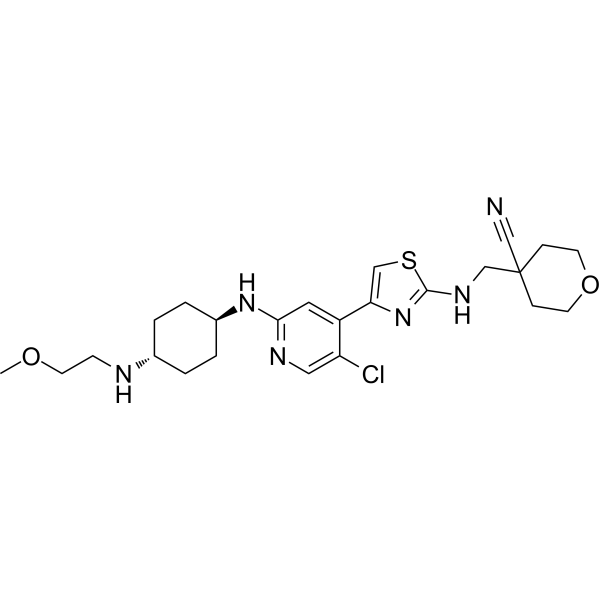
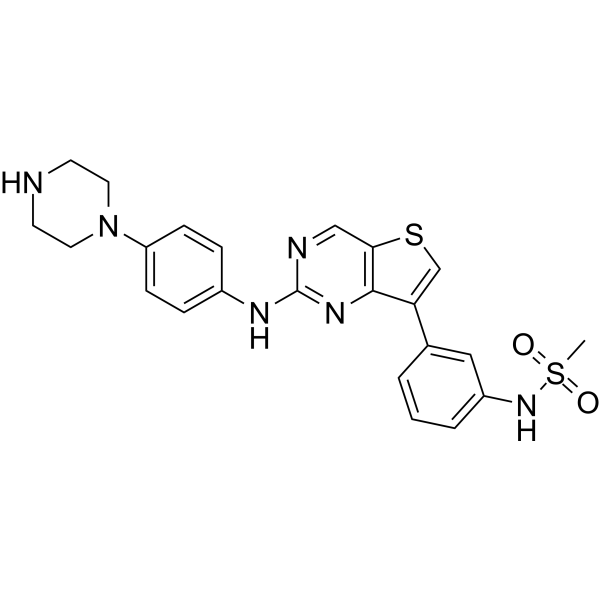
 0 ImagesSynonyms: GFH009; JSH-009; SLS009Tambiciclib (GFH009, JSH-009) is an orally active, highly potent and selective CDK9 inhibitor (IC50 = 1 nM), demonstrating >200-fold selectivity over other CDKs, >100-fold selectivity over DYRK1A/B, and excellent selectivity over 468 kinases/mutants. Tambiciclib demonstrates potent in vitro and in vivo antileukemic efficacy in acute myeloid leukemia (AML) mouse models by inhibiting RNA Pol II phosphorylation, downregulating MCL1 and MYC, and inducing apoptosis. Tambiciclib can be used for AML research.
-
RSS0680
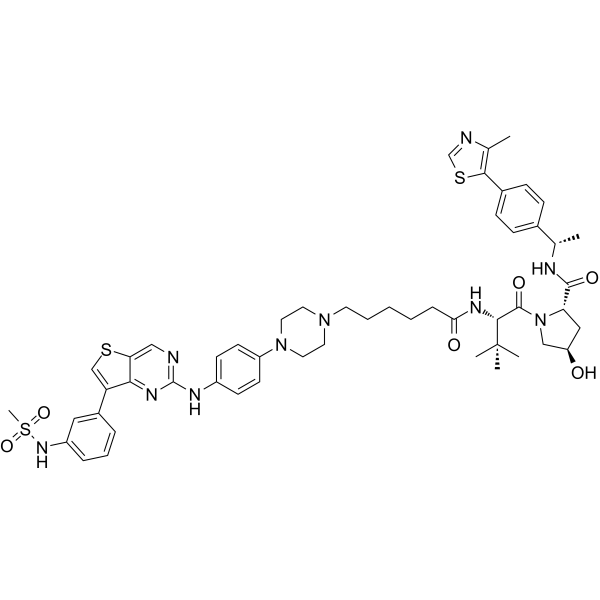 0 ImagesRSS0680 is a small noncoding RNA (sRNA) targeting the mRNA ribosome binding site (RBS) and a PROTAC. RSS0680 competitively binds to RBS through the conserved CCUCCUCCC anti-Shine-Dalgarno (aSD) sequence and inhibits the translation initiation of target genes. RSS0680 can interact with the DUF1127 protein CcaF1, regulate its own stability and participate in bacterial oxidative stress defense, enhancing the host's resistance to heat shock and oxidative damage by affecting pathways such as C1 metabolism and pyruvate dehydrogenase complex. RSS0680 degrades AAK1, CDK1, CDK16, CDK2, CDK4, CDK6, EIF2AK4, GAK, LATSl, LIMK2, MAPK6, MAPKAPK5, MARK2, MARK4, MKNK2, NEK9, RPS6KB1, SIK2, SNRK, STK17A, STK17B, STK35, and WEEl. RSS0680 can be used to study diseases or disorders mediated by aberrant kinase activity and regulatory mechanisms of noncoding RNAs in α-proteobacteria[1][2].
-
DB0614
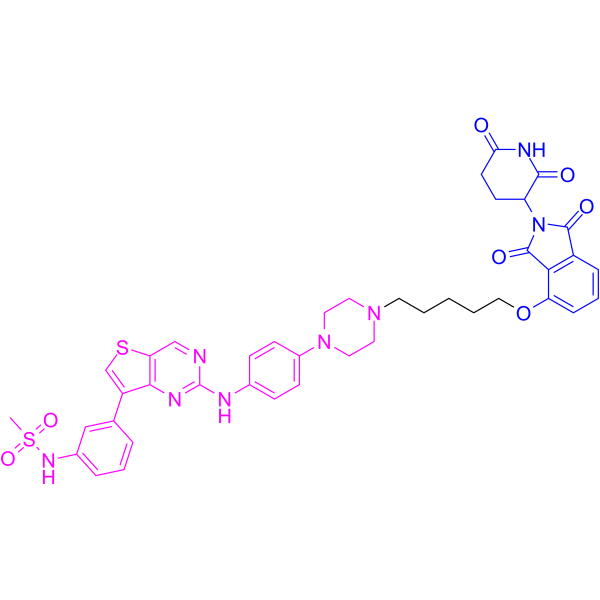 0 ImagesDB0614 is a PROTAC based on Cereblon ligand, which is a selective and potent targeted protein degrader of NEK9 inhibitor. DB0614 can degrade ABL1, ABL2, BLK, CDK11B, CDK4, CSK, EPHA3, FER, GAK, LIMK1, MAP3K20, MAP4K1, MAP4K2, MAP4K3, MAP4K5, MAPK14, MAPK7, MAPK8, MAPK9, MAPKAPK2, MAPKAPK3, NLK, PDIK1L, PTK2B, RIPK1, RPS6KA1, RPS6KA3, SIK2, SIK3, STK35, TNK2 and ULK1. DB0614 can be used for research of disease or disorder mediated by aberrant kinase activity.
-
Tambiciclib dimaleate
 0 ImagesSynonyms: GFH009 dimaleate; JSH-009 dimaleate; SLS009 dimaleateTambiciclib (GFH009, JSH-009) dimaleate is an orally active, highly potent and selective CDK9 inhibitor (IC50 = 1 nM), demonstrating >200-fold selectivity over other CDKs, >100-fold selectivity over DYRK1A/B, and excellent selectivity over 468 kinases/mutants. Tambiciclib dimaleate demonstrates potent in vitro and in vivo antileukemic efficacy in acute myeloid leukemia (AML) mouse models by inhibiting RNA Pol II phosphorylation, downregulating MCL1 and MYC, and inducing apoptosis. Tambiciclib dimaleate can be used for AML research.
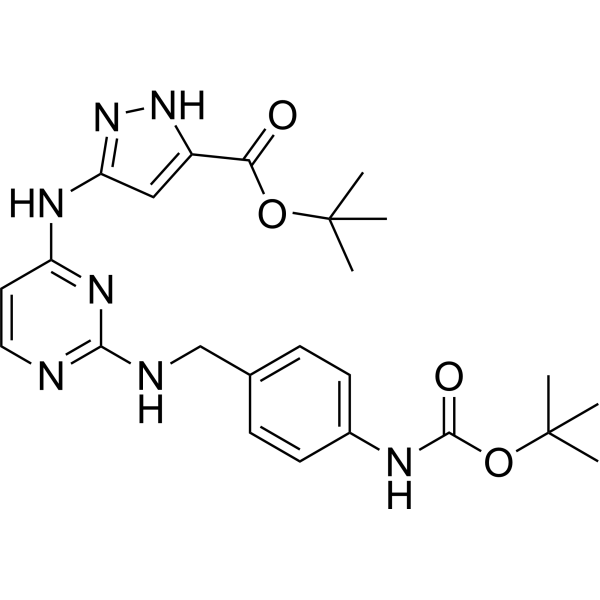
-
FLT3/ITD-IN-4
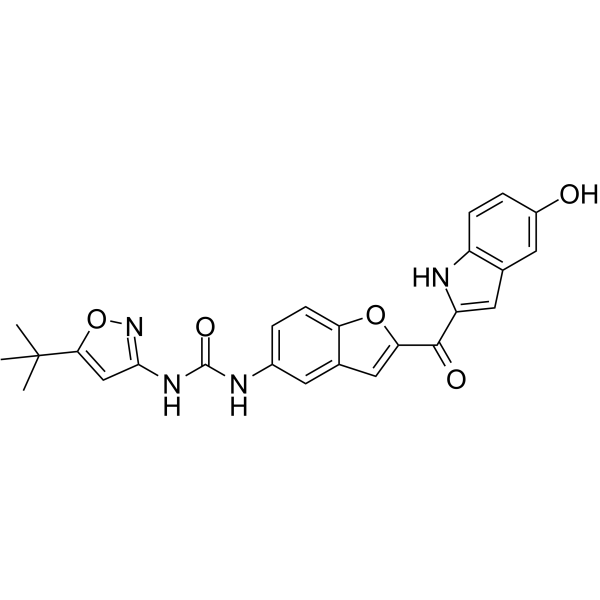 0 ImagesArt. -Nr.: HY-146680CAS. Nr.: 2278278-04-7FLT3/ITD-IN-4 (Compound 16) is a selective FMS-like tyrosine kinase 3 internal tandem duplications (FLT3-ITD) inhibitor with an IC50 of 2.3 nM. FLT3/ITD-IN-4 can be used for acute myeloid leukemia research.




