



ULK1
ULK1 is a serine/threonine kinase and a key initiator of mammalian autophagy, functioning near the apex of a nutrient-sensitive regulatory pathway[1]. Mechanistically, AMPK binds ULK1 and supports ULK1-mediated autophagy, while mTORC1 negatively regulates the ULK1 autophagic complex through phosphorylation-dependent control[2][3]. During starvation, ULK1 links cellular energy sensing to downstream autophagy machinery, including ATG13, FIP200/RB1CC1, ATG101, ATG14L, VPS34, and phagophore formation[3][4]. In disease models, altered ULK1 signaling has been connected with prostate cancer progression, prion infection, clear cell renal cell carcinoma, cardiomyocyte oxidative injury, and pathogen-related autophagy[5][6][7][8][9]. Compared with ULK2, ULK1 shows strong functional overlap in nutrient-starvation autophagy, because combined ULK1/ULK2 loss disrupts autophagy activation more clearly than single loss[10]. Compared with ULK3, ULK1 remains part of the canonical mTOR-AMPK autophagy axis, whereas ULK3 can support mTOR-insensitive autophagic flux in BIN1-deficient hippocampal neurons[11]. For experimental applications, ULK1 pathway modulation can be studied with AMPK activators, mTOR inhibitors, deubiquitinase inhibitor WP1130, and pathway inhibitors targeting CAMKK2-AMPK-ULK1 signaling[2][5][12].
References:
- [1]. Chan EY. Regulation and function of uncoordinated-51 like kinase proteins. Antioxid Redox Signal. 2012 Sep 1;17(5):775-85. doi: 10.1089/ars.2011.4396. Epub 2012 Jan 4. PMID: 22074133. et al. Regulation and function of uncoordinated-51 like kinase proteins. Antioxid Redox Signal. 2012 Sep 1;17(5):775-85. [Content Brief]
- [2]. Lee JW, et al. The association of AMPK with ULK1 regulates autophagy. PLoS One. 2010 Nov 3;5(11):e15394. [Content Brief]
- [3]. Roach PJ. AMPK -> ULK1 -> autophagy. Mol Cell Biol. 2011 Aug;31(15):3082-4. doi: 10.1128/MCB.05565-11. Epub 2011 May 31. PMID: 21628530; PMCID: PMC3147606. et al. AMPK -> ULK1 -> autophagy. Mol Cell Biol. 2011 Aug;31(15):3082-4. [Content Brief]
- [4]. Pyo KE, et al. ULK1 O-GlcNAcylation Is Crucial for Activating VPS34 via ATG14L during Autophagy Initiation. Cell Rep. 2018 Dec 4;25(10):2878-2890.e4. [Content Brief]
- [5]. Lin C, et al. Inhibition of CAMKK2 impairs autophagy and castration-resistant prostate cancer via suppression of AMPK-ULK1 signaling. Oncogene. 2021 Mar;40(9):1690-1705. [Content Brief]
- [6]. Fan XY, et al. Activation of the AMPK-ULK1 pathway plays an important role in autophagy during prion infection. Sci Rep. 2015 Oct 1;5:14728. [Content Brief]
- [7]. Radovanovic M, et al. Role of AMPK/mTOR-independent autophagy in clear cell renal cell carcinoma. J Investig Med. 2020 Dec;68(8):1386-1393. [Content Brief]
- [8]. Xie C, et al. A novel danshensu/tetramethypyrazine derivative attenuates oxidative stress-induced autophagy injury via the AMPK-mTOR-Ulk1 signaling pathway in cardiomyocytes. Exp Ther Med. 2021 Feb;21(2):118. [Content Brief]
- [9]. Yu Y, et al. Guanylate-Binding protein 2b regulates the AMPK/mTOR/ULK1 signalling pathway to induce autophagy during Mycobacterium bovis infection. Virulence. 2022 Dec;13(1):875-889. [Content Brief]
- [10]. McAlpine F, et al. Regulation of nutrient-sensitive autophagy by uncoordinated 51-like kinases 1 and 2. Autophagy. 2013 Mar;9(3):361-73. [Content Brief]
- [11]. Jin Y, et al. BIN1 deficiency enhances ULK3-dependent autophagic flux and reduces dendritic size in mouse hippocampal neurons. Autophagy. 2025 Jan;21(1):223-242. [Content Brief]
- [12]. Drießen S, et al. Deubiquitinase inhibition by WP1130 leads to ULK1 aggregation and blockade of autophagy. Autophagy. 2015;11(9):1458-70. [Content Brief]
-
ULK1 Related Products (30)
Related Products (30)

-
Antibodies (2)
- 1
- 2
-
MRT68921
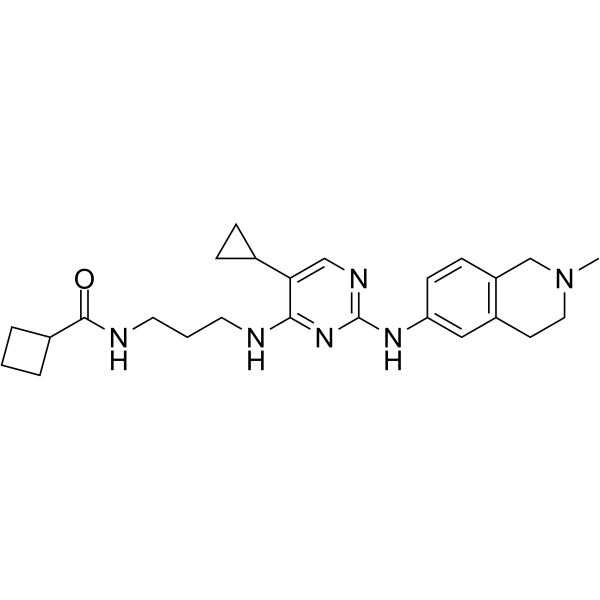 0 ImagesMRT68921 is a potent NUAK1/ULK1 dual inhibitor. MRT68921 inhibits ULK1 and ULK2 with IC50 values of 2.9 nM and 1.1 nM, respectively. MRT68921 can block cells autophagy and kill tumor cells by breaking the balance of oxidative stress signals. MRT68921 can inhibit cell proliferation and induce ROS production and apoptosis. MRT68921 can be used for the research of cancer, such as breast cancer.
-
DCC-3116
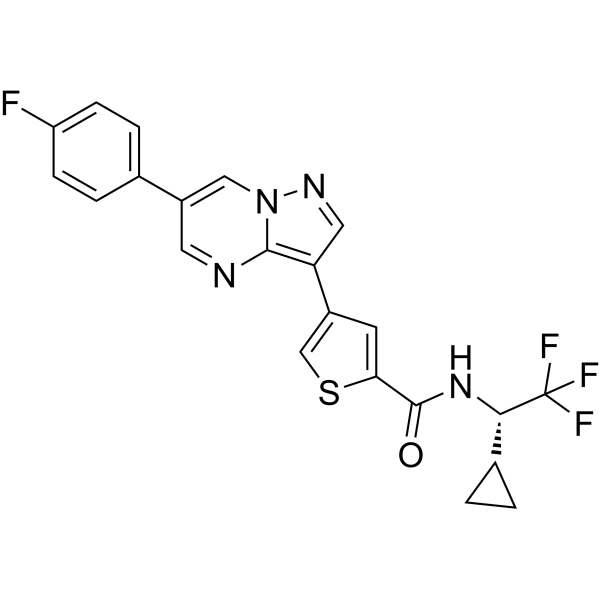
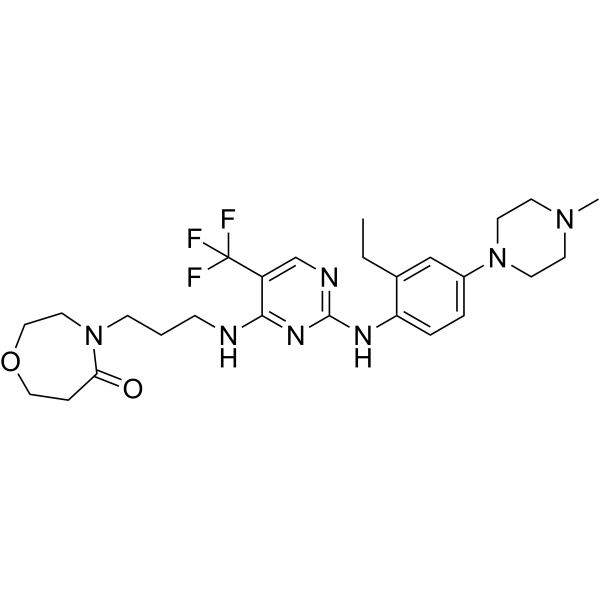 0 ImagesDCC-3116 is an orally active ULK1/2 inhibitor. DCC-3116 can inhibit autophagy in lung cancer cells by inhibiting KRASG12C signaling, thereby inhibiting the proliferation of lung cancer cells and exerting anti-cancer effects.
-
DB1113
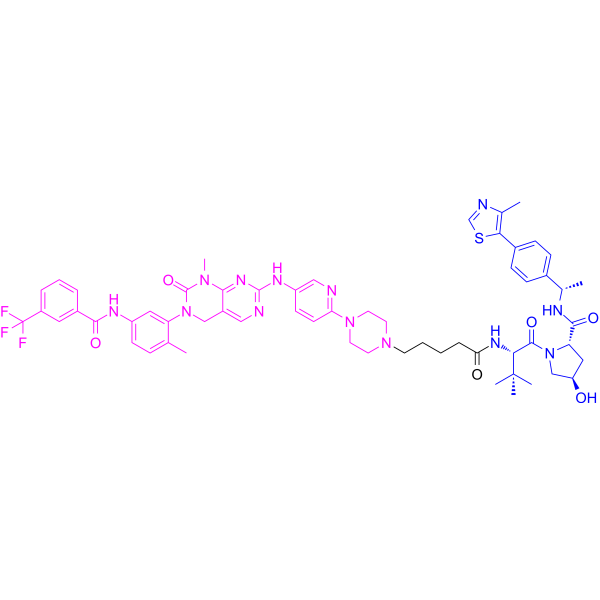 0 ImagesDB1113 is a multi-kinase PROTAC degrader. DB1113 induces the ubiquitination and degradation of ABL1, ABL2, BLK, CDK11B, CDK4, CSK, EPHA3, FER, GAK, LIMK1, MAP3K20, MAP4K1, MAP4K2, MAP4K3, MAP4K5, MAPK14, MAPK7, MAPK8, MAPK9, MAPKAPK2, MAPKAPK3, NLK, PDIK1L, PTK2B, RIPK1, RPS6KA1, RPS6KA3, SIK2, SIK3, STK35, TNK2, and ULK1. DB1113 can be used to study diseases or disorders mediated by aberrant kinase activity.
-
DB0614
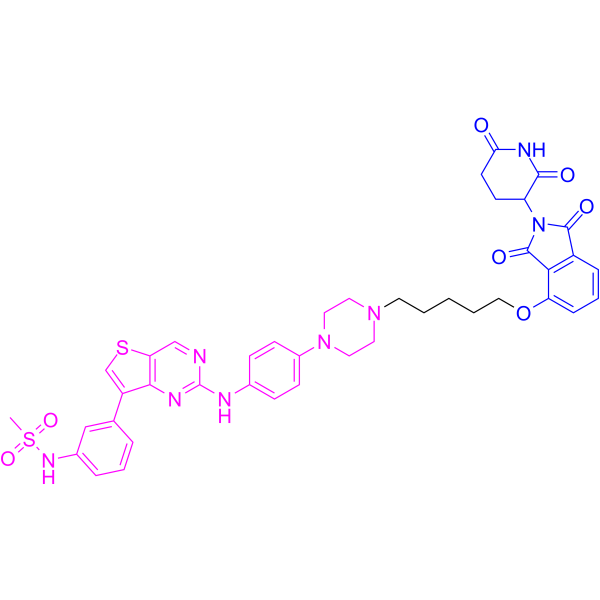 0 ImagesDB0614 is a PROTAC based on Cereblon ligand, which is a selective and potent targeted protein degrader of NEK9 inhibitor. DB0614 can degrade ABL1, ABL2, BLK, CDK11B, CDK4, CSK, EPHA3, FER, GAK, LIMK1, MAP3K20, MAP4K1, MAP4K2, MAP4K3, MAP4K5, MAPK14, MAPK7, MAPK8, MAPK9, MAPKAPK2, MAPKAPK3, NLK, PDIK1L, PTK2B, RIPK1, RPS6KA1, RPS6KA3, SIK2, SIK3, STK35, TNK2 and ULK1. DB0614 can be used for research of disease or disorder mediated by aberrant kinase activity.
-
GW296115
 0 ImagesGW296115 is a multi-target inhibitor with the following IC50 values against its targets: 8.4 nM for BRSK2, 21 nM for BRSK1, 1.8 μM for PDGFRβ, 5.5 nM for STK17B/DRAK2, 28 nM for DRAK1, 20 nM for PHKG1, and 89 nM for DCAMKL3. GW296115 downregulates the phosphorylation of S317 site on ULK1 and S351 site on P62, which are AMPK substrates driven by BRSK2. GW296115 does not alter the phosphorylation level of AMPK at T172, reduces nutrient deprivation-mediated Autophagy and autophagosome formation, and enhances Apoptosis. GW296115 exhibits anticancer activity against triple-negative breast cancer. GW296115 is applicable for breast cancer-related research.
-
MRT68921 dihydrochloride
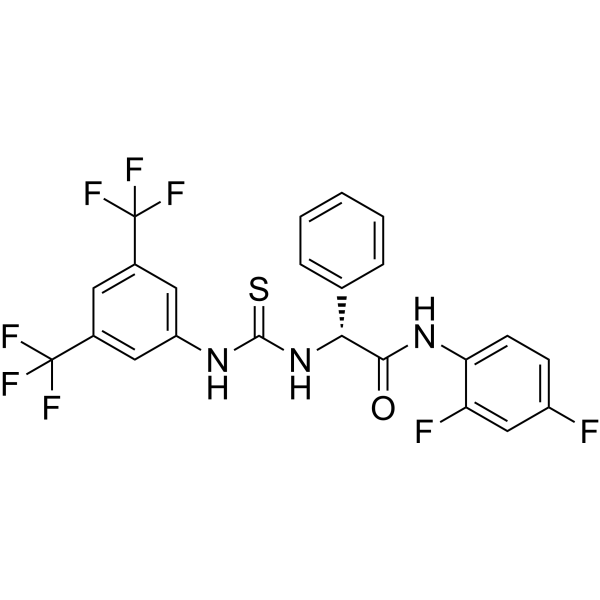
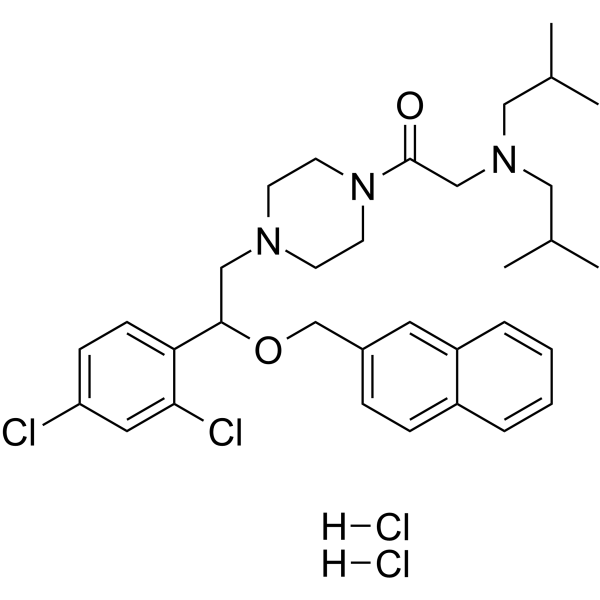
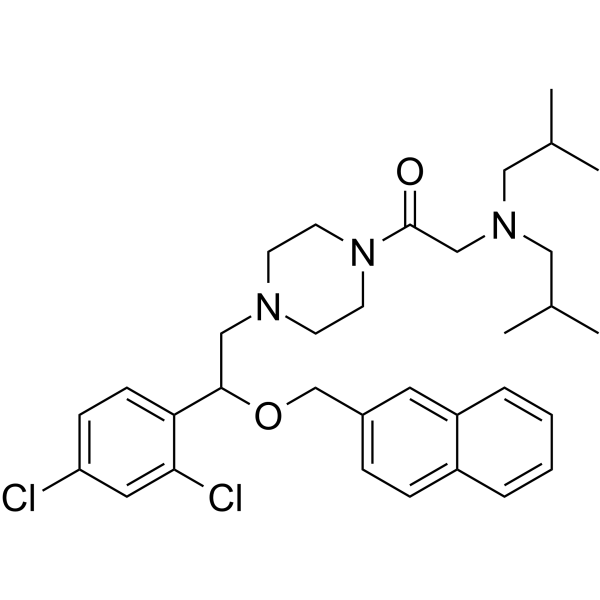
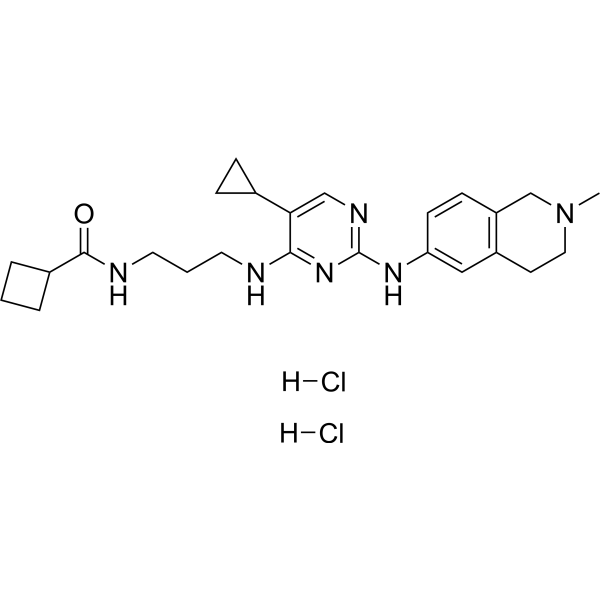 0 ImagesMRT68921 dihydrochloride is a potent NUAK1/ULK1 dual inhibitor. MRT68921 dihydrochloride inhibits ULK1 and ULK2 with IC50 values of 2.9 nM and 1.1 nM, respectively. MRT68921 dihydrochloride can block cells autophagy and kill tumor cells by breaking the balance of oxidative stress signals. MRT68921 dihydrochloride can inhibit cell proliferation and induce ROS production and apoptosis. MRT68921 dihydrochloride can be used for the research of cancer, such as breast cancer.
-
SBP-7455
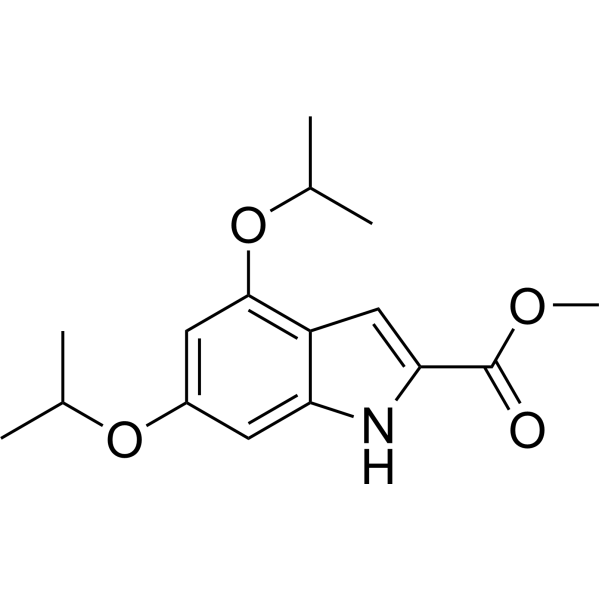
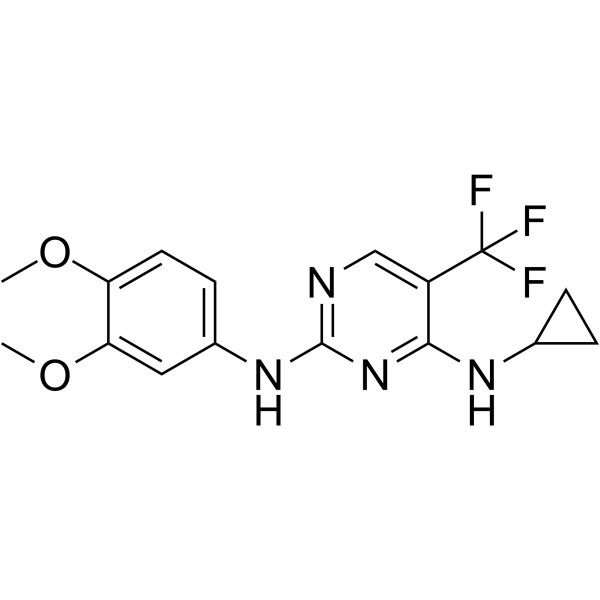 0 ImagesSBP-7455 is a potent, high affinity and orally active dual ULK1/ULK2 autophagy inhibitor with IC50s of 13 nM and 476 nM in the ADP-Glo assays, respectively. SBP-7455 potently inhibits ULK1/2 enzymatic activity and can be used for triple-negative breast cancer (TNBC) research.
-
SBP-1750
 0 ImagesSBP-1750 is an orally active ULK inhibitor and an ATG13 degrader. SBP-1750 strongly inhibits ULK1/2 activity, with IC50 values of 8 and 50 nM, respectively. SBP-1750 induces ATG13 degradation, with an EC50 value of 114 nM. SBP-1750 can inhibit autophagy in cancer cells and induce cell death. SBP-1750 can be used in cancer research, such as for pancreatic cancer.
-
LYN-1604 hydrochloride
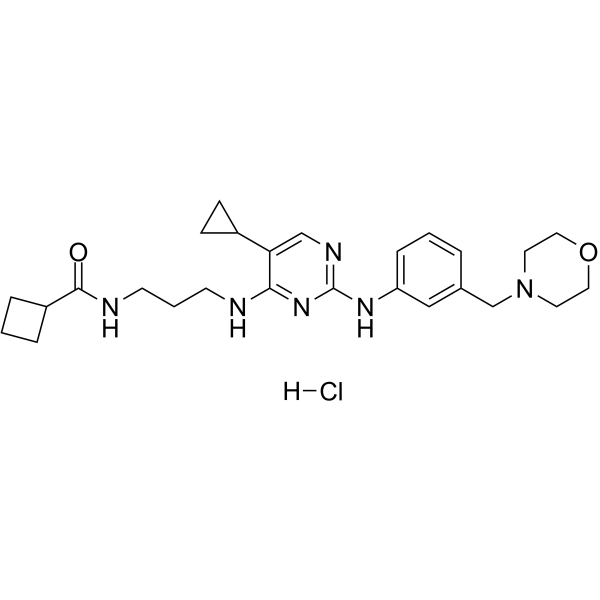
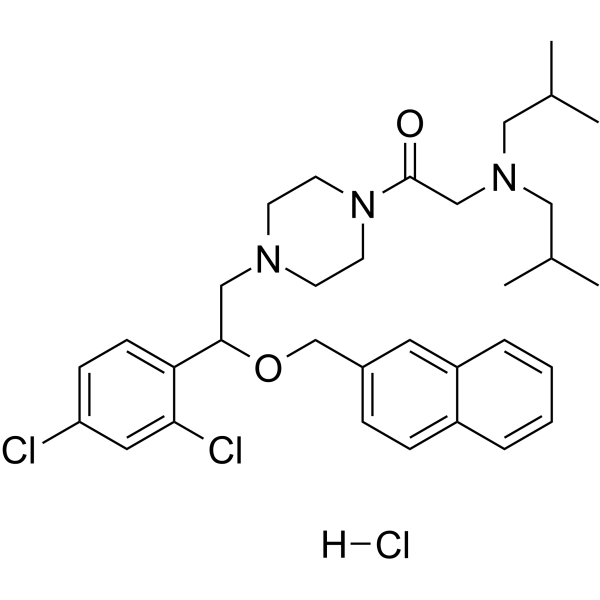 0 ImagesCat. No.: HY-101923ACAS No.: 2216753-86-3
-
MR-2088
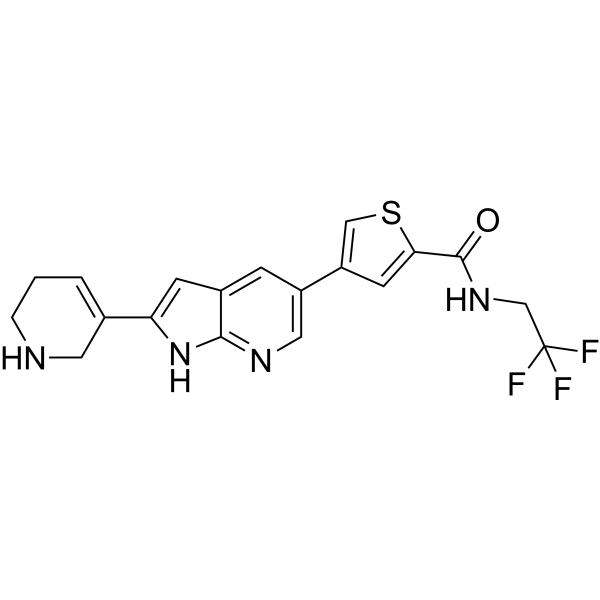 0 ImagesMR-2088 is a reversible, ATP-competitive, and selective ULK1/2 inhibitor with pEC50 values of 8.3 and 8.7 respectively. MR-2088 effectively inhibits autophagic flux and demonstrates a synergistic antiproliferative effect with Trametinib (HY-10999) (MEK inhibitor) in vitro. MR-2088 can be used for non-small lung cell cancer (NSCLC) research.
-
PARP7-IN-27
 0 ImagesCat. No.: HY-189217CAS No.: 3051563-45-9PARP7-IN-27 is a blood-brain barrier-permeable and selective PARP7 inhibitor with an IC50 of 22.8 nM. PARP7-IN-27 alleviates neuroinflammation and astrocyte activation, mitigates autophagy-related alterations, reduces the levels of ischemia-associated pro-inflammatory factors, and maintains the expression of synaptic markers. PARP7-IN-27 can be used in studies related to ischemic stroke.
- 1
- 2




