



CDK11
CDK11 is a serine/threonine cyclin-dependent kinase that regulates transcription, RNA splicing, apoptosis, and cell-cycle progression, thereby supporting cellular proliferation and survival programs[1][2]. Mechanistically, CDK11 participates in transcriptional complexes and RNA-processing pathways, while mitosis-associated CDK11 activity contributes to cytokinetic abscission through regulation of Aurora B-dependent checkpoint signaling[1][3][4]. In cancer models, elevated CDK11 expression has been reported in breast cancer, osteosarcoma, liposarcoma, and other malignancies, where CDK11 depletion suppresses proliferation, induces apoptosis, and disrupts cell-cycle progression[1][2][5]. Compared with related isoforms, CDK11^p110 is primarily associated with transcriptional and RNA-processing functions, whereas CDK11^p58 is linked to mitotic regulation, cytokinesis, cell-cycle arrest, and apoptosis-dependent processes[2][4]. This isoform distinction is particularly important in experimental cancer research because CDK11^p110 supports tumor-cell growth, while CDK11^p58 has been reported as a negative regulator in breast cancer models[2]. For research applications, RNA interference-mediated CDK11 silencing is widely used to evaluate tumor-cell dependency on CDK11 signaling, and emerging CDK11-targeted inhibitor studies further support its value as a therapeutic investigation platform[1][2][5].
References:
- [1]. Zhou Y, et al. The emerging roles and therapeutic potential of cyclin-dependent kinase 11 (CDK11) in human cancer. Oncotarget. 2016 Jun 28;7(26):40846-40859. doi: 10.18632/oncotarget.8519. PMID: 27049727; PMCID: PMC5130049. [Content Brief]
- [2]. Zhou Y, et al. Cyclin-dependent kinase 11(p110) (CDK11(p110)) is crucial for human breast cancer cell proliferation and growth. Sci Rep. 2015 May 20;5:10433. [Content Brief]
- [3]. Kelso S, et al. Crystal structure of the CDK11 kinase domain bound to the small-molecule inhibitor OTS964. Structure. 2022 Dec 1;30(12):1615-1625.e4. [Content Brief]
- [4]. Renshaw MJ, et al. CDK11p58-cyclin L1β regulates abscission site assembly. J Biol Chem. 2019 Dec 6;294(49):18639-18649. [Content Brief]
- [5]. Jia B, et al. Cyclin-dependent kinase 11 (CDK11) is crucial in the growth of liposarcoma cells. Cancer Lett. 2014 Jan 1;342(1):104-12. [Content Brief]
All Product Categories
-
CDK11 Related Products (9)
Related Products (9)

-
OTS964 hydrochloride
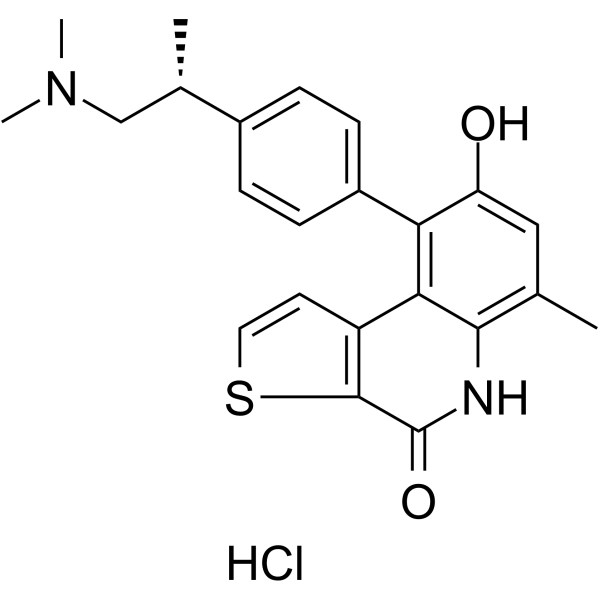 0 ImagesOTS964 hydrochloride is an orally active, high affinity and selective TOPK (T-lymphokine-activated killer cell-originated protein kinase) inhibitor with an IC50 of 28 nM. OTS964 hydrochloride is also a potent inhibitor of the cyclin-dependent kinase CDK11, which binds to CDK11B with a Kd of 40 nM.
-
Tambiciclib
 0 ImagesSynonyms: GFH009; JSH-009; SLS009Tambiciclib (GFH009, JSH-009) is an orally active, highly potent and selective CDK9 inhibitor (IC50 = 1 nM), demonstrating >200-fold selectivity over other CDKs, >100-fold selectivity over DYRK1A/B, and excellent selectivity over 468 kinases/mutants. Tambiciclib demonstrates potent in vitro and in vivo antileukemic efficacy in acute myeloid leukemia (AML) mouse models by inhibiting RNA Pol II phosphorylation, downregulating MCL1 and MYC, and inducing apoptosis. Tambiciclib can be used for AML research.
-
DB1113
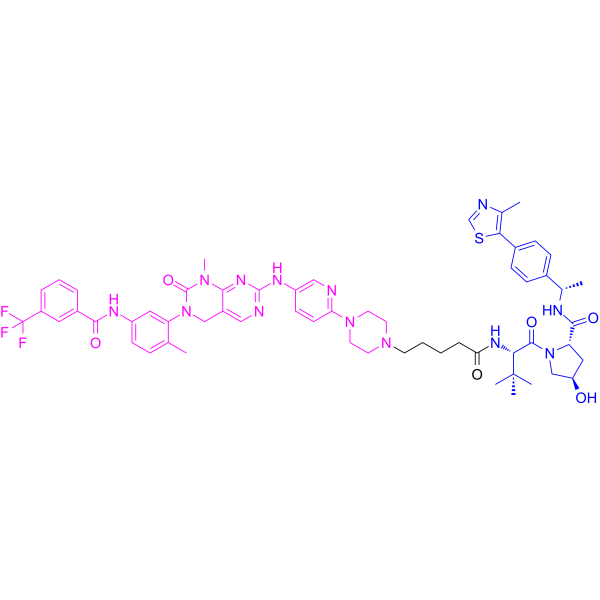 0 ImagesDB1113 (Example 24) is a bifunctional compound targeted protein degradation of kinases. DB1113 degrades ABL1, ABL2, BLK, CDK11B, CDK4, CSK, EPHA3, FER, GAK, LIMK1, MAP3K20, MAP4K1, MAP4K2, MAP4K3, MAP4K5, MAPK14, MAPK7, MAPK8, MAPK9, MAPKAPK2, MAPKAPK3, NLK, PDIK1L, PTK2B, RIPK1, RPS6KA1, RPS6KA3, SIK2, SIK3, STK35, TNK2, and ULK1. DB1113 can be used for research of disease or disorder mediated by aberrant kinase activity.

-
BI-1622
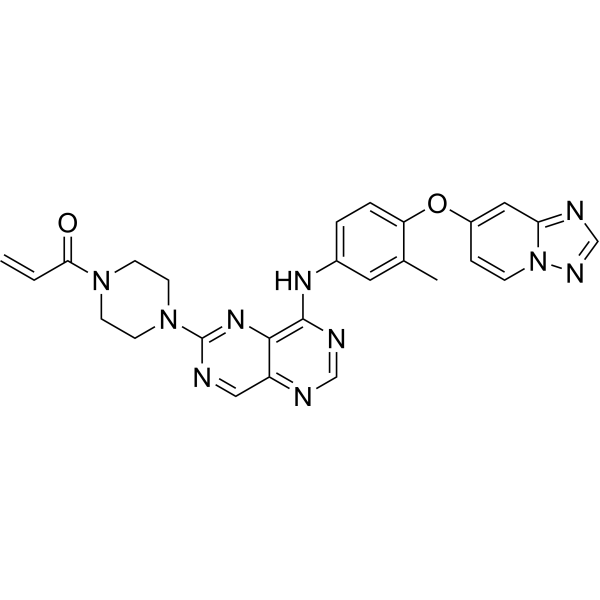 0 ImagesBI-1622 is an orally active, potent and highly selective HER2 (ERBB2) inhibitor, with an IC50 of 7 nM. BI-1622 shows greater than 25-fold selectivity over EGFR. BI-1622 shows high antitumor efficacy in vivo in xenograft mouse tumor models with engineered H2170 and PC9 cells and had a favorable agent metabolism and pharmacokinetics profile.
-
CDK11-IN-1 hydrochloride
 0 ImagesCat. No.: HY-182764ACDK11-IN-1 hydrochloride is an orally active cyclin-dependent kinase 11 (CDK11) inhibitor with an IC50 of 4 nM, and it exhibits high selectivity against other kinases including CDK7 and CDK9. CDK11-IN-1 hydrochloride inhibits tumor growth in lung cancer xenograft models. CDK11-IN-1 hydrochloride can be used for lung cancer research.
-
CDK11-IN-1
 0 ImagesCat. No.: HY-182764CDK11-IN-1 is an orally active cyclin-dependent kinase 11 (CDK11) inhibitor with an IC50 of 4 nM, and it exhibits high selectivity against other kinases including CDK7 and CDK9. CDK11-IN-1 inhibits tumor growth in lung cancer xenograft models. CDK11-IN-1 can be used for lung cancer research.
-
Tambiciclib dimaleate
 0 ImagesSynonyms: GFH009 dimaleate; JSH-009 dimaleate; SLS009 dimaleateTambiciclib (GFH009, JSH-009) dimaleate is an orally active, highly potent and selective CDK9 inhibitor (IC50 = 1 nM), demonstrating >200-fold selectivity over other CDKs, >100-fold selectivity over DYRK1A/B, and excellent selectivity over 468 kinases/mutants. Tambiciclib dimaleate demonstrates potent in vitro and in vivo antileukemic efficacy in acute myeloid leukemia (AML) mouse models by inhibiting RNA Pol II phosphorylation, downregulating MCL1 and MYC, and inducing apoptosis. Tambiciclib dimaleate can be used for AML research.
-
OTS964
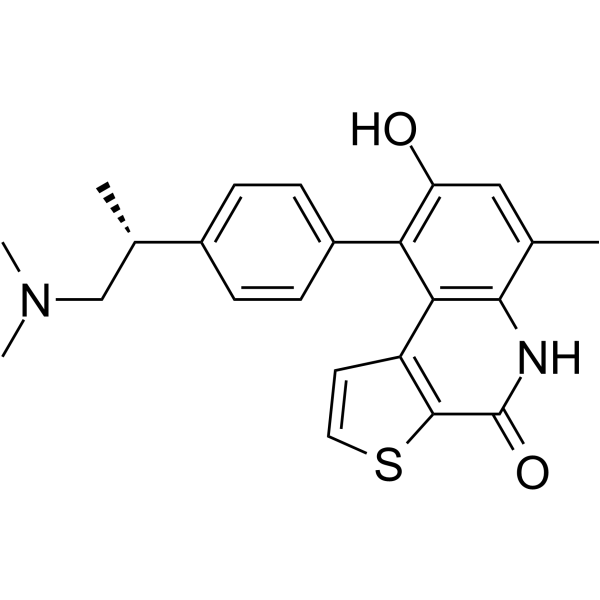 0 ImagesCat. No.: HY-19718CAS No.: 1338542-14-5OTS964 is an orally active, high affinity and selective TOPK inhibitor with an IC50 of 28 nM. OTS964 is also a potent inhibitor of the cyclin-dependent kinase CDK11, which binds to CDK11B with a Kd of 40 nM.



