



Mcl-1
Mcl-1 (myeloid cell leukemia-1) is a critical anti-apoptotic member of the BCL-2 protein family that preserves mitochondrial integrity by restraining the pro-apoptotic effectors BAK and BAX and preventing mitochondrial outer membrane permeabilization (MOMP)[1][2]. Mechanistically, Mcl-1 contains a hydrophobic BH3-binding groove that sequesters pro-apoptotic proteins and suppresses stress-induced apoptosis, thereby maintaining cell survival under physiological and pathological conditions[1][3]. Within the intrinsic apoptotic pathway, BH3-only proteins including NOXA, BIM, PUMA, and BID antagonize anti-apoptotic BCL-2 family members, and NOXA displays notable selectivity toward Mcl-1, promoting apoptotic signaling through Mcl-1 neutralization and degradation[4][5][6]. In cancer models, Mcl-1 overexpression contributes to tumor progression, chemoresistance, and disease relapse, highlighting its role as a major survival factor in malignant cells[7][8]. Compared with related anti-apoptotic isoforms such as BCL-2 and BCL-xL, Mcl-1 exhibits distinct binding preferences and plays a particularly important role in restraining BAK-dependent apoptosis, indicating non-redundant functions within the BCL-2 family network[9][10]. For experimental applications, selective Mcl-1 inhibitors and BH3 mimetics, including MCL-1 SAHB and S63845, disrupt Mcl-1-BAK interactions and induce apoptosis in MCL-1-dependent cancer cells, providing valuable tools for mechanistic studies and therapeutic target validation[11][12].
References:
- [1]. Chipuk JE, et al. How do BCL-2 proteins induce mitochondrial outer membrane permeabilization? Trends Cell Biol. 2008 Apr;18(4):157-64. [Content Brief]
- [2]. Willis SN, et al. Proapoptotic Bak is sequestered by Mcl-1 and Bcl-xL, but not Bcl-2, until displaced by BH3-only proteins. Genes Dev. 2005;19(11):1294-1305.
- [3]. Huang K, et al. BH3-only proteins target BCL-xL/MCL-1, not BAX/BAK, to initiate apoptosis. Cell Res. 2019 Nov;29(11):942-952. [Content Brief]
- [4]. Roufayel R, et al. BH3-only proteins Noxa and Puma are key regulators of induced apoptosis. Life (Basel). 2022;12(2):256.
- [5]. Albert MC, et al. CHIP ubiquitylates NOXA and induces its lysosomal degradation in response to DNA damage. Cell Death Dis. 2020;11:740.
- [6]. Willis SN, et al. Life in the balance: how BH3-only proteins induce apoptosis. Curr Opin Cell Biol. 2005;17(6):617-625.
- [7]. Lee EF, et al. A novel BH3 ligand that selectively targets Mcl-1 reveals that apoptosis can proceed without Mcl-1 degradation. J Cell Biol. 2008;180(2):341-355.
- [8]. Nakajima W, et al. The anti-apoptotic protein MCL1, a novel target of lung cancer therapy[J]. Journal of Cancer Treatment and Diagnosis, 2018, 2(1).
- [9]. Zhai D, et al. Differential regulation of Bax and Bak by anti-apoptotic Bcl-2 family proteins Bcl-B and Mcl-1. J Biol Chem. 2008 Apr 11;283(15):9580-6. [Content Brief]
- [10]. Willis SN, et al. Life in the balance: how BH3-only proteins induce apoptosis. Curr Opin Cell Biol. 2005 Dec;17(6):617-25. [Content Brief]
- [11]. Stewart ML, et al. The MCL-1 BH3 helix is an exclusive MCL-1 inhibitor and apoptosis sensitizer. Nat Chem Biol. 2010 Aug;6(8):595-601. [Content Brief]
- [12]. Greaves G, et al. BH3-only proteins are dispensable for apoptosis induced by pharmacological inhibition of both MCL-1 and BCL-XL. Cell Death Differ. 2019;26:1037-1047.
-
Mcl-1 Related Products (97)
Related Products (97)

-
Antibodies (1)
-
S63845
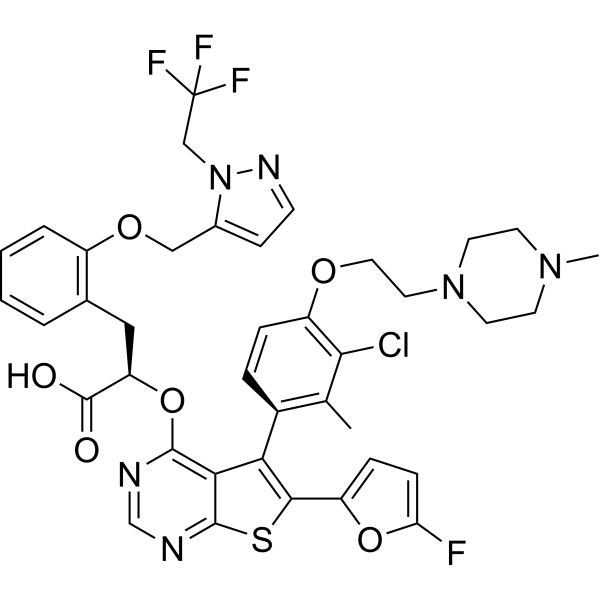 0 ImagesS63845 is a potent and selective myeloid cell leukemia 1 (MCL1) inhibitor with a Kd of 0.19 nM for human MCL1.
-
ABT-737
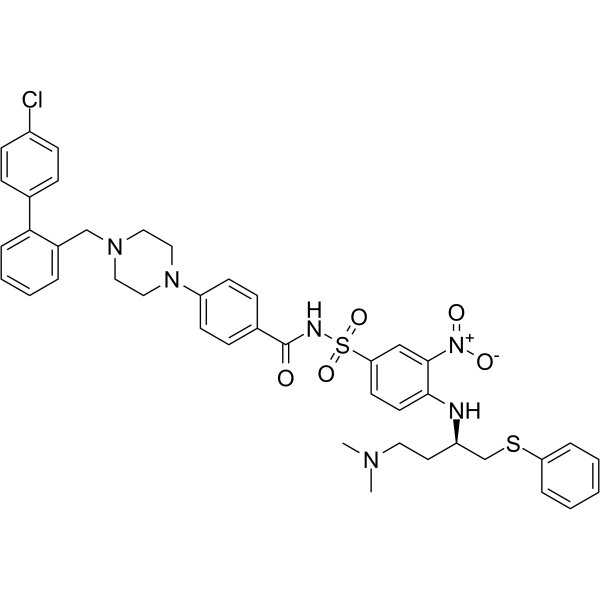 0 ImagesABT-737, a BH3 mimetic, is a potent Bcl-2, Bcl-xL and Bcl-w inhibitor with EC50s of 30.3 nM, 78.7 nM, and 197.8 nM, respectively. ABT-737 induces the disruption of the BCL-2/BAX complex and BAK-dependent but BIM-independent activation of the intrinsic apoptotic pathway. ABT-737 induces autophagy and has the potential for acute myeloid leukemia (AML) research.
-
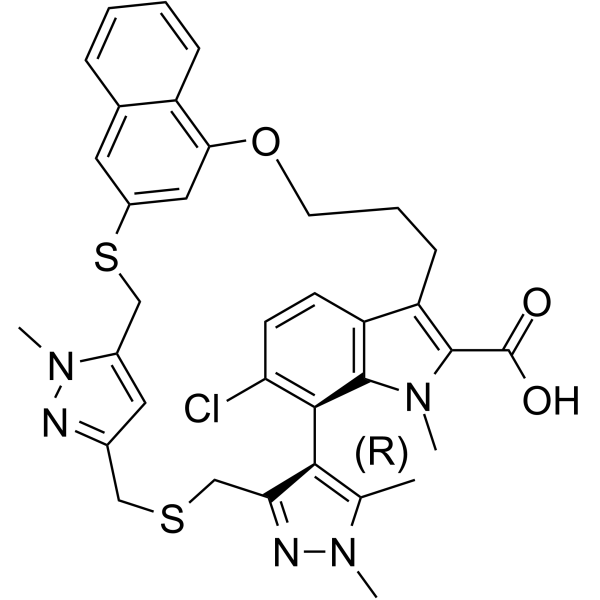
BT2
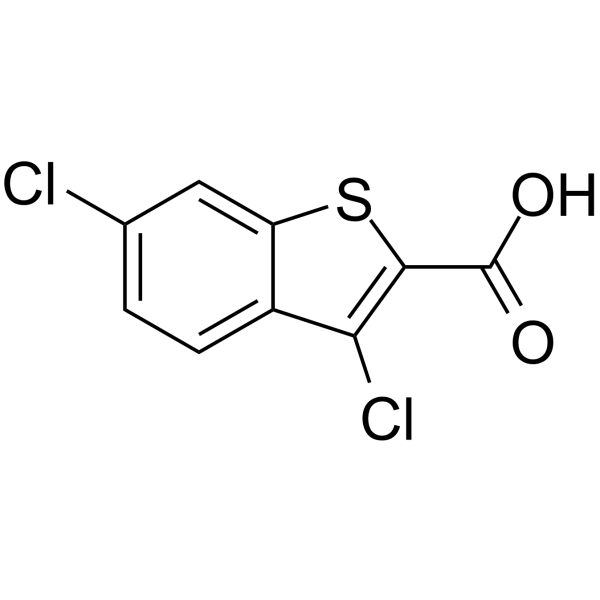 0 ImagesBT2 is a BCKDC kinase (BDK) inhibitor with an IC50 of 3.19 μM. BT2 binding to BDK triggers helix movements in the N-terminal domain, resulting in the dissociation of BDK from the branched-chain α-ketoacid dehydrogenase complex (BCKDC). BT2 (compound 4) is also a potent and selective Mcl-1 inhibitor with a Ki value of 59 μM.
-
QCA570
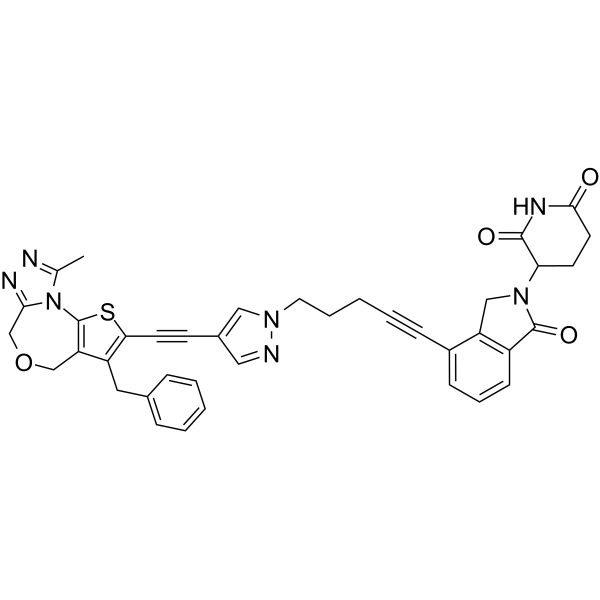 0 ImagesQCA570 is a pan-BET-BRD PROTAC degrader. QCA570 degrades BRD2/3/4 and BRDT via cereblon and the ubiquitin-proteasome pathway, inhibits the expression of c-MYC, EZH2 and Mcl-1, induces tumor cell apoptosis, cycle arrest and regression, and exerts a synergistic inhibitory effect on Osimertinib (HY-15772)-resistant EGFR-mutant non-small cell lung cancer. QCA570 can be used in the research of acute myeloid leukemia, acute lymphoblastic leukemia, bladder cancer and non-small cell lung cancer.
-
PROTAC B-Raf degrader 1
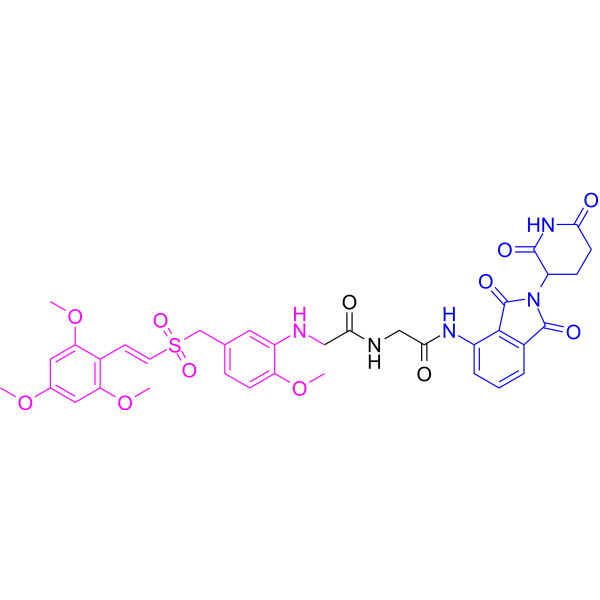 0 ImagesPROTAC B-Raf degrader 1 is a PROTAC degrader targeting B-Raf, which recruits the ubiquitin-proteasome system to accelerate B-Raf degradation and reduce the expression of downstream Mcl-1. PROTAC B-Raf degrader 1 inhibits cancer cell proliferation, arrests cell cycle and induces apoptosis. PROTAC B-Raf degrader 1 can be used in breast cancer-related research.
-
TC11
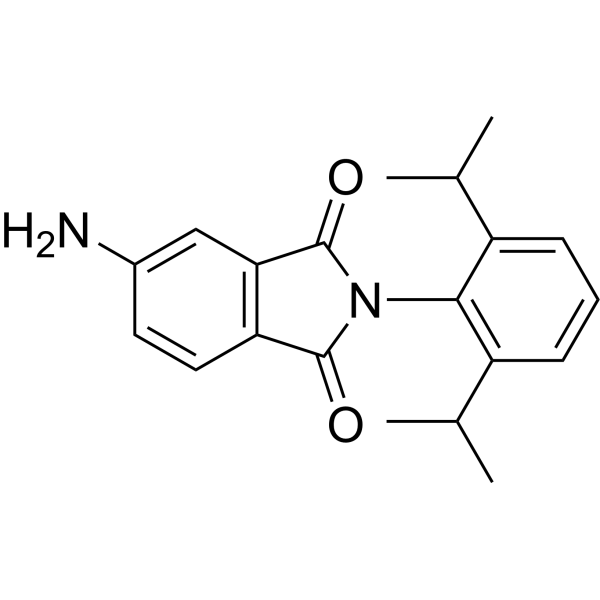 0 ImagesTC11 is a MCL1 degrader and apoptosis inducer. TC11 induces sustained CDK1 activation to phosphorylate and degrade MCL1, activates caspase-3, -8, and -9, inhibits centrosomal-regulatory NPM function to block centrosomal clustering, and triggers apoptosis independent of the cereblon pathway. TC11 blocks tumor cell proliferation in vitro and acts against tumor xenografts in vivo. TC11 can be used for the research of multiple myeloma.
-
MIK665
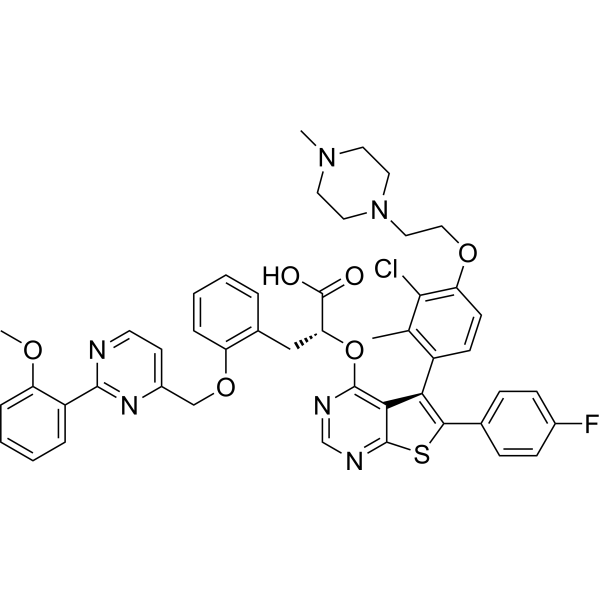 0 ImagesSynonyms: S-64315MIK665 (S-64315), derived from S63845, is a myeloid cell leukemia sequence 1 (MCL1) inhibitor. MIK665 has an IC50 of 1.81 nM for MCL1.
-
Obatoclax Mesylate
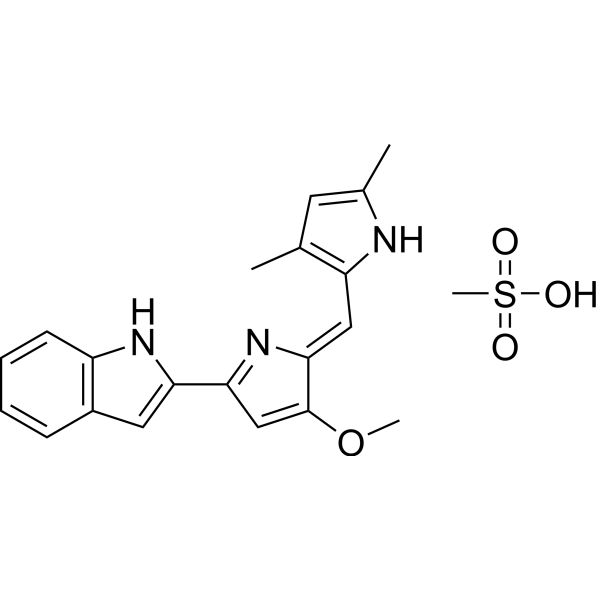 0 ImagesSynonyms: GX15-070 MesylateObatoclax Mesylate (GX15-070 Mesylate), a BH3 mimetic, is a pan-BCL-2 family proteins inhibitor with a Ki of 220 nM for BCL-2. Obatoclax Mesylate induces autophagy-dependent cell death and targets cyclin D1 for proteasomal degradation. Obatoclax Mesylate has anti-cancer and broad-spectrum antiparasitic activity.
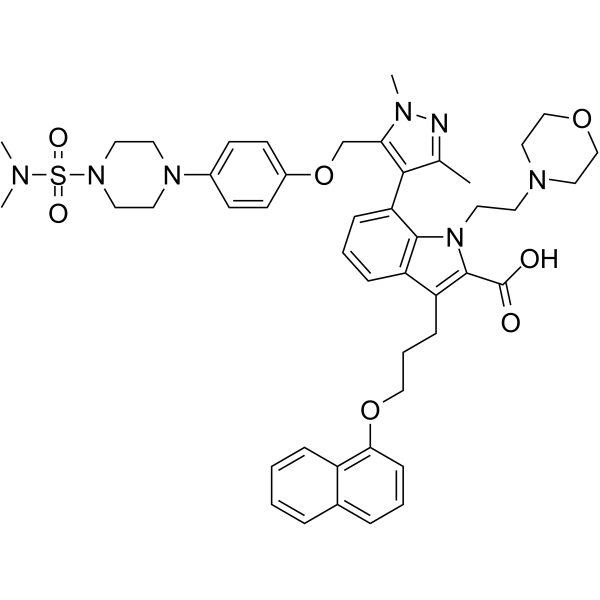
-
PROTAC Bcl2 degrader-1
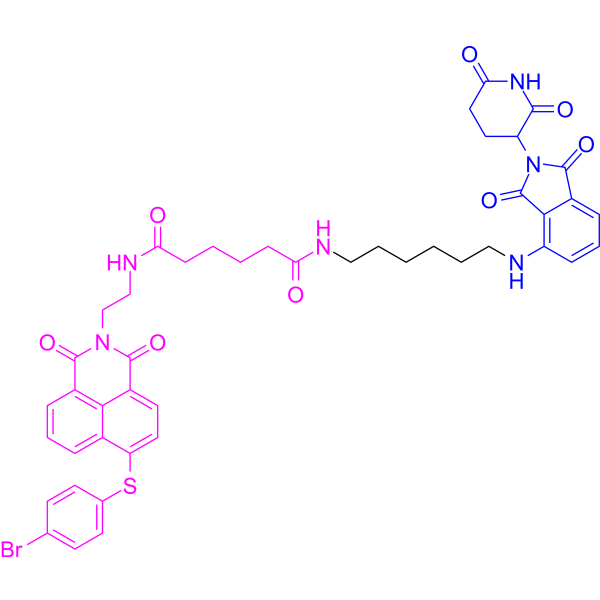
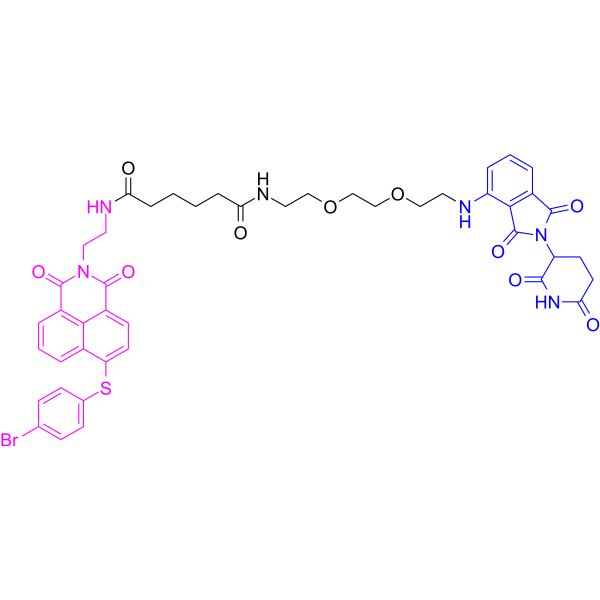 0 ImagesPROTAC Bcl2 degrader-1 (Compound C5) is a PROTAC based on Cereblon ligand, which potently and selectively induces the degradation of Bcl-2 (IC50, 4.94 μM; DC50, 3.0 μM) and Mcl-1 (IC50, 11.81 μM) by introducing the E3 ligase cereblon (CRBN)-binding ligand pomalidomide to Mcl-1/Bcl-2 dual inhibitor Nap-1.
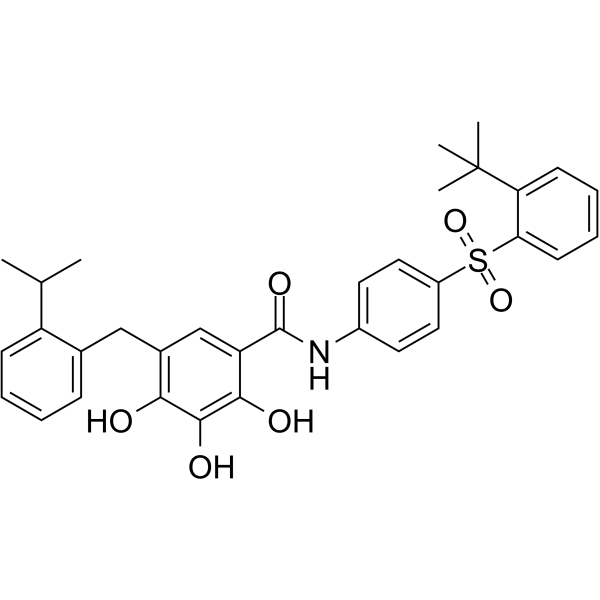
-
(R)-(-)-Gossypol
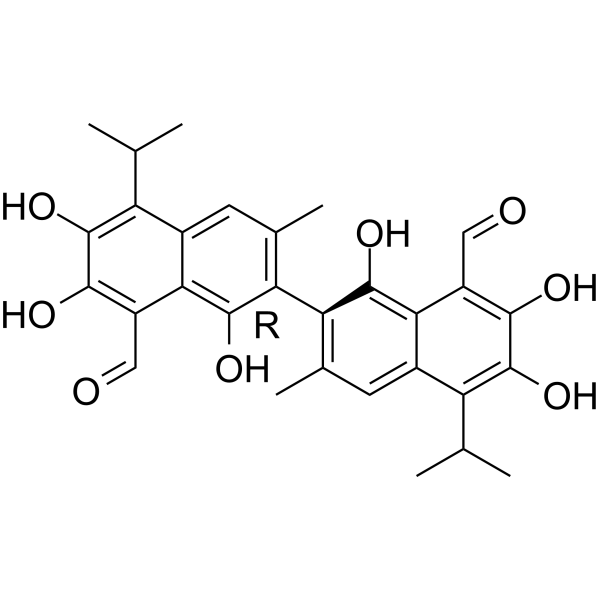 0 ImagesSynonyms: AT-101; R-(-)-gossypol acetic acid
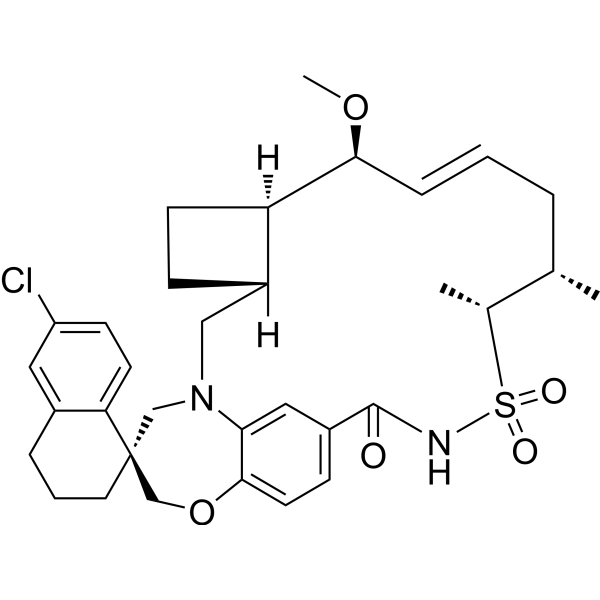
-
SHP2-D26
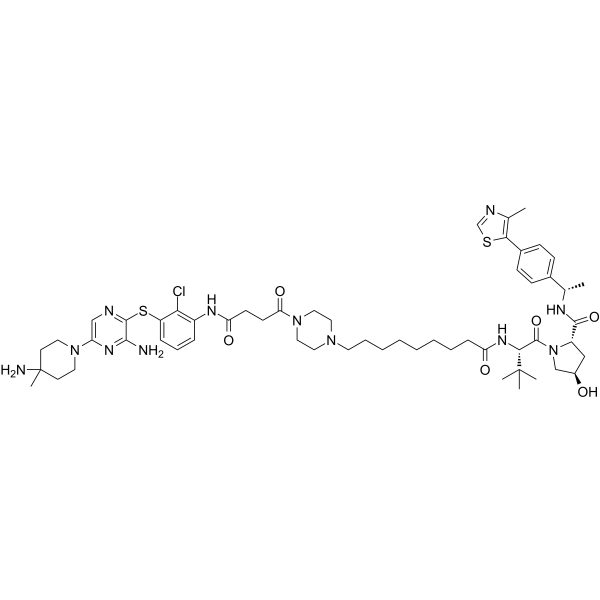 0 ImagesCat. No.: HY-145162CAS No.: 2458219-65-1SHP2-D26 is a SHP2 PROTAC degrader with DC50 values of 6.0 nM (KYSE520 cells) and 2.6 nM (MV4;11 cells), respectively. SHP2-D26 inhibits ERK phosphorylation, upregulates Bim levels, downregulates Mcl-1 levels, and induces cell cycle arrest and apoptosis. SHP2-D26 can be used in studies related to esophageal cancer, acute myeloid leukemia and non-small cell lung cancer.
-
Sabutoclax
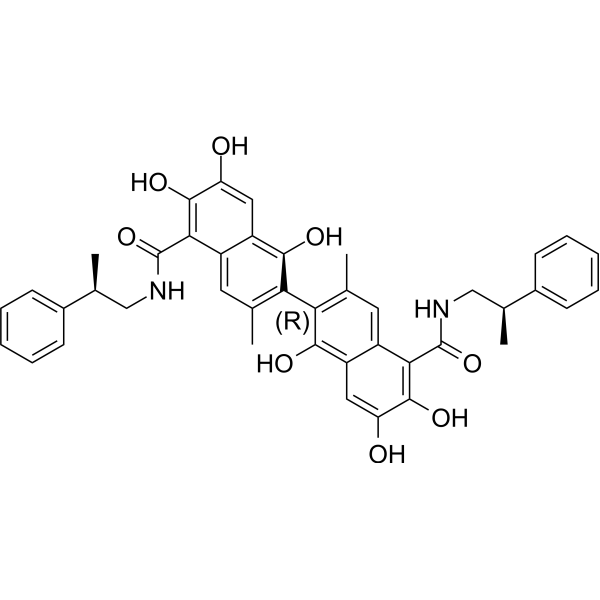 0 ImagesSynonyms: BI-97C1




