



A-1210477
Based on 20 publication(s) in Google Scholar
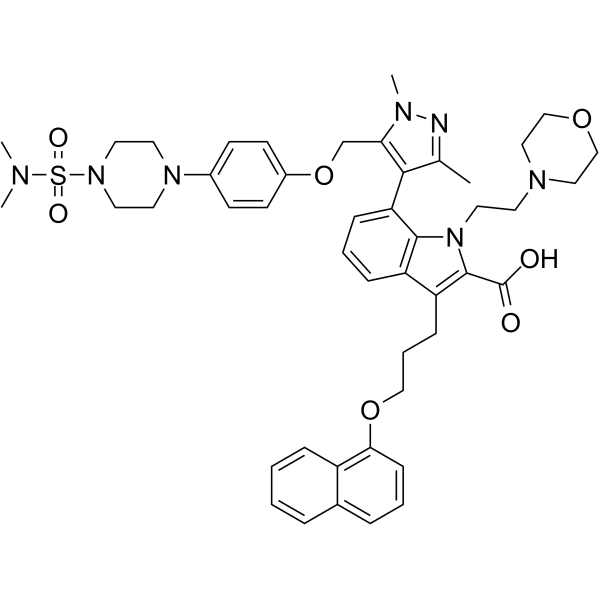
A-1210477 is a potent and selective inhibitor of MCL-1 with a Ki of 0.45 nM. A-1210477 specifically binds MCL-1 and promotes apoptosis of cancer cells in an MCL-1-dependent manner.
For research use only. We do not sell to patients.
- Purity : 99.86%
- CAS No.: 1668553-26-1
- Formula: C46H55N7O7S
- Molecular Weight:850.04
-
Storage:Powder -20°C, 3 years , 4°C, 2 years ; In solvent -80°C, 2 years , -20°C, 1 year

To place orders, for customer services and technical support, please contact: MedChemExpress USA
Tel: 609-228-6898 E-mail: [email protected] [email protected]


-
 Biological Activity
-
Chemical Information
-
Solvent & Solubility
- Protocols
- Purity & Documentation
- References
-
 Help & FAQs


-
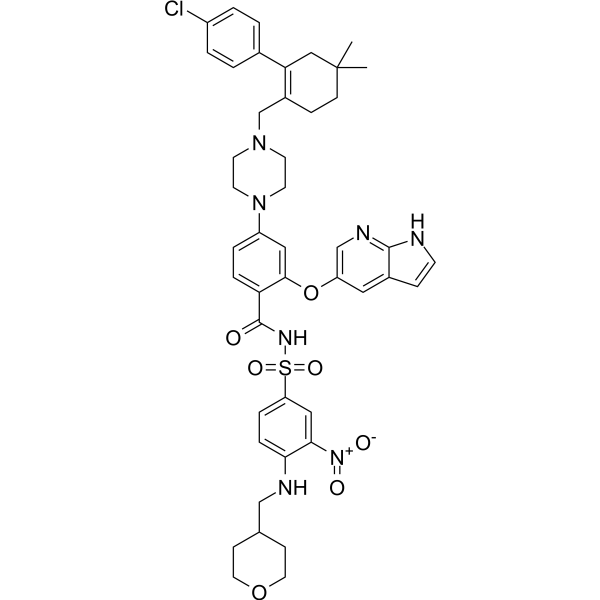
HY-15531
VenetoclaxBCL-2 Inhibitor -
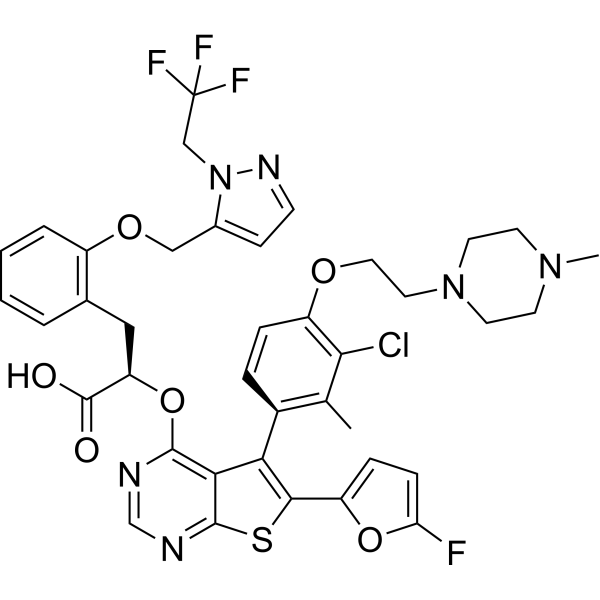
HY-100741
S63845MCL1 Inhibitor -
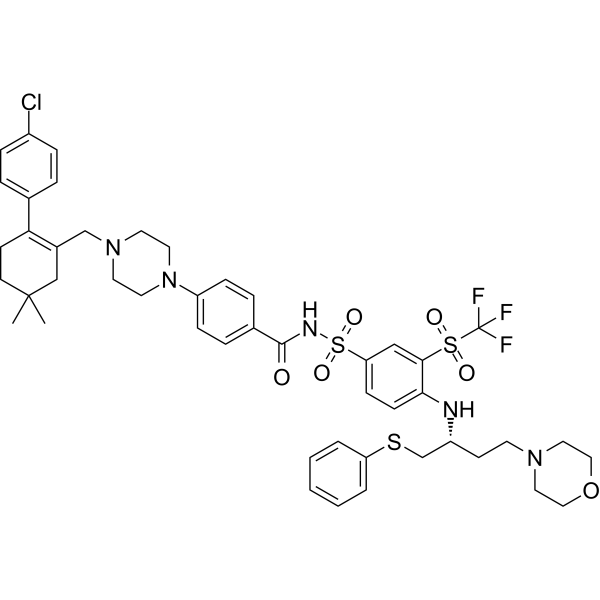
HY-10087
NavitoclaxBcl-2 Inhibitor -
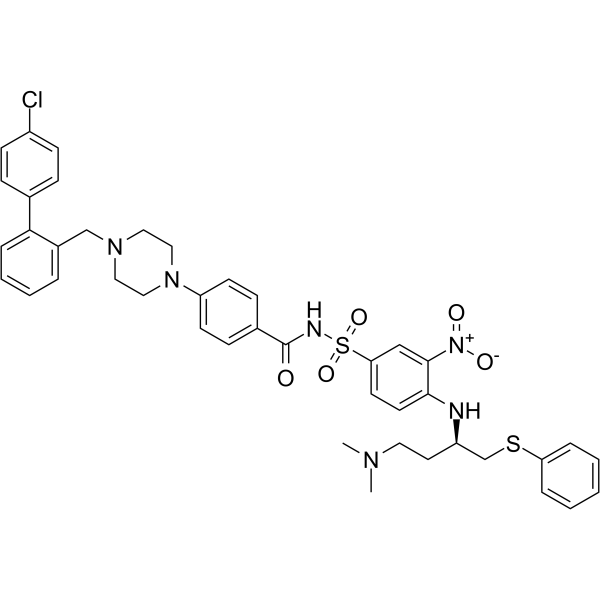
HY-50907
ABT-737Bcl-2 Family Inhibitor/BH3 Mimetic -
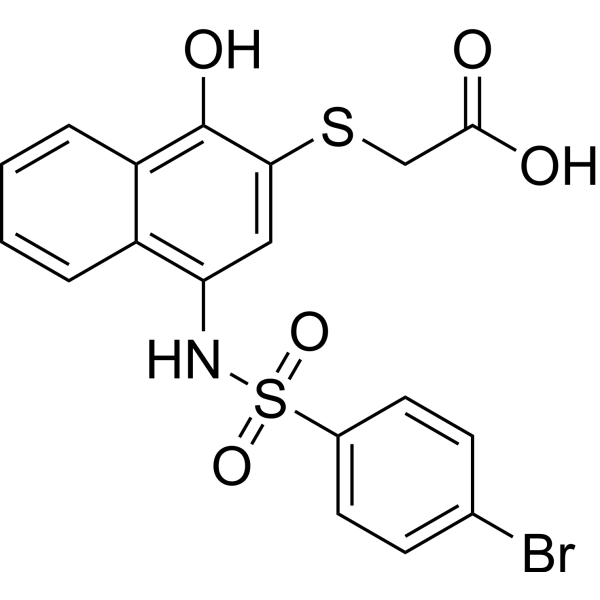
HY-18628
UMI-77Bcl-2 Family Inhibitor -
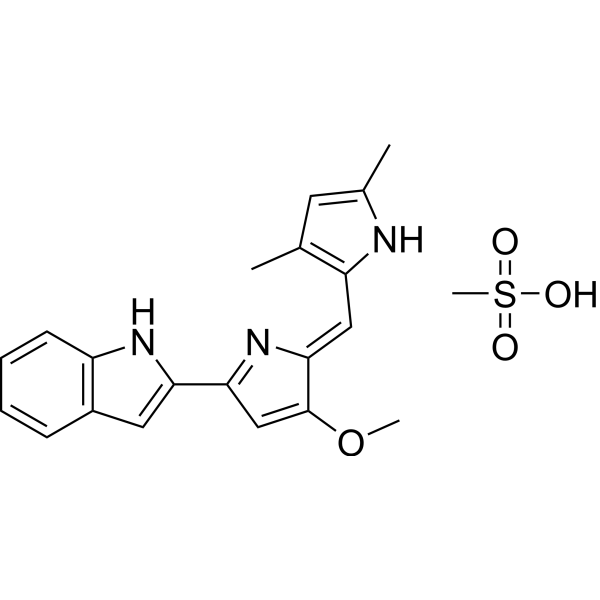
HY-10969
Obatoclax MesylateBcl-2 Family Inhibitor -
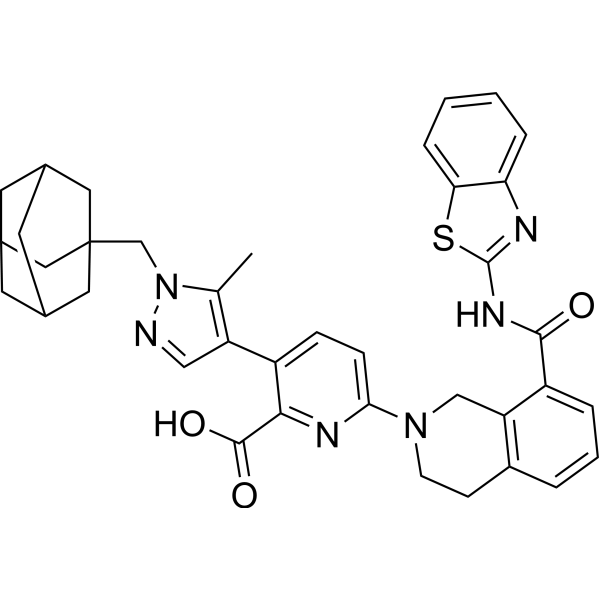
HY-19741
A-1331852Bcl-xL Inhibitor -
HY-101565
TapotoclaxMCL-1 Inhibitor -
HY-19725
A-1155463BCL-XL Inhibitor -
HY-101533
AZD-5991Mcl-1 Inhibitor -

HY-15531R
Venetoclax (Standard)BCL-2 Inhibitor -

HY-10087R
Navitoclax (Standard)Reference Standard
Publications Citing Use of MedChemExpress (MCE) A-1210477
More- Nat Commun. 2026 Feb 12;17(1):1214. [Abstract]
- Nat Commun. 2025 Aug 21;16(1):7689. [Abstract]
- Cell Death Differ. 2019 Mar;26(3):470-486. [Abstract]
- Cell Death Dis. 2021 Aug 12;12(8):789. [Abstract]
- Cell Death Dis. 2020 Nov 15;11(11):982. [Abstract]
- Aging Cell. 2026 Apr;25(4):e70477. [Abstract]
- J Pineal Res. 2024 Jan 31.
- JCI Insight. 2024 Mar 14;9(8):e172565. [Abstract]
- Biochem Pharmacol. 2022 May;199:115017. [Abstract]
- Int J Mol Sci. 2020 May 30;21(11):3907. [Abstract]
- Chem Biol Interact. 2022 Jul 1;361:109978. [Abstract]
- Sci Rep. 2019 Aug 12;9(1):11677. [Abstract]
- J Cell Physiol. 2021 Nov;236(11):7356-7375. [Abstract]
- Open Biol. 2016 Aug;6(8):160134. [Abstract]
- J Cell Biochem. 2025 Jan;126(1):e30681. [Abstract]
- Clin Res Hepatol Gastroenterol. 2019 Jun;43(3):292-300. [Abstract]
- Oncol Lett. 2019 Nov;18(5):5481-5489. [Abstract]
- Leuk Lymphoma. 2019 Sep;60(9):2170-2180. [Abstract]
- Res Sq. 2024 Aug 04.
- bioRxiv. 2023 Aug 5.
 Customer Validation & Images

-
WB


Biological Activity
Description
IC50 & Target
[1]|
Mcl-1 0.45 nM (Ki) |
Bcl-2 132 nM (Ki) |
Bfl-1 660 nM (Ki) |
Bcl-W 2280 nM (Ki) |
Apoptosis |
Cellular Effect
|
Cell Line

|
Type | Value | Description | References |
|---|---|---|---|---|
| HEK-293T | IC50 |
>20 μM
Compound: A1210477
|
Cytotoxicity against HEK293T cells assessed as reduction in cell viability incubated for 48 hrs by CCK8 assay
Cytotoxicity against HEK293T cells assessed as reduction in cell viability incubated for 48 hrs by CCK8 assay
|
[PMID: 34228434] |
| HeLa | IC50 |
>20 μM
Compound: A1210477
|
Cytotoxicity against human HeLa cells assessed as inhibition of cell growth incubated for 48 hrs by CCK8 assay
Cytotoxicity against human HeLa cells assessed as inhibition of cell growth incubated for 48 hrs by CCK8 assay
|
[PMID: 34228434] |
| HL-60 | IC50 |
2.46 μM
Compound: A1210477
|
Cytotoxicity against human HL-60 cells assessed as inhibition of cell growth incubated for 48 hrs by CCK8 assay
Cytotoxicity against human HL-60 cells assessed as inhibition of cell growth incubated for 48 hrs by CCK8 assay
|
[PMID: 34228434] |
| HL-60 | IC50 |
5.53 μM
Compound: A-1210477
|
Antiproliferative activity against human HL-60 cells assessed as growth inhibition measured after 72 hrs by CCK-8 assay
Antiproliferative activity against human HL-60 cells assessed as growth inhibition measured after 72 hrs by CCK-8 assay
|
[PMID: 39121336] |
| K562 | IC50 |
>30 μM
Compound: 4; A1210477
|
Antiproliferative activity against human K562 cells assessed as decrease in cell viability measured after 72 hrs by MTT assay
Antiproliferative activity against human K562 cells assessed as decrease in cell viability measured after 72 hrs by MTT assay
|
[PMID: 34342996] |
| K562 | IC50 |
13.9 μM
Compound: A-1210477
|
Cytotoxicity against human K562 cells after 24 hrs by MTT assay
Cytotoxicity against human K562 cells after 24 hrs by MTT assay
|
[PMID: 32794745] |
| KMS-12-PE | IC50 |
>40 μM
Compound: A-1210477
|
Cytotoxicity against human KMS-12-PE cells after 24 hrs by MTT assay
Cytotoxicity against human KMS-12-PE cells after 24 hrs by MTT assay
|
[PMID: 32794745] |
| L-363 | IC50 |
11.8 μM
Compound: A-1210477
|
Cytotoxicity against human L-363 cells after 24 hrs by MTT assay
Cytotoxicity against human L-363 cells after 24 hrs by MTT assay
|
[PMID: 32794745] |
| LP-1 | IC50 |
10.6 μM
Compound: A-1210477
|
Cytotoxicity against human LP-1 cells after 24 hrs by MTT assay
Cytotoxicity against human LP-1 cells after 24 hrs by MTT assay
|
[PMID: 32794745] |
| MM1.S | IC50 |
>40 μM
Compound: A-1210477
|
Cytotoxicity against human MM1.S cells after 24 hrs by MTT assay
Cytotoxicity against human MM1.S cells after 24 hrs by MTT assay
|
[PMID: 32794745] |
| MOLM-13 | IC50 |
8.15 μM
Compound: A-1210477
|
Antiproliferative activity against human MOLM-13 cells assessed as growth inhibition measured after 72 hrs by CCK-8 assay
Antiproliferative activity against human MOLM-13 cells assessed as growth inhibition measured after 72 hrs by CCK-8 assay
|
[PMID: 39121336] |
| MOLP-8 | IC50 |
9.7 μM
Compound: A-1210477
|
Cytotoxicity against human MOLP8 cells after 24 hrs by MTT assay
Cytotoxicity against human MOLP8 cells after 24 hrs by MTT assay
|
[PMID: 32794745] |
| MV4-11 | IC50 |
1.55 μM
Compound: 4; A1210477
|
Antiproliferative activity against human MV4-11 cells assessed as decrease in cell viability measured after 72 hrs by MTT assay
Antiproliferative activity against human MV4-11 cells assessed as decrease in cell viability measured after 72 hrs by MTT assay
|
[PMID: 34342996] |
| NCI-H23 | IC50 |
13.5 μM
Compound: 4; A1210477
|
Antiproliferative activity against human NCI-H23 cells assessed as decrease in cell viability measured after 72 hrs by MTT assay
Antiproliferative activity against human NCI-H23 cells assessed as decrease in cell viability measured after 72 hrs by MTT assay
|
[PMID: 34342996] |
| NCI-H929 | IC50 |
0.9 μM
Compound: 4; A1210477
|
Antiproliferative activity against human NCI-H929 cells assessed as decrease in cell viability measured after 72 hrs by MTT assay
Antiproliferative activity against human NCI-H929 cells assessed as decrease in cell viability measured after 72 hrs by MTT assay
|
[PMID: 34342996] |
| NCI-H929 | IC50 |
8.6 μM
Compound: A-1210477
|
Cytotoxicity against human NCI-H929 cells after 24 hrs by MTT assay
Cytotoxicity against human NCI-H929 cells after 24 hrs by MTT assay
|
[PMID: 32794745] |
| RS4-11 | IC50 |
7.31 μM
Compound: A1210477
|
Cytotoxicity against human RS4-11 cells assessed as inhibition of cell growth incubated for 48 hrs by CCK8 assay
Cytotoxicity against human RS4-11 cells assessed as inhibition of cell growth incubated for 48 hrs by CCK8 assay
|
[PMID: 34228434] |
| SK-BR-3 | IC50 |
4.31 μM
Compound: 4; A1210477
|
Antiproliferative activity against human SK-BR-3 cells assessed as decrease in cell viability measured after 72 hrs by MTT assay
Antiproliferative activity against human SK-BR-3 cells assessed as decrease in cell viability measured after 72 hrs by MTT assay
|
[PMID: 34342996] |
| THP-1 | IC50 |
5.65 μM
Compound: A-1210477
|
Antiproliferative activity against human THP-1 cells assessed as growth inhibition measured after 72 hrs by CCK-8 assay
Antiproliferative activity against human THP-1 cells assessed as growth inhibition measured after 72 hrs by CCK-8 assay
|
[PMID: 39121336] |
| U-937 | IC50 |
4.71 μM
Compound: A-1210477
|
Antiproliferative activity against human U-937 cells assessed as growth inhibition measured after 72 hrs by CCK-8 assay
Antiproliferative activity against human U-937 cells assessed as growth inhibition measured after 72 hrs by CCK-8 assay
|
[PMID: 39121336] |
In Vitro
A-1210477 (10 μM) reduces the amount of BIM co-immunoprecipitated with MCL-1 antibody, and triggers MCL-1 elevation in a variety of cancer cell lines, including the breast cancer cell line HCC-1806. A-1210477 inhibits MCL-1-NOXA interactions with an IC50 of approximately 1 μM, while having no effect on BCL-2-BIM or BCL-XL-BCL-XS interactions. The NSCLC cell lines H2110 and H23 are sensitive to A-1210477 with cell viability IC50<10 μM, confirming that A-1210477 can kill MCL-1-dependent cell lines[1].
MedChemExpress (MCE) has not independently confirmed the accuracy of these methods. They are for reference only.


Chemical Information
-
CAS No. 1668553-26-1
-
Appearance Solid
-
Molecular Weight 850.04
-
Formula C46H55N7O7S
-
Color White to off-white
-
SMILES
O=C(C(N1CCN2CCOCC2)=C(CCCOC3=C4C=CC=CC4=CC=C3)C5=C1C(C6=C(COC7=CC=C(N8CCN(S(=O)(N(C)C)=O)CC8)C=C7)N(C)N=C6C)=CC=C5)O
-
Shipping
Room temperature in continental US; may vary elsewhere.
-
Storage
Powder -20°C 3 years 4°C 2 years In solvent -80°C 2 years -20°C 1 year


Publications (20)
-
Journal Impact Factor
-
Most Recent
-
Nat Commun
Human iPSC-based Modeling of Pulmonary Fibrosis Reveals p300/CBP Inhibition Suppresses Alveolar Transitional Cell State. [Abstract]2026 Feb 12;17(1):1214. PMID: 41680175 -
Nat Commun
Small round cell sarcoma tumoroid biobank reveals CIC::DUX4 sarcoma vulnerability to MCL-1 inhibition. [Abstract]2025 Aug 21;16(1):7689. PMID: 40841360 -
Cell Death Differ
DNase II activated by the mitochondrial apoptotic pathway regulates RIP1-dependent non-apoptotic hepatocyte death via the TLR9/IFN-β signaling pathway. [Abstract]2019 Mar;26(3):470-486. PMID: 29855540 -
Cell Death Dis
Constitutive BAK/MCL1 complexes predict paclitaxel and S63845 sensitivity of ovarian cancer. [Abstract]2021 Aug 12;12(8):789. PMID: 34385422 -
Cell Death Dis
A small natural molecule CADPE kills residual colorectal cancer cells by inhibiting key transcription factors and translation initiation factors. [Abstract]2020 Nov 15;11(11):982. PMID: 33191401 -
Aging Cell
Morphofunctional Heterogeneity and Plasticity of Glioblastoma Cells Induced to Senescence by Temozolomide. [Abstract]2026 Apr;25(4):e70477. PMID: 41963773 -
-
JCI Insight
2024 Mar 14;9(8):e172565. PMID: 38483541 -
Biochem Pharmacol
Hydroquinone destabilizes BIM mRNA through upregulation of p62 in chronic myeloid leukemia cells. [Abstract]2022 May;199:115017. PMID: 35346662 -
Int J Mol Sci
Albendazole-Induced SIRT3 Upregulation Protects Human Leukemia K562 Cells from the Cytotoxicity of MCL1 Suppression. [Abstract]2020 May 30;21(11):3907. PMID: 32486166 -
Chem Biol Interact
BCL2 inhibitor ABT-199 and BCL2L1 inhibitor WEHI-539 coordinately promote NOXA-mediated degradation of MCL1 in human leukemia cells. [Abstract]2022 Jul 1;361:109978. PMID: 35561756 -
Sci Rep
Matrix Metalloproteinase Expressions Play Important role in Prediction of Ovarian Cancer Outcome. [Abstract]2019 Aug 12;9(1):11677. PMID: 31406154 -
J Cell Physiol
NOXA-mediated degradation of MCL1 and BCL2L1 causes apoptosis of daunorubicin-treated human acute myeloid leukemia cells. [Abstract]2021 Nov;236(11):7356-7375. PMID: 33982799 -
Open Biol
2016 Aug;6(8):160134. PMID: 27512141
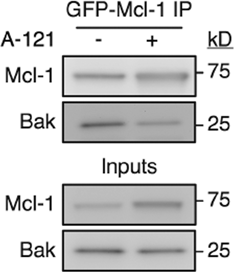
A-1210477 purchased from MedChemExpress. Usage Cited in: Open Biol. 2016 Aug;6(8):160134. [Abstract]
Immunoblots showing affinity purification of GFP-tagged Mcl-1 in the presence of 2 μM A-1210477, and detection of co-purifying Bak.
-
J Cell Biochem
Mcl-1 is a Gatekeeper Molecule to Regulate the Crosstalk Between Ferroptotic Agent-Induced ER Stress and TRAIL-Induced Apoptosis. [Abstract]2025 Jan;126(1):e30681. PMID: 39853862 -
Clin Res Hepatol Gastroenterol
Targeting Mcl-1 inhibits survival and self-renewal of hepatocellular cancer stem-like cells. [Abstract]2019 Jun;43(3):292-300. PMID: 30528319 -
Oncol Lett
2019 Nov;18(5):5481-5489. PMID: 31612056 -
Leuk Lymphoma
MCL-1 or BCL-xL-dependent resistance to the BCL-2 antagonist (ABT-199) can be overcome by specific inhibitor as single agents and in combination with ABT-199 in acute myeloid leukemia cells. [Abstract]2019 Sep;60(9):2170-2180. PMID: 30626241 -
-


Solvent & Solubility
In Vitro:
DMSO : 10 mg/mL (11.76 mM; Need ultrasonic; Hygroscopic DMSO has a significant impact on the solubility of product, please use newly opened DMSO)
Please refer to the solubility information to select the appropriate solvent. Once prepared, please aliquot and store the solution to prevent product inactivation from repeated freeze-thaw cycles.
Storage method and period of stock solution: -80°C, 2 years; -20°C, 1 year. When stored at -80°C, please use it within 2 years. When stored at -20°C, please use it within 1 year.
Please refer to the solubility information to select the appropriate solvent. Once prepared, please aliquot and store the solution to prevent product inactivation from repeated freeze-thaw cycles.
Storage method and period of stock solution: -80°C, 2 years; -20°C, 1 year. When stored at -80°C, please use it within 2 years. When stored at -20°C, please use it within 1 year.
Concentration (start) × Volume (start) = Concentration (final) × Volume (final)
In Vivo:
Select the appropriate dissolution method based on your experimental animal and administration route.
- For the following dissolution methods, please ensure to first prepare a clear stock solution using an In Vitro approach and then sequentially add co-solvents:
- To ensure reliable experimental results, the clarified stock solution can be appropriately stored based on storage conditions. As for the working solution for In Vivo experiments, it is recommended to prepare freshly and use it on the same day.
- The percentages shown for the solvents indicate their volumetric ratio in the final prepared solution. If precipitation or phase separation occurs during preparation, heat and/or sonication can be used to aid dissolution.
Add each solvent one by one: 10% DMSO 40% PEG300 5% Tween-80 45% Saline
Solubility: ≥ 1 mg/mL (1.18 mM); Clear solution
This protocol yields a clear solution of ≥ 1 mg/mL (saturation unknown).
Taking 1 mL working solution as an example, add 100 μL DMSO stock solution (10.0 mg/mL) to 400 μL PEG300, and mix evenly; then add 50 μL Tween-80 and mix evenly; then add 450 μL Saline to adjust the volume to 1 mL.
Preparation of Saline: Dissolve 0.9 g sodium chloride in ddH₂O and dilute to 100 mL to obtain a clear Saline solution.
Add each solvent one by one: 10% DMSO 90% (20% SBE-β-CD in Saline)
Solubility: 1 mg/mL (1.18 mM); Suspended solution; Need ultrasonic
This protocol yields a suspended solution of 1 mg/mL. Suspended solution can be used for oral and intraperitoneal injection.
Taking 1 mL working solution as an example, add 100 μL DMSO stock solution (10.0 mg/mL) to 900 μL 20% SBE-β-CD in Saline, and mix evenly.
Preparation of 20% SBE-β-CD in Saline (4°C, storage for one week): 2 g SBE-β-CD powder is dissolved in 10 mL Saline, completely dissolve until clear.
In Vivo Dissolution Calculator
Please enter the basic information of animal experiments:
-
-
-
-
Recommended: Prepare an additional quantity of animals to account for potential losses during experiments.
Please enter your animal formula composition:
-
%DMSO +
Recommended: Keep the proportion of DMSO in working solution below 2% if your animal is weak.
-
%+
-
+%Tween-80 + +
-
%Saline +
The co-solvents required include: DMSO, . All of co-solvents are available by MedChemExpress (MCE). , Tween 80. All of co-solvents are available by MedChemExpress (MCE).
Working solution concentration: 0.22 mg/mL
Method for preparing stock solution: mg drug dissolved in μL DMSO. Stock solution concentration: mg/mL.
1. Take μL DMSO stock solution;
2. Add μL .
μL , mix evenly;
3. Then add μL Tween 80, mix evenly;
4. Then add μL
Please ensure that the stock solution in the first step is dissolved to a clear state, and add co-solvents in sequence. You can use ultrasonic heating (ultrasonic cleaner, recommended frequency 20-40 kHz), vortexing, etc. to assist dissolution.


Purity & Documentation
-
Data Sheet (279 KB)
-
SDS (393 KB)
- English - EN (393 KB)
- Français - FR (393 KB)
- Deutsch - DE (393 KB)
- Norwegian - NO (393 KB)
- Español - ES (393 KB)
- Swedish - SV (393 KB)
- Italian - IT (393 KB)
- Korean - KR (393 KB)
- Portuguese - PT (393 KB)
-
Handling Instructions (2659 KB)
References
[1]. Leverson JD, et al. Potent and selective small-molecule MCL-1 inhibitors demonstrate on-target cancer cell killing activity as single agents and in combination with ABT-263 (navitoclax). Cell Death Dis. 2015 Jan 15;6:e1590. [Content Brief]
[2]. Qing Wang, et al. A-1210477, a selective MCL-1 inhibitor, overcomes ABT-737 resistance in AML. Oncol Lett. 2019 Nov;18(5):5481-5489. [Content Brief]


Complete Stock Solution Preparation Table
Please refer to the solubility information to select the appropriate solvent. Once prepared, please aliquot and store the solution to prevent product inactivation from repeated freeze-thaw cycles.
Storage method and period of stock solution: -80°C, 2 years; -20°C, 1 year. When stored at -80°C, please use it within 2 years. When stored at -20°C, please use it within 1 year.
| Optional Solvent | Concentration Solvent Mass | 1 mg | 5 mg | 10 mg | 25 mg |
|---|---|---|---|---|---|
| DMSO | 1 mM | 1.1764 mL | 5.8821 mL | 11.7642 mL | 29.4104 mL |
| 5 mM | 0.2353 mL | 1.1764 mL | 2.3528 mL | 5.8821 mL | |
| 10 mM | 0.1176 mL | 0.5882 mL | 1.1764 mL | 2.9410 mL |


A-1210477 Related Classifications
HY-12468 Related Classifications
 Powered by Bioz