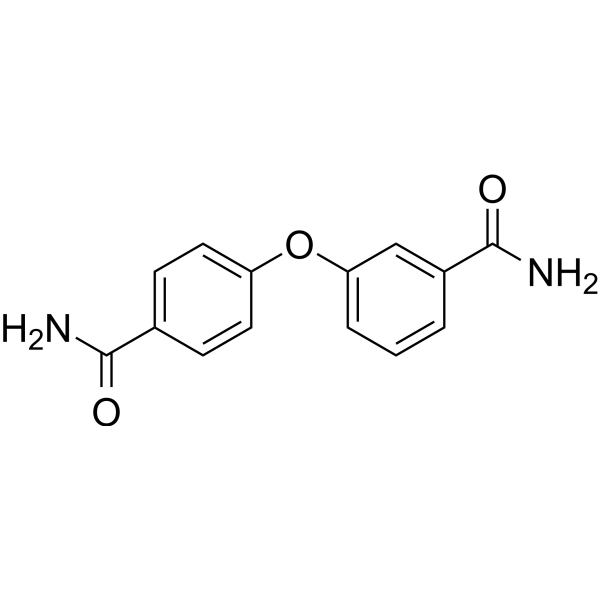
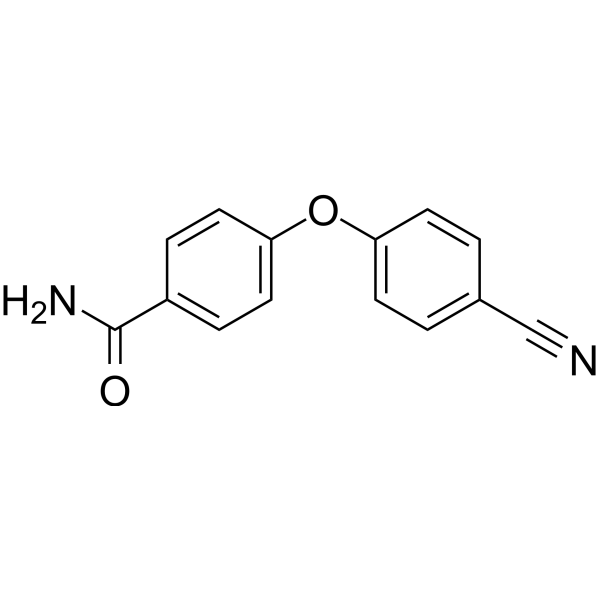
PARP16
PARP16 is a tail-anchored endoplasmic reticulum (ER) mono-ADP-ribosyltransferase that functions as a key regulator of cellular stress signaling through protein ADP-ribosylation[1]. Mechanistically, PARP16 promotes activation of the unfolded protein response (UPR) by ADP-ribosylating the ER stress sensors PERK (EIF2AK3) and IRE1α (ERN1), thereby enhancing downstream ER stress signaling and maintaining proteostasis under conditions of protein-folding stress[1]. PARP16 enzymatic activity increases during ER stress, and its ADP-ribosylation activity is both necessary and sufficient for efficient PERK and IRE1α activation, establishing PARP16 as an upstream regulator of the UPR pathway[1]. Beyond stress sensing, PARP16 participates in translational control through mono-ADP-ribosylation of ribosomal proteins, linking ER homeostasis to regulation of protein synthesis[2][3]. In disease-relevant models, elevated PARP16 activity enhances ER stress signaling and contributes to pathological cellular responses, whereas PARP16 depletion suppresses UPR activation and reduces disease-associated phenotypes[4][5]. For example, PARP16 knockdown attenuates ER stress-mediated neuronal injury in ischemia/reperfusion-related models, supporting a functional role in stress-induced cell death pathways[5]. Compared with nuclear DNA damage-responsive PARP family members such as PARP1, PARP16 is distinguished by its ER membrane localization and selective regulation of PERK- and IRE1α-dependent UPR signaling rather than canonical DNA repair mechanisms[1]. Therefore, PARP16 represents a valuable experimental target for investigating ER stress biology, UPR regulation, and diseases driven by chronic proteotoxic stress[1][4][5].
Références:
- [1]. Jwa M, et al. PARP16 is a tail-anchored endoplasmic reticulum protein required for the PERK- and IRE1α-mediated unfolded protein response. Nat Cell Biol. 2012 Nov;14(11):1223-30. [Content Brief]
- [2]. Mizuta R, et al. Evaluation of an octyl group-modified Alaska pollock gelatin-based surgical sealant for prevention of postoperative adhesion. Acta Biomater. 2021 Feb;121:328-338. [Content Brief]
- [3]. Wang J, et al. ADP-ribose transferase PARP16 mediated-unfolded protein response contributes to neuronal cell damage in cerebral ischemia/reperfusion. FASEB J. 2023 Feb;37(2):e22788. [Content Brief]
All Product Categories
-
PARP16 Produits associés (3)
Produits associés (3)

-
DB008
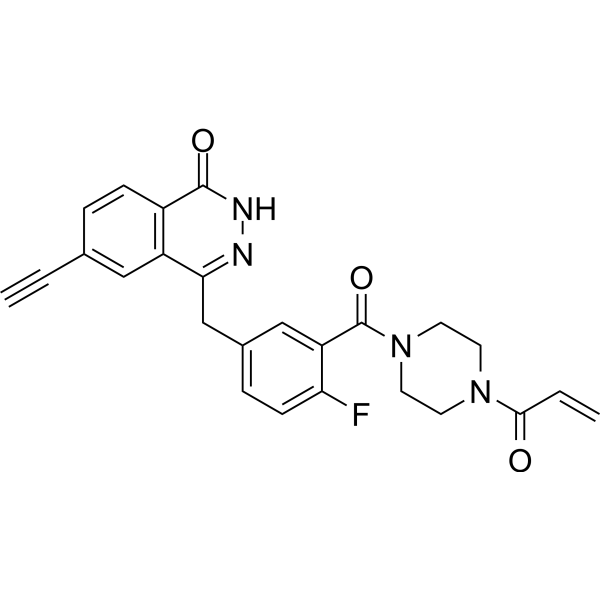 0 ImagesDB008 is potent and selective PARP16 inhibitor with an IC50 value of 0.27 μM, containing an acrylamide electrophilic reagent. DB008 is membrane-permeable and marks PARP16 selectively. DB008 is a click chemistry reagent, it contains an Alkyne group and can undergo copper-catalyzed azide-alkyne cycloaddition (CuAAc) with molecules containing Azide groups.