



PARP10
PARP10 (also known as ARTD10) is a mono-ADP-ribosyltransferase that catalyzes mono-ADP-ribosylation of target proteins and functions as a regulator of cellular proliferation, transcriptional responses, and genome maintenance[1][2]. Mechanistically, PARP10 participates in DNA damage tolerance pathways through interactions with proliferating cell nuclear antigen (PCNA), thereby promoting translesion DNA synthesis and replication-associated stress responses[3][4]. Recent evidence further demonstrates that PARP10 is recruited to nascent single-stranded DNA gaps, where it facilitates RAD18-dependent PCNA ubiquitination and REV1 recruitment, supporting gap filling and preservation of genomic stability under replication stress conditions[5]. In disease-relevant models, elevated PARP10 activity has been associated with enhanced cellular proliferation, replication fork stability, and tumor growth, suggesting that PARP10 can support adaptation to oncogenic replication stress[6]. Compared with canonical PARP family members such as PARP1 and PARP2, which primarily catalyze poly-ADP-ribosylation, PARP10 lacks polymer-forming activity and instead functions predominantly as a mono-ADP-ribosyltransferase through a distinct catalytic mechanism that restricts its enzymatic output to MARylation[2][7]. This biochemical distinction underlies its specialized roles in replication-associated genome maintenance and DNA damage tolerance pathways[3][5]. For experimental applications, selective PARP10 inhibitors and chemical probes have been developed and are used to investigate PARP10-dependent signaling, DNA repair regulation, and cancer-associated replication stress mechanisms[7].
Références:
- [1]. Uniprotkb.
- [2]. Blanchet MF, et al. Computational identification of RNA functional determinants by three-dimensional quantitative structure-activity relationships. Nucleic Acids Res. 2014;42(17):11261-71. [Content Brief]
- [3]. Dhoonmoon A, et al. Mono-ADP-ribosylation by PARP10 and PARP14 in genome stability. NAR Cancer. 2023 Feb 20;5(1):zcad009. [Content Brief]
- [4]. Khatib JB, et al. PARP10 promotes the repair of nascent strand DNA gaps through RAD18 mediated translesion synthesis. Nat Commun. 2024 Jul 23;15(1):6197. [Content Brief]
- [5]. Onizuka K, et al. Structural optimization of pseudorotaxane-forming oligonucleotides for efficient and stable complex formation. Nucleic Acids Res. 2018 Sep 28;46(17):8710-8719. [Content Brief]
- [6]. Perez-Castro L, et al. Tryptophan and its metabolites in normal physiology and cancer etiology. FEBS J. 2023 Jan;290(1):7-27. [Content Brief]
- [7]. Senkowski W, et al. Large-scale gene expression profiling platform for identification of context-dependent drug responses in multicellular tumor spheroids. Cell Chem Biol. 2016;23(11):1428-1438.
All Product Categories
-
PARP10 Produits associés (20)
Produits associés (20)

- 1
-
RBN012759
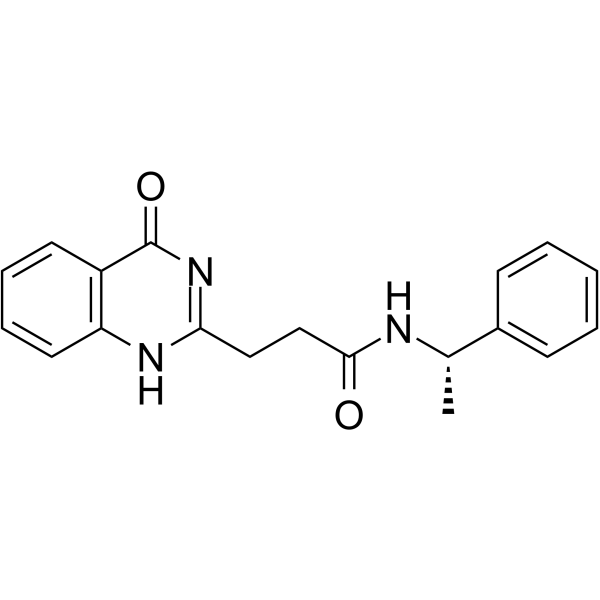
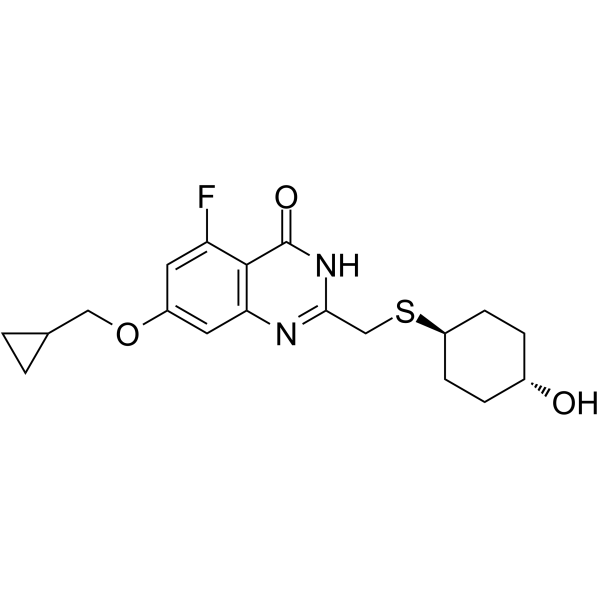 0 ImagesRBN012759 is a potent, selective and orally active inhibitor of PARP14, with an IC50 of <3 nM. RBN012759 displays 300-fold selectivity over the monoPARPs and 1000-fold selectivity over the polyPARPs. RBN012759 decreases pro-tumor macrophage function and elicits inflammatory responses in tumor explants.
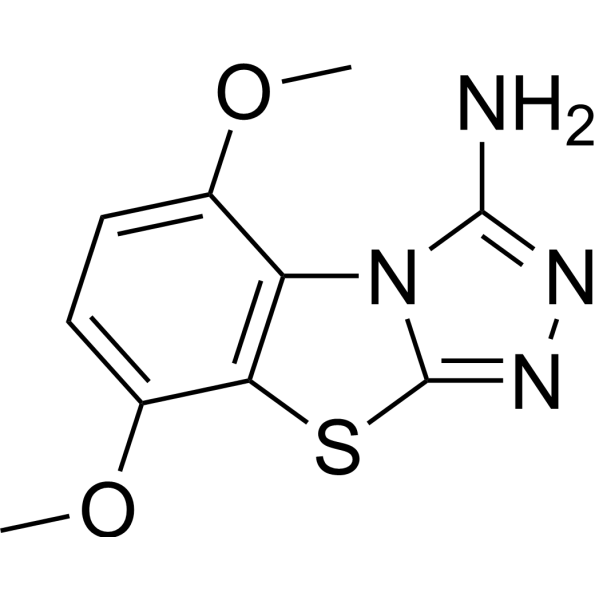
-
PARP10-IN-1
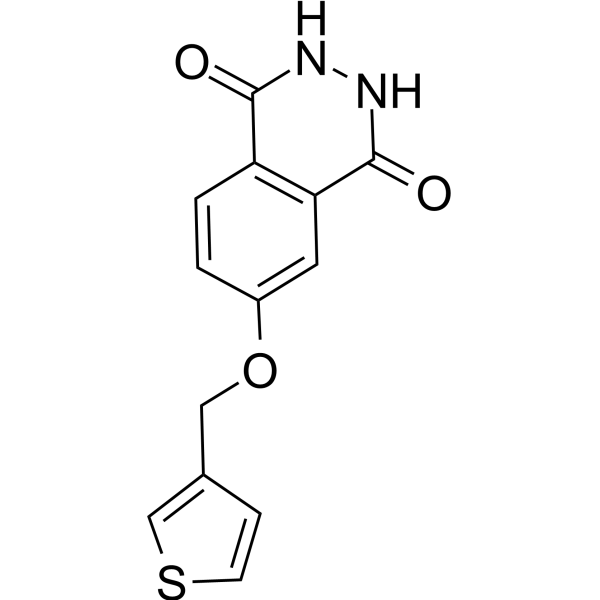
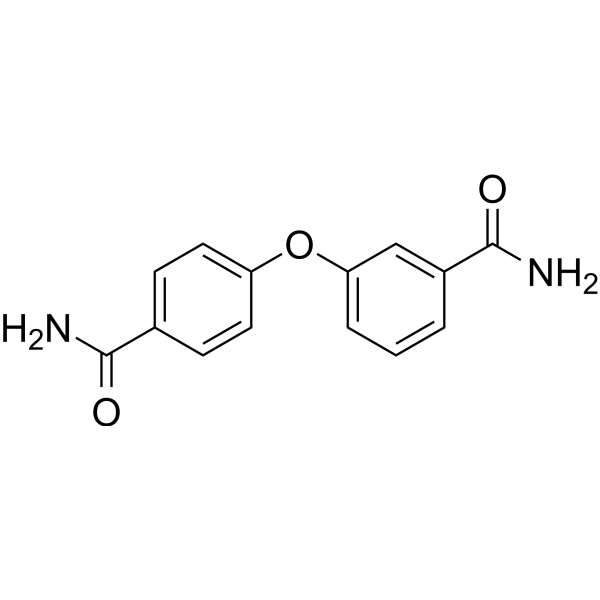
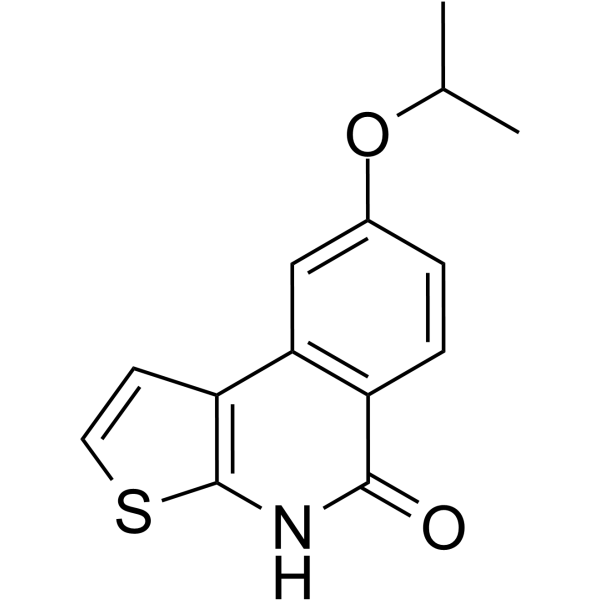
 0 ImagesCat. No.: HY-125217CAS No.: 2286261-72-9PARP10-IN-1 is a PARP10 inhibitor with an IC50 of 1.8 μM, 2.7 μM, and >10-fold selectivity over most PARP family members, excluding PARP7 and PARP16.PARP10-IN-1 inhibits PARP10-mediated mono-ADP-ribosylation, including auto-MARylation of PARP10 and MARylation of its protein targets.PARP10-IN-1 is membrane permeable and inhibits PARP10-dependent MARylation in human embryonic kidney cells.PARP10-IN-1 can be used for the research of cancer.
-
OUL312
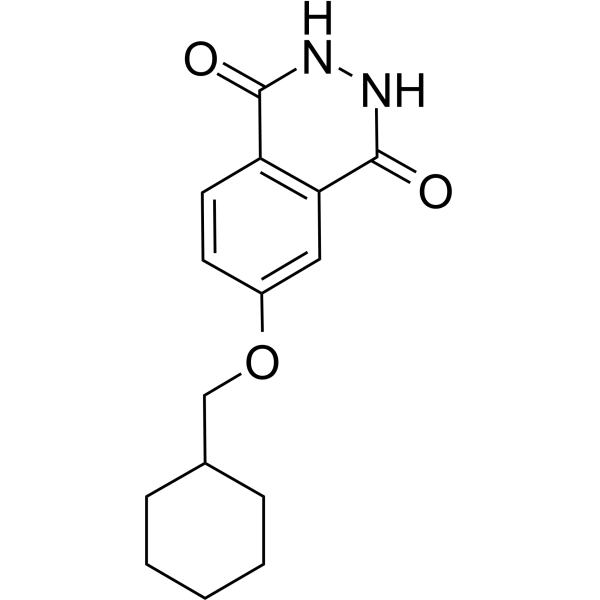
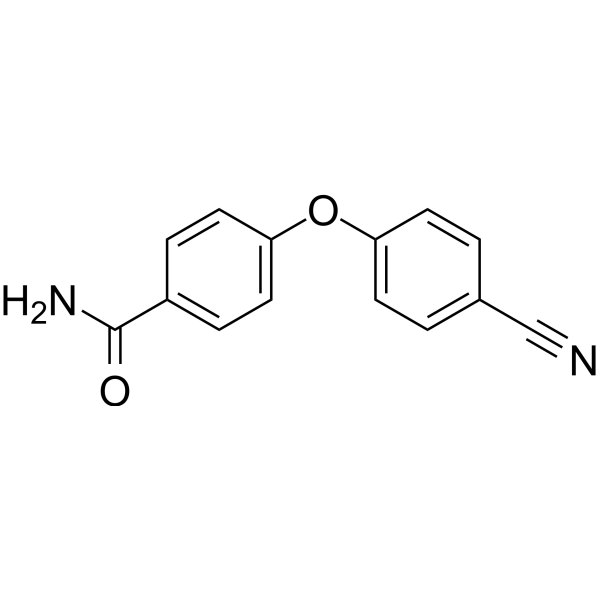
 0 ImagesCat. No.: HY-178317Pureté: 99.20%OUL312 is a potent PARP10 inhibitor (IC50 = 20 nM), showing more than 75-fold greater selectivity for PARP15 (IC50 = 1500 nM). OUL312 is also at least 18-fold higher than all other human enzymes in the family. OUL312 has a good ADME profile, is able to enter cells, is not toxic, and effectively rescues human cells from PARP10-induced apoptosis at sub-micromolar concentrations. OUL312 can be used for the study of cervical cancer.
-
YCH1899
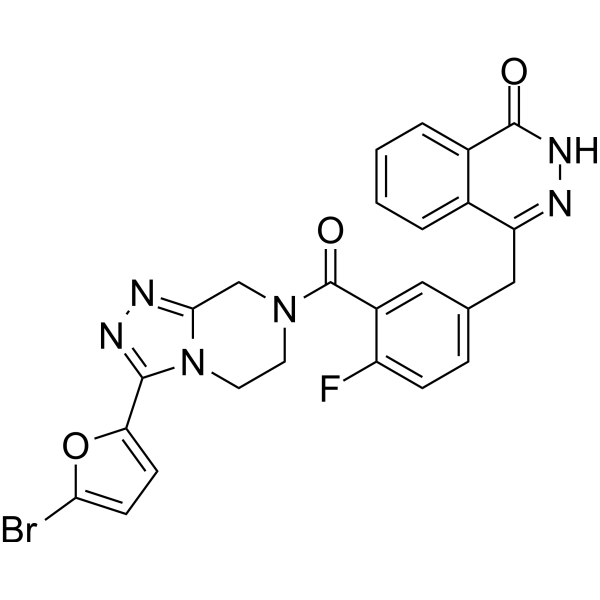 0 ImagesYCH1899 is an orally active PARP inhibitor, with an IC50< 0.001 nM for PARP1/2. YCH1899 exhibits distinct antiproliferation activity against Olaparib (HY-10162)-resistant and Talazoparib (HY-16106)-resistant Capan-1 cells (Capan-1/OP and Capan-1/TP cells) , with IC50 values of 0.89 and 1.13 nM, respectively. YCH1899 has acceptable pharmacokinetic properties in rats.
-
ARTD10/PARP10-IN-1
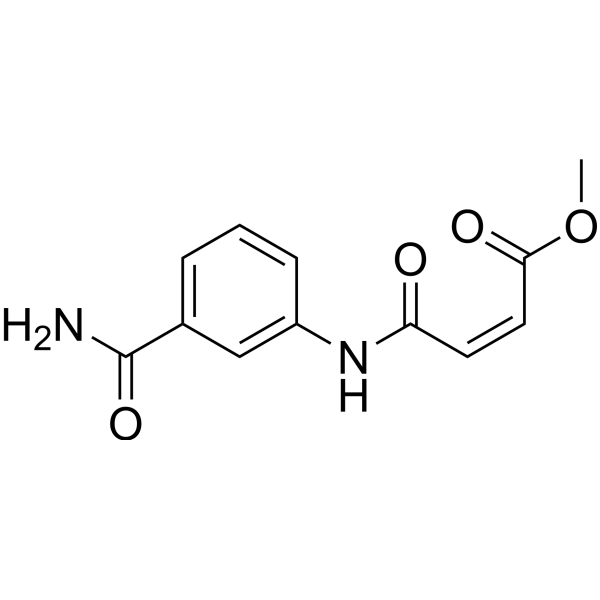 0 ImagesCat. No.: HY-148709CAS No.: 1708103-76-7ARTD10/PARP10-IN-1 (compound 23) is a potent and non-selective PARP inhibitor, targeting to mono-ADP-ribosyltransferases ARTD7/PARP15, ARTD8/PARP14, ARTD10/PARP10 and poly(ADP-ribose) polymerase-1 (ARTD1/PARP1) with IC50s of 1.7 μM, 1.6 μM, 0.8 μM, and 4.4 μM, respectively.
-
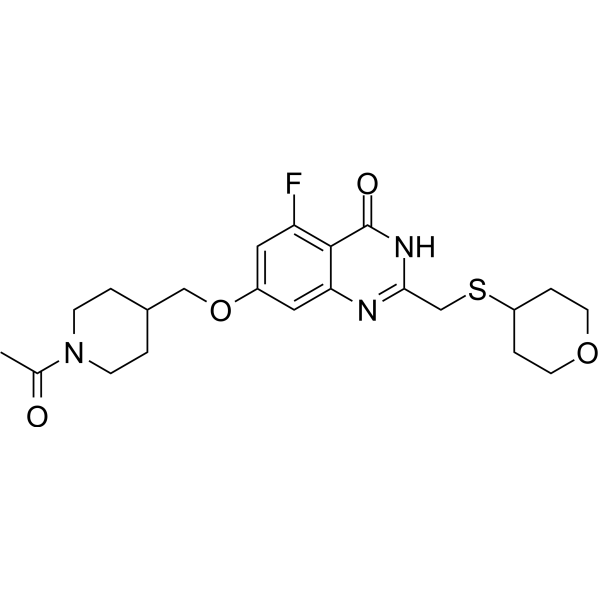
PARP14 inhibitor 1
 0 ImagesCat. No.: HY-172806CAS No.: 3035493-13-8PARP14 inhibitor 1 is an orally active, selective PARP14 inhibitor with an IC50 of 5.52 nM. PARP14 inhibitor 1 exhibits favorable pharmacokinetic properties and in vivo safety. PARP14 inhibitor 1 enhances and stabilizes intracellular endogenous PARP14 protein levels, while effectively reducing the expression levels of IL-4, IL-13 and IL-17A. PARP14 inhibitor 1 can be used in research related to atopic dermatitis.
-
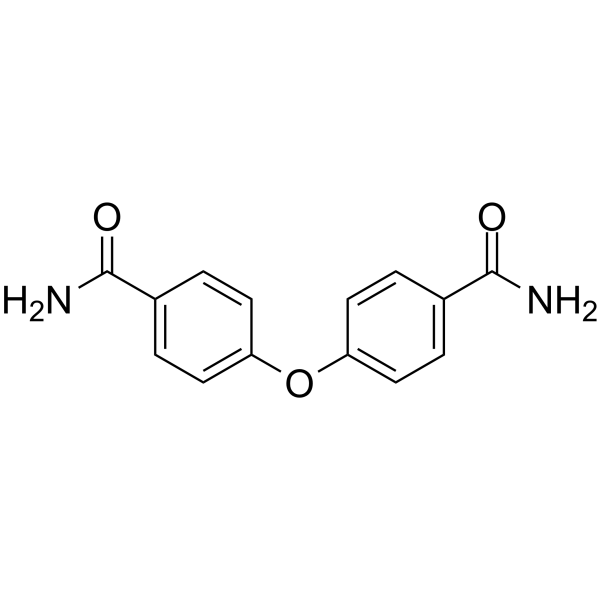
OUL245
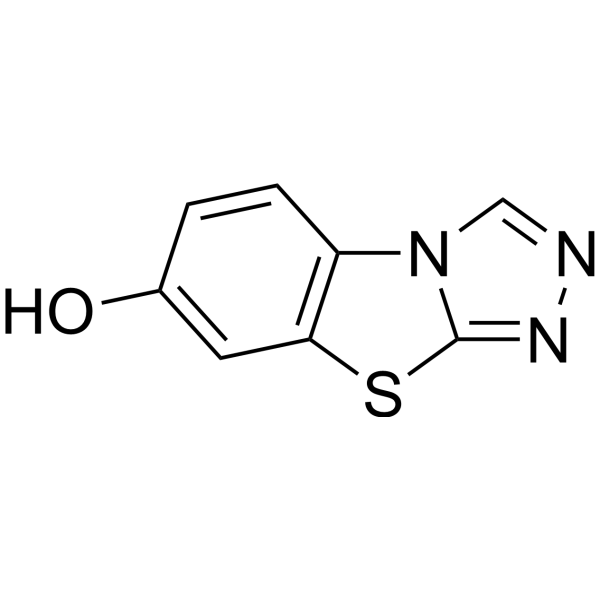 0 ImagesCat. No.: HY-W294889CAS No.: 1023814-45-0
-
ARTD10/PARP10-IN-2
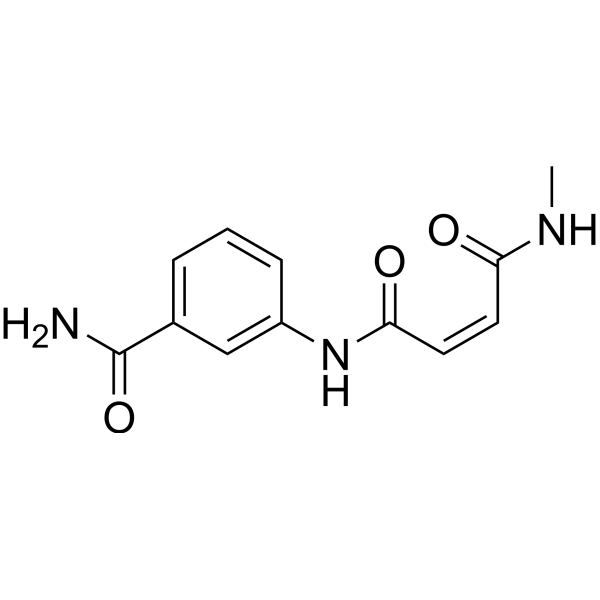 0 ImagesCat. No.: HY-148710CAS No.: 1708103-69-8ARTD10/PARP10-IN-2 (compound 19) is a potent and non-selective PARP inhibitor, targeting to mono-ADP-ribosyltransferases ARTD10/PARP10 and poly(ADP-ribose) polymerase-1 ARTD1/PARP1 with IC50s of 2.0 μM, and 9.7 μM, respectively.

- 1



