



PARP14
PARP14 (poly(ADP-ribose) polymerase 14) is a multidomain mono-ADP-ribosyltransferase that functions as both a writer and reader of ADP-ribosylation and regulates immunity, transcriptional control, and genome stability[1]. Mechanistically, PARP14 acts as a transcriptional coactivator of STAT6, promoting IL-4/STAT6-dependent gene expression and supporting T helper 2 (Th2) differentiation, cytokine signaling, and allergic inflammatory responses[2][3][4]. Through these activities, PARP14 links cytokine-driven transcriptional programs to immune-cell function and tissue inflammation[2][3]. In disease settings, PARP14 contributes to allergic airway disease and has been implicated in cancer-associated survival pathways, including B-cell malignancies and hepatocellular carcinoma, where it supports cellular fitness and disease progression[1][4][5]. Beyond immune regulation, PARP14 promotes homologous recombination and protects cells from replication stress, highlighting an additional role in maintaining genome integrity during DNA replication[6]. Compared with related PARP isoforms, PARP14 is distinguished by the presence of multiple macrodomains together with a catalytic mono-ADP-ribosyltransferase domain, enabling it to integrate ADP-ribose recognition with ADP-ribose writing functions within a single protein[1]. For experimental applications, selective PARP14 inhibitors such as RBN012759 have demonstrated high target selectivity and have been used to suppress PARP14-dependent ADP-ribosylation and attenuate allergic inflammatory phenotypes in vivo, providing useful pharmacological tools for mechanistic and translational research[4][7].
References:
- [1]. Đukić N, et al. PARP14 is a PARP with both ADP-ribosyl transferase and hydrolase activities. Sci Adv. 2023 Sep 15;9(37):eadi2687. [Content Brief]
- [2]. Krishnamurthy P, et al. STAT6 and PARP Family Members in the Development of T Cell-dependent Allergic Inflammation. Immune Netw. 2016 Aug;16(4):201-10. [Content Brief]
- [3]. Torretta A, et al. PARP14 is a writer, reader, and eraser of mono-ADP-ribosylation. J Biol Chem. 2023 Sep;299(9):105096. [Content Brief]
- [4]. Eddie AM, et al. Selective Pharmaceutical Inhibition of PARP14 Mitigates Allergen-Induced IgE and Mucus Overproduction in a Mouse Model of Pulmonary Allergic Response. Immunohorizons. 2022 Jul 11;6(7):432-446. [Content Brief]
- [5]. Iansante V, et al. PARP14 promotes the Warburg effect in hepatocellular carcinoma by inhibiting JNK1-dependent PKM2 phosphorylation and activation. Nat Commun. 2015 Aug 10;6:7882. [Content Brief]
- [6]. Pasi M, et al. Analyzing ion distributions around DNA: sequence-dependence of potassium ion distributions from microsecond molecular dynamics. Nucleic Acids Res. 2015 Feb 27;43(4):2412-23. [Content Brief]
- [7]. Brooks DM,et al. Immunomodulatory roles of PARPs: Shaping the tumor microenvironment, et al. Curr Opin Chem Biol. 2023 Dec;77:102402. [Content Brief]
-
PARP14 Related Products (17)
Related Products (17)

- 1
-
RBN012759
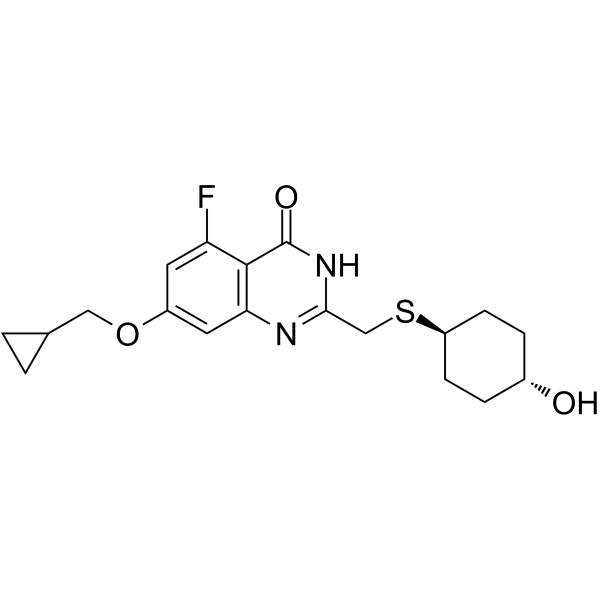 0 ImagesRBN012759 is a potent, selective and orally active inhibitor of PARP14, with an IC50 of <3 nM. RBN012759 displays 300-fold selectivity over the monoPARPs and 1000-fold selectivity over the polyPARPs. RBN012759 decreases pro-tumor macrophage function and elicits inflammatory responses in tumor explants.
-
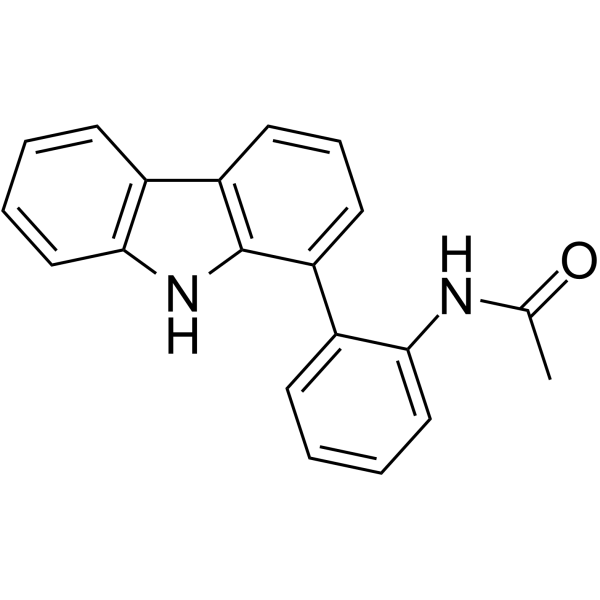
PARP14 inhibitor H10
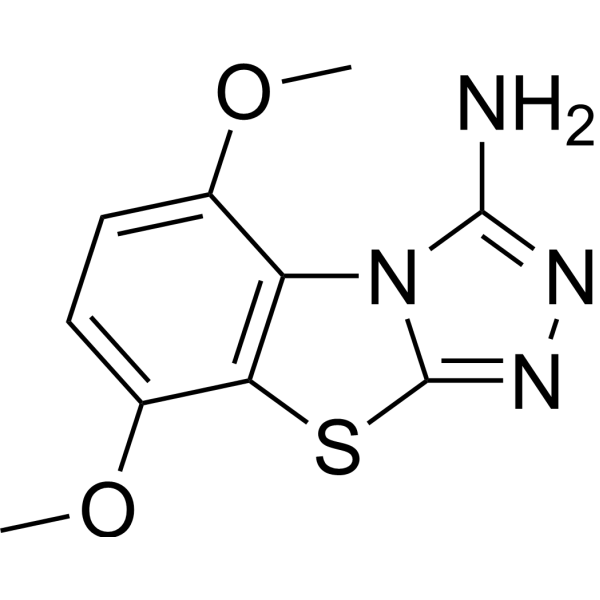
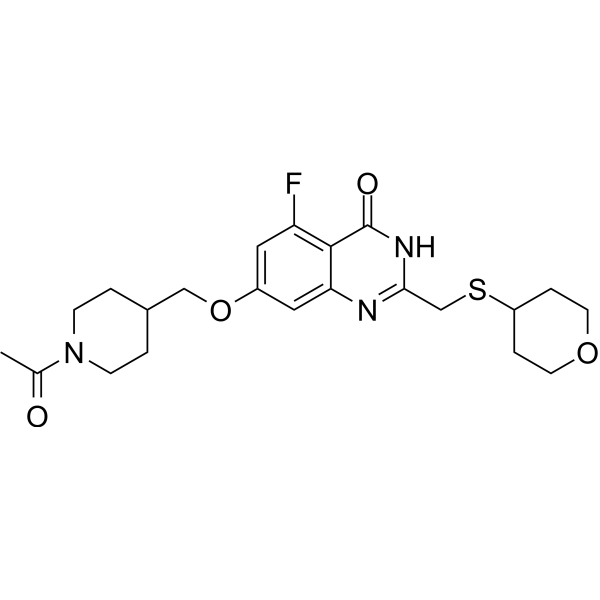
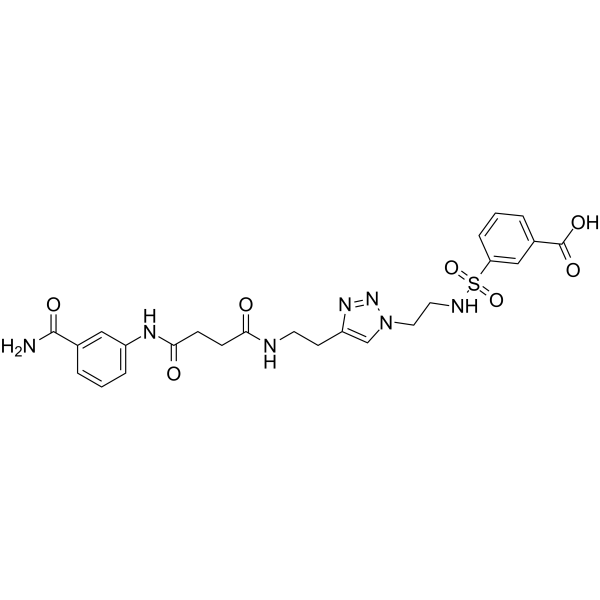 0 ImagesPARP14 inhibitor H10, compound H 10, is a selective inhibitor against PARP14 (IC50=490 nM), over other PARPs (≈24 fold over PARP1). PARP14 inhibitor H10 induces caspase-3/7-mediated cell apoptosis.
-
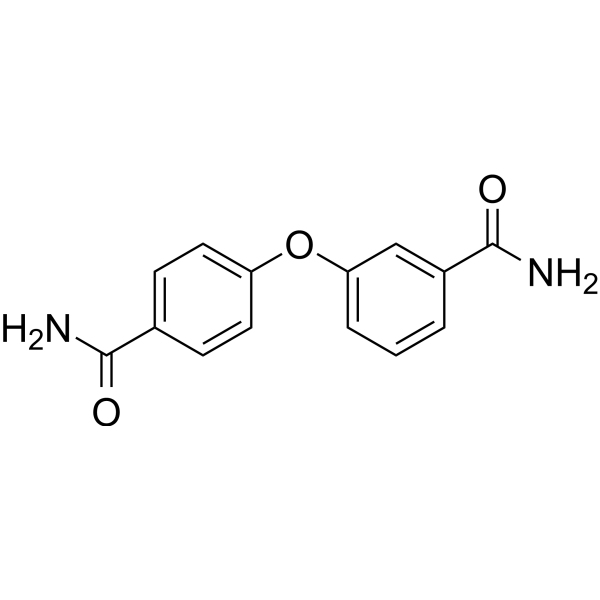
XW-17
 0 ImagesCat. No.: HY-183548XW-17 is a PARP14 inhibitor with an IC50 of 3.03 nM and selectivity over other PARP family members.XW-17 suppresses PARP14-mediated mono-ADP-ribosylation, engages and stabilizes endogenous PARP14 protein.XW-17 attenuates skin lesions and decreases expression of IL-4, IL-13, IgE, and IL-17A in an atopic dermatitis-like mouse model.XW-17 can be used for the research of atopic dermatitis.
-
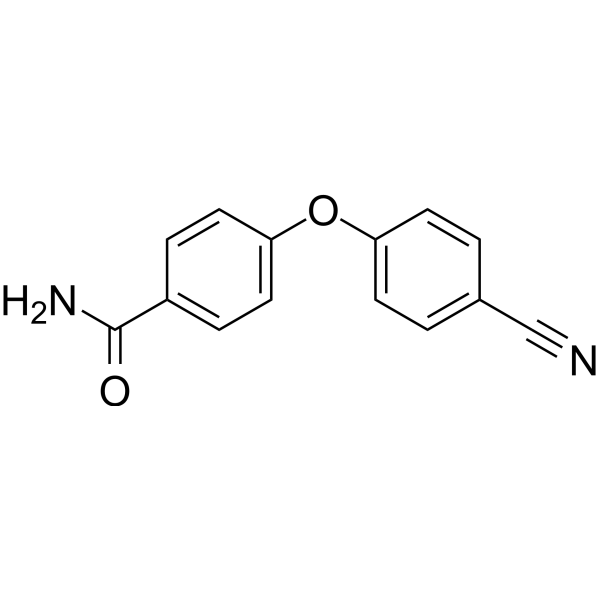
RBN012811
 0 ImagesRBN012811 is a highly selective PROTAC-based PARP14 degrader. RBN012811 forms a ternary complex with cereblon by binding to the NAD+ site of PARP14, and mediates the specific degradation of PARP14 via the ubiquitin-proteasome pathway (IC50=10 nM). RBN012811 effectively depletes endogenous PARP14 in various cell lines and primary human macrophages, thereby downregulating IL-10 production and IFN-β mRNA levels, increasing phosphorylated STAT1 levels to enhance inflammatory signaling, and inhibiting interferon-induced ADPr condensate formation. RBN012811 also modulates viral replication, exhibiting increased HSV1 replication while reducing VSV replication. RBN012811 has important application value in research related to cancer and viral infections.
-
YCH1899
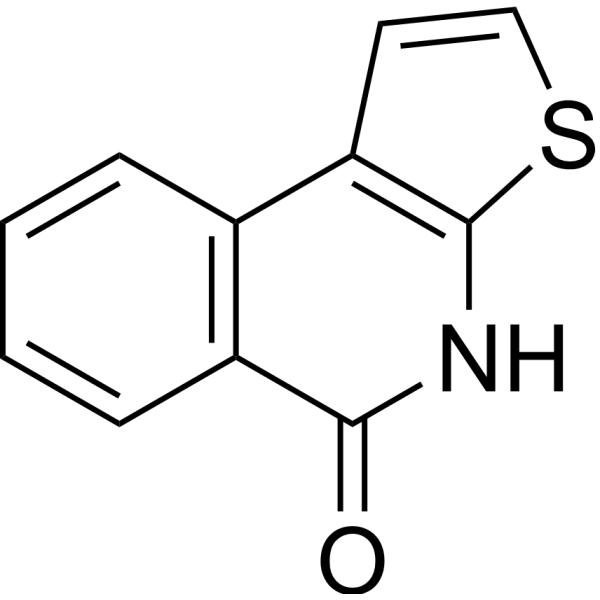
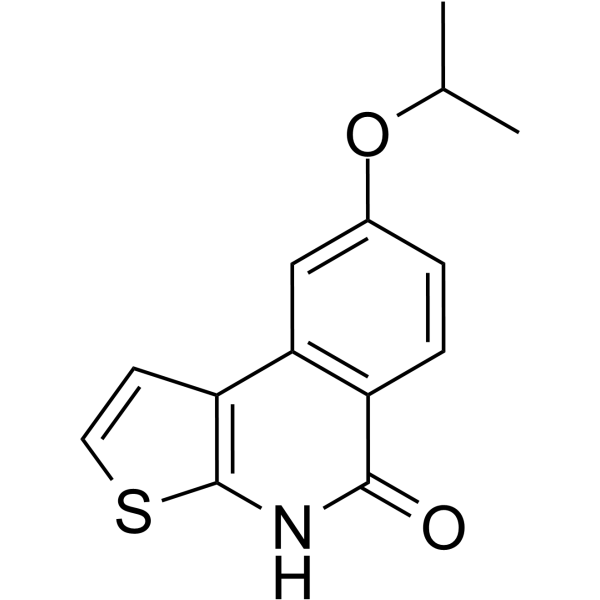
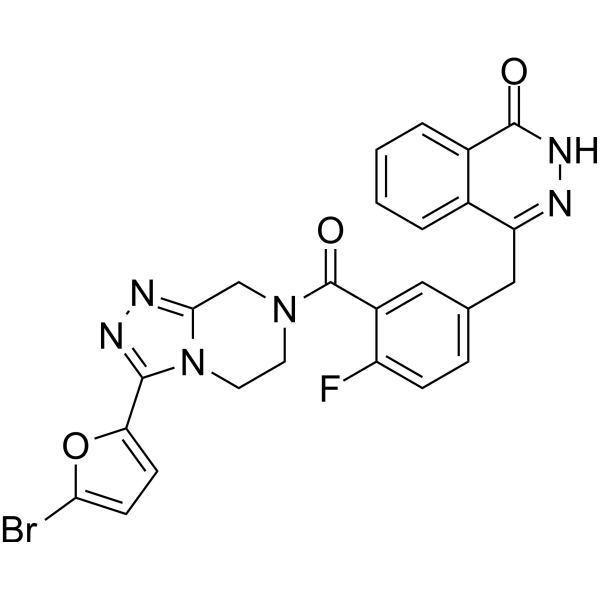 0 ImagesYCH1899 is an orally active PARP inhibitor, with an IC50< 0.001 nM for PARP1/2. YCH1899 exhibits distinct antiproliferation activity against Olaparib (HY-10162)-resistant and Talazoparib (HY-16106)-resistant Capan-1 cells (Capan-1/OP and Capan-1/TP cells) , with IC50 values of 0.89 and 1.13 nM, respectively. YCH1899 has acceptable pharmacokinetic properties in rats.
-
ARTD10/PARP10-IN-1
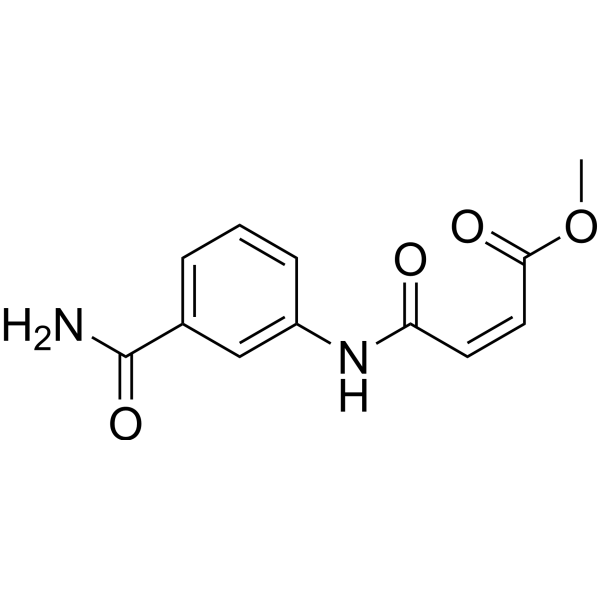 0 ImagesCat. No.: HY-148709CAS No.: 1708103-76-7ARTD10/PARP10-IN-1 (compound 23) is a potent and non-selective PARP inhibitor, targeting to mono-ADP-ribosyltransferases ARTD7/PARP15, ARTD8/PARP14, ARTD10/PARP10 and poly(ADP-ribose) polymerase-1 (ARTD1/PARP1) with IC50s of 1.7 μM, 1.6 μM, 0.8 μM, and 4.4 μM, respectively.
-
PARP14 inhibitor 1
 0 ImagesCat. No.: HY-172806CAS No.: 3035493-13-8PARP14 inhibitor 1 is an orally active, selective PARP14 inhibitor with an IC50 of 5.52 nM. PARP14 inhibitor 1 exhibits favorable pharmacokinetic properties and in vivo safety. PARP14 inhibitor 1 enhances and stabilizes intracellular endogenous PARP14 protein levels, while effectively reducing the expression levels of IL-4, IL-13 and IL-17A. PARP14 inhibitor 1 can be used in research related to atopic dermatitis.
-
OUL245
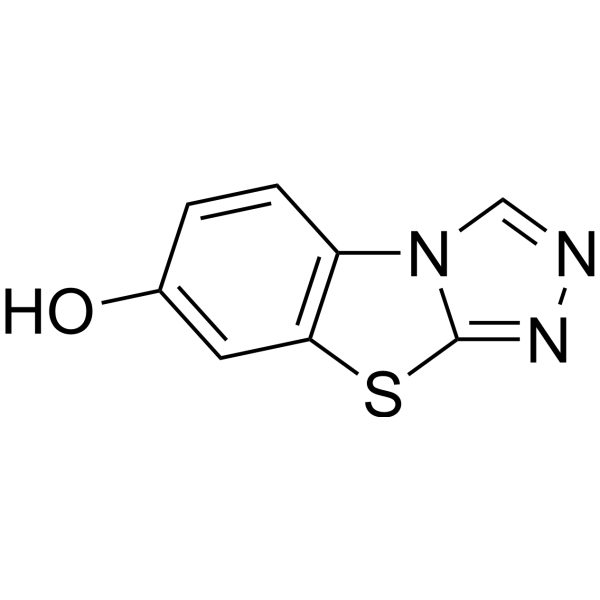 0 ImagesCat. No.: HY-W294889CAS No.: 1023814-45-0
-
PARP14 inhibitor 2
 0 ImagesCat. No.: HY-176456CAS No.: 3064731-00-3PARP14 inhibitor 2 (Compound 3) is an orally active and highly selective PARP14 inhibitor with an IC50 value of <30 nM. PARP14 inhibitor 2 inhibits the mono-ADP-ribosyltransferase activity of PARP14 and regulates IFN-γ and IL-4 signaling, reversing protumor macrophage polarization and inhibiting anti-tumor inflammatory responses. PARP14 inhibitor 2 is promising for research of PARP14-related diseases such as tumors, atopic dermatitis and autoimmune diseases.
-
ARTD10/PARP10-IN-2
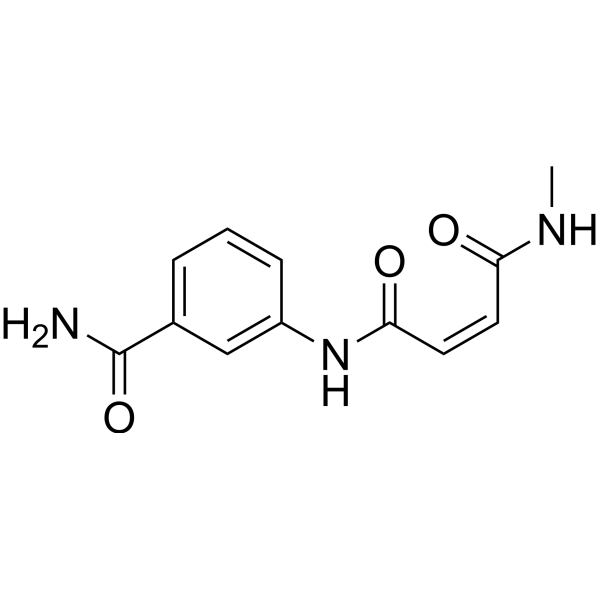 0 ImagesCat. No.: HY-148710CAS No.: 1708103-69-8ARTD10/PARP10-IN-2 (compound 19) is a potent and non-selective PARP inhibitor, targeting to mono-ADP-ribosyltransferases ARTD10/PARP10 and poly(ADP-ribose) polymerase-1 ARTD1/PARP1 with IC50s of 2.0 μM, and 9.7 μM, respectively.
- 1



