



PARP12
PARP12 is a zinc-finger-containing mono-ADP-ribosyltransferase that functions as an interferon-stimulated antiviral effector and regulates protein mono-ADP-ribosylation in innate immune responses[1][6]. Mechanistically, PARP12 localizes to cytoplasmic stress granules through its zinc-finger domains, where it contributes to antiviral defense by repressing translation, interacting with viral RNA, and promoting restriction of viral replication[1][7]. PARP12 also directly modifies viral targets, including Zika virus non-structural proteins NS1 and NS3, leading to their ubiquitination-associated proteasomal degradation and suppression of viral propagation[6][7]. In experimental infection models, PARP12 restricts replication of multiple RNA viruses, including alphaviruses, flaviviruses, coronaviruses, and encephalomyocarditis virus, supporting its central role in host antiviral immunity[7][2][3]. Recent studies further demonstrated that PARP12 is required for efficient restriction of viral macrodomain mutants and participates in interferon-dependent antiviral pathways[3][4]. Compared with the related zinc-finger PARP family member PARP13/ZAP, which lacks catalytic ADP-ribosyltransferase activity and primarily mediates RNA recognition and degradation, PARP12 possesses intrinsic mono-ADP-ribosyltransferase activity and directly modifies protein substrates[7]. Beyond antiviral signaling, PARP12 has been implicated in intracellular trafficking through MARylation-dependent regulation of transport machinery, indicating broader cellular functions that may influence disease-relevant pathways[5]. Therefore, PARP12 represents a valuable experimental target for investigating ADP-ribosylation-dependent antiviral mechanisms and innate immune regulation[1][7].
References:
- [1]. Welsby I, et al. PARP12, an interferon-stimulated gene involved in the control of protein translation and inflammation. J Biol Chem. 2014;289(38):26642-26657. [Content Brief]
- [2]. Uniprotkb.
- [3]. Ryan AP, et al. Zinc-finger PARP proteins ADP-ribosylate alphaviral proteins and are required for interferon-γ-mediated antiviral immunity. Sci Adv. 2025 Jan 31;11(5):eadm6812. [Content Brief]
- [4]. Kerr CM, et al. PARP12 is required to repress the replication of a Mac1 mutant coronavirus in a cell- and tissue-specific manner. J Virol. 2023 Sep 28;97(9):e0088523. [Content Brief]
- [5]. Kiros M, et al. Trends in HIV-1 pretreatment drug resistance and HIV-1 variant dynamics among antiretroviral therapy-naive Ethiopians from 2003 to 2018: a pooled sequence analysis. Virol J. 2023 Oct 25;20(1):243. [Content Brief]
- [6]. Lüscher B, et al. Intracellular mono-ADP-ribosyltransferases at the host-virus interphase. Cell Mol Life Sci. 2022;79(6):288.
- [7]. Di Paola S, et al. Mono-ADP-ribosylating PARP enzymes in cellular signaling and disease. J Cell Sci. 2025;138(14):jcs263963.
All Product Categories
-
PARP12 Related Products (4)
Related Products (4)

-
YCH1899
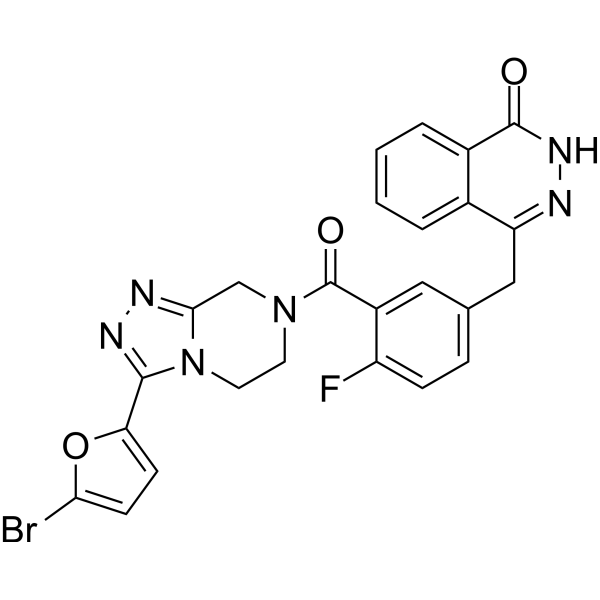 0 ImagesYCH1899 is an orally active PARP inhibitor, with an IC50< 0.001 nM for PARP1/2. YCH1899 exhibits distinct antiproliferation activity against Olaparib (HY-10162)-resistant and Talazoparib (HY-16106)-resistant Capan-1 cells (Capan-1/OP and Capan-1/TP cells) , with IC50 values of 0.89 and 1.13 nM, respectively. YCH1899 has acceptable pharmacokinetic properties in rats.
-
PARP14 inhibitor 1
 0 ImagesCat. No.: HY-172806CAS No.: 3035493-13-8PARP14 inhibitor 1 is an orally active, selective PARP14 inhibitor with an IC50 of 5.52 nM. PARP14 inhibitor 1 exhibits favorable pharmacokinetic properties and in vivo safety. PARP14 inhibitor 1 enhances and stabilizes intracellular endogenous PARP14 protein levels, while effectively reducing the expression levels of IL-4, IL-13 and IL-17A. PARP14 inhibitor 1 can be used in research related to atopic dermatitis.



