



PARP15
PARP15 (also known as ARTD7) is a member of the macrodomain-containing PARP family and functions as a mono-ADP-ribosyltransferase that mediates mono-ADP-ribosylation of proteins and RNA, thereby regulating transcriptional and post-transcriptional cellular processes[1][2][3]. Mechanistically, PARP15 contains macrodomains and a catalytic ADP-ribosyltransferase domain, linking ADP-ribosylation signaling to transcriptional regulation and RNA-associated functions[2][4]. Recent structural and biochemical studies demonstrated that PARP15 localizes to stress granules, modifies RNA, and requires catalytic-domain dimerization for enzymatic activity, supporting a role in translational control and cellular stress responses[2]. In disease-relevant contexts, evolutionary analyses have associated PARP15 with antiviral defense mechanisms, whereas human genetic studies identified PARP15 as a susceptibility locus in systemic capillary leak syndrome, implicating PARP15-mediated ADP-ribosylation in vascular inflammatory responses[2][5]. Compared with its closely related paralog PARP14, PARP15 originated through partial gene duplication, possesses a simpler domain architecture, exhibits distinct NAD+-binding and automodification properties, and has evolved under lineage-specific selective pressures linked to host-virus interactions[2]. For experimental applications, crystal structures of the PARP15 catalytic domain in complex with small-molecule inhibitors have provided a framework for the rational design of selective PARP-family inhibitors and for mechanistic studies of mono-ADP-ribosylation signaling[6].
Verweise:
- [1]. Aguiar RC, et al. B-aggressive lymphoma family proteins have unique domains that modulate transcription and exhibit poly(ADP-ribose) polymerase activity. J Biol Chem. 2005 Oct 7;280(40):33756-65. [Content Brief]
- [2]. Ebenwaldner C, et al. Regulation of ADP-ribosyltransferase activity by ART domain dimerization in PARP15. Nat Commun. 2025 Oct 29;16(1):9567. [Content Brief]
- [3]. Vyas S, et al. Family-wide analysis of poly(ADP-ribose) polymerase activity. Nat Commun. 2014 Jul 21;5:4426. [Content Brief]
- [4]. Forst AH, et al. Recognition of mono-ADP-ribosylated ARTD10 substrates by ARTD8 macrodomains. Structure. 2013 Mar 5;21(3):462-75. [Content Brief]
- [5]. Gómez Hernández MT, et al. The «Weekday Effect» Does Not Have an Impact on the Development of Complications or Mortality After Pulmonary Resection: Retrospective Cohort Study. Cir Esp (Engl Ed). 2021 Apr;99(4):296-301. English, Spanish. [Content Brief]
- [6]. Zhou X, et al. Crystal structures of the catalytic domain of human PARP15 in complex with small molecule inhibitors. Biochem Biophys Res Commun. 2022 Sep 24;622:93-100. [Content Brief]
All Product Categories
-
PARP15 Verwandte Produkte (14)
Verwandte Produkte (14)

- 1
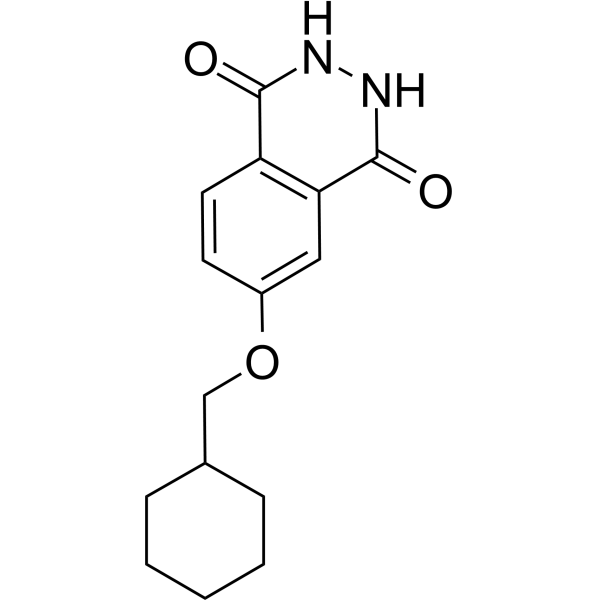
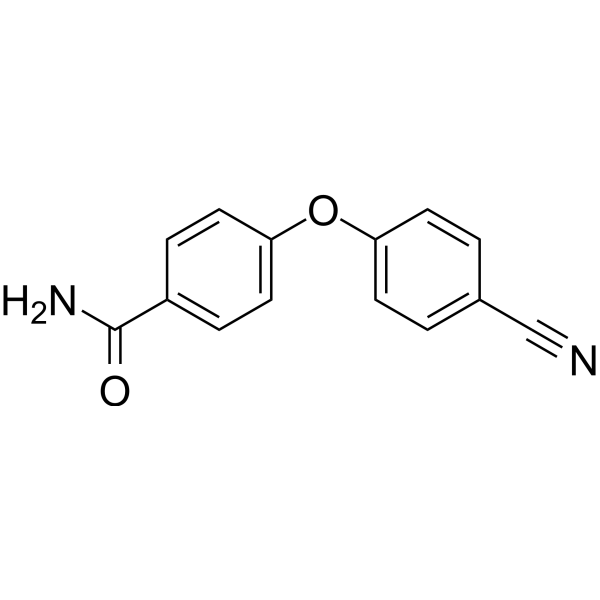
-
YCH1899
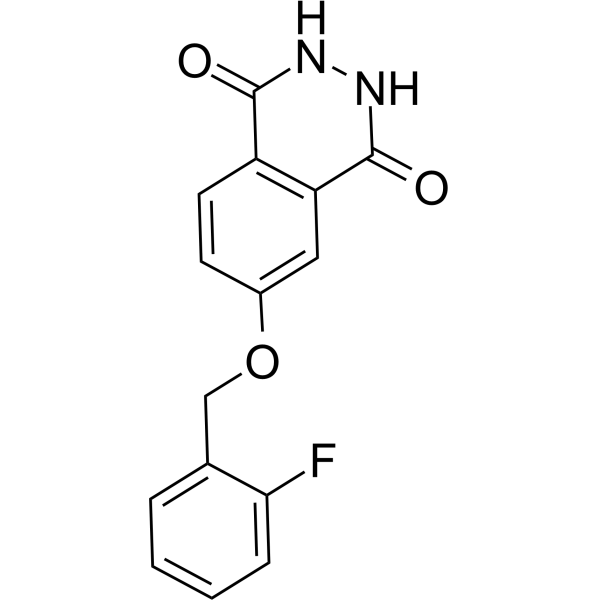
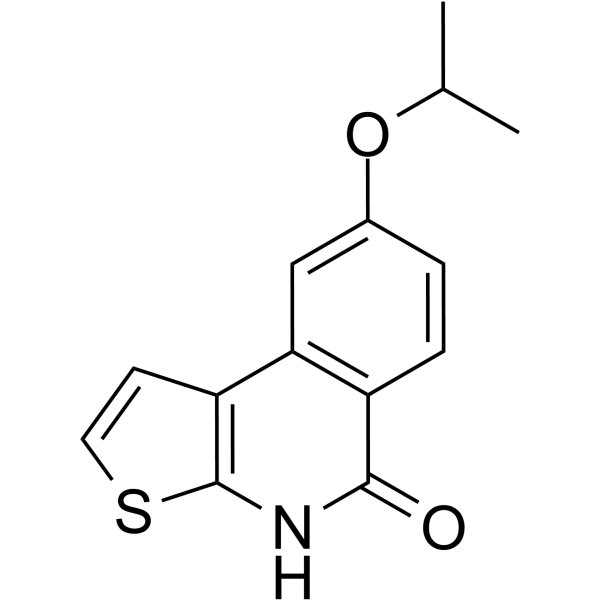
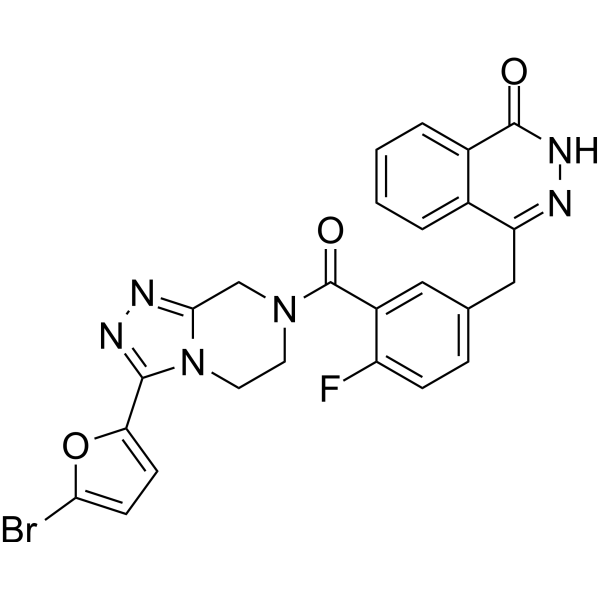 0 ImagesYCH1899 is an orally active PARP inhibitor, with an IC50< 0.001 nM for PARP1/2. YCH1899 exhibits distinct antiproliferation activity against Olaparib (HY-10162)-resistant and Talazoparib (HY-16106)-resistant Capan-1 cells (Capan-1/OP and Capan-1/TP cells) , with IC50 values of 0.89 and 1.13 nM, respectively. YCH1899 has acceptable pharmacokinetic properties in rats.
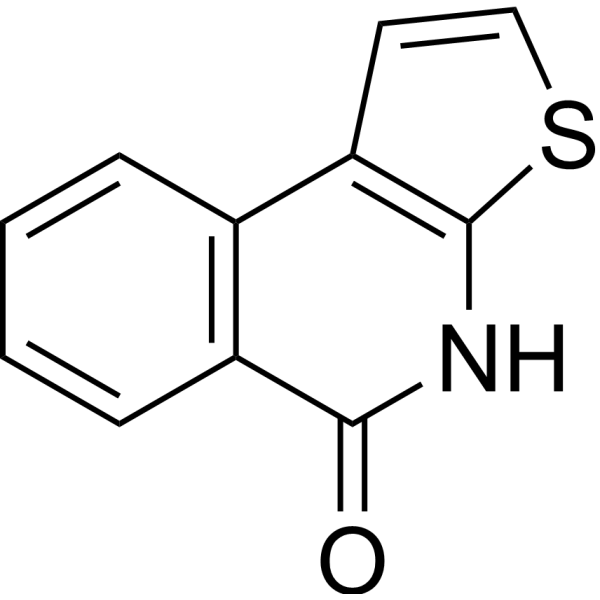
-
ARTD10/PARP10-IN-1
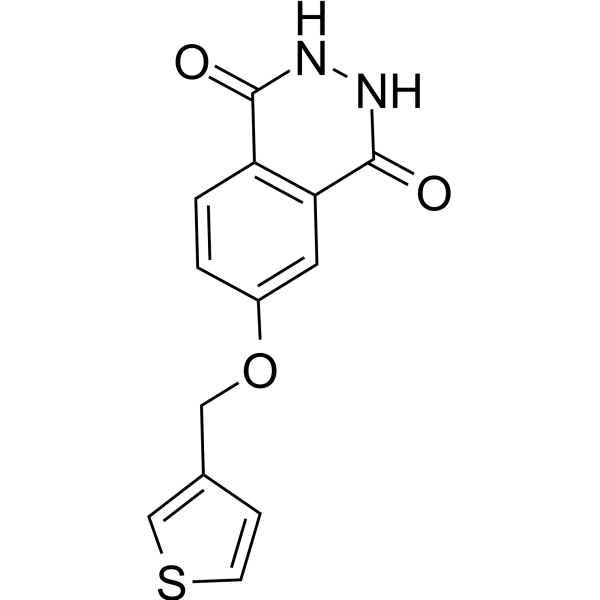
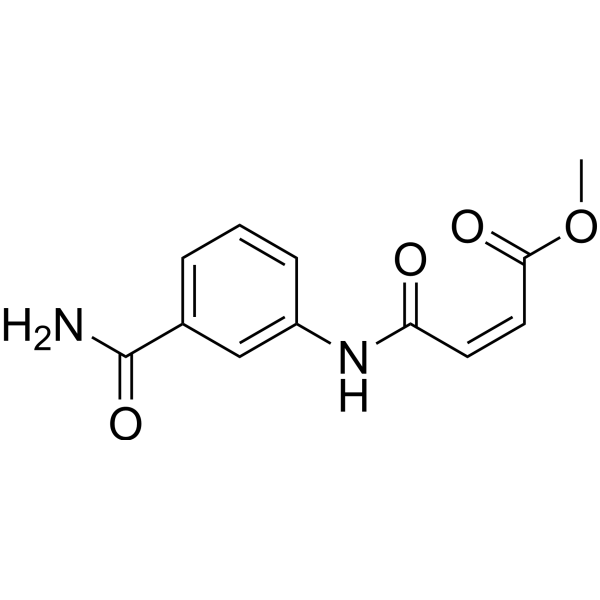 0 ImagesArt. -Nr.: HY-148709CAS. Nr.: 1708103-76-7ARTD10/PARP10-IN-1 (compound 23) is a potent and non-selective PARP inhibitor, targeting to mono-ADP-ribosyltransferases ARTD7/PARP15, ARTD8/PARP14, ARTD10/PARP10 and poly(ADP-ribose) polymerase-1 (ARTD1/PARP1) with IC50s of 1.7 μM, 1.6 μM, 0.8 μM, and 4.4 μM, respectively.
-
PARP14 inhibitor 1
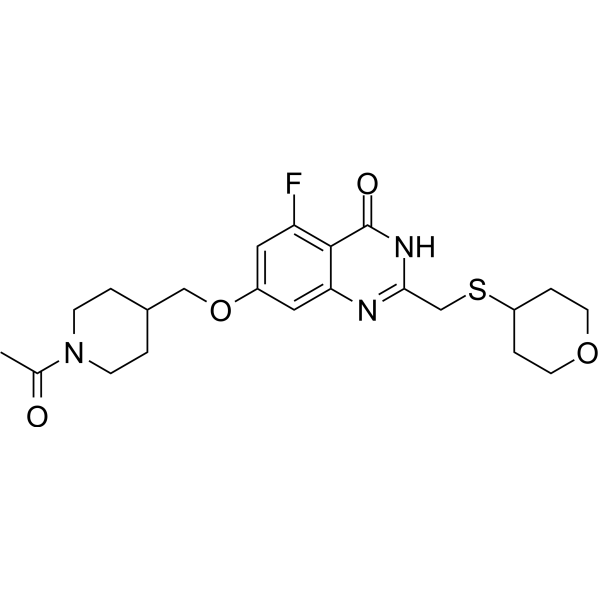
 0 ImagesArt. -Nr.: HY-172806CAS. Nr.: 3035493-13-8PARP14 inhibitor 1 is an orally active, selective PARP14 inhibitor with an IC50 of 5.52 nM. PARP14 inhibitor 1 exhibits favorable pharmacokinetic properties and in vivo safety. PARP14 inhibitor 1 enhances and stabilizes intracellular endogenous PARP14 protein levels, while effectively reducing the expression levels of IL-4, IL-13 and IL-17A. PARP14 inhibitor 1 can be used in research related to atopic dermatitis.
-
OUL245
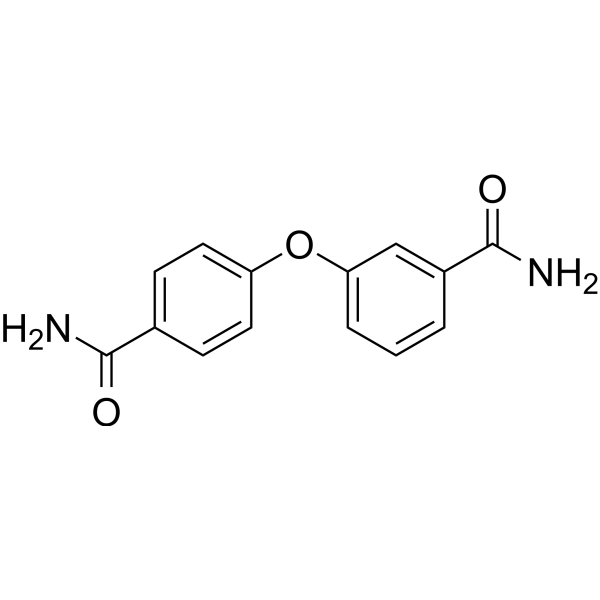
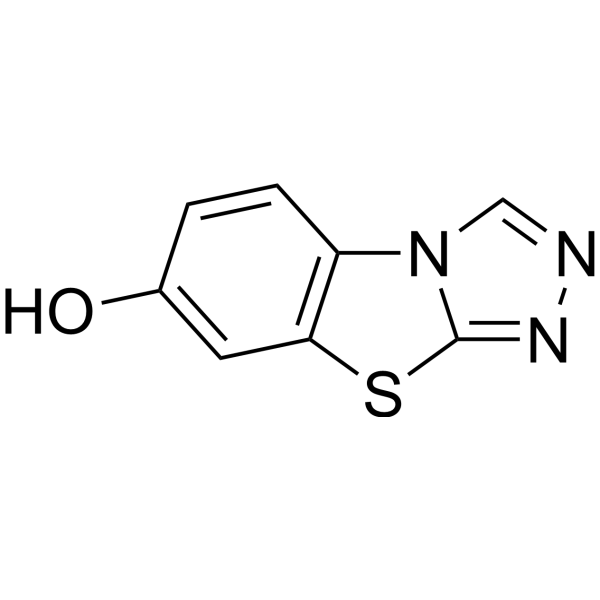 0 ImagesArt. -Nr.: HY-W294889CAS. Nr.: 1023814-45-0
-
ARTD10/PARP10-IN-2
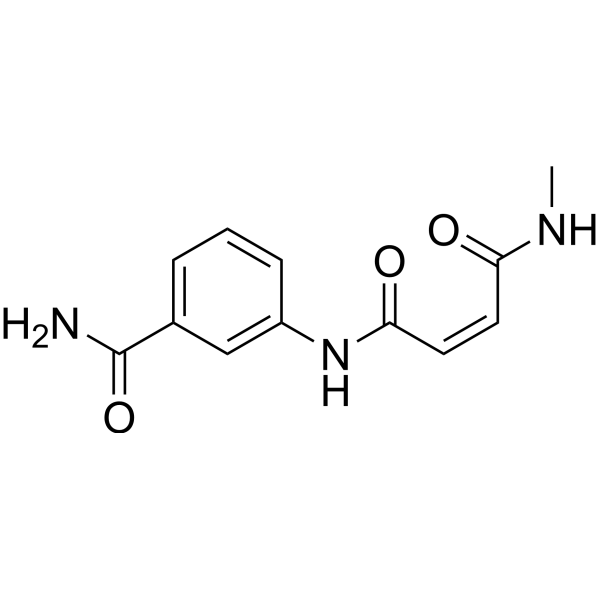 0 ImagesArt. -Nr.: HY-148710CAS. Nr.: 1708103-69-8ARTD10/PARP10-IN-2 (compound 19) is a potent and non-selective PARP inhibitor, targeting to mono-ADP-ribosyltransferases ARTD10/PARP10 and poly(ADP-ribose) polymerase-1 ARTD1/PARP1 with IC50s of 2.0 μM, and 9.7 μM, respectively.
- 1



