



DYRK2
DYRK2 (dual-specificity tyrosine-phosphorylation-regulated kinase 2) is a member of the DYRK kinase family that integrates cell-cycle control, DNA-damage signaling, proteostasis, and apoptosis through substrate-specific phosphorylation events[1][2]. Upon genotoxic stress, DYRK2 undergoes nuclear translocation and directly phosphorylates p53 at Ser46, promoting p53-dependent apoptotic transcriptional programs and irreversible cell-fate commitment after severe DNA damage[1]. Mechanistically, ATM-dependent phosphorylation stabilizes DYRK2 and supports its accumulation in the nucleus, linking DNA-damage sensing to apoptotic execution pathways[3]. Beyond p53 regulation, DYRK2 functions as a priming kinase for c-Jun and c-Myc, facilitating their ubiquitination and degradation, thereby influencing G1/S cell-cycle progression and oncogenic signaling networks[4]. DYRK2 also regulates proteostasis by phosphorylating the 26S proteasome and enhancing proteasome activity, a process associated with survival of proteasome-dependent tumor cells including multiple myeloma and triple-negative breast cancer models[5][6]. In disease settings, altered DYRK2 expression has been associated with tumor progression, chemosensitivity, and metastatic behavior, although its biological role remains context dependent across cancer types[2][7]. Compared with related DYRK isoforms, DYRK2 is distinguished by its prominent regulation of p53-dependent apoptosis, proteasome activation, and ubiquitin-mediated turnover of oncogenic substrates[1][4][5]. For experimental applications, pharmacological inhibition of DYRK2 suppresses proteasome activity and impairs growth of proteasome-addicted cancers, supporting its value as a mechanistic target in translational oncology research[6][8].
References:
- [1]. Taira N, et al. DYRK2 is targeted to the nucleus and controls p53 via Ser46 phosphorylation in the apoptotic response to DNA damage. Mol Cell. 2007 Mar 9;25(5):725-38. [Content Brief]
- [2]. Rabezanahary H, et al. Live virus neutralizing antibodies against pre and post Omicron strains in food and retail workers in Québec, Canada. Heliyon. 2024 May 21;10(10):e31026. [Content Brief]
- [3]. Liebl M C, et al. Cell fate regulation upon DNA damage: p53 serine 46 kinases pave the cell death road[J]. Bioessays, 2019, 41(12): 1900127.
- [4]. Taira N, et al. DYRK2 priming phosphorylation of c-Jun and c-Myc modulates cell cycle progression in human cancer cells. J Clin Invest. 2012 Mar;122(3):859-72. [Content Brief]
- [5]. Guo X, et al. Site-specific proteasome phosphorylation controls cell proliferation and tumorigenesis. Nat Cell Biol. 2016 Feb;18(2):202-12. [Content Brief]
- [6]. Banerjee S, et al. Inhibition of dual-specificity tyrosine phosphorylation-regulated kinase 2 perturbs 26S proteasome-addicted neoplastic progression. Proc Natl Acad Sci U S A. 2019 Dec 3;116(49):24881-24891. [Content Brief]
- [7]. Yamaguchi N, et al. DYRK2 regulates epithelial-mesenchymal-transition and chemosensitivity through Snail degradation in ovarian serous adenocarcinoma. Tumour Biol. 2015 Aug;36(8):5913-23. [Content Brief]
- [8]. Banerjee S, et al. Ancient drug curcumin impedes 26S proteasome activity by direct inhibition of dual-specificity tyrosine-regulated kinase 2. Proc Natl Acad Sci U S A. 2018 Aug 7;115(32):8155-8160. [Content Brief]
-
DYRK2 Related Products (25)
Related Products (25)

- 1
- 2
-
T025
 0 ImagesT025 is an orally active and highly potent inhibitor of Cdc2-like kinase (CLKs), with Kd values of 4.8, 0.096, 6.5, 0.61, 0.074, 1.5 and 32 nM for CLK1, CLK2, CLK3, CLK4, DYRK1A, DYRK1B and DYRK2, respectively. T025 induces caspase-3/7-mediated cell apoptosis. T025 reduces CLK-dependent phosphorylation. T025 exerts anti-proliferative activities in both hematological and solid cancer cell lines (IC50 values: 30-300 nM). T025 has an anti-tumor efficiency, mainly for MYC-driven disease research.
-
Leucettine L41
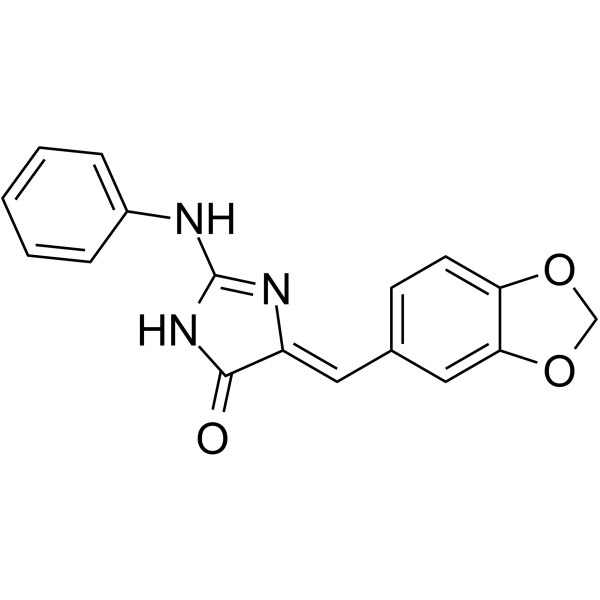 0 ImagesLeucettine L41 is a potent inhibitor of dual-specificity tyrosine phosphorylation-regulated kinases (DYRKs) and CDC-like kinases (CLKs). Leucettine L41 can also inhibit GSK-3 singnaling. Leucettine L41 can inhibit cell apoptosis and ROS production. Leucettine L41 can promote β-cell cell cycle progression, cell proliferation and increase insulin secretion. Leucettine L41 can be used for the researches of neurological disease and metabolic disease, such as Alzheimer’s disease (AD) and diabetes.
-
DYRK2-IN-2 hydrochloride
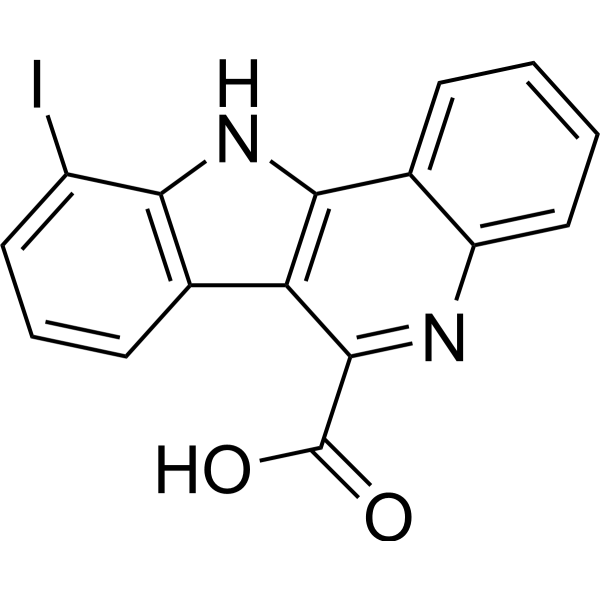
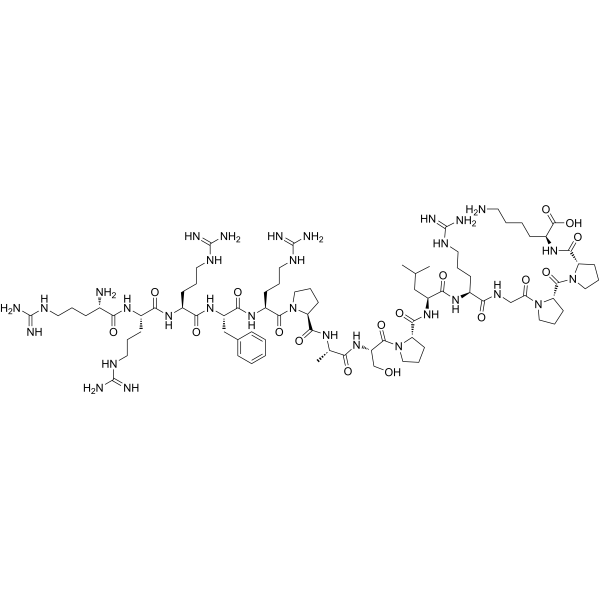
 0 ImagesCat. No.: HY-402805ADYRK2-IN-2 hydrochloride is a selective DYRK2 inhibitor with an IC50 of 40.3 nM. DYRK2-IN-2 hydrochloride shows weaker inhibitory activity against DYRK1A (IC50 = 1842 nM), DYRK1B (IC50 = 1335 nM), DYRK4 (IC50 = 1931 nM), DYRK3 (IC50 = 112 nM) and CLK (IC50 = 540-6496 nM). DYRK2-IN-2 hydrochloride inhibits the phosphorylation of Thr212 in Tau protein. DYRK2-IN-2 hydrochloride is applicable for neuronal research.
-
PROTAC DYRK2 degrader-2
 0 ImagesPROTAC DYRK2 degrader-2 is a PROTAC DYRK2 degrader based on curcumin analog A3. It recruits the CRBN E3 ligase to mediate DYRK2 ubiquitination and achieves degradation via the ubiquitin-proteasome system. PROTAC DYRK2 degrader-2 downregulates the expression level of DYRK2 protein in cancer cells. It is applicable to cancer-related research.
-
YK-2-69
 0 ImagesYK-2-69 is a highly selective DYRK2 inhibitor with an IC50 value of 9 nM. YK-2-69 specifically interacts with Lys-231 and Lys-234 of DYRK2 and can be utilized in researches related to prostate cancer.
-
Dyrk1A-IN-4
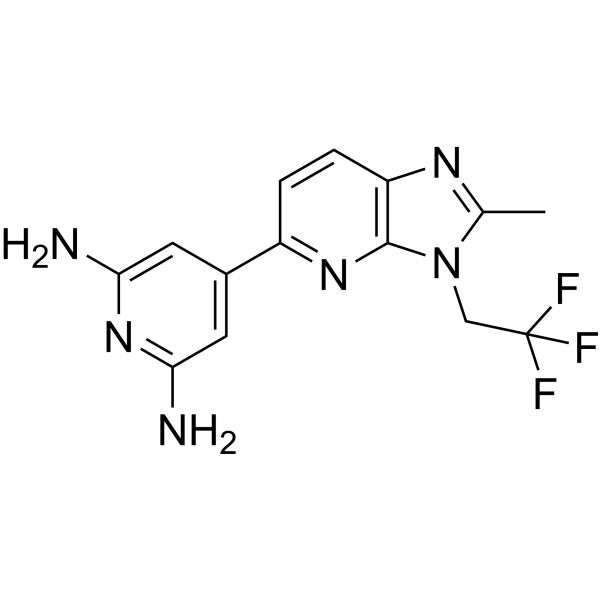 0 ImagesDyrk1A-IN-4 is a potent and orally active Dyrk1A inhibitor. Dyrk1A-IN-4 exhibits IC50s against DYRK1A and DYRK2 of 2 nM and 6 nM. Dyrk1A-IN-4 exhibits the inhibition of the DYRK1A pSer520 autophosphorylation in U2OS cells with an IC50 of 28 nM. Dyrk1A-IN-4 can be used for the studies of ovarian adenocarcinoma, neuroblastoma and cervical squamous cell carcinoma.
-
MU1210
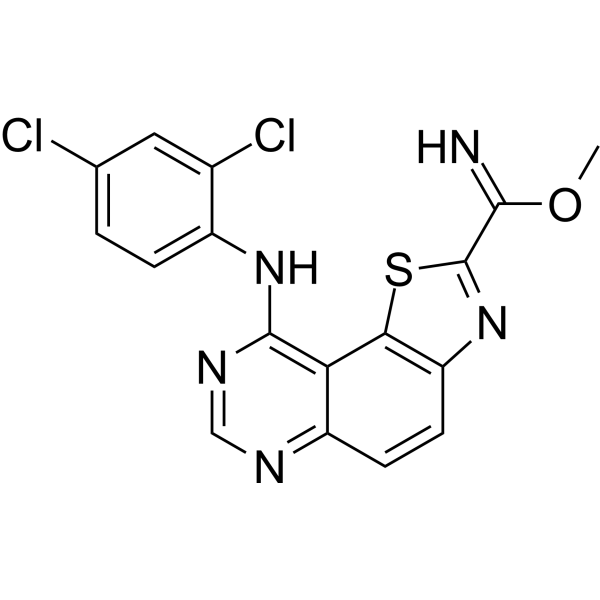
 0 ImagesMU1210 (compound 12f), a chemical probe, is an inhibitor of CDC-like kinases Clk1, Clk2, and Clk4 (with IC50 values of 8, 20, and 12 nM respectively), with IC50 for HIPK1 and DYRK2 are 187 and 1309 nM. MU1210 also has favorable pharmacokinetic characteristics (in mice, 10 mg/kg, intraperitoneal injection: Cmax=1.24 μM, T1/2=58 minutes; no acute toxicity observed).
-
ON 108600
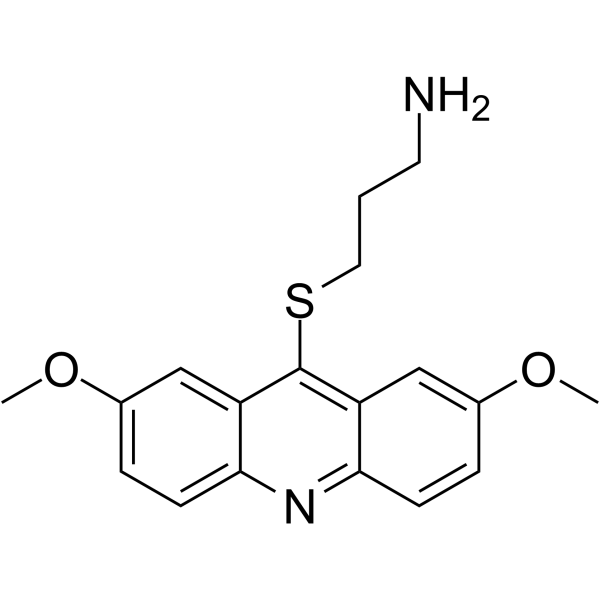
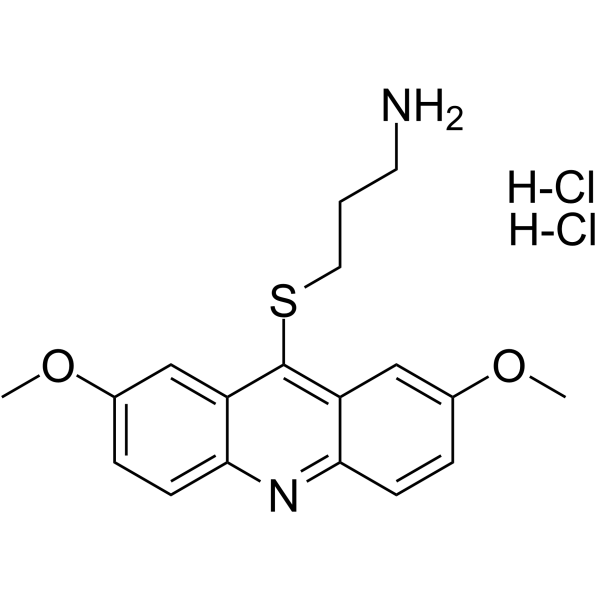
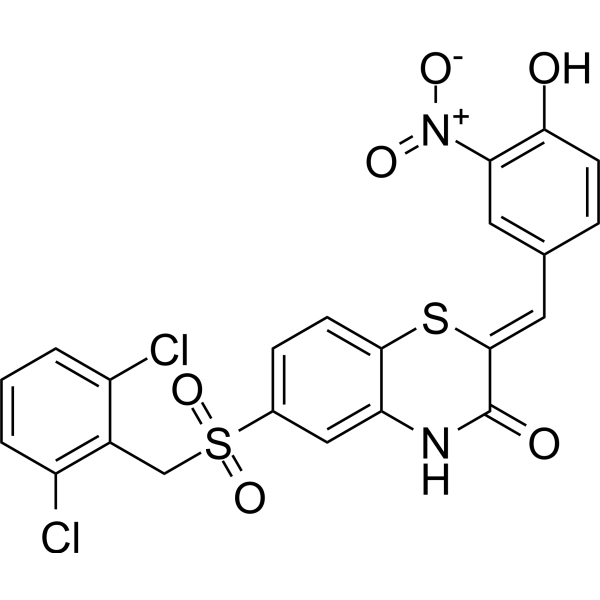 0 ImagesSynonyms: 108600ON 108600 (108600) is a CK2 (CK2α1: IC50 = 50 nM; CK2α2 = 5 nM), TNIK (IC50 = 5 nM) and DYRK (DYRK1A: IC50 = 16 nM; DYRK1B = 7 nM; DYRK2: = 28 nM). ON 108600 suppresses the growth of CD44high/CD24low breast cancer stem cell (BCSC) populations, induces G2/M arrest and apoptosis in triple negative breast cancer (TNBC) cells, and inhibits tubulin polymerization. ON 108600 can be used for the study of chemotherapy-resistant and metastatic TNBC.
-
LDN-209929 dihydrochloride
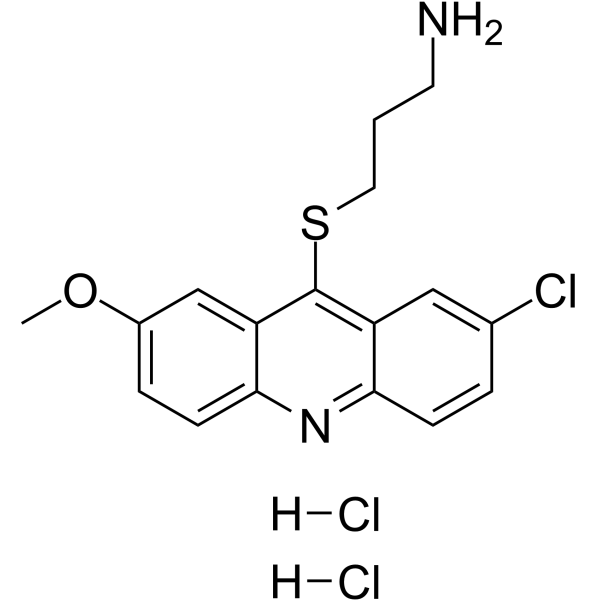 0 ImagesLDN-209929 dihydrochloride is a potent and selective haspin kinase inhibitor (IC50=55 nM) with180-fold selectivity verses DYRK2 (IC50=9.9 μM). LDN-209929 is a optimized analogue of LDN-192960 (HY-13455).
-
ZJCK-6-46
 0 ImagesZJCK-6-46 (32) is a potential and orally activeDYRK1A inhibitor (IC50 = 0.68 nM) with high BBB permeability (CNS+). ZJCK-6-46 (32) reduces tau phosphorylation. ZJCK-6-46 (32) ameliorates cognitive dysfunction by obviously reducing the expression of phosphorylated tau and neuronal loss in vivo.
-
DYRK2-IN-2
 0 ImagesCat. No.: HY-402805CAS No.: 2416195-65-6DYRK2-IN-2 (Compound C17) is a selective inhibitor of DYRK2, with its IC50 value being 40.3 nM. The inhibitory activity of DYRK2-IN-2 on DYRK1A (IC50 = 1842 nM), DYRK1B (IC50 = 1335 nM), DYRK4 (IC50 = 1931 nM), DYRK3 (IC50 = 112 nM), and CLKs (IC50 = 540-6496 NM) is relatively low. DYRK2-IN-2 inhibits the phosphorylation of Tau protein at Thr212 and shows moderate cytotoxicity in HT22 cells. DYRK2-IN-2 can be used in cancer research.
-
PROTAC DYRK2 degrader 1
 0 ImagesCat. No.: HY-161597CAS No.: 3061366-76-2PROTAC DYRK2 degrader 1 is a DYRK2 PROTAC degrader with DC50 values of 1.607 μM (MDA-MB-231 cells) and 3.265 μM (HeLa cells), respectively. PROTAC DYRK2 degrader 1 induces DYRK2 degradation via the ubiquitin-proteasome system. It is applicable to the research of triple-negative breast cancer and cervical cancer.
-
GSK3-IN-10
 0 ImagesCat. No.: HY-172198CAS No.: 844441-56-1GSK3-IN-10 (Compound 4) is a multi-target inhibitor, that mainly targets GSK3α and GSK3β with IC50 of 1.0 nM and 2.0 nM. GSK3-IN-10 inhibits the activation of β-catenin, promotes the neuronal survival, and exhibits a protective effect against endoplasmic reticulum stress.
- 1
- 2



