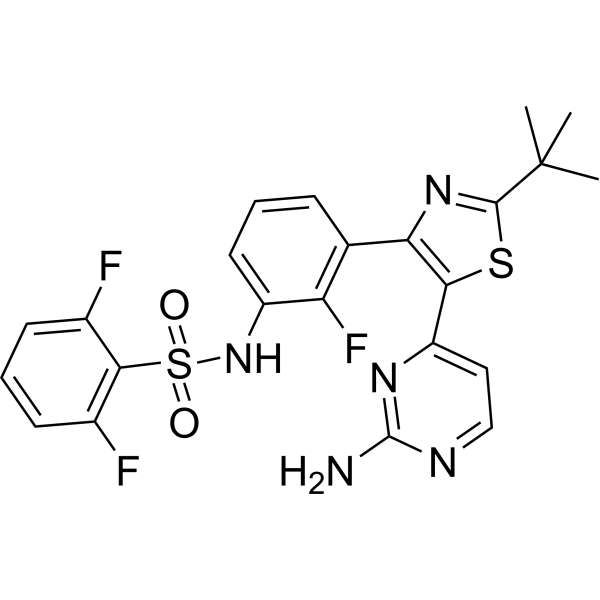
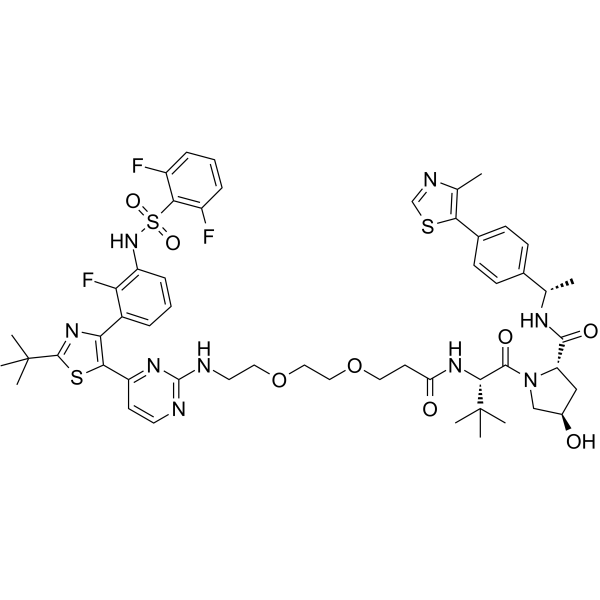
CDK17
CDK17 (cyclin-dependent kinase 17), also known as PCTAIRE2, belongs to the PCTAIRE subfamily of cyclin-dependent serine/threonine kinases and is predominantly expressed in terminally differentiated neurons, supporting a specialized role distinct from canonical cell-cycle CDKs[1]. Mechanistically, CDK17 participates in neuronal signaling networks and has been associated with protein interaction complexes linked to neuronal differentiation and intracellular regulatory processes[1][2]. In disease-related models, increased PCTAIRE2 expression has been reported in amyloid precursor protein (APP)-dependent experimental systems and has been associated with Alzheimer-related molecular pathology, suggesting relevance to neurodegenerative signaling pathways rather than classical proliferative cell-cycle control[3]. Compared with related PCTAIRE family members, including CDK16 and CDK18, CDK17 remains substantially less characterized, and current evidence highlights its neuronal enrichment as a distinguishing biological feature[4]. For experimental research applications, CDK17 is primarily investigated through expression profiling, protein-interaction studies, and neurodegeneration-associated cellular models, whereas selective CDK17-targeted pharmacological inhibitors have not been well established in the published literature cited here[1][3][4].
References:
- [1]. Hirose T, et al. PCTAIRE 2, a Cdc2-related serine/threonine kinase, is predominantly expressed in terminally differentiated neurons. Eur J Biochem. 1997 Oct 15;249(2):481-8. [Content Brief]
- [2]. Hirose T, et al. Identification of tudor repeat associator with PCTAIRE 2 (Trap). A novel protein that interacts with the N-terminal domain of PCTAIRE 2 in rat brain. Eur J Biochem. 2000 Apr;267(7):2113-21. [Content Brief]
- [3]. Chaput D, et al. Potential role of PCTAIRE-2, PCTAIRE-3 and P-Histone H4 in amyloid precursor protein-dependent Alzheimer pathology. Oncotarget. 2016;7(8):8481-8497. [Content Brief]
- [4]. Karimbayli J, et al. Insights into the structural and functional activities of forgotten Kinases: PCTAIREs CDKs. Mol Cancer. 2024 Jun 29;23(1):135. [Content Brief]
All Product Categories
-
CDK17 관련 제품 (2)
관련 제품 (2)