CDK12
CDK12 is a transcription-associated cyclin-dependent kinase that forms a complex with cyclin K and phosphorylates the C-terminal domain of RNA polymerase II to support transcription elongation and RNA processing[1][1]. CDK12 preferentially maintains the expression of long genes enriched in the DNA damage response (DDR), including BRCA1, ATR, FANCI, and FANCD2, thereby preserving genomic stability under replication and genotoxic stress[1][2][3]. Mechanistically, CDK12 regulates transcription elongation, co-transcriptional splicing, transcription termination, and RNA turnover, and its inhibition induces premature cleavage and polyadenylation of DDR transcripts, leading to selective suppression of DNA repair pathways[2][4][5]. In cancer models, CDK12 deficiency or inhibition impairs homologous recombination-associated repair programs, increases DNA damage signaling, and enhances sensitivity to DNA-damaging agents and PARP inhibitors[2][5][6]. Compared with the closely related kinase CDK13, which shares cyclin K as a regulatory partner and participates broadly in transcriptional regulation, CDK12 shows a more prominent role in sustaining DDR gene expression and genome maintenance[1][1]. For experimental applications, dual CDK12/CDK13 inhibitors such as THZ531 and SR-4835 have been widely used to investigate transcriptional dependencies, DDR regulation, and therapeutic vulnerabilities in cancer cells[1][7].
References:
- [1]. Rabezanahary H, et al. Live virus neutralizing antibodies against pre and post Omicron strains in food and retail workers in Québec, Canada. Heliyon. 2024 May 21;10(10):e31026. [Content Brief]
- [2]. Krajewska M, et al. CDK12 loss in cancer cells affects DNA damage response genes through premature cleavage and polyadenylation. Nat Commun. 2019 Apr 15;10(1):1757. [Content Brief]
- [3]. Kohoutek J, et al. Cyclin K goes with Cdk12 and Cdk13. Cell Div. 2012 Apr 18;7:12. [Content Brief]
- [4]. Florio E, et al. D2R signaling in striatal spiny neurons modulates L-DOPA induced dyskinesia. iScience. 2022 Oct 4;25(10):105263. [Content Brief]
- [5]. Tateishi-Karimata H, et al. Newly characterized interaction stabilizes DNA structure: oligoethylene glycols stabilize G-quadruplexes CH-π interactions. Nucleic Acids Res. 2017 Jul 7;45(12):7021-7030. [Content Brief]
- [6]. Liang S, et al. CDK12: A Potent Target and Biomarker for Human Cancer Therapy. Cells. 2020 Jun 18;9(6):1483. [Content Brief]
- [7]. Dudkiewicz-Garbicz J, et al. CDK12 and CDK13 in oncology: from RNA regulation to therapeutic targeting. Cell Oncol (Dordr). 2026 Jan 5;49(1):13. [Content Brief]
-
CDK12 Related Products (54)
Related Products (54)

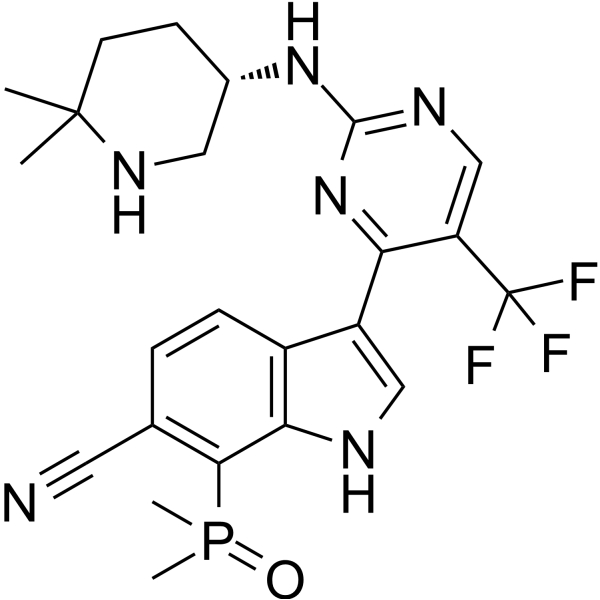
-
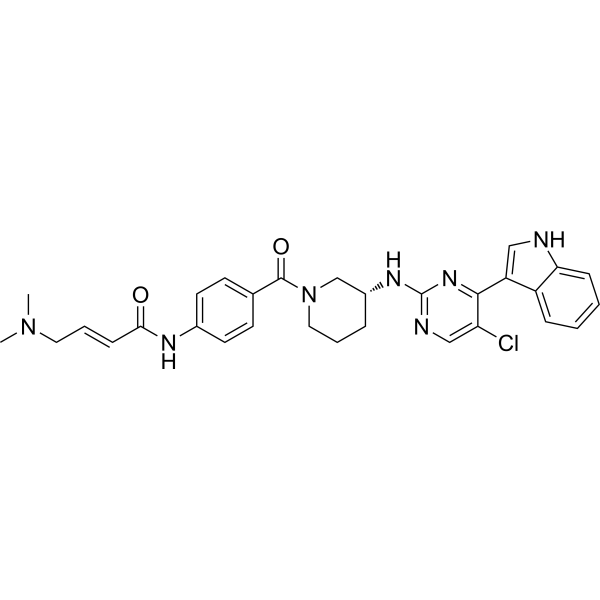
SR-4835
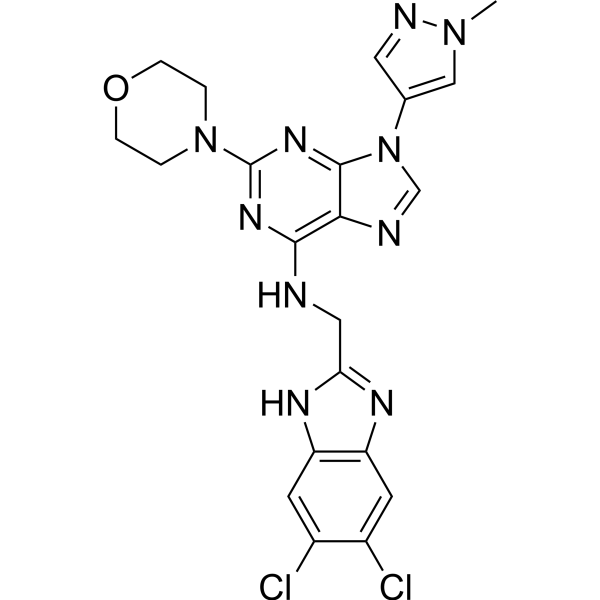 0 ImagesSR-4835 is a potent, highly selective and ATP competitive dual inhibitor of CDK12/CDK13 (CDK12: IC50=99 nM, Kd=98 nM; CDK13: Kd=4.9 nM). SR-4835 acts in synergy with DNA-damaging chemotherapy and PARP inhibitors and provokes triple-negative breast cancer (TNBC) cell death.
-
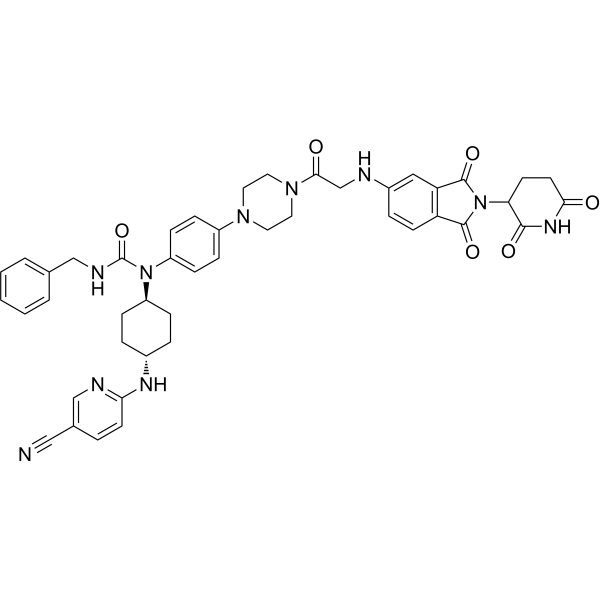
BSJ-4-116
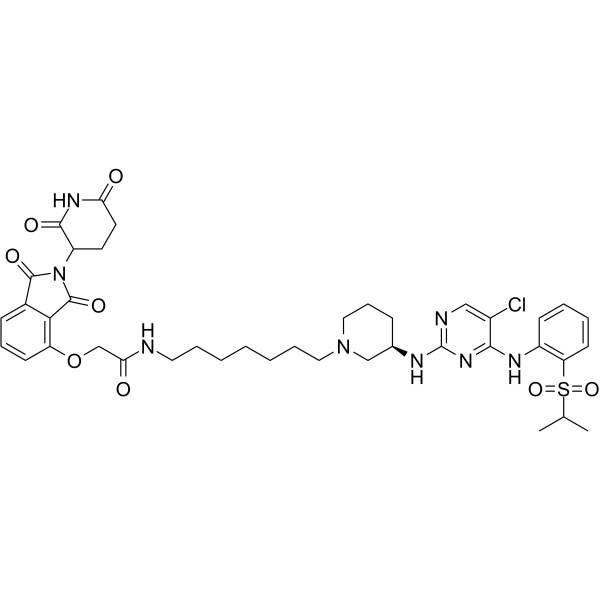 0 ImagesBSJ-4-116 is a PROTAC connected by ligands for Cereblon and CDK. BSJ-4-116 is a highly potent and selective CDK12 degrader (PROTAC) with an IC50 of 6 nM. BSJ-4-116 downregulates DDR genes through a premature termination of transcription, primarily through increasing poly(adenylation). BSJ-4-116 exhibits potent antiproliferative effects, alone and in combination with the poly(ADP-ribose) polymerase inhibitor Olaparib (HY-10162).
-
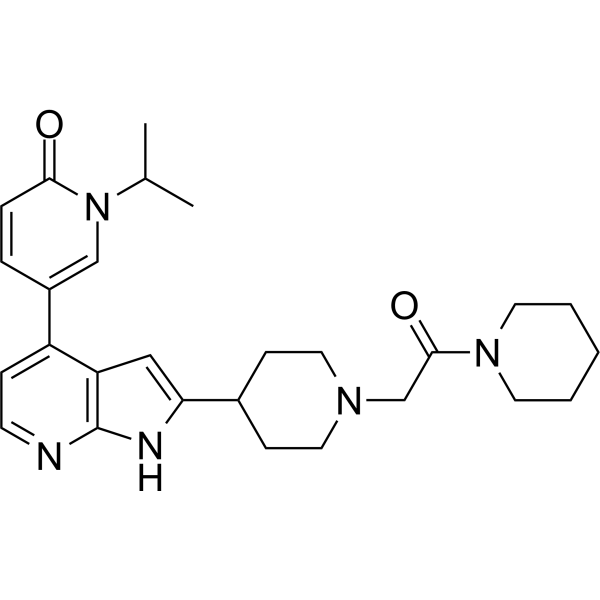
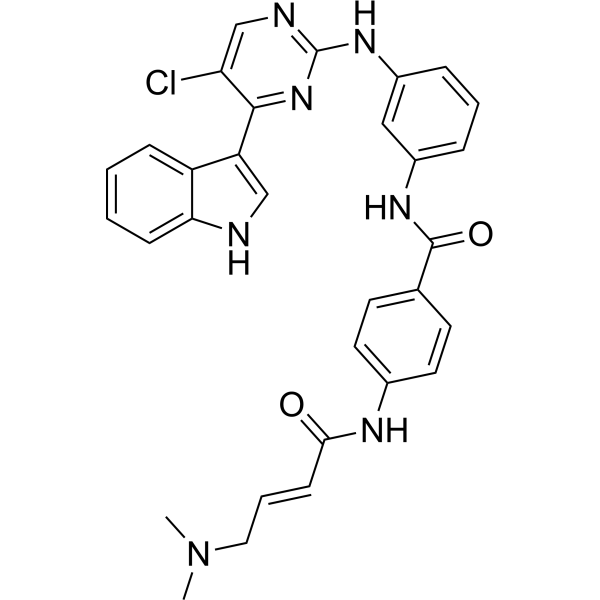
MFH290
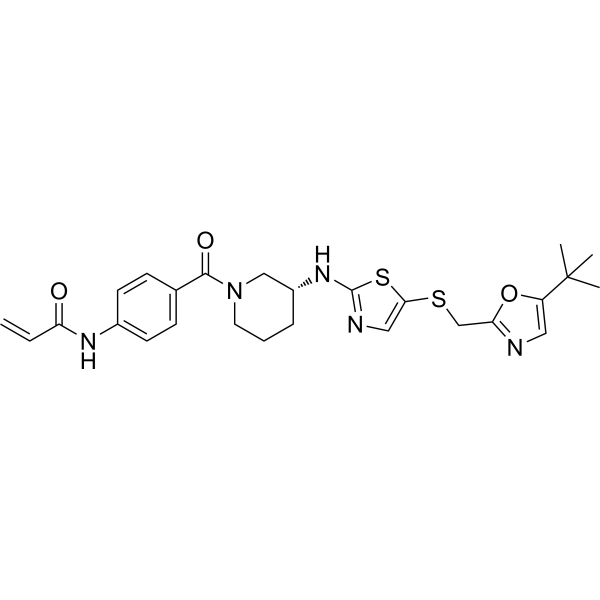 0 ImagesMFH290 is an orally active, selective covalent CDK12/CDK13 inhibitor, with an IC50 of 25 nM against human CDK12 and 49 nM against human CDK13. MFH290 reduces the phosphorylation level of CTD-RNAPII-Ser2, downregulates genes related to DNA damage response (DDR), and inhibits transcription factors regulated by super-enhancers. MFH290 can be used in research related to various cancers including leukemia.
-
dCeMM4
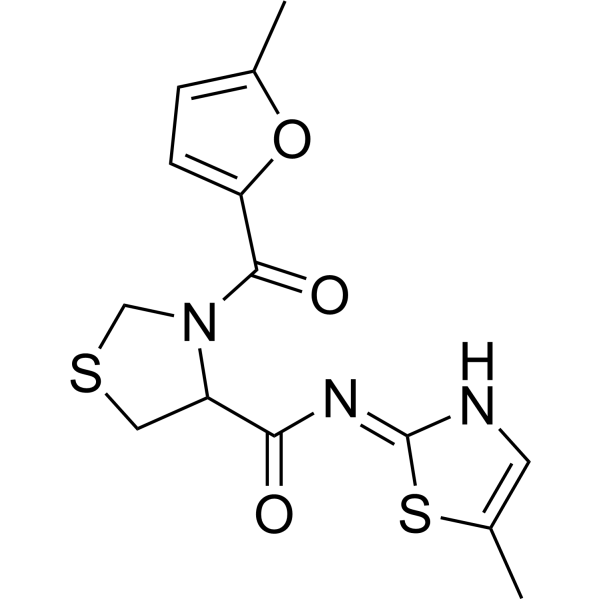 0 ImagesdCeMM4 is a Cyclin K Molecular glue degrader. dCeMM4 mediates the direct interaction between CDK12:cyclin K and the CRL4B ligase complex, thereby driving the ubiquitination and proteasomal degradation of Cyclin K. dCeMM4 induces Apoptosis without cell cycle phase-specific arrest. dCeMM4 exhibits synergistic activity with DNA damage inducers, and a correlation exists between Cyclin K degradation and cellular sensitivity. dCeMM4 can be used in studies related to T-cell malignancies.
-
PARP1/CDK12-IN-2
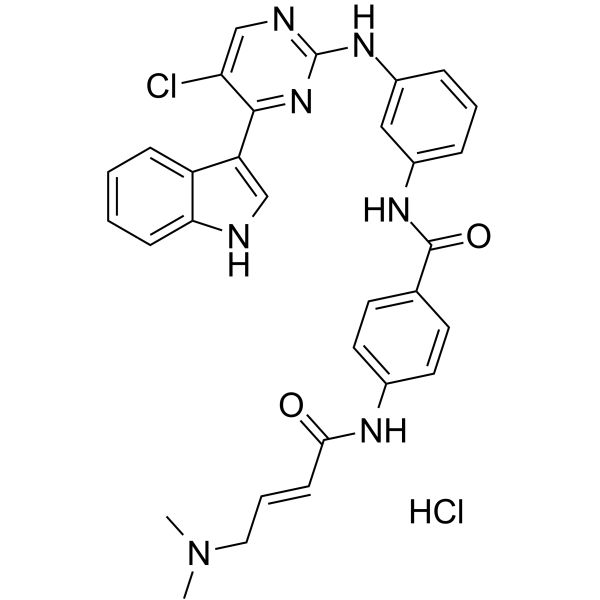
 0 ImagesCat. No.: HY-189660PARP1/CDK12-IN-2 is a selective dual PARP1/CDK12 inhibitor with an IC50 of 42 nM for CDK12 and an IC50 of 35 nM for PARP1. PARP1/CDK12-IN-2 inhibits CDK13. PARP1/CDK12-IN-2 induces Apoptosis and induces G2/M phase arrest. PARP1/CDK12-IN-2 exhibits anticancer activity against breast cancer and lung cancer. PARP1/CDK12-IN-2 can be used for research on triple-negative breast cancer.
-
YJ1206
 0 ImagesCat. No.: HY-168555CAS No.: 3053716-98-3YJ1206 is an orally active selective CDK12/CDK13 PROTAC degrader. YJ1206 induces DNA damage and genomic instability, activates the AKT pathway, and triggers apoptosis. YJ1206 reduces tumor cell viability, inhibits tumor growth, and attenuates tumor cell dissemination. YJ1206 is applicable to research related to prostate cancer and high-grade serous tubo-ovarian cancer.
-
CDK12-IN-2
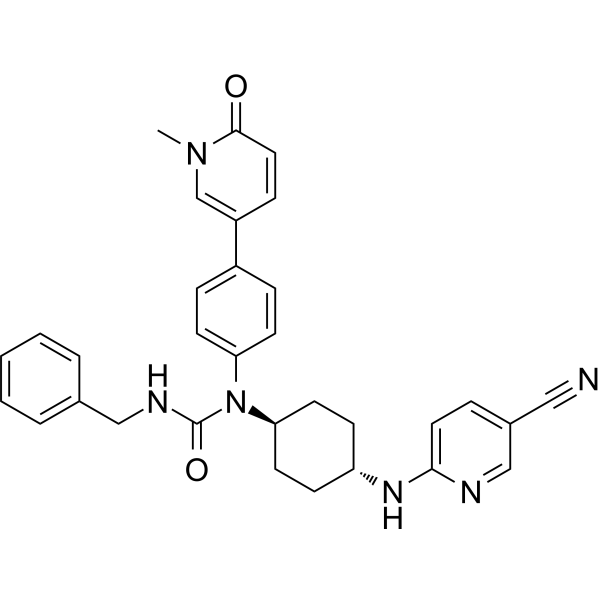 0 ImagesCDK12-IN-2 is a potent, selective and nanomolar CDK12 inhibitor (IC50=52 nM) with good physicochemical properties. CDK12-IN-2 is also a strong CDK13 inhibitor due to CDK13 is the closest homologue of CDK12. CDK12-IN-2 shows excellent kinase selectivity for CDK12 over CDK2, 9, 8, and 7. CDK12-IN-2 inhibits the phosphorylation of Ser2 in the C-terminal domain of RNA polymerase II. CDK12-IN-2 can be used an excellent chemical probe for functional studies of CDK12.
-
PROTAC CDK12/13 Degrader-1 TFA
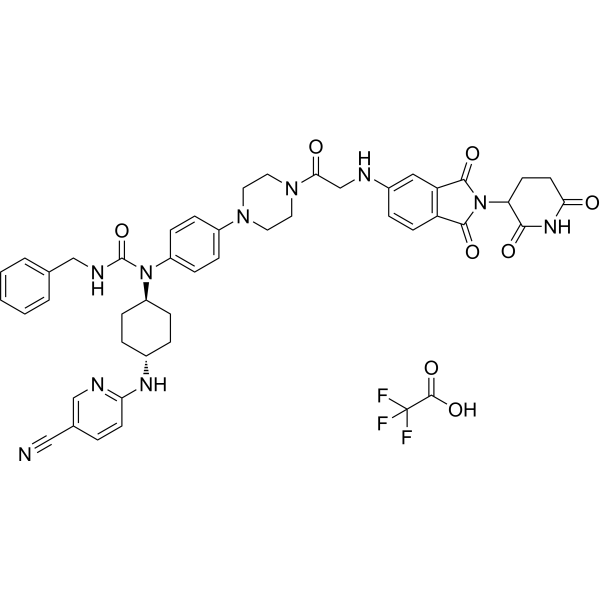 0 ImagesCat. No.: HY-151110APurity: 99.12%
-
BSJ-5-63
 0 ImagesBSJ-5-63 is a potent CDK12, CDK7, CDK9 PROTAC degrader. BSJ-5-63 BSJ-5-63 decreases the protein expression of CDK12, CDK7, CDK9, RNAPII, Cyclin K. BSJ-5-63 decreases the mRNA expression of BRCA1, BRCA2. BSJ-5-63 shows anticancer activity and has the potential for the research of prostate cancer.
-
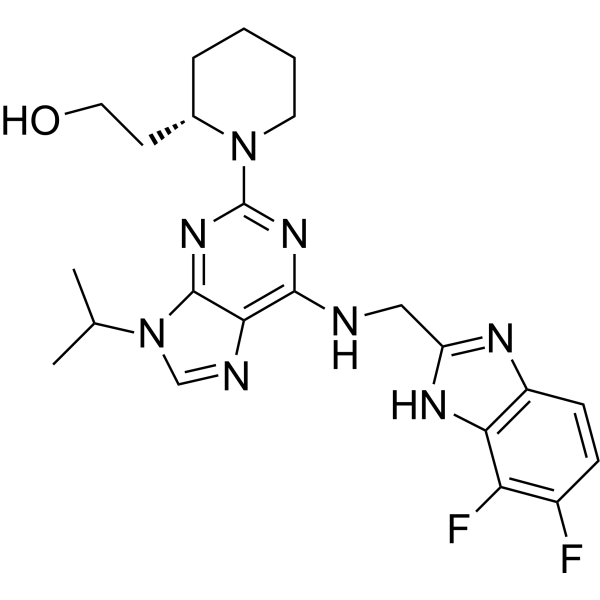
LL-K12-18
 0 ImagesLL-K12-18 is a CDK12 kinase inhibitor and a dual-site molecular glue. LL-K12-18 inhibits human CDK12 with an IC50 value of 283.9 nM, and selectively degrades cyclin K via the ubiquitin-proteasome system by stabilizing the CDK12-DDB1 complex. LL-K12-18 downregulates DNA damage response genes, reduces the phosphorylation level of CTD Ser2 in RNA polymerase II, and modulates biomarkers such as ATM, RAD51, γ-H2AX and cleaved PARP, thereby effectively inducing apoptosis and inhibiting proliferation of breast cancer cells. LL-K12-18 exhibits high target selectivity and serves as a research tool for studies on triple-negative breast cancer.
-
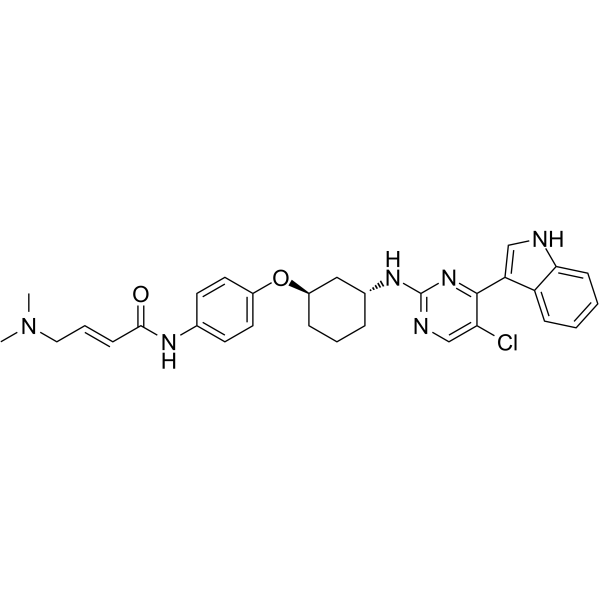
ZLC491
 0 ImagesZLC491 is an orally active PROTAC degrader that selectively targets CDK12/CDK13 and exhibits certain oral bioavailability. ZLC491 induces cereblon- and proteasome-dependent selective degradation of CDK12 and CDK13. ZLC491 inhibits the transcription and expression of long genes, and mainly acts on a subset of DNA damage response genes. ZLC491 inhibits the proliferation of various triple-negative breast cancer cells. ZLC491 can be used in research related to triple-negative breast cancer.
-
CDK12-IN-6
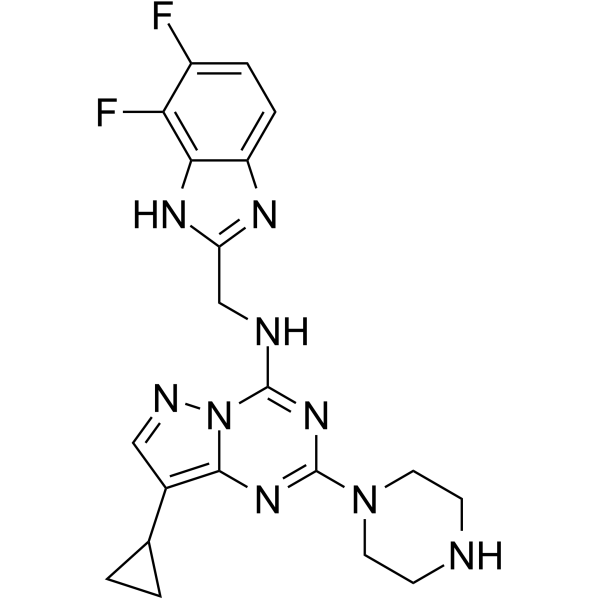 0 ImagesCDK12-IN-6, a pyrazolotriazine, is a potent CDK12 inhibitor with an IC50 of 1.19 μM at high ATP (2 mM). CDK12-IN-6 has no effect on CDK2/Cyclin E (IC50>20 μM) and CDK9/Cyclin T1 (IC50>20 μM) at high ATP (2 mM) (WO2021116178A1).