



RORα
RORα (retinoic acid receptor-related orphan receptor alpha, NR1F1) is a member of the nuclear receptor superfamily that functions as a ligand-regulated transcription factor by binding ROR response elements (ROREs) and regulating target gene transcription[1]. RORα participates in fundamental biological processes including circadian rhythm regulation, inflammation, immune homeostasis, lipid metabolism, glucose metabolism, and cellular differentiation, thereby linking transcriptional control to systemic physiological regulation[2][4]. Mechanistically, RORα directly modulates the expression of circadian clock genes such as BMAL1 and influences inflammatory signaling pathways including NF-κB, while also regulating metabolic gene networks involved in energy homeostasis[2]. In disease contexts, altered RORα expression has been associated with cancer, metabolic disorders, cardiovascular pathology, and autoimmune diseases, and reduced RORα expression correlates with aggressive tumor phenotypes in several malignancies[2]. Experimental studies further demonstrate that RORα contributes to immune regulation through its role in T helper 17 (Th17) cell biology, where combined deficiency of RORα and RORγ impairs Th17 development and reduces autoimmune pathology in animal models[4]. Compared with related isoforms in the ROR family, RORα exhibits broader tissue distribution and distinct physiological functions, although partial functional overlap with RORγ has been reported in immune and metabolic regulation[4]. For experimental applications, synthetic modulators have been developed to interrogate RORα signaling; the agonist SR1078 activates RORα-dependent transcriptional programs, whereas inverse agonists such as SR3335 and SR1001 suppress RORα activity and have been used to investigate metabolic and autoimmune disease mechanisms[4][3].
Referencias:
- [1]. Chang MR, et al. The therapeutic potential of RORγ modulators in the treatment of human disease. J Exp Pharmacol. 2012;4:141-148. [Content Brief]
- [2]. Lee JM, et al. Unraveling the physiological roles of retinoic acid receptor-related orphan receptor α. Exp Mol Med. 2021 Sep;53(9):1278-1286. [Content Brief]
- [3]. Wang Y, et al. Therapeutic Effect of a Synthetic RORα/γ Agonist in an Animal Model of Autism. ACS Chem Neurosci. 2016 Feb 17;7(2):143-8. [Content Brief]
- [4]. Solt LA, et al. Action of RORs and their ligands in (patho)physiology. Trends Endocrinol Metab. 2012;23(12):619-627.
-
Productos relacionados con RORα (9)
Productos relacionados con (9)

-
XY018
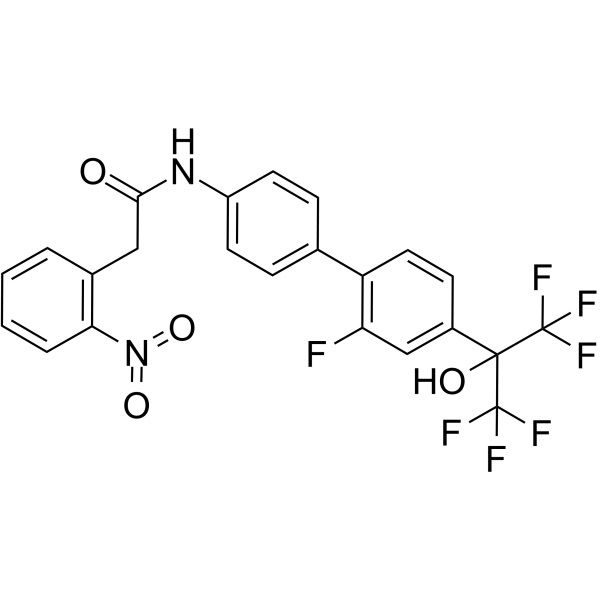 0 ImagesXY018 is a potent ROR-γ-selective antagonist. XY018 inhibits ROR-γ constitutive activity in 293T cells with high potency (EC50, 190 nM). XY018 binds to the ROR-γ hydrophobic ligand binding domain (LBD).
-
6'''-Feruloylspinosin
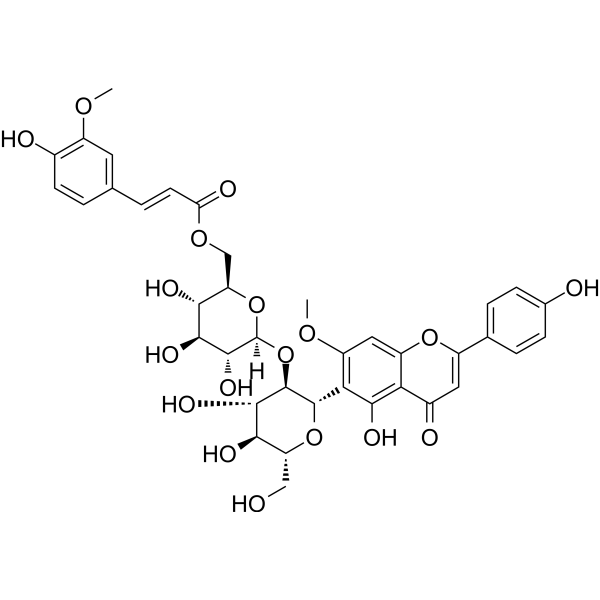 0 Images6'''-Feruloylspinosin is an orally active RORα activator that crosses the blood-brain barrier, with a Kd of 0.308 μM, and is found in natural sources. 6'''-Feruloylspinosin modulates AMPK and mTOR phosphorylation. 6'''-Feruloylspinosin promotes autophagy through the AMPK/mTOR signaling pathway, inhibits GSK3β phosphorylation at Tyr216, and activates the PGC-1α/Nrf2/HO-1 pathway. 6'''-Feruloylspinosin regulates neurotransmitter levels, enhances mRNA expression of GABAA α1, α5, and GABAB R1 receptor subunits, increases brain 5-HT and GABA, restores melatonin levels, and ameliorates anxiety-like behaviors. 6'''-Feruloylspinosin regulates oxidative stress homeostasis, inhibits mitochondrial dysfunction, decreases MDA while increasing GSH. 6'''-Feruloylspinosin can be used for research on Alzheimer's disease, acute myocardial infarction, heart failure with insomnia, and insomnia.
-
Desethyl-SID 7969543
 0 ImagesReferencia número: HY-402601Pureza: 98.83%Desethyl-SID 7969543 is an isoquinolinone analog of SID 7969543 (HY-107404) and a selective SF-1 (NR5A1) inhibitor. Desethyl-SID 7969543 shows no activity against RORA, VP16 and LRH-1, and exhibits no cytotoxicity at concentrations close to its SF-1 IC50 value.
-
BMS-986251
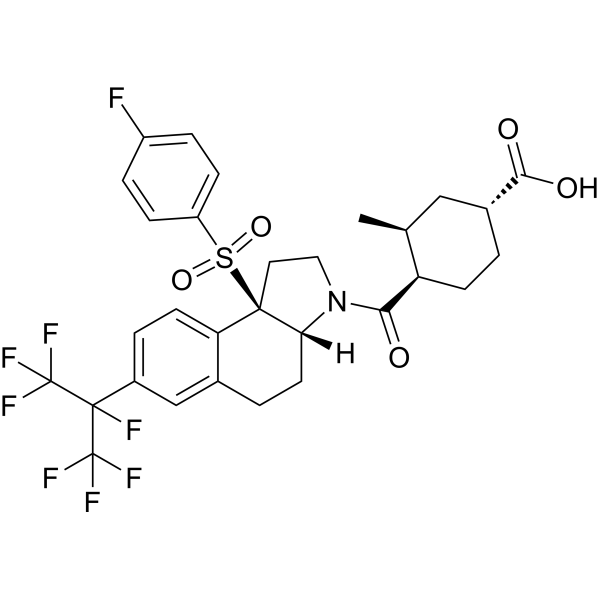 0 ImagesReferencia número: HY-136527No. CAS: 2460133-35-9BMS-986251 is an orally active and selective RORγt inverse agonist with an EC50 of 12 nM for RORγt GAL4. BMS-986251 inhibits IL-17 with an EC50 of 24 nM in human whole blood assay. BMS-986251 demonstrates robust efficacy in mouse acanthosis and Imiquimod-induced (HY-B0180) models (preclinical models of psoriasis).
-
CM002
 0 ImagesReferencia número: HY-184895CM002 is a circadian clock activator. CM002 inhibits the lineage commitment and terminal differentiation of preadipocytes by activating the circadian clock, thereby blocking the adipogenesis process driven by Wnt signaling-mediated transcriptional induction. CM002 attenuates lipid storage in a clock-dependent manner via inhibition of the lipogenic program in mature adipocytes. CM002 enhances circadian clock output across various adipose depots in both lean and obese mice through BMAL1/CLOCK-dependent metabolic reprogramming, inhibits adipocyte development and hypertrophy, and improves insulin sensitivity. CM002 can be used in research on obesity and type 2 diabetes.
-
DP1 peptide
 0 ImagesReferencia número: HY-P11858DP1 peptide is a high-affinity ROR1-binding peptide with a Kd value of 74.9 nM. When labeled with 68Ga, DP1 peptide serves as a PET imaging agent, which features rapid tumor uptake, favorable target-to-nontarget ratios in various tumor models, and renal clearance, enabling non-invasive quantitative visualization of ROR1 expression. DP1 peptide can be used in research related to melanoma, hepatocellular carcinoma, colorectal cancer, and non-small cell lung cancer.
-
RORγ agonist 2
 0 ImagesReferencia número: HY-175361RORγ agonist 2 (Compound 34) is a selective RORγ agonist with an EC50 of 0.03 μM for hRORγ. RORγ agonist 2 significantly inhibits tumors growth in syngeneic MC38 tumor mice model.
-
Gala-SR
 0 ImagesReferencia número: HY-179514No. CAS: 3092129-97-7Synonyms: Gala-SR1078Gala-SR (Gala-SR1078) is an RORα agonist. Gala-SR ameliorates rhythm disorders by enhancing the amplitude of the circadian rhythm. Gala-SR can be used for the study of periodontitis.
-
NP1
 0 ImagesReferencia número: HY-P11859NP1 is a NOTA-chelated linear precursor based on the ROR1-targeting peptide. After labeling with [18F]AlF, NP1 yields [18F]AlF-NP1, a PET imaging probe with excellent ROR1 specificity (KD = 141.7 nM), rapid tumor uptake and high target-to-background ratio, which is suitable for non-invasive visualization of various ROR1-overexpressing tumors.



