



Bacterial
Anything that destroys bacteria or suppresses their growth or their ability to reproduce. Heat, chemicals such as chlorine, and antibiotic drugs all have antibacterial properties. Many antibacterial products for cleaning and handwashing are sold today. Such products do not reduce the risk for symptoms of viral infectious diseases in otherwise healthy persons. This does not preclude the potential contribution of antibacterial products to reducing symptoms of bacterial diseases in the home.
All Product Categories
-
Bacterial Inhibitors
(7553)
View all products
-
Bacterial Agonists
(3)
View all products
-
Bacterial Antagonists
(9)
View all products
-
Bacterial Activators
(25)
View all products
-
Bacterial Modulators
(27)
View all products
-
Bacterial Chemicals
(2)
View all products
-
Bacterial Inducers
(6)
View all products
-
Bacterial Controls
(14)
View all products
-
Bacterial Substrates
(2)
View all products
-
Bacterial Ligand
(1)
View all products
-
Bacterial Related Products (8893)
Related Products (8893)

-
Antibodies (14)
-
Related Compound Screening Libraries (1)
-
Cefetecol
 0 ImagesCat. No.: HY-159796ACAS No.: 117211-03-7Synonyms: GR69153Cefetecol (GR69153) is a semisynthetic β-lactam antibacterial agent and α-glucosidase inhibitor (yeast IC50 = 2.1 μM; Ki = 5.78 μM) that crosses the blood-brain barrier. Cefetecol reduces blood glucose levels in Streptozotocin-induced diabetic mice. Cefetecol decreases the mRNA expression of GSK-3, PPAR-γ, and UCP-3. Cefetecol induces bacterial cell filamentation and exhibits bactericidal activity against Gram-positive and Gram-negative bacteria. Cefetecol is used in the study of diabetes and bacterial infections.
-
Cymbopogon citratus extract
 0 ImagesCat. No.: HY-N20595Synonyms: Cymbopogon titrtus extract; Lemongrass extract; Cymbopogon extractCymbopogon citratus extract (Cymbopogon titrtus extract) is a lemongrass (Cymbopogon Citratus DC (Stapf.)) extract with antibacterial, antiprotozoal, antirheumatic, antitumor, cardioprotective, anti-inflammatory and gastric protective properties.
-
Vitexolide D
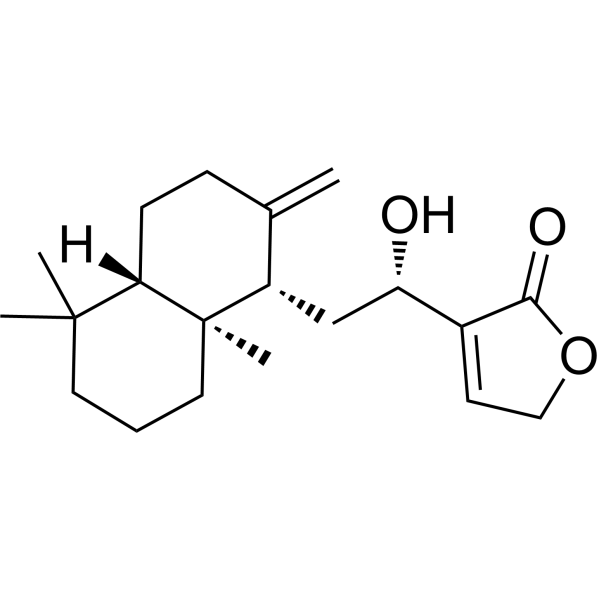 0 ImagesCat. No.: HY-N8367CAS No.: 1788090-69-6Vitexolide D is a class of diterpenoid compounds. Vitexolide D was isolated from the natural Vitex vestita. Vitexolide D has antibacterial activity .
-
Antitubercular agent-35
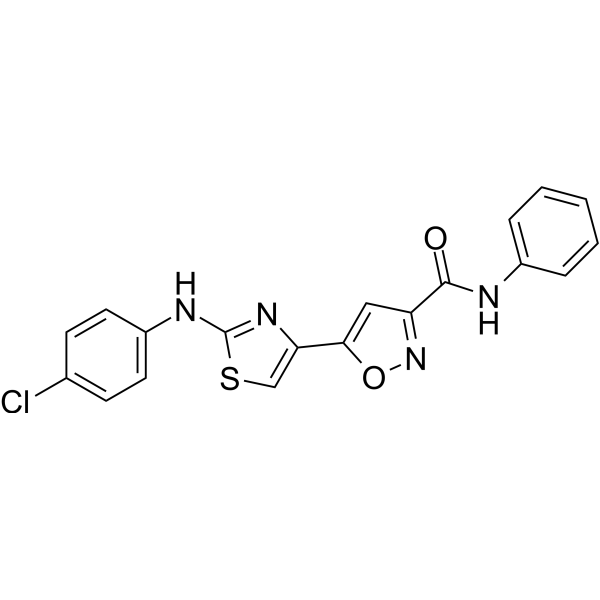 0 ImagesCat. No.: HY-151958Antitubercular agent-35 (compound 42l) is an antitubercular agent. Antitubercular agent-35 inhibits the growth of MtbH37Rv and M. Marinum with MIC90 values of 1.25 and 2 μg/mL, respectively. Antitubercular agent-35 shows the ability of escaping metabolic degradation by human liver microsomes. Antitubercular agent-35 can be used for the research of tuberculosis.
-
ML267 free base
 0 ImagesML267 free base is a blood-brain barrier permeable Antibacterial agent and bacterial phosphopantetheinyl transferase (PPTase) inhibitor, with an IC50 of 0.29 μM against Bacillus subtilis Sfp-PPTase and an IC50 of 8.1 μM against bacterial AcpS-PPTase. ML267 free base attenuates bacterial secondary metabolism, activity, and the production of Sfp-PPTase-dependent metabolites. ML267 free base inhibits the growth of Gram-positive bacteria, including Methicillin (HY-121544)-resistant Staphylococcus aureus. ML267 free base is applicable to research related to bacterial infections, including methicillin-resistant Staphylococcus aureus infections.
-
Pexiganan TFA
 0 ImagesCat. No.: HY-105088CSynonyms: MSI 78 TFAPexiganan TFA is an antimicrobial peptide with broad-spectrum bactericidal. Pexiganan TFA disrupts bacterial cell membranes, induces peptidoglycan damage and cell lysis. Pexiganan TFA can be used for the research of bacterial infection.
-
Clindamycin hydrochloride monohydrate
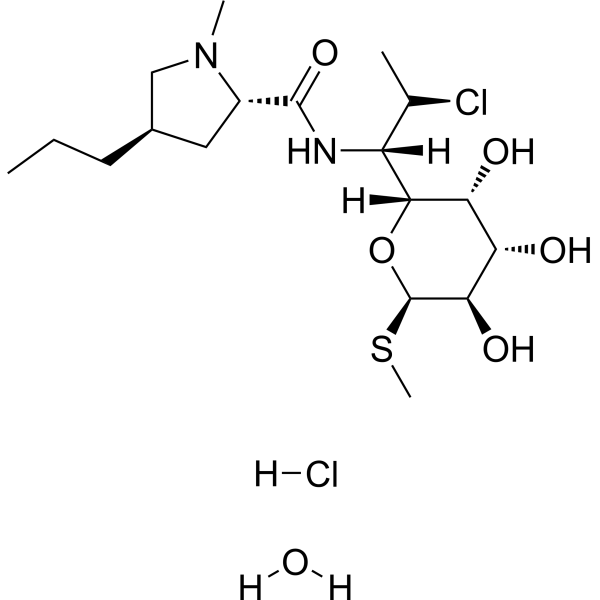 0 ImagesClindamycin hydrochloride monohydrate is an oral protein synthesis inhibitory agent that has the ability to suppress the expression of virulence factors in Staphylococcus aureus at sub-inhibitory concentrations (sub-MICs). Clindamycin hydrochloride monohydrate resistance results from enzymatic methylation of the antibiotic binding site in the 50S ribosomal subunit (23S rRNA). Clindamycin hydrochloride monohydrate decreases the production of Panton-Valentine leucocidin (PVL), toxic-shock-staphylococcal toxin (TSST-1) or alpha-haemolysin (Hla).
-
Anti-MRSA agent 19
 0 ImagesCat. No.: HY-167841CAS No.: 667410-81-3Anti-MRSA agent 19 (Compound 1) is an antibiotic that exhibits activity against S. aureus. Anti-MRSA agent 19 is a active (median MIC=4 μg/mL) against 40 CDC isolates of different bacterial species containing various resistance factors,including Vancomycin (HY-B0671),aminoglycoside/Tetracycline (HY-A0107),and oxazolidinone resistance.
-
AM8191 hydrochloride
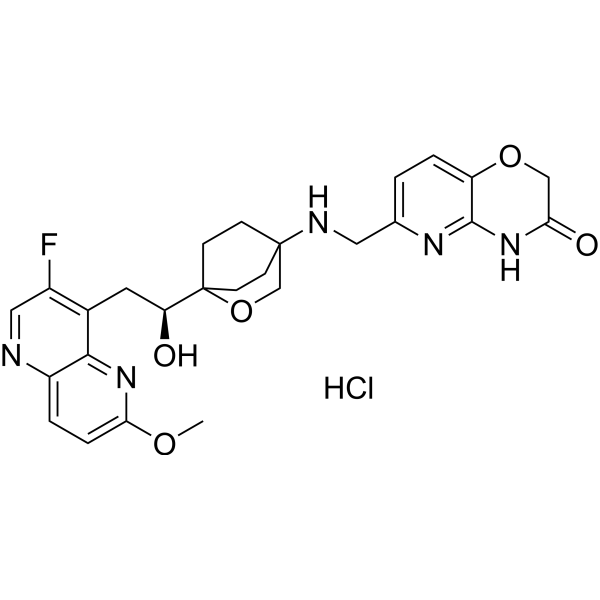 0 ImagesCat. No.: HY-125424CAS No.: 1417548-17-4AM8191 is an orally active bactericidal and selectively inhibits DNA synthesis and Staphylococcus aureus gyrase (IC50=1.02 μM) and topo IV (IC50=10.4 μM). AM8191 inhibits S. aureus MSSA (MIC=0.02 μg/mL) and S. aureus MRSA (MIC=0.06 μg/mL).
-
GSK951A
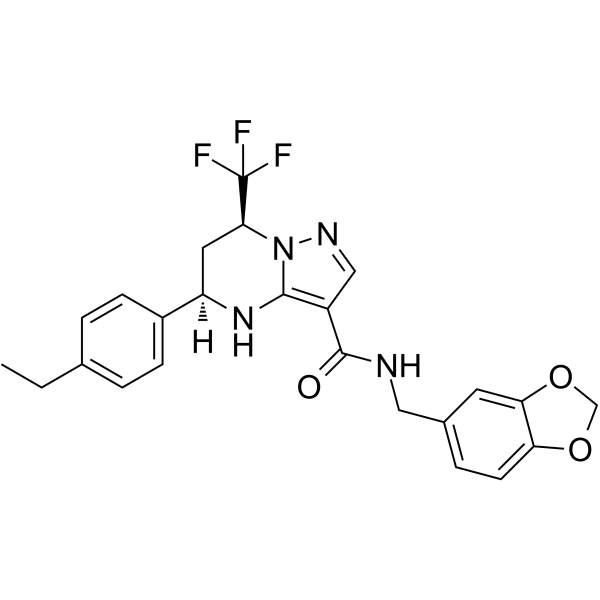 0 ImagesCat. No.: HY-117741CAS No.: 1403602-33-4GSK951A is a THPP analogue. GSK951A inhibits mycolic acid biosynthesis. GSK951A combines potency in culture with in vivo activity and lack of cytotoxicity.
-
BM635 mesylate
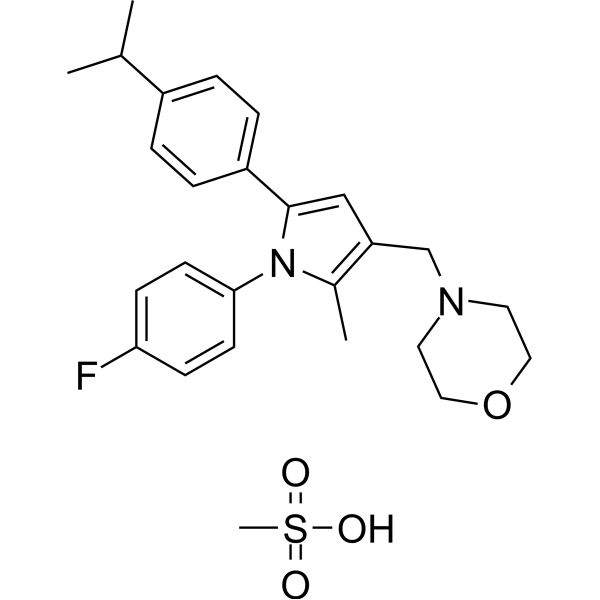 0 ImagesCat. No.: HY-109587BCAS No.: 2703867-74-5BM635 mesylate is a MmpL3 inhibitor with outstanding anti-mycobacterial activity. BM635 mesylate has a MIC50 of 0.6 μM against M. tuberculosis H37Rv. BM635 mesylate significantly improves the bioavailability compared to free-base BM635.
-
Goose grass extract
 0 ImagesCat. No.: HY-N20491Goose grass extract is an extract of goosegrass (Eleusine indica) that has antioxidant, antibacterial and anticancer activities.
-
AHU1
 0 ImagesCat. No.: HY-114748CAS No.: 216774-38-8AHU1 is a compound that inhibits the expression of Shiga toxin type 2 in Escherichia coli O157:H7, demonstrating a dose-dependent reduction in toxin activity by interfering with the SOS response through its effects on RecA.
-
(±)14(15)-EET Ethanolamide
 0 ImagesCat. No.: HY-175044CAS No.: 1469713-10-7Synonyms: (±)14(15)-Epoxy eicosatrienoyl ethanolamide(±)14(15)-EET Ethanolamide ((±)14(15)-Epoxy eicosatrienoyl ethanolamide) is a fatty acid monoepoxide. (±)-14(15)-EET ethanolamide can be used in the research of Pseudomonas aeruginosa infections and respiratory diseases.
-
Antibacterial agent 121
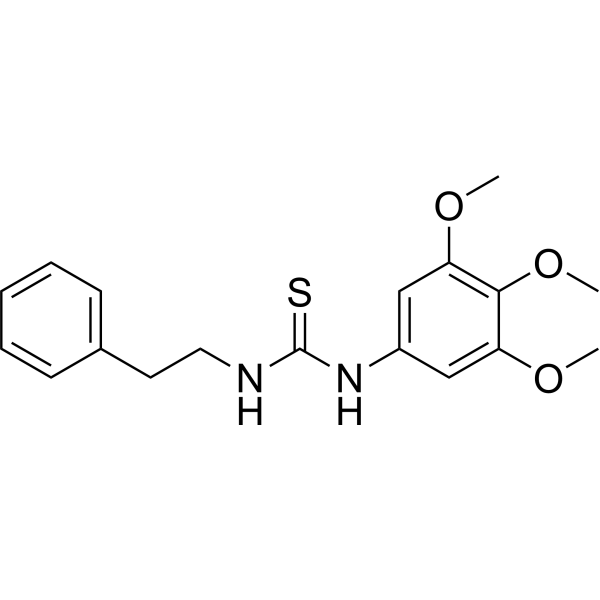 0 ImagesCat. No.: HY-151354CAS No.: 474099-18-8Antibacterial agent 121 (Compound 10) is an antibacterial agent. Antibacterial agent 121 shows anti-mycobacterial and anti-inflammatory activities and can be used in Tuberculosis (TB) research.
-
Ethylenediaminetetraacetic acid-13C4
 0 ImagesCat. No.: HY-W777365CAS No.: 1215408-17-5Synonyms: EDTA-13C4Ethylenediaminetetraacetic acid-13C4 (EDTA-13C4) is the 13C-labeled Ethylenediaminetetraacetic acid (HY-Y0682). Ethylenediaminetetraacetic acid (EDTA) is a kind of metal chelating agent (binds to bivalent and trivalent metal cations, including calcium). Ethylenediaminetetraacetic acid has antibacterial, anti-inflammatory, antioxidant, anti-hypercalcemia and anticoagulant activities. Ethylenediaminetetraacetic acid decreases the metal ion-catalyzed oxidative damage to proteins, and allows maintenance of reducing environment during protein purification. Ethylenediaminetetraacetic acid can alleviate the liver fibrosis. Ethylenediaminetetraacetic acid can be used for coronary artery disease and neural system disease research.
-
Antibiotic TAN-592B
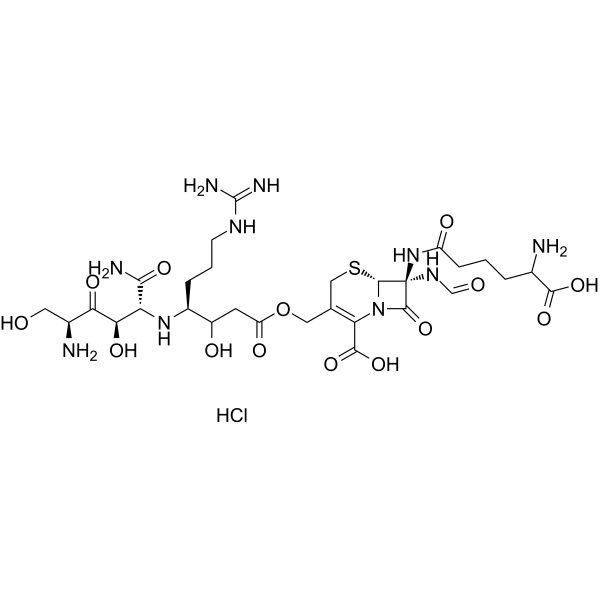 0 ImagesCat. No.: HY-128488CAS No.: 99685-75-3Antibiotic TAN-592B is an antibiotic against infectious disease caused by bacteria.
-
Vancomycin prodrug
 0 ImagesCat. No.: HY-172813Vancomycin prodrug (compound 13c) is a Vancomycin (HY-B0671) prodrug. Vancomycin prodrug shows antibacterial effect with MICs of 0.78 μM, 0.78 μM, 1.56 μM for S. aureus 330041, MRSA USA 300 and MRSA 3390, respectively. Vancomycin prodrug has the ability to quickly bind to Cys-34 residue of plasma. Vancomycin prodrug exhibits a good therapeutic effect on MRSA USA300 infected mice similar to Vancomycin. Vancomycin prodrug, an albumin-binding acid-sensitive prodrug, effectively reduces Vancomycin’s nephrotoxicity while maintaining its efficacy for Gram-positive bacterial infections.
-
PRP020
 0 ImagesCat. No.: HY-180149PRP020 is a potent and specific inhibitor of mycobacterial ATP synthase. PRP020 does not inhibit acidification driven by succinate. PRP020 exihibits MIC95 against M. tuberculosis of 2 μM, and it remains active against most drug-resistant mutant strains. PRP020 is highly safe and can be used in anti-tuberculosis research.
-
Baquiloprim-d6
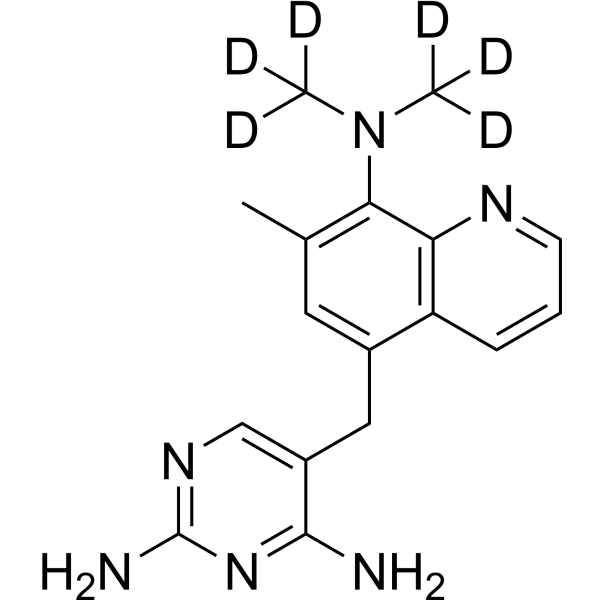 0 ImagesCat. No.: HY-19581SCAS No.: 1228182-50-0Baquiloprim-d6 is the deuterated-labeled Baquiloprim (HY-19581). Baquiloprim is an orally active Antibiotic and selective inhibitor of Bacterial Dihydrofolate reductase (DHFR), with an IC50 of 19 nM against E. coli and an IC50 of 190 μM against rat liver dihydrofolate reductase. Baquiloprim is a bacteriostatic broad-spectrum antibacterial agent that acts against Gram-negative and Gram-positive bacteria. Baquiloprim inhibits glucuronidation in cultured hepatocytes. Baquiloprim can be used in research related to Pasteurella haemolytica infection, bacterial infection, Escherichia coli diarrhea, bacterial infection in pigs, and pneumonic pasteurellosis.




