



Bacterial
Anything that destroys bacteria or suppresses their growth or their ability to reproduce. Heat, chemicals such as chlorine, and antibiotic drugs all have antibacterial properties. Many antibacterial products for cleaning and handwashing are sold today. Such products do not reduce the risk for symptoms of viral infectious diseases in otherwise healthy persons. This does not preclude the potential contribution of antibacterial products to reducing symptoms of bacterial diseases in the home.
All Product Categories
-
Bacterial Inhibitors
(7518)
View all products
-
Bacterial Agonists
(3)
View all products
-
Bacterial Antagonists
(9)
View all products
-
Bacterial Activators
(23)
View all products
-
Bacterial Modulators
(27)
View all products
-
Bacterial Chemicals
(2)
View all products
-
Bacterial Inducers
(7)
View all products
-
Bacterial Controls
(14)
View all products
-
Bacterial Substrates
(2)
View all products
-
Bacterial Ligand
(1)
View all products
-
Bacterial Related Products (8848)
Related Products (8848)

-
Antibodies (14)
-
Related Compound Screening Libraries (1)
-
Sulfamethomidine
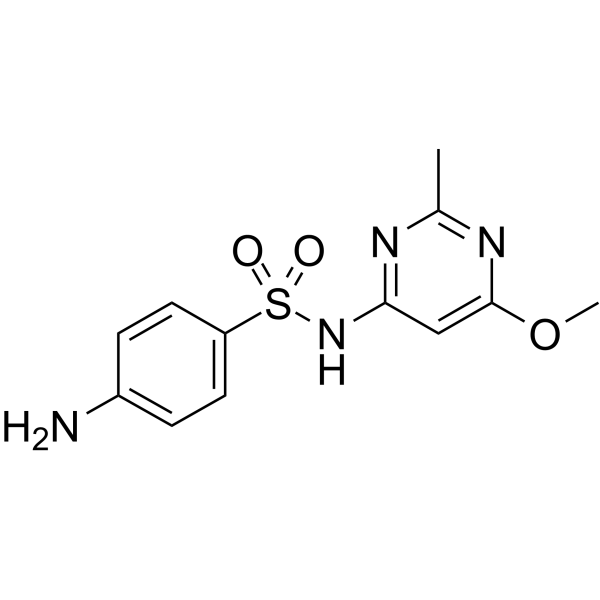 0 ImagesSulfamethomidine is an antibacterial agent.
-
Antibacterial agent 372
 0 ImagesCat. No.: HY-189124Antibacterial agent 372 is a potent antibacterial agent. Antibacterial agent 372 is a DNA gyrase inhibitor that binds to the ATP-binding pocket of the GyrB subunit, downregulates gyrB gene expression, and impedes DNA replication and supercoiling. Antibacterial agent 372 exhibits broad-spectrum antibacterial activity against Gram-positive and Gram-negative bacteria. Antibacterial agent 372 can be used for research on microbial infections.
-
Anol glucoside
 0 ImagesCat. No.: HY-N16640CAS No.: 120396-85-2Anol glucoside is a phenolic glucose glycoside compound found in Cleidion spiciflorum. Anol glucoside has potential antibacterial, anti-inflammatory and antimalarial activities.
-
Antibacterial agent 217
 0 ImagesCat. No.: HY-163630CAS No.: 3040034-03-2Antibacterial agent 217 (Compound 24) is a non-cytotoxic, non-hemolytic, moderately active antibacterial agent that inhibits the growth of Staphylococcus aureus strains with a minimum inhibitory concentration (MIC) of 32 μg/mL. Antibacterial agent 217 also moderately inhibits the growth of Staphylococcus epidermidis.
-
Oosporein (Standard)
 0 ImagesOosporein (Standard) is the analytical standard of Oosporein (HY-N7719). This product is intended for research and analytical applications. Oosporein is a microbial metabolite and a red crystalline toxin produced by various fungi. Oosporein can promote the reproduction of fungi in host bodies by inhibiting insect immunity, and possesses multiple activities such as antibacterial, antiviral (HSV), and insecticidal effects. Oosporein can inhibit plant growth. In addition, Oosporein can also induce apoptosis, cell membrane damage, oxidative stress, and mitochondrial damage. Oosporein has certain antitumor activity.
-
Hodgkinsine
 0 ImagesCat. No.: HY-N12180ACAS No.: 18210-71-4Hodgkinsine is an opioid receptor agonist and NMDA receptor antagonist, which has analgesic and anti-injurial effects. In addition, Hodgkinsine has antiviral, antibacterial and antifungal activities.
-
Bilanafos
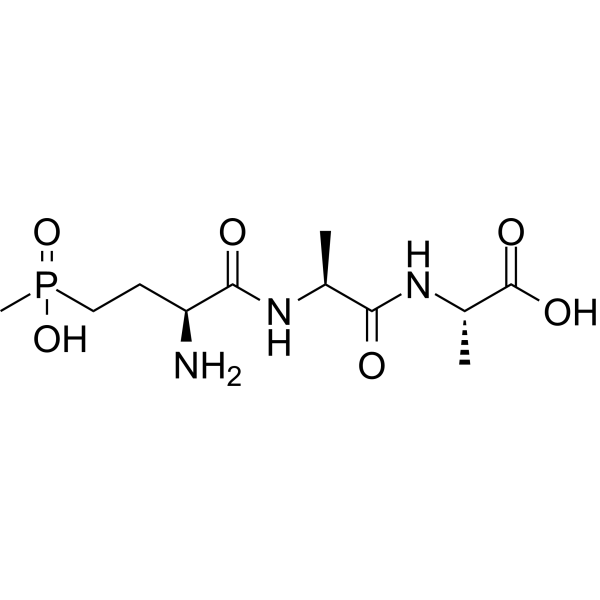 0 ImagesCat. No.: HY-122494CAS No.: 35597-43-4Synonyms: SF-1293Bilanafos is a natural organic phosphine tripeptide antibiotic metabolized by Streptomyces hydroscopius or Streptomyces viridochromeogenes. Bialaphos has antimicrobial activity aganist Gram-negative and positive bacteria as well as some fungal plant diseases.
-
Difloxacin-d3 hydrochloride trihydrate
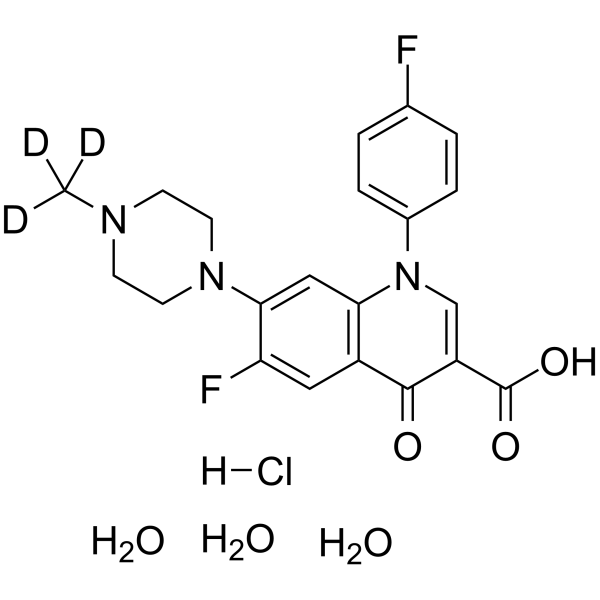 0 ImagesCat. No.: HY-121272ASSynonyms: A-56619-d3 hydrochloride trihydrateDifloxacin-d3 (hydrochloride trihydrate) is a deuterium labeled Difloxacin. Difloxacin is an antimicrobial agent.
-
T3SS-IN-4
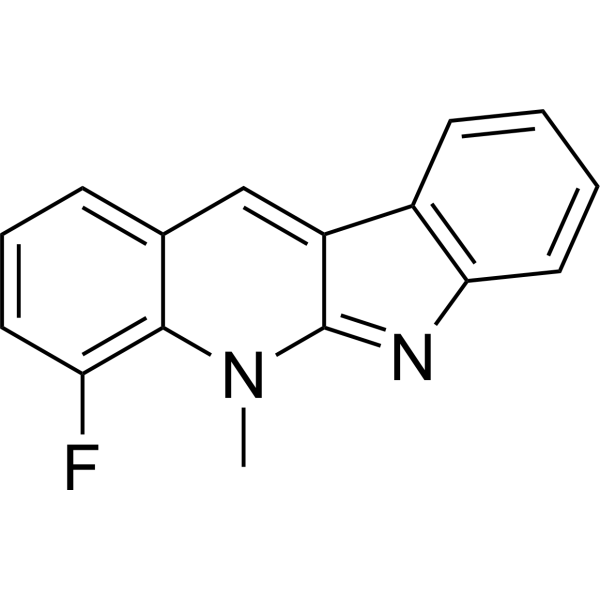 0 ImagesCat. No.: HY-162376CAS No.: 2316760-41-3T3SS-IN-4 (Compound Z-8) is a T3SS inhibitor that can inhibit the expression of Xanthomonas oryzae pv oryzae (Xoo) T3SS-related genes without affecting bacterial growth. T3SS-IN-4 can effectively reduce the hypersensitive response (HR) induced by Xoo in tobacco and lower the pathogenicity of Xoo in rice.
-
Lydicamycin
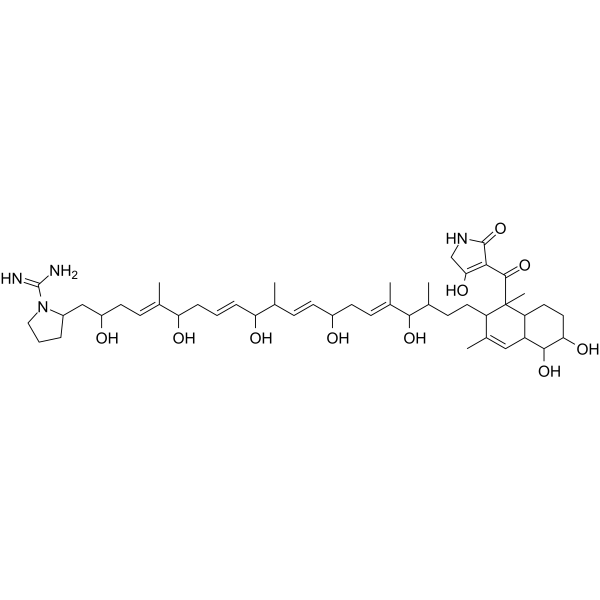 0 ImagesCat. No.: HY-125414CAS No.: 133352-27-9Lydicamycin is an antibiotic isolated from the fermentation broth of an actinomycete strain identified as Streptomyces lydicus. Lydicamycin is active against Gram-positive bacteria and a certain yeast, but inactive against Gram-negative bacteria.
-
Thiazoplanomicin
 0 ImagesCat. No.: HY-P11027Thiazoplanomicin (Compound 1) is a thiazolyl peptide antibiotic. Thiazoplanomicin can be isolated from the leaf-litter actinomycete Actinoplanes sp. MM794L-181F6. Thiazoplanomicin has potent antimicrobial activities against gonococcal strains (especially drug-resistant strains) and Gram-positive bacterium with MICs of 31.2-125 and 0.5-15.6 ng/mL, respectively. Thiazoplanomicin has no antibacterial activity against E.coli. Thiazoplanomicin can be used for bacterial infections research.
-
L-Valine-13C5,15N,d2
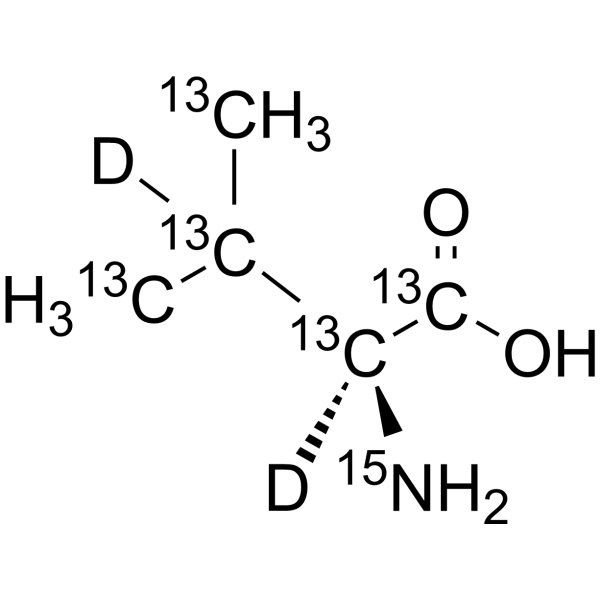 0 ImagesCat. No.: HY-N0717S3CAS No.: 201417-09-6Synonyms: (S)-Valine-13C5,15N,d2L-Valine-13C5,15N,d2 ((S)-Valine-13C5,15N,d2) is the deuterium, 13C-, and 15N-labeled L-Valine (HY-N0717). L-Valine ((S)-Valine) is a nonlinear semiorganic material. L-Valine causes lipid peroxidation and accumulation of malondialdehyde (MDA), exhibits inhibitory activity against cyanobacteria. L-Valine inhibits multidrug-resistant bacteria through activation of PI3K/Akt signaling pathway and inhibition of arginase.
-
Basil oil
 0 ImagesBasil oil is an exquisite natural substance extensively employed in the research of biomedical science due to its profound manifestation of antimicrobial and antioxidant attributes. Infused with copious quantities of bioactive substances such as eugenol and linalool, basil oil annihilates bacteria and fungi.
-
Miconazole-d2
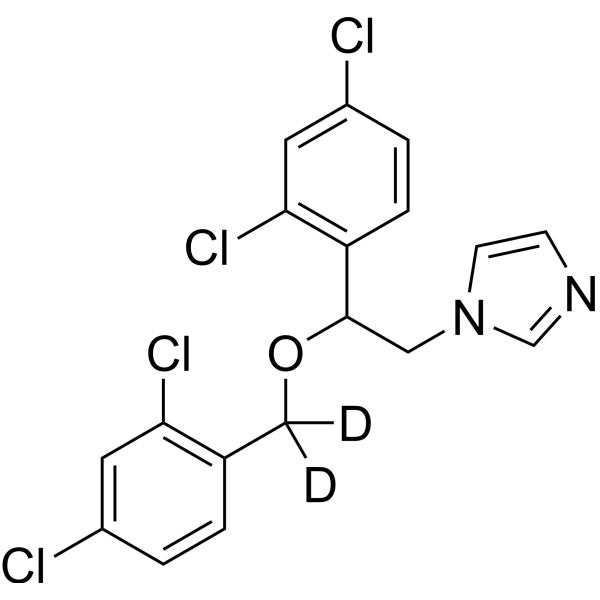 0 ImagesCat. No.: HY-B0454S2CAS No.: 2140316-33-0Synonyms: R18134-d2Miconazole-d2 is the deuterium labeled Miconazole. Miconazole (R18134) is an imidazole antifungal agent. Miconazole also has antibacterial effects.
-
Aldgamycin G
 0 ImagesCat. No.: HY-115367CAS No.: 107745-56-2Aldgamycin G is a macrolide antibiotic active against Gram-positive bacteria and can be isolated from Streptomyces avidinii.
-
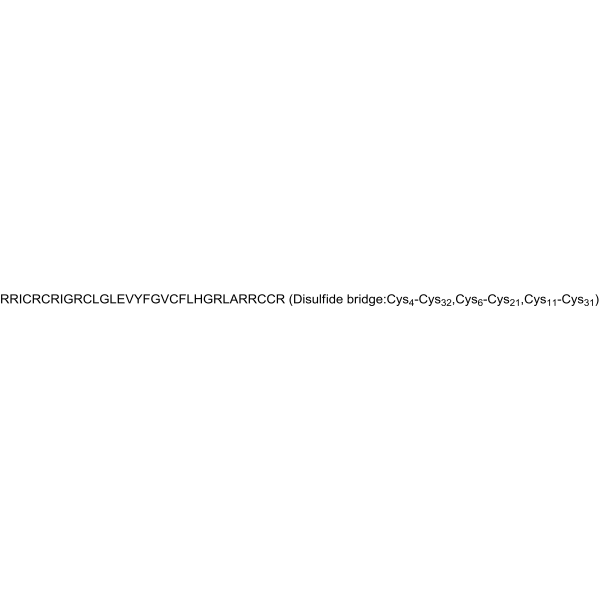
Jelleine-II
 0 ImagesCat. No.: HY-P11141Jelleine-II is a short chain antibacterial peptide derived from royal jelly, with broad-spectrum antibacterial activity. Jelleine-II has antibacterial activity against yeast, fungi, Gram positive bacteria, and Gram negative bacteria. Jelleine-II can be used in the study of infectious conditions.
-
Rabeprazole sulfide-d4
 0 ImagesCat. No.: HY-W719463Rabeprazole sulfide-d4 is the deuterium labeled Rabeprazole Sulfide (HY-W003467). Rabeprazole Sulfide is an active metabolite of Rabeprazole. Rabeprazole is a proton pump inhibitor that suppresses gastric acid secretion through an interaction with (H+/K+)-ATPase in gastric parietal cells. Rabeprazole markedly inhibits the motility of H. pylori. Rabeprazole has the potential for various peptic diseases treatment.
-
(±)-Emodin bianthrone
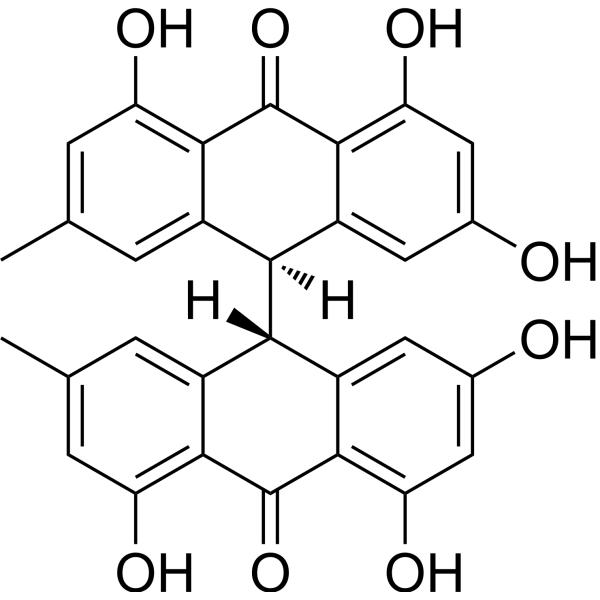 0 ImagesCat. No.: HY-N12276CAS No.: 61281-20-7(±)-Emodin bianthrone (compound 10), a natural product, exhibits antimalarial, antitubercular and ntifungal activities.
-
Amoxicillin-13C6
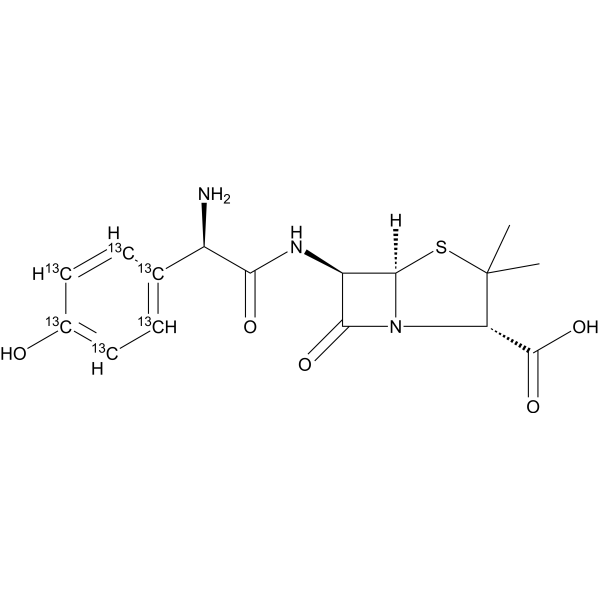 0 ImagesCat. No.: HY-B0467ASSynonyms: Amoxycillin-13C6Amoxicillin-13C6 is the 13C6 labeled Amoxicillin. Amoxicillin is an antibiotic with good oral absorption and broad spectrum antimicrobial activity.




