Btk
Bruton tyrosine kinase
Bruton tyrosine kinase (Btk) is a member of the Tec family kinases with a well-characterized role in B-cell antigen receptor (BCR)-signaling and B-cell activation.
Btk plays a crucial role in B cell development and activation through the BCR signaling pathway and represents a new target for diseases characterized by inappropriate B cell activity. Btk is a kinase expressed exclusively in B cells and myeloid cells and has a well characterized, vital role in B cells highlighted by the human primary immune deficiency disease, X-linked agammaglobulinemia (XLA), which results from mutation in the Btk gene. Btk plays an essential role in the BCR signaling pathway. Antigen binding to the BCR results in B cell receptor oligomerization, Syk and Lyn kinase activation, followed by Btk kinase activation. Once activated, Btk forms a signaling complex with proteins such as BLNK, Lyn, and Syk and phosphorylates phospholipase C (PLC)γ2. This leads to downstream release of intracellular Ca2+ stores and propagation of the BCR signaling pathway through extracellular signal-regulated kinase and NF-κB signaling, ultimately resulting in transcriptional changes to foster B cell survival, proliferation, and/or differentiation.
All Product Categories
-
Btk Related Products (270)
Related Products (270)

-
Recombinant Proteins (19)
-
Antibodies (3)
-
(S)-Sunvozertinib
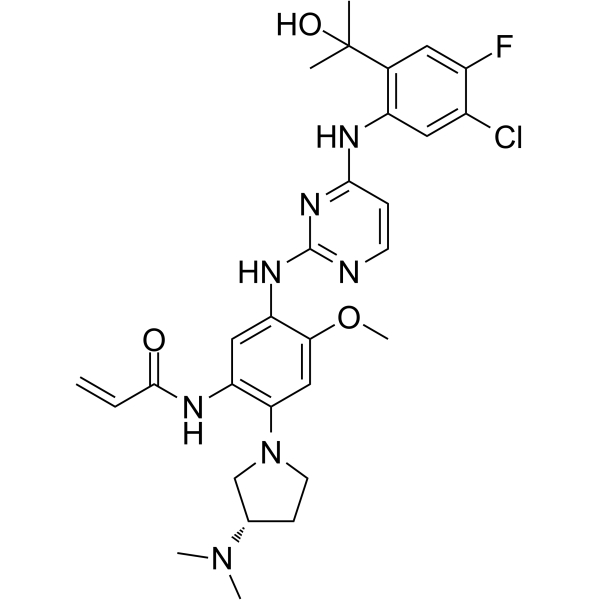 0 ImagesSynonyms: (S)-DZD9008
-
(E/Z)-Rilzabrutinib
 0 ImagesCat. No.: HY-151232CAS No.: 1575591-66-0Synonyms: (E/Z)-PRN1008(E/Z)-Rilzabrutinib ((E/Z)-PRN1008) is a cis-trans isomer of Rilzabrutinib (HY-112166). Rilzabrutinib is a BTK inhibitor.
-
Terreic acid
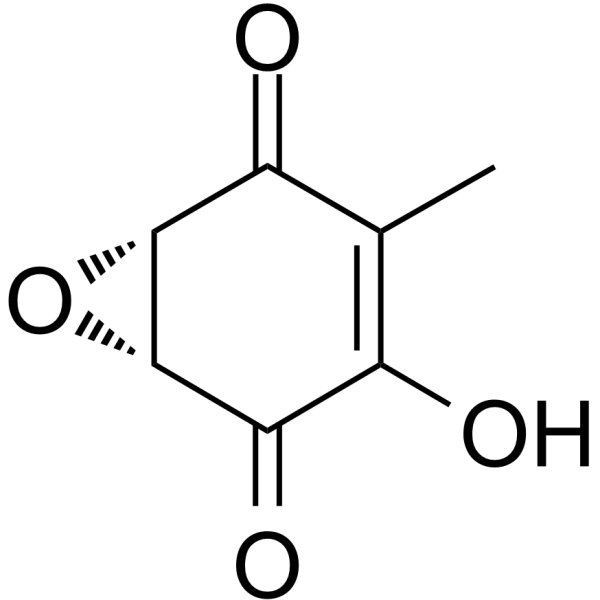 0 ImagesTerreic acid, a quinone epoxide antibiotic, acts as an effective Btk inhibitor. Terreic acid blocks the interaction between PKC and the pleckstrin homology domain of Btk. Terreic acid inhibits the binding of GST-BtkPH to PKC in lysates of HMC-1 human mast cells with an IC50 of approximately 100 μM.
-
PTD10
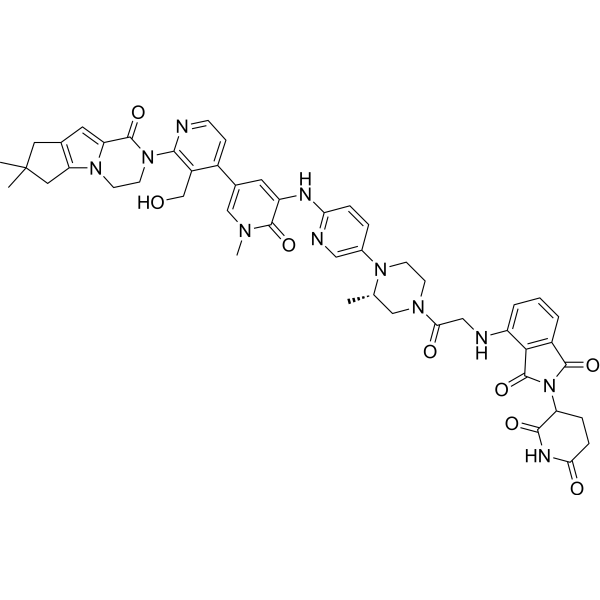 0 ImagesCat. No.: HY-154860CAS No.: 2642231-19-2PTD10 is a selective and potent BTK PROTAC degrader (DC50 = 0.5 nM, KD = 2.28 nM). PTD10 can recruit cereblon (CRBN) E3 ligase and form a ternary complex with BTK, thereby mediating the ubiquitination and proteasome-dependent degradation of BTK. PTD10 inhibits cancer cells proliferation, and induces cell apoptosis via activation of the caspase-dependent pathway and mitochondrial pathway. PTD10 potently inhibits the BCR, AKT and NF-κB signaling pathway. PTD10 can be used for researches of B-cell malignancies and autoimmune disease.
-
(R)-Pirtobrutinib
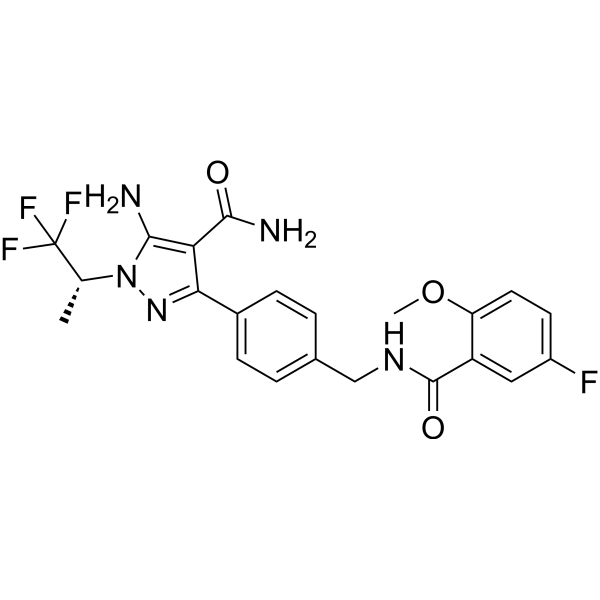 0 ImagesSynonyms: (R)-LOXO-305(R)-Pirtobrutinib ((R)-LOXO-305) is a less active enantiomer of Pirtobrutinib. Pirtobrutinib (LOXO-305), a highly selective and non-covalent next generation BTK inhibitor, inhibits diverse BTK C481 substitution mutations.
-
SJF620 hydrochloride
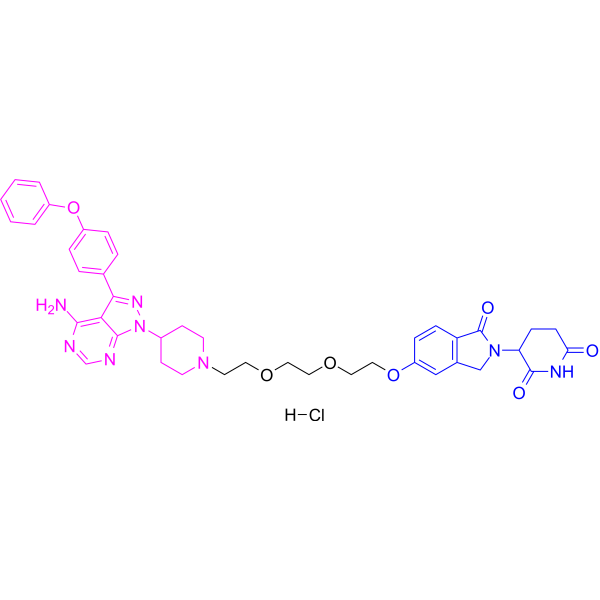 0 ImagesCat. No.: HY-133137ACAS No.: 2821938-05-8
-
GDC-0834 Racemate
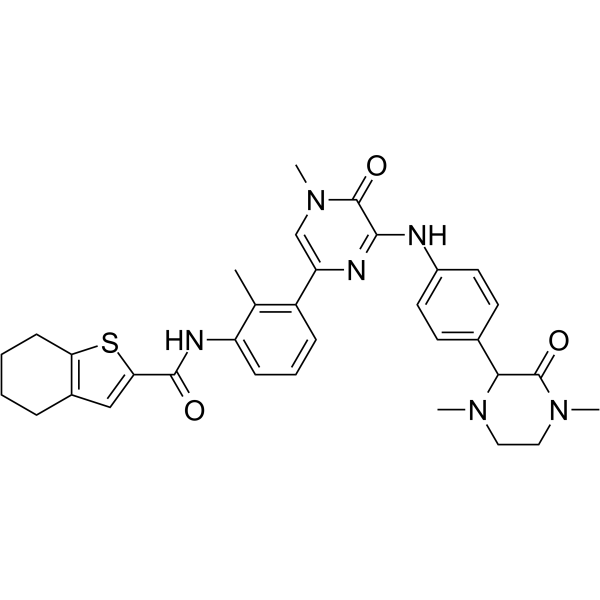 0 ImagesCat. No.: HY-15427ACAS No.: 1133432-46-8
-
Dihydrodiol-Ibrutinib-d5
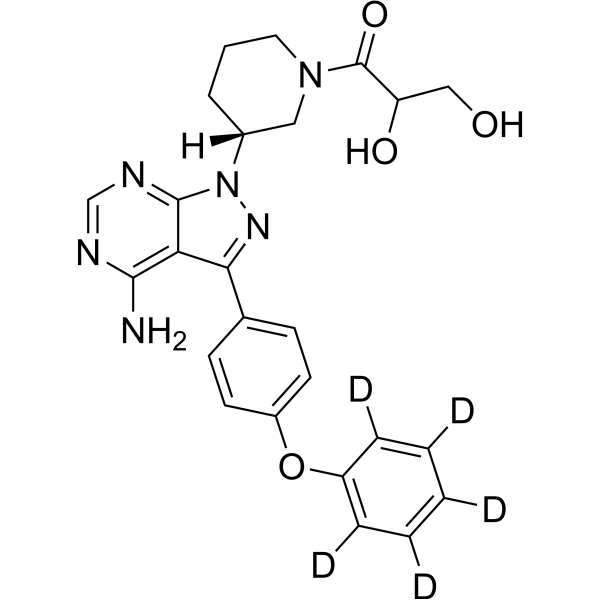 0 ImagesCat. No.: HY-100659SCAS No.: 2068022-09-1Synonyms: PCI-45227-d5Dihydrodiol-Ibrutinib-d5 is the deuterium labeled Dihydrodiol-Ibrutinib (HY-100659). Dihydrodiol-Ibrutinib is a dihydrodiol active metabolite of Ibrutinib (HY-10997), has inhibitory activity towards BTK approximately 15 times lower than that of ibrutinib.
-
(R)-Elsubrutinib
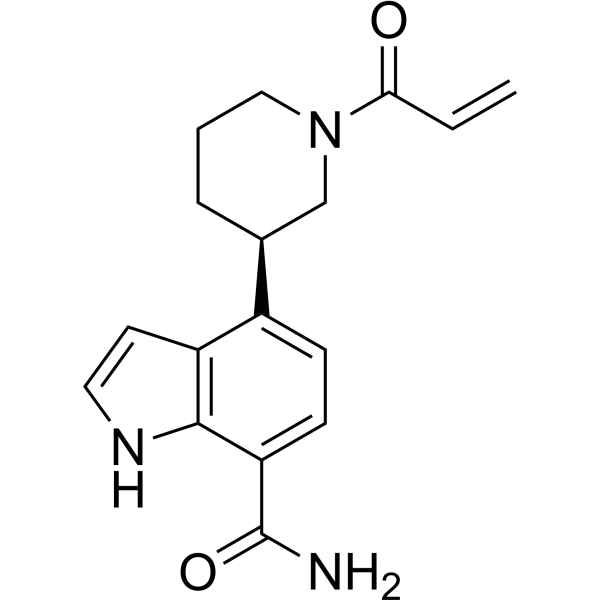 0 ImagesSynonyms: (R)-ABBV-105
-
Ibrutinib dimer
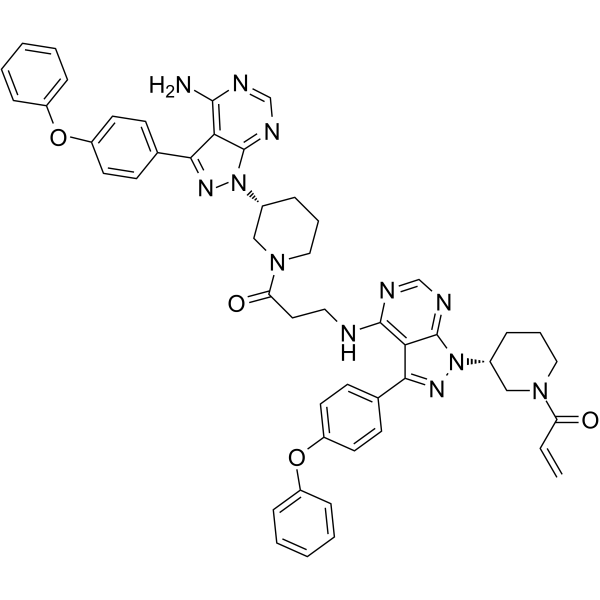 0 ImagesIbrutinib dimer is a Dimer of Ibrutinib. Ibrutinib dimer is an impurity of Ibrutinib. Ibrutinib is a selective, irreversible Btk inhibitor with an IC50 of 0.5 nM.
-
(Rac)-IBT6A
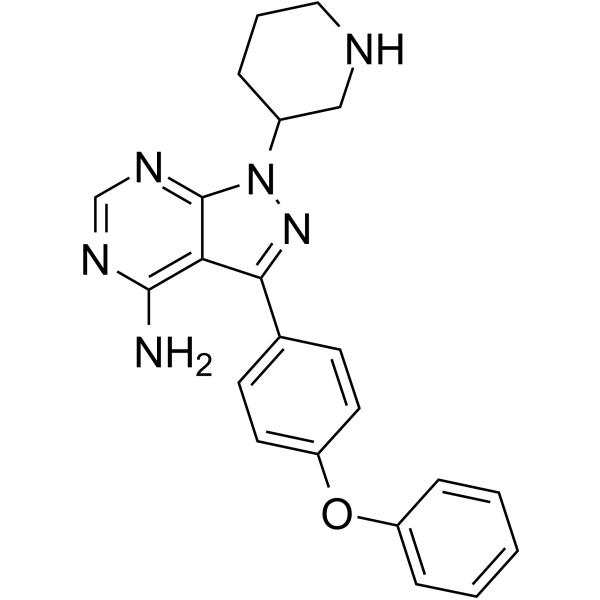 0 Images(Rac)-IBT6A is a racemate of IBT6A. IBT6A is an impurity of Ibrutinib. IBT6A can be used in synthesis of IBT6A Ibrutinib dimer and IBT6A adduct. Ibrutinib is a selective, irreversible Btk inhibitor with an IC50 of 0.5 nM.

-
Acalabrutinib (Standard)
 0 ImagesSynonyms: ACP-196 (Standard)Acalabrutinib (Standard) is the analytical standard of Acalabrutinib. This product is intended for research and analytical applications. Acalabrutinib (ACP-196) is an orally active, irreversible, and highly selective second-generation BTK inhibitor. Acalabrutinib binds covalently to Cys481 in the ATP-binding pocket of BTK. Acalabrutinib demonstrates potent on-target effects and efficacy in mouse models of chronic lymphocytic leukemia (CLL). Acalabrutinib is a click chemistry reagent, itcontains an Alkyne group and can undergo copper-catalyzed azide-alkyne cycloaddition (CuAAc) with molecules containing Azide groups.
-
IBT6A hydrochloride
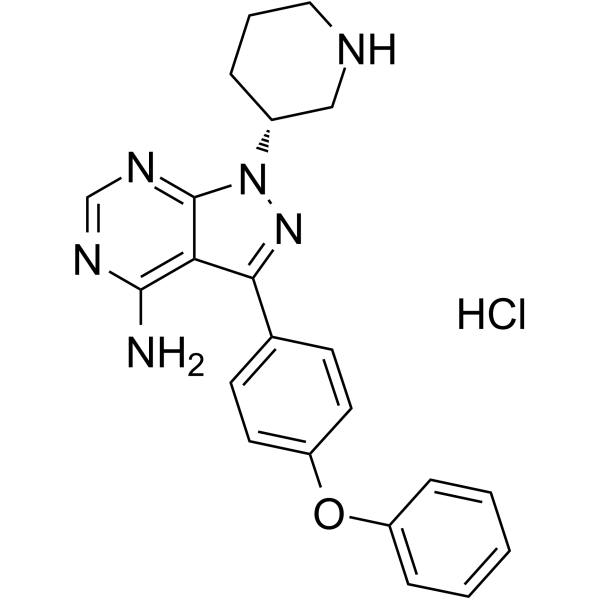 0 ImagesIBT6A hydrochloride is an impurity of Ibrutinib. IBT6A can be used in synthesis of IBT6A Ibrutinib dimer and IBT6A adduct. Ibrutinib is a selective, irreversible Btk inhibitor with an IC50 of 0.5 nM.
-
DBt-10
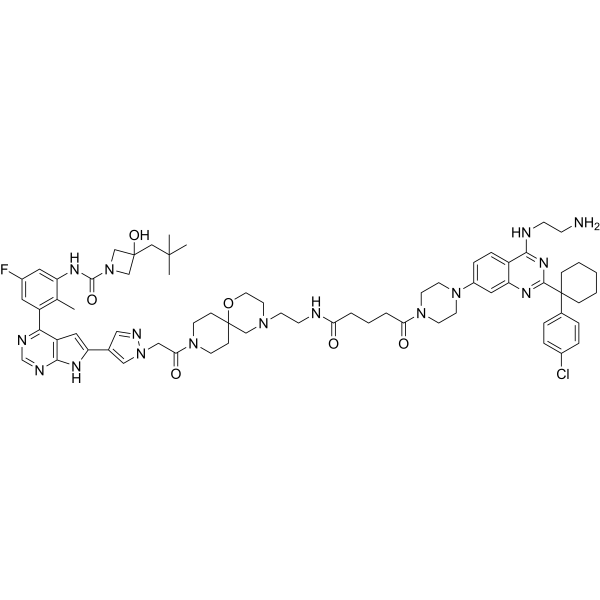 0 ImagesCat. No.: HY-156746DBt-10 is a PROTAC degrader that targets and degrades BTK by recruiting DCAF1. It degrades BTK in TMD8 BTK-GFP/mCherry cells with a DC50 of 137 nM. DBt-10 induces CRL4DCAF1-dependent ubiquitination and proteasomal degradation of BTK, and retains BTK-degrading and antiproliferative activities in TMD8 cells that are resistant to CRBN-BTK PROTACs due to loss of CRBN expression. DBt-10 has a high survival window and exhibits extremely weak apoptosis-inducing effects on lymphoma cells. DBt-10 can be used for research on diffuse large B-cell lymphoma.