



Dopamine Receptor
Dopamine Receptors are a class of G protein-coupled receptors that are prominent in the vertebrate central nervous system (CNS). The neurotransmitter dopamine is the primary endogenous ligand for dopamine receptors. Dopamine receptors are implicated in many neurological processes, including motivation, pleasure, cognition, memory, learning, and fine motor control, as well as modulation of neuroendocrine signaling. Abnormal dopamine receptor signaling and dopaminergic nerve function is implicated in several neuropsychiatric disorders. Thus, dopamine receptors are common neurologic drug targets; antipsychotics are often dopamine receptor antagonists while psychostimulants are typically indirect agonists of dopamine receptors. There are at least five subtypes of dopamine receptors, D1, D2, D3, D4, and D5. The D1 and D5 receptors are members of the D1-like family of dopamine receptors, whereas the D2, D3 and D4receptors are members of the D2-like family.
Dopamine Receptor Isoform Specific Products
All Product Categories
-
Dopamine Receptor Inhibitors
(144)
View all products
-
Dopamine Receptor Agonists
(256)
View all products
-
Dopamine Receptor Antagonists
(456)
View all products
-
Dopamine Receptor Activators
(28)
View all products
-
Dopamine Receptor Modulators
(48)
View all products
-
Dopamine Receptor MDM2 Inhibitor
(1)
View all products
-
Dopamine Receptor Controls
(7)
View all products
-
Dopamine Receptor Ligands
(20)
View all products
-
Dopamine Receptor Related Products (1100)
Related Products (1100)

-
Antibodies (7)
-
Related Compound Screening Libraries (1)
-
Dopamine Receptor Isoform Comparison
-
Trepipam
 0 ImagesCat. No.: HY-119463CAS No.: 20012-08-2Synonyms: Trimopam; SCH-12679Trepipam (Trimopam; SCH-12679) is a D1-dopamine receptor antagonist. Trepipam can reduce the self-injurious behavior in 6-OHDA-lesioned rats. Trepipam can be used in the research of epilepsy and anxiety neurosis.
-
Flupentixol dihydrochloride (Standard)
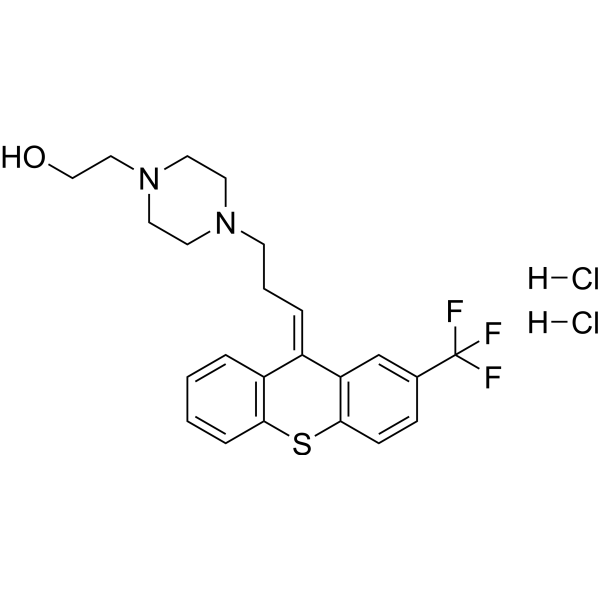 0 ImagesCat. No.: HY-15856BRCAS No.: 2413-38-9Synonyms: Flupenthixol dihydrochloride (Standard)Flupentixol (dihydrochloride) (Standard) is the analytical standard of Flupentixol (dihydrochloride). This product is intended for research and analytical applications. Flupentixol is an orally active D1/D2 dopamine receptor antagonist and new PI3K inhibitor (PI3Kα IC50=127 nM). Flupentixol shows anti-proliferative activity to cancer cells and induces apoptosis. Flupentixol can also be used in schizophrenia, anxiolytic and depressive research.
-
Tiapride
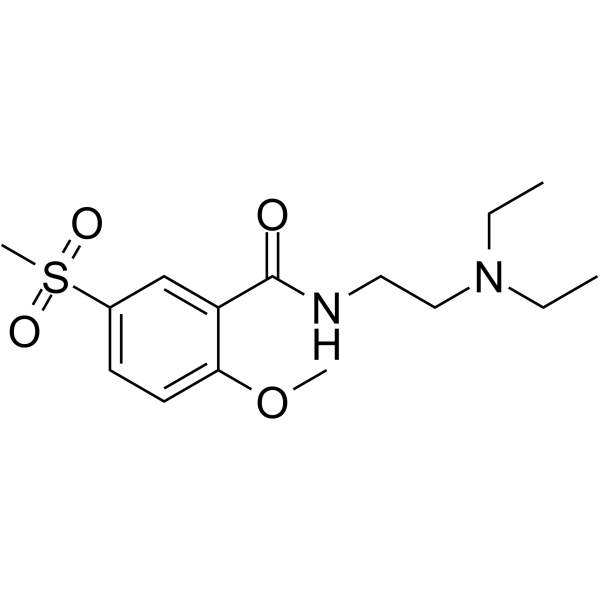 0 ImagesCat. No.: HY-B1196ACAS No.: 51012-32-9Tiapride is a selective and orally active D2 and D3 dopamine receptors antagonist with IC50 values of 110-320 nM and 180 nM, respectively. Tiapride shows anti-dyskinetic activity and anxiolytic activity. Tiapride is a neuroleptic agent.
-
D3R/MOR antagonist 2
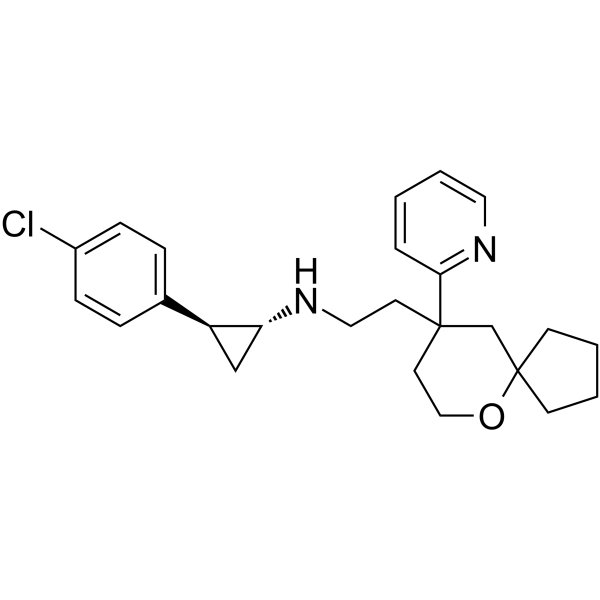 0 ImagesCat. No.: HY-149387CAS No.: 3033883-17-6D3R/MOR antagonist 2 (Compound 121) is a D3R/MOR antagonist (Ki: 361 nM and 85.2 nM respectively). D3R/MOR antagonist 2 has the potential to produce analgesic effects through MOR partial agonism, reduce opioid-misuse liability via D3R antagonism.
-
Haloperidol solution
 0 ImagesCat. No.: HY-FL14538CAS No.: 52-86-8Haloperidol solution is mainly composed of Haloperidol (HY-14538). Haloperidol is a potent dopamine D2 receptor antagonist, widely used as an antipsychotic agent. Haloperidol can be used in the study of schizophrenia, tics in Tourette syndrome, mania in bipolar disorder, delirium, agitation, acute psychosis, and hallucinations from alcohol withdrawal.
-
Bulbocapnine
 0 ImagesBulbocapnine is an aporphine isoquinoline alkaloid that exerts antagonistic effects on dopamine Receptor) and α-adrenergic receptors, as well as anti-peroxidative effects. The Ki value of bulbocapnine for tyrosine hydroxylase (TH) is 0.20 mM. Bulbocapnine reduces intracellular dopamine content, inhibits TH activity, and decreases Ca2+ concentration. Bulbocapnine antagonizes the dose-dependent inhibitory effect of dopamine on the heart rate acceleration induced by stimulating the postganglionic fibers of the right cardiac accelerator nerve.
-
SV 156
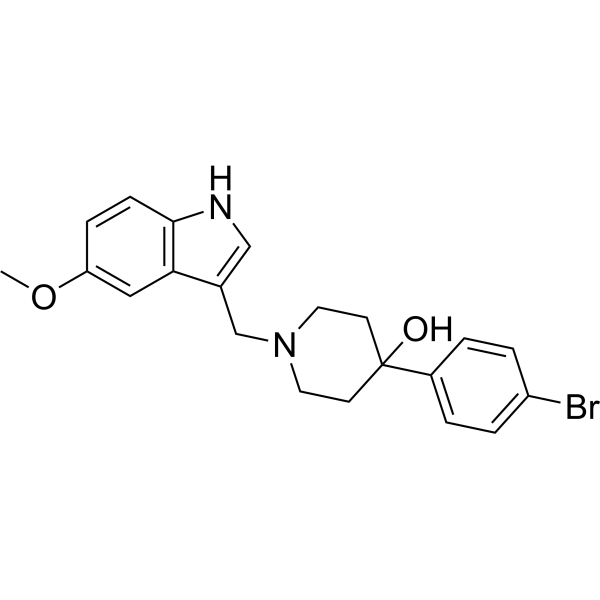 0 ImagesCat. No.: HY-111242CAS No.: 873445-60-4SV 156 is a potent and selective D2 dopamine receptor antagonist, with a Ki of 2.5 nM for hD2. SV 156 has approximately 40-fold binding selectivity for D2 dopamine receptors compared to the D3 receptor subtype. SV 156 can be used for L-DOPA (HY-N0304)-associated abnormal involuntary movements (AIMs) research.
-
(±)-BAK2-66
 0 ImagesCat. No.: HY-119768CAS No.: 1301178-83-5(±)-BAK2-66 is a selectivity dopamine D3 receptor antagonist with theKi values of 1nM and 960 nM for D3R and D2R, respectively. (±)-BAK2-66 can be used for study in animal models of addiction.
-
(S)-Remoxipride
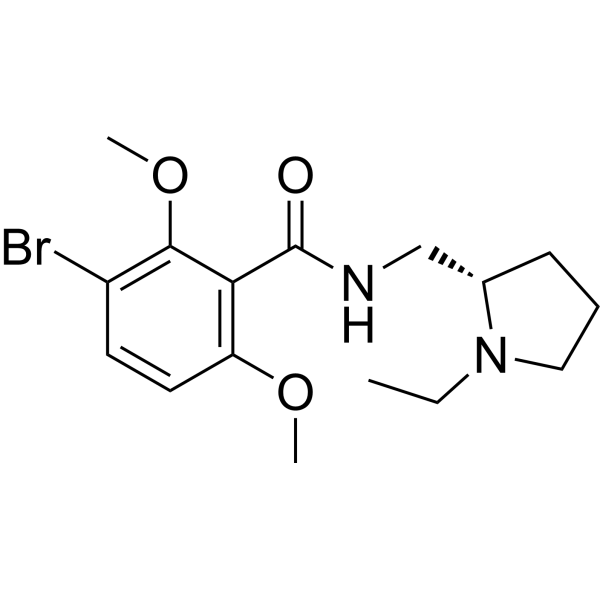 0 ImagesCat. No.: HY-101313CAS No.: 80125-14-0Synonyms: (-)-Remoxipride(S)-Remoxipride ((-)-Remoxipride) is a selective dopamine D2-receptor antagonist with an IC50 value of 1.57 μM. (S)-Remoxipride can be used for the research of psychotic disorder.
-
Quetiapine-d8 hemifumarate
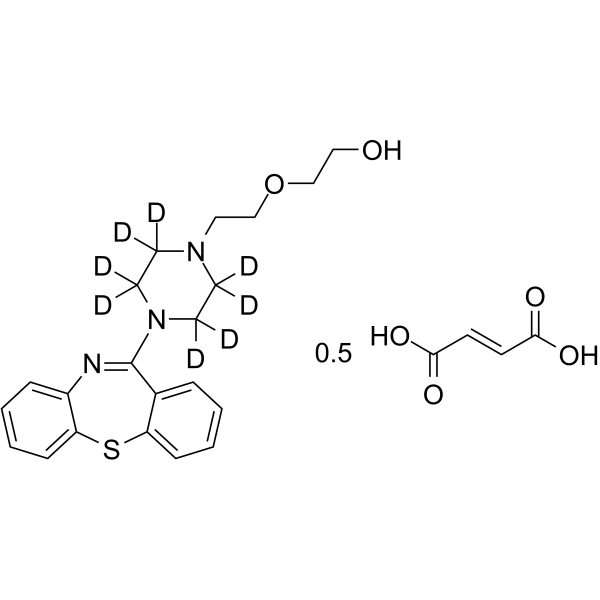 0 ImagesCat. No.: HY-B0031S3Quetiapine-d8 (hemifumarate) is the deuterium labeled Quetiapine hemifumarate. Quetiapine hemifumarate is a 5-HT receptors agonist with a pEC50 of 4.77 for human 5-HT1A receptor. Quetiapine hemifumarate is a dopamine receptor antagonist with a pIC50 of 6.33 for human D2 receptor. Quetiapine hemifumarate has moderate to high affinity for the human D2, HT1A, 5-HT2A, 5-HT2C receptor with pKis of 7.25, 5.74, 7.54, 5.55. Antidepressant and anxiolytic effects.
-
D1R antagonist 1
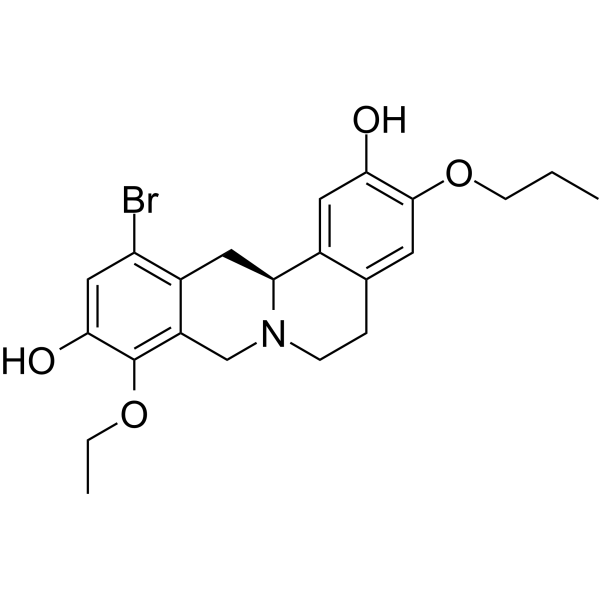 0 ImagesCat. No.: HY-149336CAS No.: 2983777-67-7D1R antagonist 1 (compound 12a) is a D1R antagonist, involved in G-protein- and β-arrestin-based signaling.
-
AVE-5997
 0 ImagesCat. No.: HY-19841CAS No.: 452917-21-4AVE-5997 is a selective b>D3 antagonist. AVE-5997 antagonizes MK-801 (HY-15084B)-induced hyperactivity. AVE-5997 can be used in the research of schizophrenia.
-
Metoclopramide hydrochloride hydrate (Standard)
 0 ImagesMetoclopramide (hydrochloride hydrate) (Standard) is the analytical standard of Metoclopramide (hydrochloride hydrate). This product is intended for research and analytical applications. Metoclopramide hydrochloride hydrate is a potent antagonist of 5-HT3 and dopamine D2 receptor, with IC50s of 308 nM and 483 nM, respectively. Metoclopramide hydrochloride hydrate can be used for the research of nausea and vomiting, gastro-oesophageal reflux, and gastroparesis.
-
SCH-23390
 0 ImagesCat. No.: HY-19545CAS No.: 87075-17-0Synonyms: R-(+)-SCH-23390SCH-23390 is a dopamine D1-like receptor antagonist (with Ki values of 0.2 nM and 0.3 nM for the D1 and D5 receptor subtypes, respectively). SCH-23390 can shorten the latency period for cocaine-induced lever pressing behavior in rats. SCH-23390 can also eliminate generalized seizures caused by chemical convulsants, such as arecoline (HY-B0726A) and strychnine, and is used in research on neurological disorders related to the dopamine system.
-
(R)-SKF 38393 hydrochloride
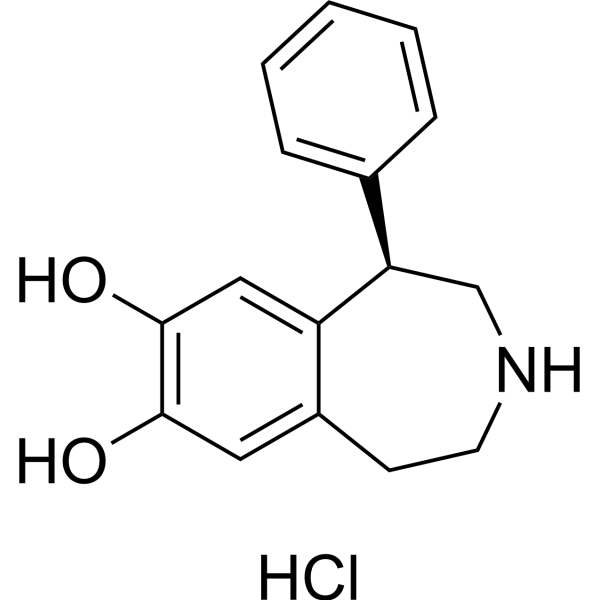 0 ImagesCat. No.: HY-12520BCAS No.: 81702-42-3Synonyms: (±)-SKF-38393 hydrochloride; SKF-38393A hydrochloride(R)-SKF 38393 ((±)-SKF-38393) hydrochloride is a potent and selective D1 dopamine receptor antagonist. (R)-SKF 38393 hydrochloride inhibits G protein-coupled inwardly rectifying potassium (GIRK) channel.
-
Zicronapine
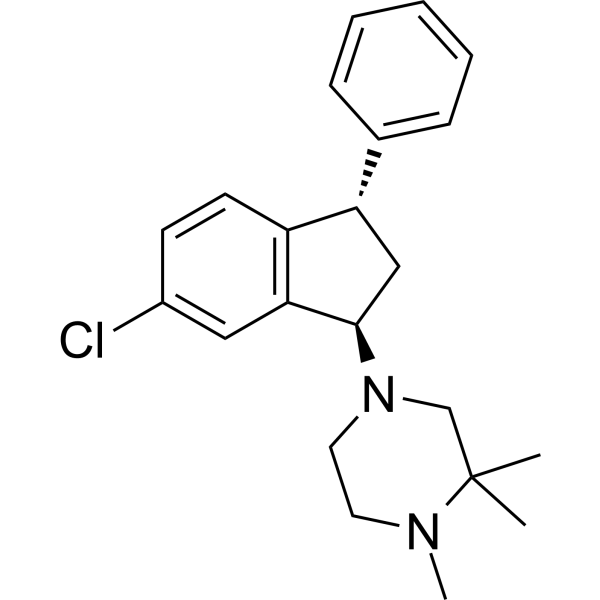 0 ImagesCat. No.: HY-14827CAS No.: 170381-16-5Synonyms: Lu 31-130Zicronapine is an antipsychotic agent with a strong pro-cognitive effect in animal models and the potential to treat a number of neurological and psychiatric diseases. Zicronapine has potent antagonistic effects at dopamine D1/D2, and serotonin 5-HT2A receptors.
-
Lurasidone-d8
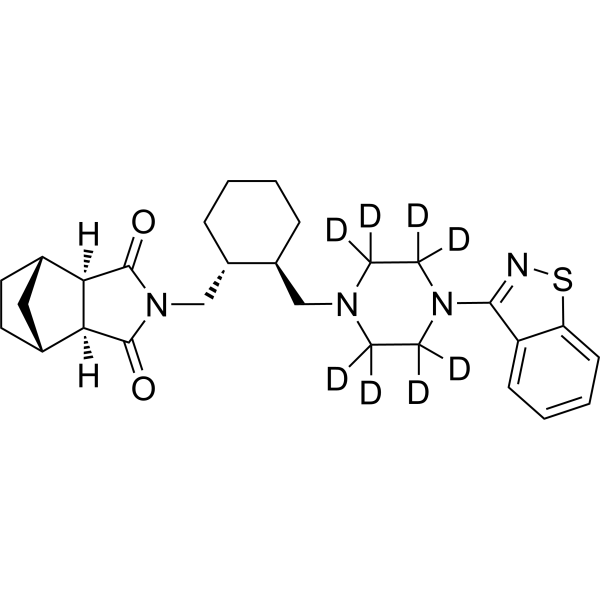 0 ImagesCat. No.: HY-B0032ASCAS No.: 1132654-54-6Synonyms: SM-13496-d8Lurasidone-d8 is deuterium labeled Lurasidone. Lurasidone (SM-13496) is an antagonist of both dopamine D2 and 5-HT7 with IC50s of 1.68 and 0.495 nM, respectively. Lurasidone (SM-13496) is also a partial agonist of 5-HT1A receptor with an IC50 of 6.75 nM.
-
Chlorprothixene (Standard)
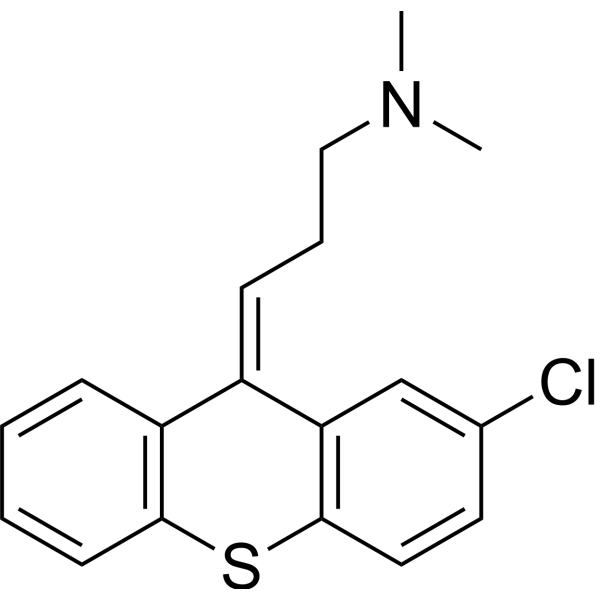 0 ImagesChlorprothixene (Standard) is the analytical standard of Chlorprothixene. This product is intended for research and analytical applications. Chlorprothixene is a dopamine and histamine receptors antagonist with Kis of 18 nM, 2.96 nM, 4.56 nM, 9 nM and 3.75 nM for hD1, hD2, hD3, hD5 and hH1 receptors, respectively. Antipsychotic activity.
-
Mafoprazine
 0 ImagesCat. No.: HY-126635CAS No.: 80428-29-1Mafoprazine is a phenylpiperazine derivative with variable affinities for neuronal receptors. It may exert its antipsychotic effects primarily through D2 receptor blockade and α-adrenergic activity, and may increase the activity of dopamine metabolites.
-
Thioridazine hydrochloride (Standard)
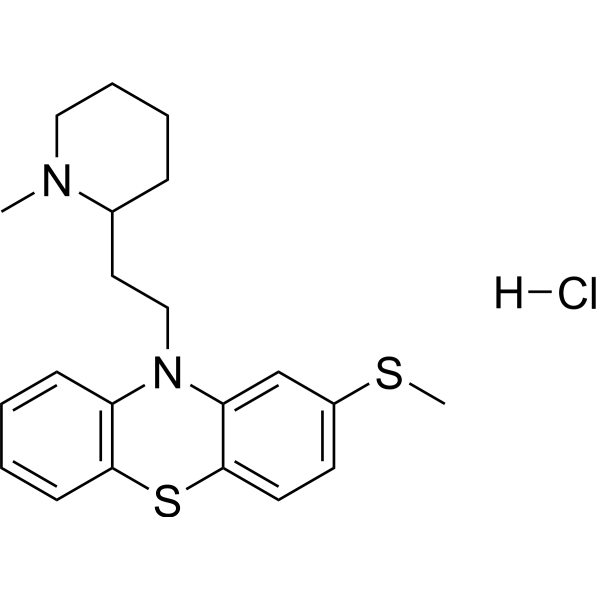 0 ImagesThioridazine (hydrochloride) (Standard) is the analytical standard of Thioridazine (hydrochloride). This product is intended for research and analytical applications. Thioridazine hydrochloride, an orally active antagonist of the dopamine receptor D2 family proteins, exhibits potent anti-psychotic and anti-anxiety activities. Thioridazine hydrochloride is also a potent inhibitor of PI3K-Akt-mTOR signaling pathways with anti-angiogenic effect. Thioridazine hydrochloride shows antiproliferative and apoptosis induction effects in various types of cancer cells, with specificity on targeting cancer stem cells (CSCs).




