HD1
Histone deacetylase 1 (HDAC1) is a class I histone deacetylase that regulates chromatin structure and gene expression through removal of acetyl groups from histone and non-histone proteins[1][2]. HDAC1 functions as a catalytic component of transcriptional corepressor complexes, including Sin3A, NuRD, and CoREST complexes, which regulate transcriptional repression and cellular differentiation programs[2][3]. Mechanistically, HDAC1 controls epigenetic regulation by modulating histone acetylation states, including regulation of histone H3 acetylation marks associated with transcriptional activity[2]. In experimental models, HDAC1 contributes to regulation of embryonic stem cell differentiation, erythroid differentiation, cell proliferation, and cancer-associated transcriptional programs[3][4]. HDAC1-containing complexes regulate cancer cell responses by controlling transcriptional networks involved in proliferation, survival, and cellular stress adaptation[4]. Compared with the closely related isoform HDAC2, HDAC1 has distinct biological functions, as genetic deletion of HDAC1 but not HDAC2 affects specific differentiation processes and reduces the activity of HDAC1/2-containing corepressor complexes[3]. HDAC1 also differs from other HDAC family members through its preferential association with Sin3A, NuRD, and CoREST transcriptional regulatory complexes[2][3]. For experimental applications, HDAC1 function is investigated using genetic depletion, catalytic activity assays, chromatin analysis, and pharmacological inhibition approaches[1][4]. HDAC inhibitors are widely used to study HDAC1-dependent transcriptional regulation and cellular phenotypes, although many inhibitors target multiple HDAC family members rather than HDAC1 selectively[5].
References:
- [1]. Taunton J, et al. A mammalian histone deacetylase related to the yeast transcriptional regulator Rpd3p. Science. 1996;272(5260):408-411. [Content Brief]
- [2]. Haberland M, et al. The many roles of histone deacetylases in development and physiology: implications for disease and therapy. Nature Reviews Genetics. 2009;10(1):32-42. [Content Brief]
- [3]. Dovey OM, et al. Histone deacetylase 1 (HDAC1), but not HDAC2, controls embryonic stem cell differentiation. Proceedings of the National Academy of Sciences of the United States of America. 2010;107(18):8242-8247. [Content Brief]
- [4]. Witt O, et al. HDAC family: What are the cancer relevant targets? Cancer Letters. 2009;277(1):8-21.
- [5]. Bradner JE, et al. Chemical phylogenetics of histone deacetylases. Nature Chemical Biology. 2010;6(4):238-243. [Content Brief]
All Product Categories
-
HD1 관련 제품 (3)
관련 제품 (3)

-
Givinostat
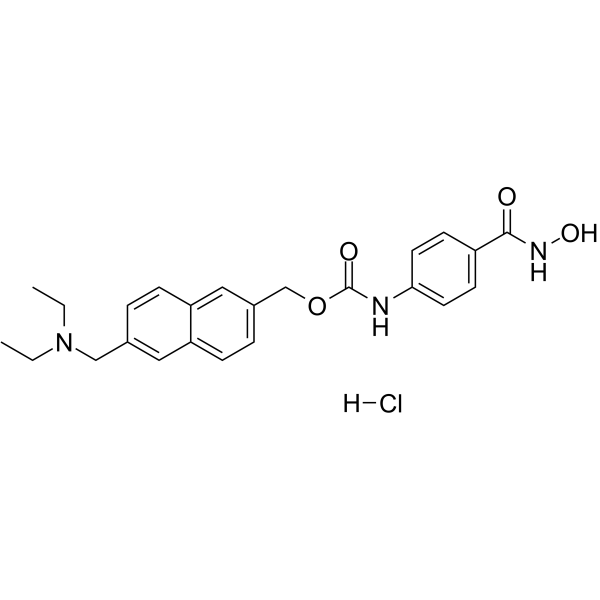
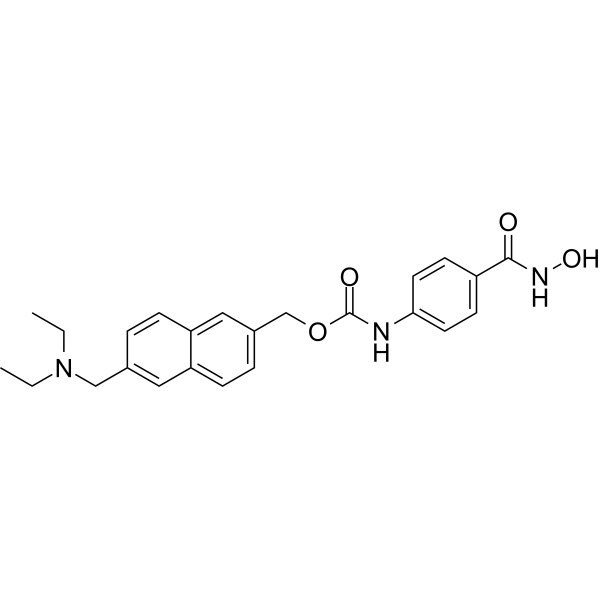 0 ImagesSynonyms: ITF-2357Givinostat (ITF-2357) is a HDAC inhibitor with an IC50 of 198 and 157 nM for HDAC1 and HDAC3, respectively. Givinostat can be used for Duchenne muscular dystrophy (DMD) research. Givinostat can penetrate the blood-brain barrier (BBB).
-
Givinostat hydrochloride monohydrate
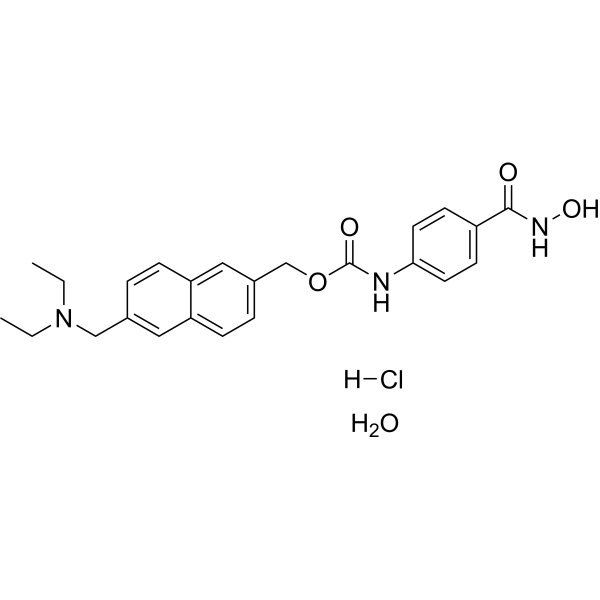 0 ImagesSynonyms: ITF-2357 hydrochloride monohydrate