



Givinostat
Based on 12 publication(s) in Google Scholar
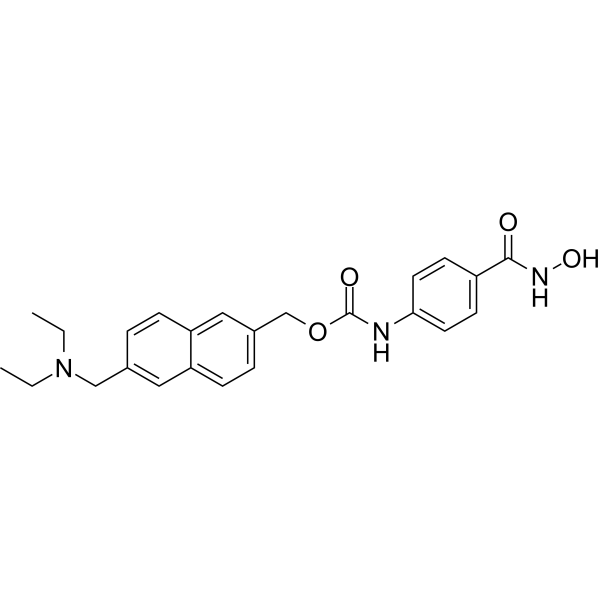
Givinostat (ITF-2357) is a HDAC inhibitor with an IC50 of 198 and 157 nM for HDAC1 and HDAC3, respectively. Givinostat can be used for Duchenne muscular dystrophy (DMD) research. Givinostat can penetrate the blood-brain barrier (BBB).
Nur für Forschungszwecke. Wir verkaufen nicht an Patienten.
- Reinheit : 98.67%
- CAS. Nr.: 497833-27-9
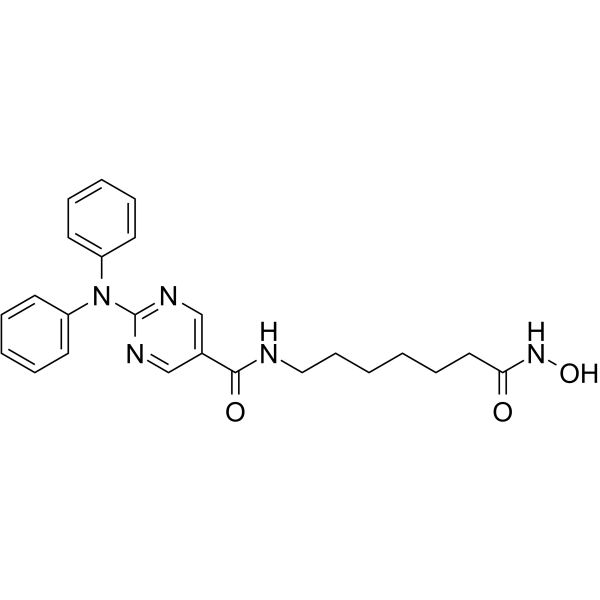
- Formel: C24H27N3O4
- Molecular Weight:421.49
-
Speicherung:Powder -20°C, 3 years ; In solvent -80°C, 6 months , -20°C, 1 month

To place orders, for customer services and technical support, please contact: MedChemExpress USA
Tel: 609-228-6898 E-mail: [email protected] [email protected]


-
 Biologische Aktivität
-
Chemical Information
-
Lösungsmittel & Löslichkeit
- Reinheit & Dokumentation
- Verweise
-
 Help & FAQs


-
HY-15144
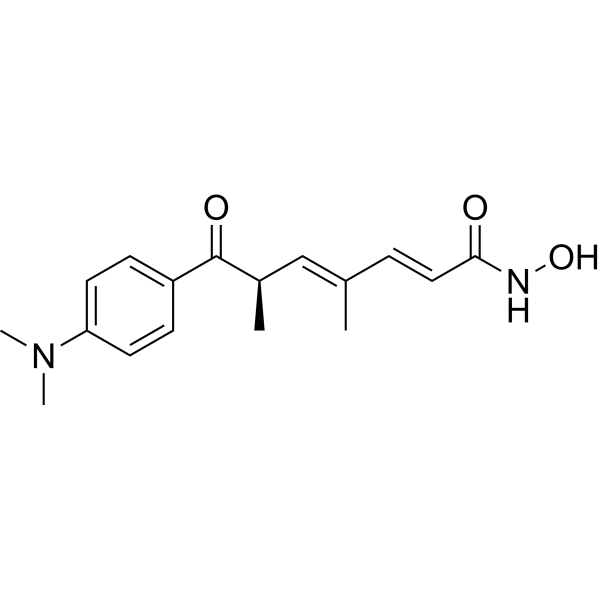
Trichostatin AHDAC Class I/II Inhibitor -
HY-109015
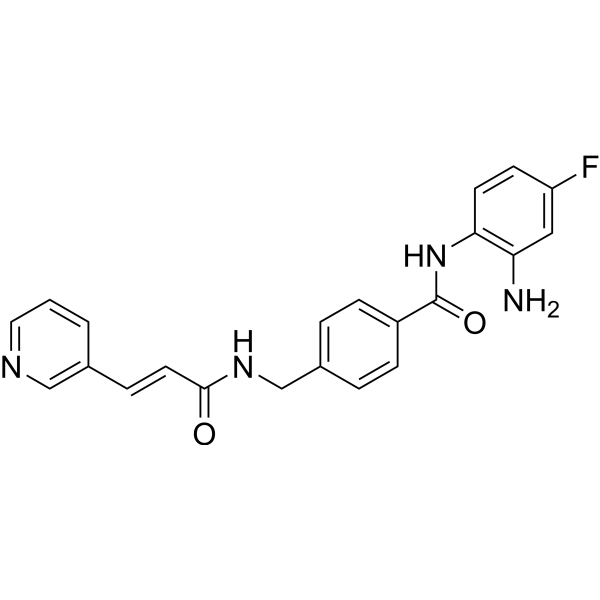
TucidinostatHDAC Inhibitor -
HY-10221
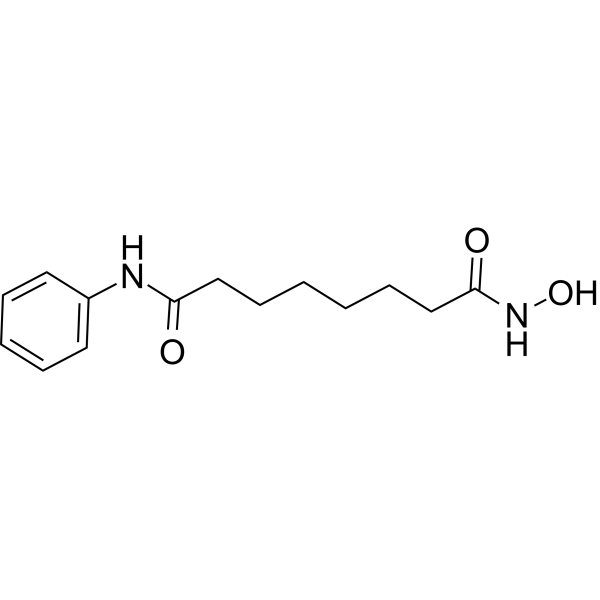
VorinostatHDAC Inhibitor -
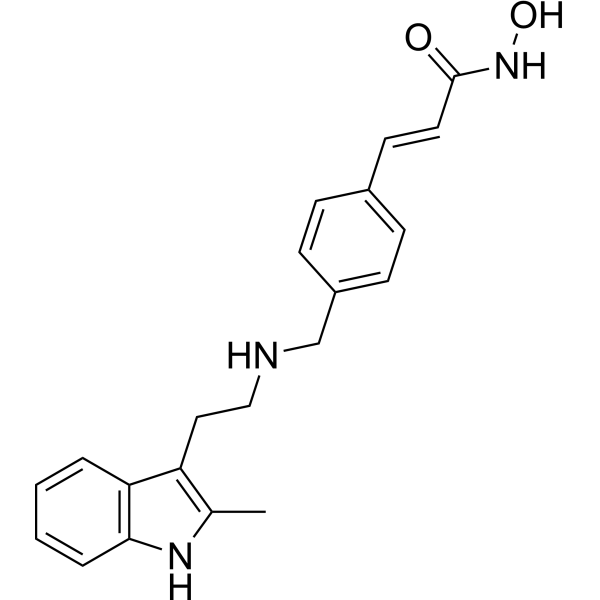
HY-10224
PanobinostatHDAC Inhibitor -
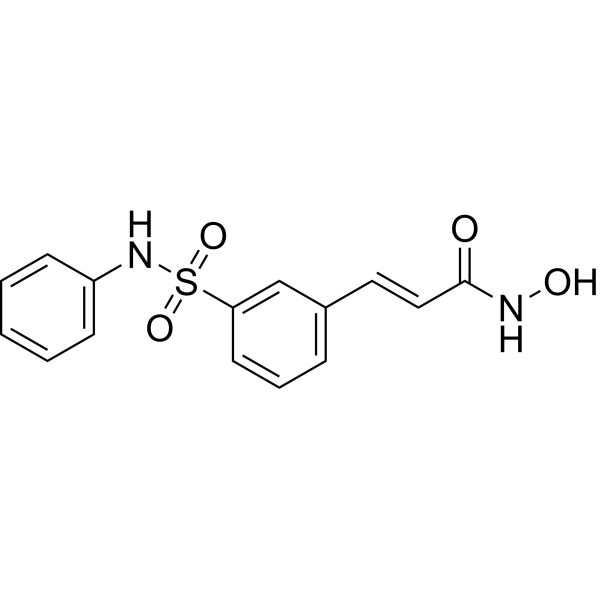
HY-10225
BelinostatHDAC Inhibitor -
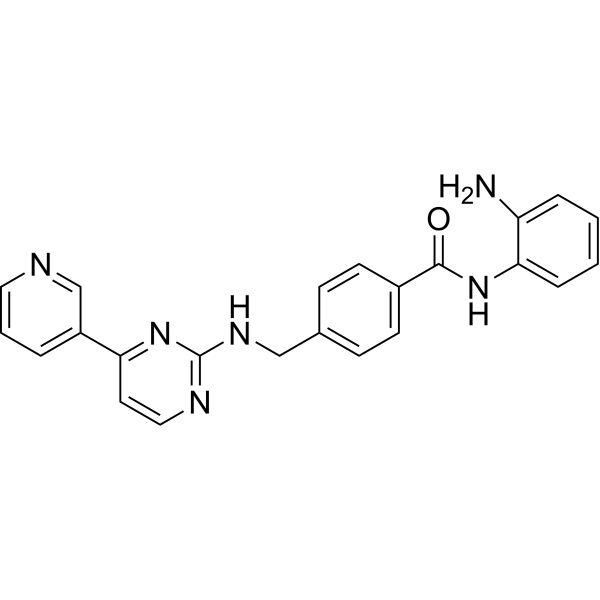
HY-12164
MocetinostatAutophagy Inducer -
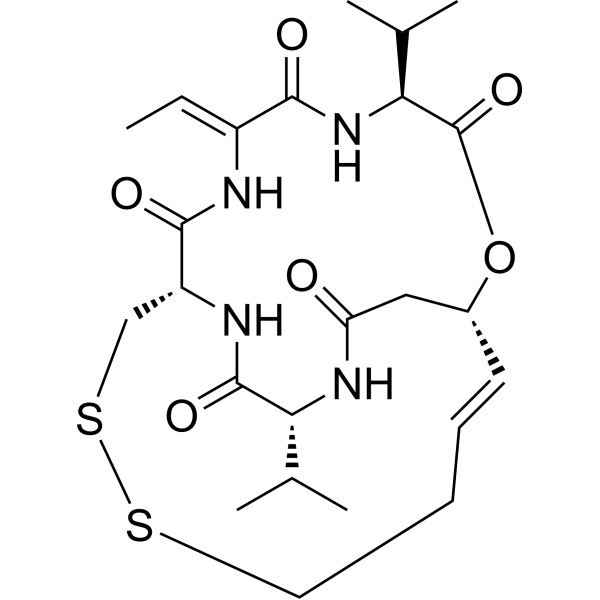
HY-15149
RomidepsinHDAC Inhibitor -
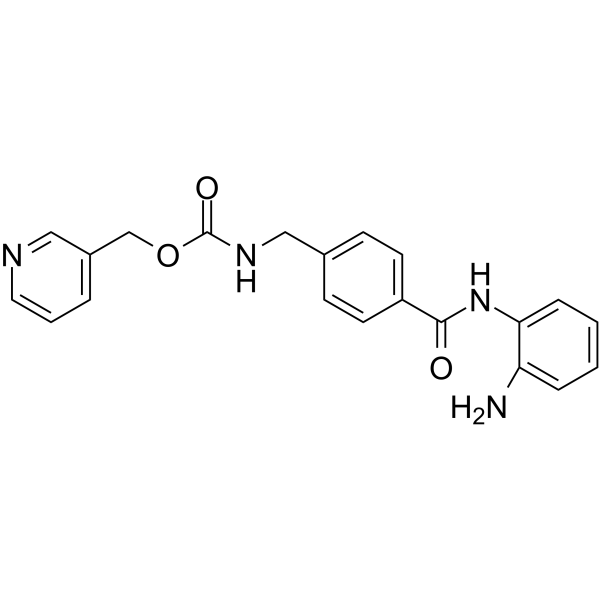
HY-12163
EntinostatHDAC Class I Inhibitor -
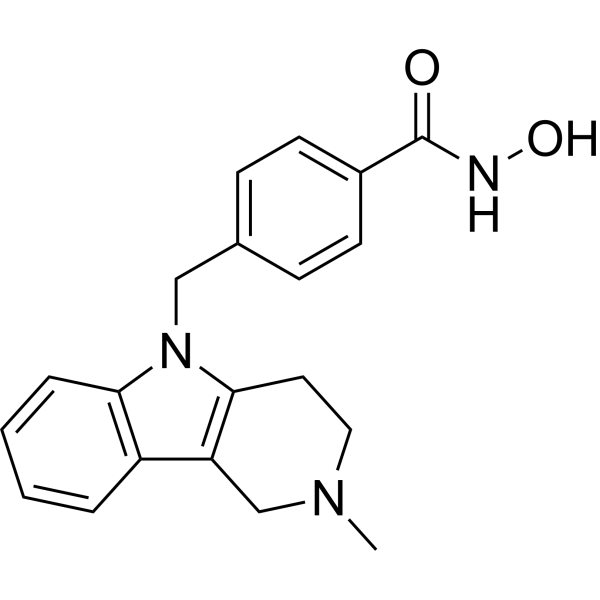
HY-13271A
Tubastatin AHDAC6 Inhibitor -
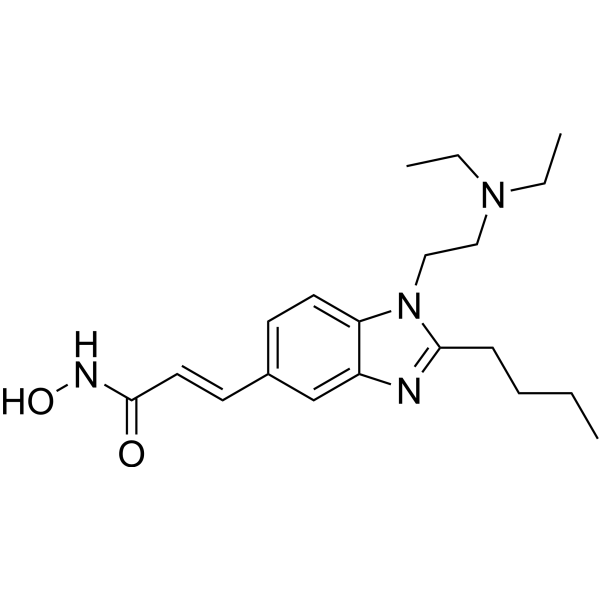
HY-13322
PracinostatHDAC/MBLAC2 Inhibitor -
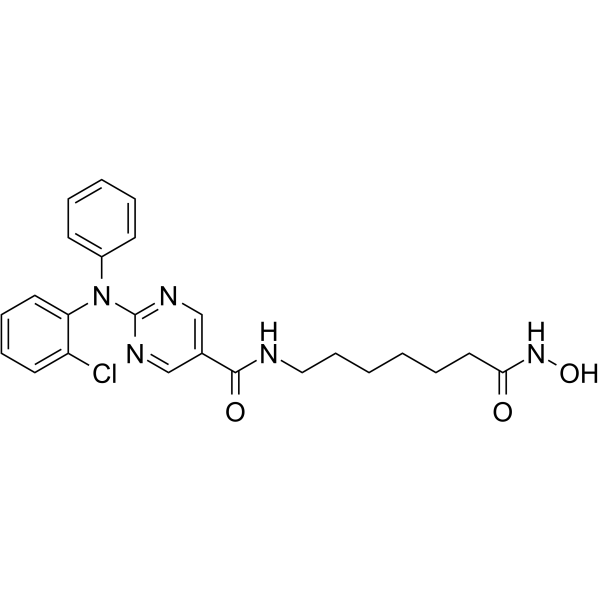
HY-15994
CitarinostatHDAC6 Inhibitor -
HY-16026
RicolinostatHDAC6 Inhibitor
Publications Citing Use of MedChemExpress (MCE) Givinostat
More- J Am Chem Soc. 2024 Oct 16;146(41):28282-28295. [Abstract]
- Cell Death Dis. 2020 Sep 15;11(9):753. [Abstract]
- Acta Pharmacol Sin. 2022 Feb;43(2):457-469. [Abstract]
- J Orthop Translat. 2021 Jun 1:29:106-112. [Abstract]
- Cell Prolif. 2021 Jul;54(7):e13072. [Abstract]
- Commun Biol. 2021 Oct 29;4(1):1235. [Abstract]
- J Mol Med (Berl). 2019 Aug;97(8):1183-1193. [Abstract]
- Int J Parasitol Drugs Drug Resist. 2026 May 17;31:100649.
- Neuroscience. 2021 Jun 15:465:38-45. [Abstract]
- bioRxiv. 2025 January 15.
- Patent. US20240252638A1.
- SSRN. 2024 Mar 13.
 Customer Validation & Images

-
RT-PCR
-
WB
-
WB


Biologische Aktivität
Beschreibung
|
hHDAC3 157 nM (IC50) |
HD1-B 7.5 nM (IC50) |
HD1-A 16 nM (IC50) |
HD2 10 nM (IC50) |
hHDAC1 198 nM (IC50) |
hHDAC11 292 nM (IC50) |
hHDAC6 315 nM (IC50) |
hHDAC2 325 nM (IC50) |
hHDAC10 340 nM (IC50) |
hHDAC7 524 nM (IC50) |
hHDAC5 532 nM (IC50) |
hHDAC9 541 nM (IC50) |
hHDAC8 854 nM (IC50) |
hHDAC4 1059 nM (IC50) |
Cellular Effect
|
Cell Line

|
Type | Value | Description | References |
|---|---|---|---|---|
| 697 | IC50 |
100 nM
Compound: Givinostat
|
Cytotoxicity against human 697 cells after 48 hrs by CellTiter 96 aqueous one solution assay
Cytotoxicity against human 697 cells after 48 hrs by CellTiter 96 aqueous one solution assay
|
[PMID: 31710483] |
| PBMC | IC50 |
313 nM
Compound: Givinostat
|
Cytotoxicity against human PBMC cells after 72 hrs by CellTiter 96 aqueous one solution assay
Cytotoxicity against human PBMC cells after 72 hrs by CellTiter 96 aqueous one solution assay
|
[PMID: 31710483] |
| Sf9 | IC50 |
44 nM
Compound: Givinostat
|
Inhibition of recombinant full length human N-terminal GST-tagged HDAC6 expressed in baculovirus infected sf9 insect cells pretreated with compound followed by Fluor de Lys deacetylase substrate addition by fluorescence method
Inhibition of recombinant full length human N-terminal GST-tagged HDAC6 expressed in baculovirus infected sf9 insect cells pretreated with compound followed by Fluor de Lys deacetylase substrate addition by fluorescence method
|
[PMID: 31710483] |
In Vitro
Givinostat (ITF2357) suppresses total LPS-induced IL-1β production robustly compared with the reduction by ITF3056. At 25, 50, and 100 nM, Givinostat reduced IL-1β secretion more than 70%. Givinostat (ITF-2357) suppresses the production of IL-6 in PBMCs stimulated with TLR agonists as well as the combination of IL-12 plus IL-18. IL-6 secretion decreases to 50% at 50 nM Givinostat, but at 100 and 200 nM, there is no reduction[1]. As shown by the CCK-8 assay, Givinostat (ITF-2357) inhibits JS-1 cell proliferation in a concentration-dependent manner. Treatment with Givinostat ≥500 nM is associated with significant inhibition of JS-1 cell proliferation (P<0.01). Also, the cell inhibition rate significantly differs between the group cotreated with Givinostat ≥250 nM plus LPS and the group without LPS treatment (same Givinostat concentration) (P<0.05)[2].
MedChemExpress (MCE) has not independently confirmed the accuracy of these methods. They are for reference only.
In Vivo
MedChemExpress (MCE) has not independently confirmed the accuracy of these methods. They are for reference only.
Clinical Trial
| NCT Number | Sponsor | Condition | Start Date |
Phase
|
|---|---|---|---|---|
| NCT01329991 | Plexxikon| | 2011-05 | PHASE1 |


Chemical Information
-
CAS. Nr. 497833-27-9
-
Appearance Solid
-
Molecular Weight 421.49
-
Formel C24H27N3O4
-
Color White to light yellow
-
SMILES
O=C(OCC1=CC=C2C=C(CN(CC)CC)C=CC2=C1)NC3=CC=C(C(NO)=O)C=C3
-
Synonyms
ITF-2357
-
Versand
Room temperature in continental US; may vary elsewhere.
-
Speicherung
Powder -20°C 3 years In solvent -80°C 6 months -20°C 1 month


Publications (12)
-
Journal Impact Factor
-
Most Recent
-
J Am Chem Soc
Inhibitor Development for α-Synuclein Fibril's Disordered Region to Alleviate Parkinson's Disease Pathology. [Abstract]2024 Oct 16;146(41):28282-28295. PMID: 39327912 -
Cell Death Dis
Checkpoint regulator B7x is epigenetically regulated by HDAC3 and mediates resistance to HDAC inhibitors by reprogramming the tumor immune environment in colorectal cancer. [Abstract]2020 Sep 15;11(9):753. PMID: 32934224 -
Acta Pharmacol Sin
2022 Feb;43(2):457-469. PMID: 33850273 -
J Orthop Translat
Personalized medicine modality based on patient-derived xenografts from a malignant transformed GCTB harboring H3F3A G34W mutation. [Abstract]2021 Jun 1:29:106-112. PMID: 34136349 -
Cell Prolif
EZH2-mediated inhibition of KLF14 expression promotes HSCs activation and liver fibrosis by downregulating PPARγ. [Abstract]2021 Jul;54(7):e13072. PMID: 34031939
Givinostat purchased from MedChemExpress. Usage Cited in: Cell Prolif. 2021 Jul;54(7):e13072. [Abstract]
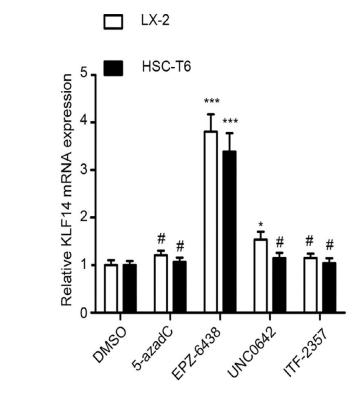
The HSCs shown were treated with DNMTs inhibitors (5-azacytidine, 2 μmol/L), G9a inhibitors (UNC0642, 2 μmol/L), and pan-HDAC inhibitor Givinostat (ITF-2357, 100 nmol/L) for 48 hours, or with EZH2 inhibitors (EPZ-6438, 10 μmol/L) for 72 hours. KLF14 expression was analyzed by RT-qPCR.
Givinostat purchased from MedChemExpress. Usage Cited in: Cell Prolif. 2021 Jul;54(7):e13072. [Abstract]
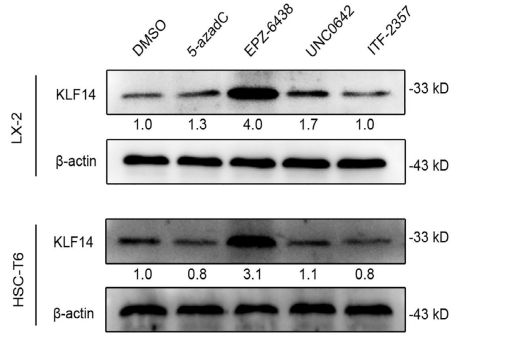
The HSCs shown were treated with DNMT inhibitors (5-azacytidine, 2 μmol/L), G9a inhibitors (UNC0642, 2 μmol/L), and pan-HDAC inhibitor Givinostat (ITF-2357, 100 nmol/L) for 48 hours, or with EZH2 inhibitors (EPZ-6438, 10 μmol/L) for 72 hours. KLF14 expression was detected by Western blotting.
-
Commun Biol
LIFR inhibition enhances the therapeutic efficacy of HDAC inhibitors in triple negative breast cancer. [Abstract]2021 Oct 29;4(1):1235. PMID: 34716410
Givinostat purchased from MedChemExpress. Usage Cited in: Commun Biol. 2021 Oct 29;4(1):1235. [Abstract]
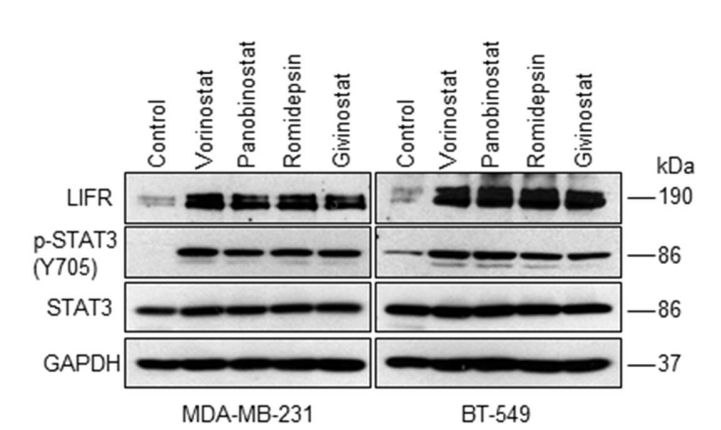
TNBC model cells (MDA-MB-231 and BT-549) were treated with indicated HDACi (Vorinostat: 10 µM; Panobinostat: 1 µM; Romidepsin: 1 µM; Givinostat: 1 µM) for 24 h and expression of LIFR, p-STAT3(Y705), and STAT3 were determined using Western blotting.
-
J Mol Med (Berl)
2019 Aug;97(8):1183-1193. PMID: 31201471 -
-
Neuroscience
Treatment with Non-specific HDAC Inhibitors Administered after Disease Onset does not Delay Evolution in a Mouse Model of Progressive Multiple Sclerosis. [Abstract]2021 Jun 15:465:38-45. PMID: 33862148 -
-
-


Lösungsmittel & Löslichkeit
In Vitro:
DMSO : 200 mg/mL (474.51 mM; Need ultrasonic; Hygroscopic DMSO has a significant impact on the solubility of product, please use newly opened DMSO)
Please refer to the solubility information to select the appropriate solvent. Once prepared, please aliquot and store the solution to prevent product inactivation from repeated freeze-thaw cycles.
Storage method and period of stock solution: -80°C, 6 months; -20°C, 1 month. When stored at -80°C, please use it within 6 months. When stored at -20°C, please use it within 1 month.
Please refer to the solubility information to select the appropriate solvent. Once prepared, please aliquot and store the solution to prevent product inactivation from repeated freeze-thaw cycles.
Storage method and period of stock solution: -80°C, 6 months; -20°C, 1 month. When stored at -80°C, please use it within 6 months. When stored at -20°C, please use it within 1 month.
Konzentration (Stammlösung) × Volumen (Stammlösung) = Konzentration (Ziellösung) × Volumen (Ziellösung)
In Vivo:
Select the appropriate dissolution method based on your experimental animal and administration route.
- For the following dissolution methods, please ensure to first prepare a clear stock solution using an In Vitro approach and then sequentially add co-solvents:
- To ensure reliable experimental results, the clarified stock solution can be appropriately stored based on storage conditions. As for the working solution for In Vivo experiments, it is recommended to prepare freshly and use it on the same day.
- The percentages shown for the solvents indicate their volumetric ratio in the final prepared solution. If precipitation or phase separation occurs during preparation, heat and/or sonication can be used to aid dissolution.
In Vivo Dissolution Calculator
Please enter the basic information of animal experiments:
-
-
-
-
Recommended: Prepare an additional quantity of animals to account for potential losses during experiments.
Please enter your animal formula composition:
-
%DMSO +
Recommended: Keep the proportion of DMSO in working solution below 2% if your animal is weak.
-
%+
-
+%Tween-80 + +
-
%Saline +
The co-solvents required include: DMSO, . All of co-solvents are available by MedChemExpress (MCE). , Tween 80. All of co-solvents are available by MedChemExpress (MCE).
Working solution concentration: 0.22 mg/mL
Method for preparing stock solution: mg drug dissolved in μL DMSO. Stock solution concentration: mg/mL.
1. Take μL DMSO stock solution;
2. Add μL .
μL , mix evenly;
3. Then add μL Tween 80, mix evenly;
4. Then add μL
Please ensure that the stock solution in the first step is dissolved to a clear state, and add co-solvents in sequence. You can use ultrasonic heating (ultrasonic cleaner, recommended frequency 20-40 kHz), vortexing, etc. to assist dissolution.


Reinheit & Dokumentation
-
Data Sheet (277 KB)
-
SDS (396 KB)
- English - EN (396 KB)
- Français - FR (396 KB)
- Deutsch - DE (396 KB)
- Norwegian - NO (396 KB)
- Español - ES (396 KB)
- Swedish - SV (396 KB)
- Italian - IT (396 KB)
- Korean - KR (396 KB)
- Portuguese - PT (396 KB)
-
Handling Instructions (2659 KB)
Verweise
[1]. Li S, et al. Specific inhibition of histone deacetylase 8 reduces gene expression and production of proinflammatory cytokines in vitro and in vivo. J Biol Chem. 2015 Jan 23;290(4):2368-78. [Content Brief]
[2]. Leoni F, et al. The histone deacetylase inhibitor ITF2357 reduces production of pro-inflammatory cytokines in vitro and systemic inflammation in vivo. Mol Med. 2005 Jan-Dec;11(1-12):1-15. [Content Brief]
[3]. Wang YG, et al. Givinostat inhibition of hepatic stellate cell proliferation and protein acetylation. World J Gastroenterol. 2015 Jul 21;21(27):8326-39. [Content Brief]
[4]. Taiarol L, et al. Givinostat-Liposomes: Anti-Tumor Effect on 2D and 3D Glioblastoma Models and Pharmacokinetics. Cancers (Basel). 2022 Jun 16;14(12):2978. [Content Brief]


Complete Stock Solution Preparation Table
Please refer to the solubility information to select the appropriate solvent. Once prepared, please aliquot and store the solution to prevent product inactivation from repeated freeze-thaw cycles.
Storage method and period of stock solution: -80°C, 6 months; -20°C, 1 month. When stored at -80°C, please use it within 6 months. When stored at -20°C, please use it within 1 month.
| Optional Solvent | Concentration Solvent Mass | 1 mg | 5 mg | 10 mg | 25 mg |
|---|---|---|---|---|---|
| DMSO | 1 mM | 2.3725 mL | 11.8627 mL | 23.7254 mL | 59.3134 mL |
| 5 mM | 0.4745 mL | 2.3725 mL | 4.7451 mL | 11.8627 mL | |
| 10 mM | 0.2373 mL | 1.1863 mL | 2.3725 mL | 5.9313 mL | |
| 15 mM | 0.1582 mL | 0.7908 mL | 1.5817 mL | 3.9542 mL | |
| 20 mM | 0.1186 mL | 0.5931 mL | 1.1863 mL | 2.9657 mL | |
| 25 mM | 0.0949 mL | 0.4745 mL | 0.9490 mL | 2.3725 mL | |
| 30 mM | 0.0791 mL | 0.3954 mL | 0.7908 mL | 1.9771 mL | |
| 40 mM | 0.0593 mL | 0.2966 mL | 0.5931 mL | 1.4828 mL | |
| 50 mM | 0.0475 mL | 0.2373 mL | 0.4745 mL | 1.1863 mL | |
| 60 mM | 0.0395 mL | 0.1977 mL | 0.3954 mL | 0.9886 mL | |
| 80 mM | 0.0297 mL | 0.1483 mL | 0.2966 mL | 0.7414 mL | |
| 100 mM | 0.0237 mL | 0.1186 mL | 0.2373 mL | 0.5931 mL |


Givinostat Related Classifications
HY-14842 Related Classifications
 Powered by Bioz