HDAC10
HDAC10 (histone deacetylase 10) is a zinc-dependent class IIb histone deacetylase that functions primarily as a polyamine deacetylase, representing a distinct enzymatic activity within the HDAC family[1]. Mechanistically, HDAC10 regulates polyamine metabolism and contributes to cellular homeostasis through pathways linked to autophagy and lysosomal function, making it an important epigenetic regulator beyond canonical histone deacetylation[1][2]. In disease-related studies, HDAC10 has attracted considerable interest in cancer biology, where altered HDAC10 activity has been associated with tumor-relevant cellular processes and therapeutic response mechanisms[2][3]. Experimental evidence further indicates that pharmacological or genetic inhibition of HDAC10 can promote autolysosome accumulation in neuroblastoma models, supporting a functional connection between HDAC10 and autophagy regulation[3][4]. Compared with its closest class IIb homolog HDAC6, HDAC10 exhibits unique substrate selectivity and is currently recognized as the only identified HDAC family member with established polyamine deacetylase activity, highlighting a major functional distinction between these related isoforms[1][2]. Structural studies have identified characteristic features, including the acidic gatekeeper residue Glu274, that contribute to substrate recognition and isoform selectivity[4]. For experimental applications, the development of selective HDAC10 inhibitors has enabled more precise interrogation of HDAC10-dependent biology, and recent compounds have demonstrated high selectivity over HDAC6 while serving as valuable chemical probes for investigating autophagy, cancer-associated pathways, and polyamine-dependent cellular processes[1][4].
参考文献:
- [1]. Lambona C, et al. Histone deacetylase 10: A polyamine deacetylase from the crystal structure to the first inhibitors. Curr Opin Struct Biol. 2023 Oct;82:102668. [Content Brief]
- [2]. Delcuve GP, et al. Roles of histone deacetylases in epigenetic regulation: emerging paradigms from studies with inhibitors. Clin Epigenetics. 2012 Mar 12;4(1):5. [Content Brief]
- [3]. Tarawneh AH, et al. Novel selective indole based histone deacetylase 10 inhibitors as anticancer therapeutics. Sci Rep. 2025;15:33307.
- [4]. Zeyen P, et al. Identification of histone deacetylase 10 (HDAC10) inhibitors that modulate autophagy in transformed cells. Eur J Med Chem. 2022 Apr 15;234:114272. doi: 10.1016/j.ejmech.2022.114272. Epub 2022 Mar 11. PMID: 35306288; PMCID: PMC9007901. [Content Brief]
-
HDAC10 関連製品 (67)
関連製品 (67)

-
抗体 (1)
-
Tucidinostat
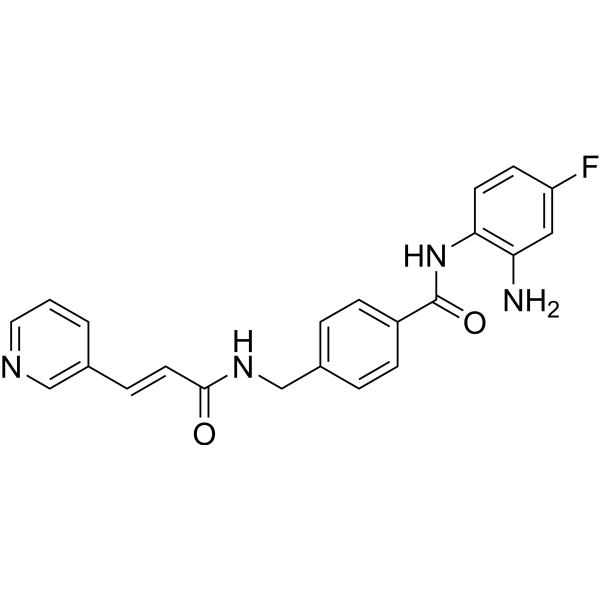 0 Images別名: Chidamide; HBI-8000; CS 055
-
Quisinostat
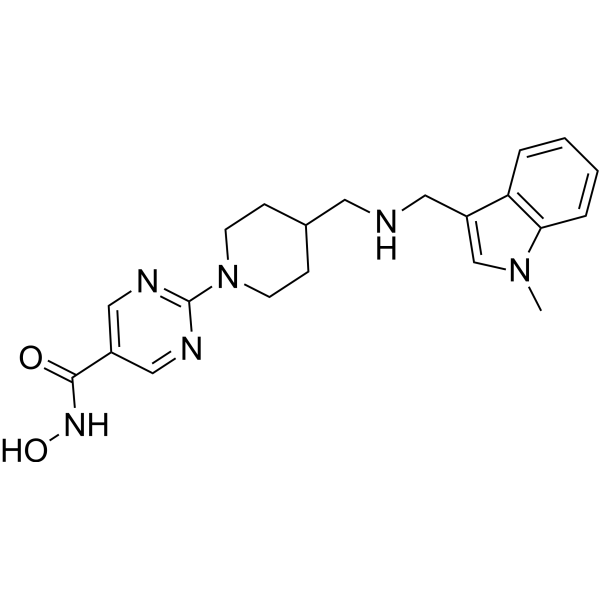 0 Images別名: JNJ-26481585
-
Givinostat
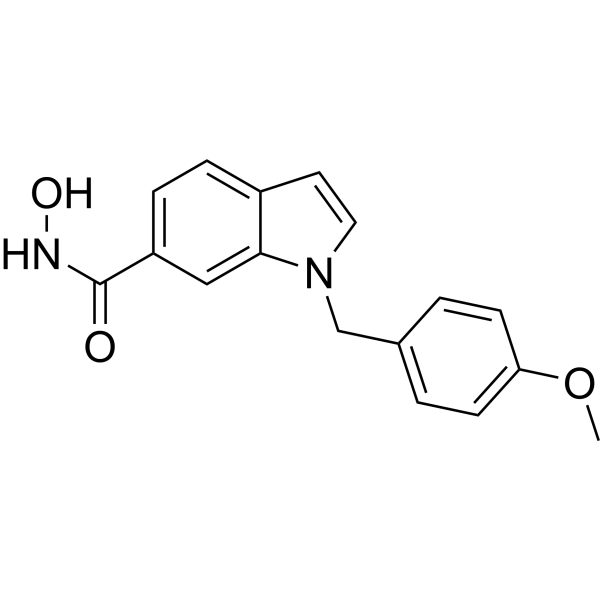
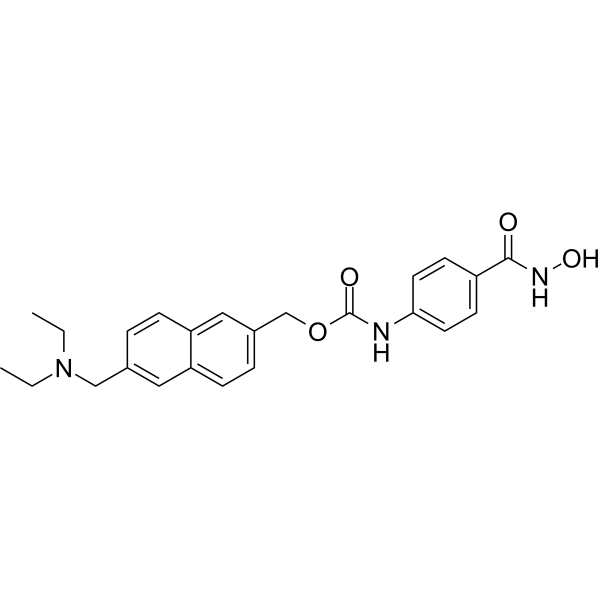 0 Images別名: ITF-2357Givinostat (ITF-2357) is a HDAC inhibitor with an IC50 of 198 and 157 nM for HDAC1 and HDAC3, respectively. Givinostat can be used for Duchenne muscular dystrophy (DMD) research. Givinostat can penetrate the blood-brain barrier (BBB).
-
Tubacin
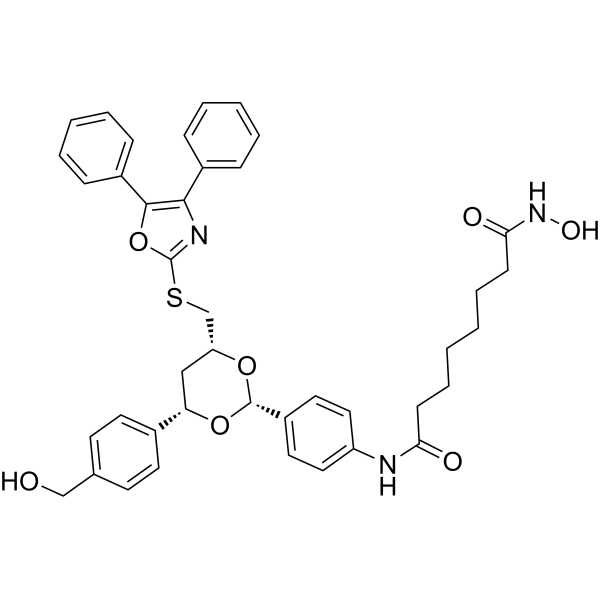 0 ImagesTubacin is a potent and selective inhibitor of HDAC6, with an IC50 value of 4 nM and approximately 350-fold selectivity over HDAC1. Tubacin also inhibits metallo-β-lactamase domain-containing protein 2 (MBLAC2).
-
Abexinostat
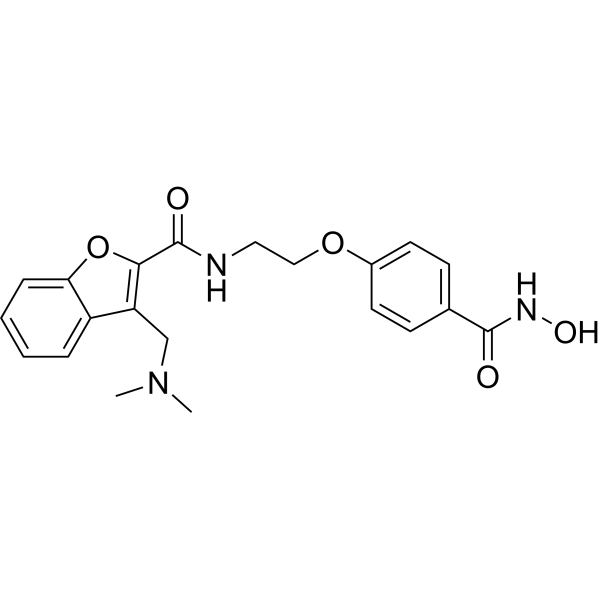 0 Images別名: CRA 024781; PCI-24781Abexinostat (CRA 024781) is a novel pan-HDAC inhibitor mostly targeting HDAC1 with Ki of 7 nM. Abexinostat also inhibits metallo-β-lactamase domain-containing protein 2 (MBLAC2) hydrolase activity with an EC50 below 10 nM.
-
Puzerinostat mesylate
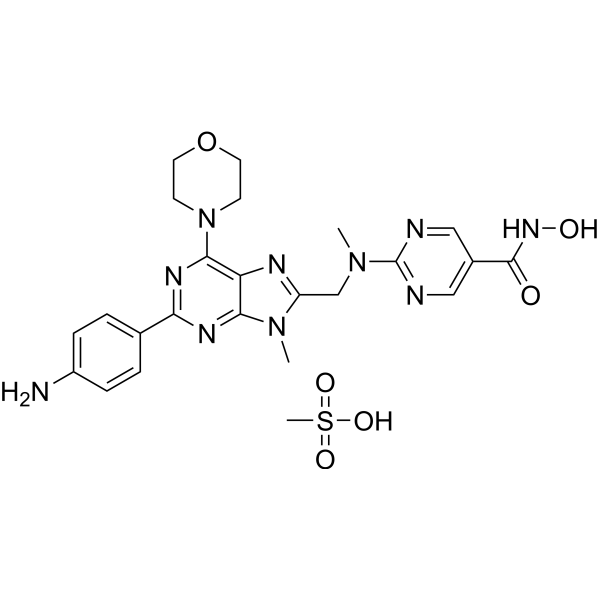 0 Images別名: Purinostat mesylatePuzerinostat mesylate (Purinostat mesylate) is a highly selective class I/IIb histone deacetylase (HDAC) inhibitor, with IC50 values of 0.81 nM, 1.4 nM, 1.7 nM, 3.8 nM, 11.5 nM, and 1.1 nM against HDAC1, HDAC2, HDAC3, HDAC8, HDAC6, and HDAC10, respectively. Puzerinostat mesylate enhances glutamine metabolism by upregulating GLS1. Puzerinostat mesylate induces cell Apoptosis and downregulates the expression of BCR-ABL and c-MYC. Puzerinostat mesylate delays the progression of Ph+ B-cell acute lymphoblastic leukemia and prolongs the survival of relevant mouse models. Puzerinostat mesylate regulates the immune microenvironment. Puzerinostat mesylate can be used in research related to chronic myeloid leukemia, Philadelphia chromosome-positive B-cell acute lymphoblastic leukemia, relapsed/refractory multiple myeloma, relapsed/refractory lymphoma, diffuse large B-cell lymphoma, and double-expression lymphoma.
-
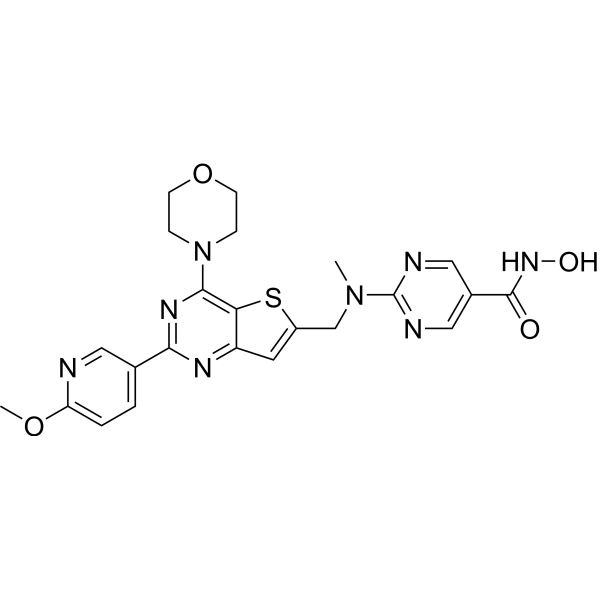
Puzerinostat
 0 Images別名: PurinostatPuzerinostat (Purinostat) is a highly selective class I/IIb histone deacetylase (HDAC) inhibitor, with IC50 values of 0.81 nM, 1.4 nM, 1.7 nM, 3.8 nM, 11.5 nM, and 1.1 nM against HDAC1, HDAC2, HDAC3, HDAC8, HDAC6, and HDAC10, respectively. Puzerinostat enhances glutamine metabolism by upregulating GLS1. Puzerinostat induces cell Apoptosis and downregulates the expression of BCR-ABL and c-MYC. Puzerinostat delays the progression of Ph+ B-cell acute lymphoblastic leukemia and prolongs the survival of relevant mouse models. Puzerinostat regulates the immune microenvironment. Puzerinostat can be used in research related to chronic myeloid leukemia, Philadelphia chromosome-positive B-cell acute lymphoblastic leukemia, relapsed/refractory multiple myeloma, relapsed/refractory lymphoma, diffuse large B-cell lymphoma, and double-expression lymphoma.
-
Pracinostat
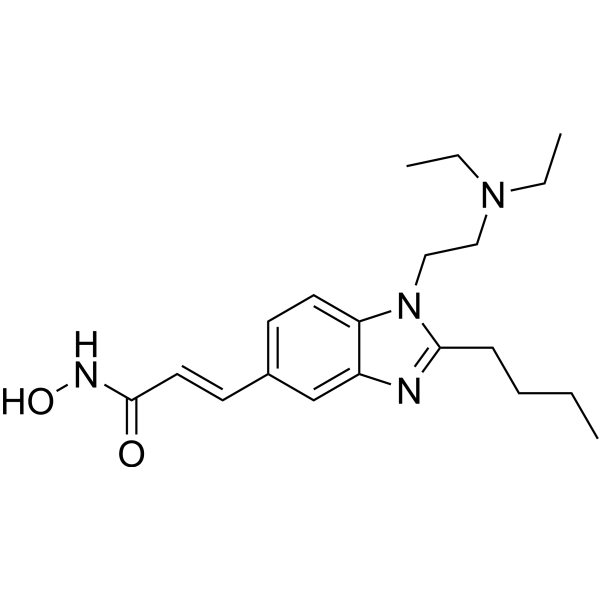 0 Images別名: SB939Pracinostat is a potent histone deacetylase (HDAC) inhibitor, with IC50s of 40-140 nM, used for cancer research. Pracinostat also inhibits metallo-β-lactamase domain-containing protein 2 (MBLAC2) hydrolase activity with an EC50 below 10 nM.
-
Nexturastat A
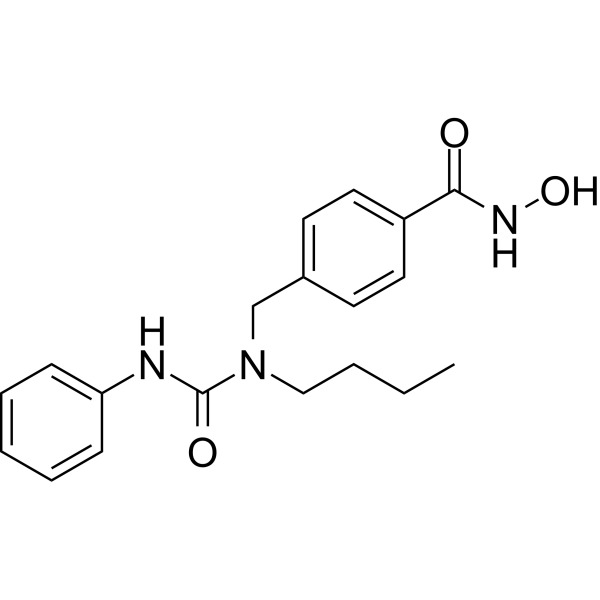 0 ImagesNexturastat A is a potent, selective HDAC6 inhibitor. Nexturastat A has inhibitory for HDAC6 with an IC50 of 5 nM. Nexturastat A can be used for the research of multiple myeloma (MM).
-
Givinostat hydrochloride monohydrate
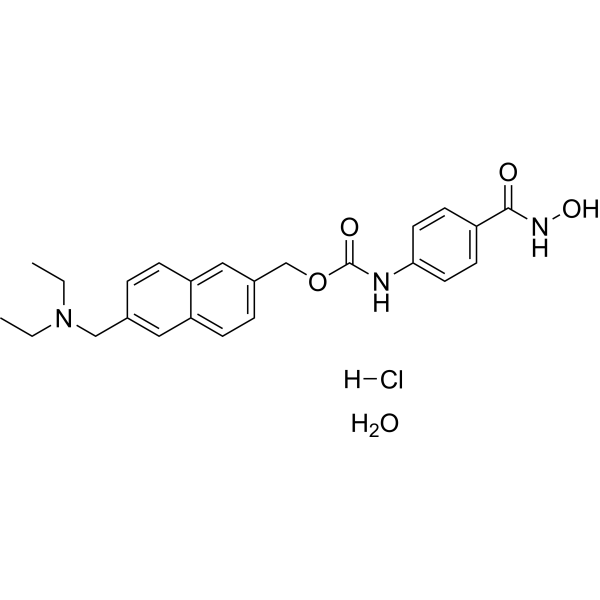 0 Images別名: ITF-2357 hydrochloride monohydrate
-
Quisinostat dihydrochloride
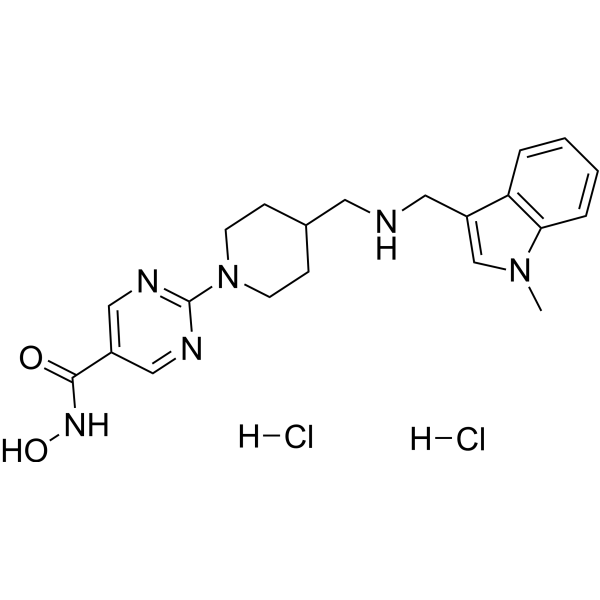 0 Images別名: JNJ-26481585 dihydrochlorideQuisinostat dihydrochloride (JNJ-26481585 dihydrochloride) is an orally active, potent pan-HDAC inhibitor with IC50s of 0.11 nM, 0.33 nM, 0.64 nM, 0.46 nM, and 0.37 nM for HDAC1, HDAC2, HDAC4, HDAC10 and HDAC11, respectively. Quisinostat dihydrochloride has a broad spectrum antitumoral activity. Quisinostat dihydrochloride can induce autophagy in neuroblastoma cells.
-
HDAC10-IN-1
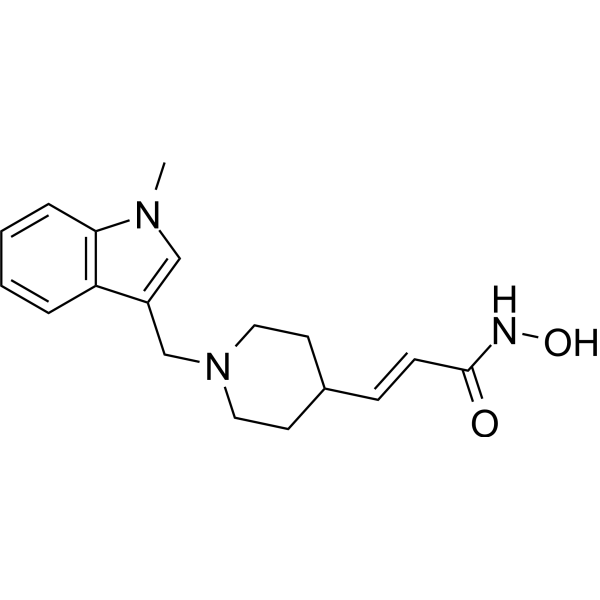 0 Images製品番号: HY-144779CAS 番号: 3033417-31-8HDAC10-IN-1 (compound 13b) is a potent and highly selective HDAC10 inhibitor, with an IC50 of 58 nM. HDAC10-IN-1 modulates autophagy in aggressive FLT3-ITD positive acute myeloid leukemia cells.
-
Domatinostat
 0 Images別名: 4SC-202 free base