



Fungal
An antifungal agent is a drug that selectively eliminates fungal pathogens from a host with minimal toxicity to the host.
Classes: 1. Polyene Antifungal Drugs: Amphotericin, nystatin, and pimaricin interact with sterols in the cell membrane (ergosterol in fungi, cholesterol in humans) to form channels through which small molecules leak from the inside of the fungal cell to the outside. 2. Azole Antifungal Drugs: Fluconazole, itraconazole, and ketoconazole inhibit cytochrome P450-dependent enzymes (particularly C14-demethylase) involved in the biosynthesis of ergosterol, which is required for fungal cell membrane structure and function. 3. Allylamine and Morpholine Antifungal Drugs: lylamines (naftifine, terbinafine) inhibit ergosterol biosynthesis at the level of squalene epoxidase. The morpholine drug, amorolfine, inhibits the same pathway at a later step. 4. Antimetabolite Antifungal Drugs: 5-Fluorocytosine acts as an inhibitor of both DNA and RNA synthesis via the intracytoplasmic conversion of 5-fluorocytosine to 5-fluorouracil.
All Product Categories
-
Fungal Related Products (2768)
Related Products (2768)

-
Antibodies (1)
-
Related Compound Screening Libraries (1)
-
Nikkomycin N
 0 ImagesCat. No.: HY-126780CAS No.: 77368-58-2Nikkomycin N is a nucleoside antibiotic, which is initially produced by Streptomyces tendae. Nikkomycin N exhibits fungicidal and insecticidal properties through inhibition of chitin synthesis.
-
Echinocandin B (purity>65%)
 0 ImagesCat. No.: HY-125723BCAS No.: 54651-05-7Synonyms: SL 7810 (purity>65%); A-30912 A (purity>65%)Echinocandin B (purity>65%) (SL 7810 (purity>65%)) is a lipopeptide antifungal antibiotic. Echinocandin B (purity>65%) is produced by Aspergillus nidulans. Echinocandin B (purity>65%) inhibits β-1,3-glucan activity, thereby blocking the biosynthesis of fungal cell walls. Echinocandin B (purity>65%) exhibits activity against a variety of Aspergillus species.
-
Licheninase
 0 ImagesCat. No.: HY-E70013ACAS No.: 37288-51-0Synonyms: EC 3.2.1.73Licheninase (EC 3.2.1.73) is a glycoside hydrolase that acts on the β-glucan cell walls of cereals, fungal and seaweeds. Licheninase specifically hydrolyzes the β(1→4) linkages in mixed-linkage β(1→3)/β(1→4)-glucans. Licheninase promotes cellulose degradation.
-
Antifungal agent 66
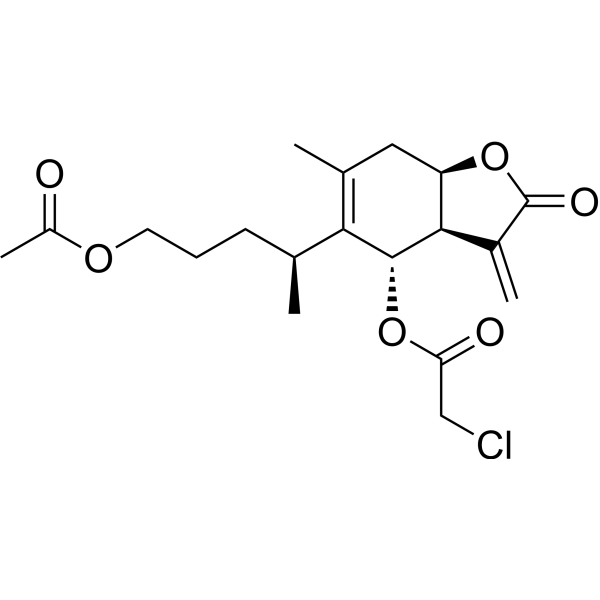 0 ImagesCat. No.: HY-155702CAS No.: 1613152-33-2Antifungal agent 66 (compound 10) has antifungal activity. Antifungal agent 66 has a broad-spectrum antifungal activity against seven phytopathogenic fungal mycelia. Antifungal agent 66 has pronounced inhibitory activity against the spore of B. cinerea with an IC50 value of 47.7 μg/mL.
-
Isomeldenin
 0 ImagesCat. No.: HY-N22057CAS No.: 186892-52-4Isomeldenin is a natural product derived from the leaves of Azadirachta indica. Isomeldenin possesses antifungal activity and inhibits pustule formation in Puccinia arachidis. Isomeldenin exhibits antitumor activity, showing cytotoxic activity against SK-OV-3, MCF-7, and 3SKBr cells, and also decreases Bax and increases Bcl2 expression. Isomeldenin can be used in research related to fungal infections and has potential for research related to coronavirus infection.
-
Chaetoviridin A
 0 ImagesCat. No.: HY-125511CAS No.: 128252-98-2Chaetoviridin A exhibits antifungal activity against several plants pathogen, inhibits growth of Verticillium dahliae through cell necrosis and mycelial deformation, and thus improves sensitivity of V. dahliae to stress, increases the emergence rate and plant height of cotton.
-
D-Gluconic acid calcium hydrate (Standard)
 0 ImagesD-Gluconic acid (calcium hydrate) (Standard) is the analytical standard of D-Gluconic acid (calcium hydrate). This product is intended for research and analytical applications. D-Gluconic acid calcium hydrate is the carboxylic acid by the oxidation with antiseptic and chelating properties.
-
Antifungal agent 109
 0 ImagesCat. No.: HY-163979Antifungal agent 109 (compound F) is a spirothiazolidinone compound with antifungal activity, with an inhibition zone of 10-17 mm.
-
Isoconazole nitrate (Standard)
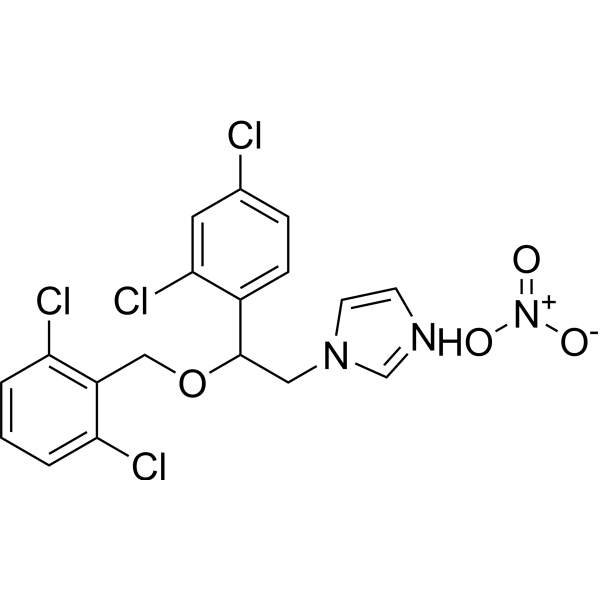 0 ImagesCat. No.: HY-B1444RCAS No.: 24168-96-5Isoconazole (nitrate) (Standard) is the analytical standard of Isoconazole (nitrate). This product is intended for research and analytical applications. Isoconazole nitrate is a broad-spectrum antimicrobial agent with a highly effective antimycotic and gram-positive antibacterial activity, exhibiting a rapid rate of absorption and low systemic exposure potential.
-
(±)-Pinoresinol
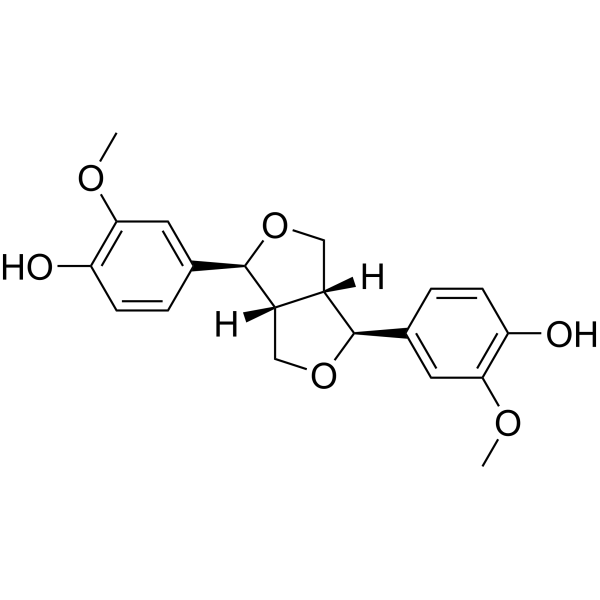 0 Images(±)-Pinoresinol is a potent antifungal agent. (±)-Pinoresinol shows antifungal activity.
-
Ferbam
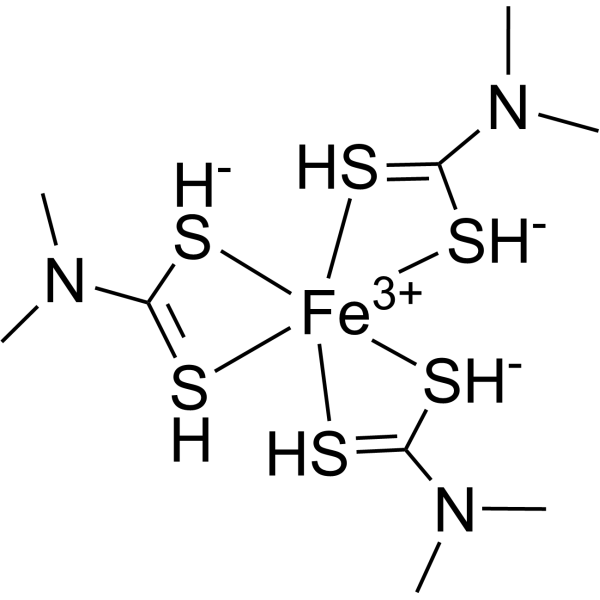 0 ImagesCat. No.: HY-130765CAS No.: 14484-64-1Synonyms: Iron(III) dimethyldithiocarbamateFerbam (Iron(III) dimethyldithiocarbamate) is a potent fungicide.
-
Cladobotric acid E
 0 ImagesCat. No.: HY-N19241CAS No.: 876152-18-0Cladobotric acid E is a potent antimicrobial agent that can be found in mycoparasitic fungi and a New Zealand Cladobotryum species. Cladobotric acid E inhibits growth of Candida auris, multiple Aspergillus species, Candida albicans, Trichophyton mentagrophytes, and Cladosporium resinae. Cladobotric acid E can be used for the research of aspergillosis, candidiasis, leukemia, bacterial infection, fungal infection.
-
Pterygospermin
 0 ImagesCat. No.: HY-N15619CAS No.: 11054-42-5Pterygospermin is an antibiotic compound found in Moringa. Pterygospermin has antibacterial has fungicidal activity.
-
Phosphatase-IN-1
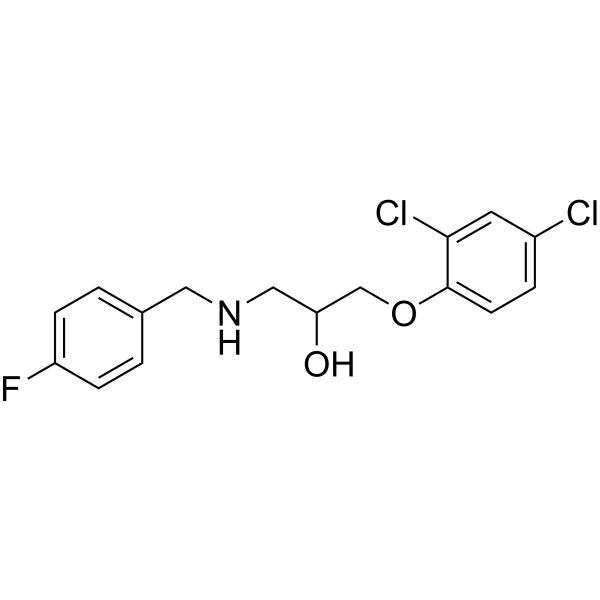 0 ImagesPhosphatase-IN-1 (compound II-8), a propranolol (HY-B0573B) derivative, is a phosphatidate phosphatase (Pah) inhibitor. Phosphatase-IN-1 can binds to MoPah1, with an affinity constant of 19.8 μM. Phosphatase-IN-1 inhibits growth of plant pathogens and shows anti-fungal ability. Phosphatase-IN-1 is not toxic to rice seedlings and wheat heads.
-
Antifungal agent 35
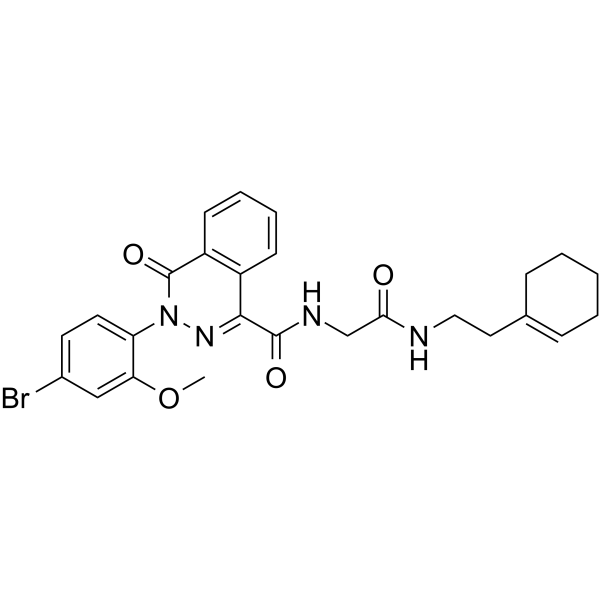 0 ImagesCat. No.: HY-147238CAS No.: 2085274-00-4Antifungal agent 35 (compound 24) is a potent antifungal agent. Antifungal agent 35 is a potent enhancer of antifungal activity of Fluconazole against C. albicans.
-
Seselin
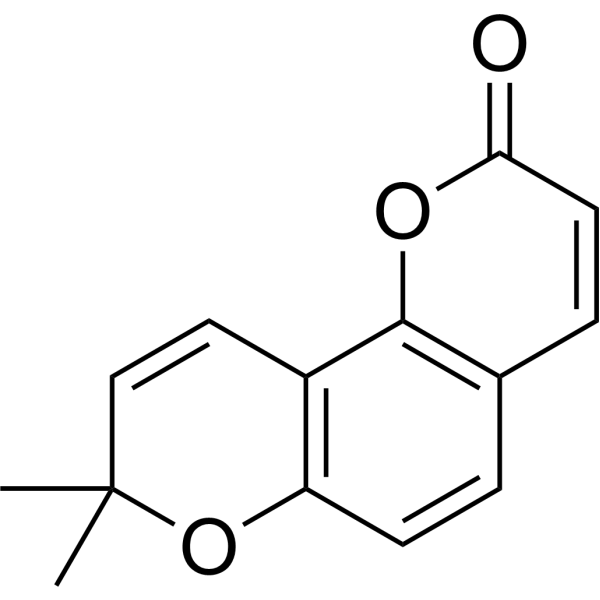 0 ImagesSeselin is an anticancer, antinociceptive, anti-inflammatory and antifungal agent. Seselin is orally active.
-
Antifungal agent 58
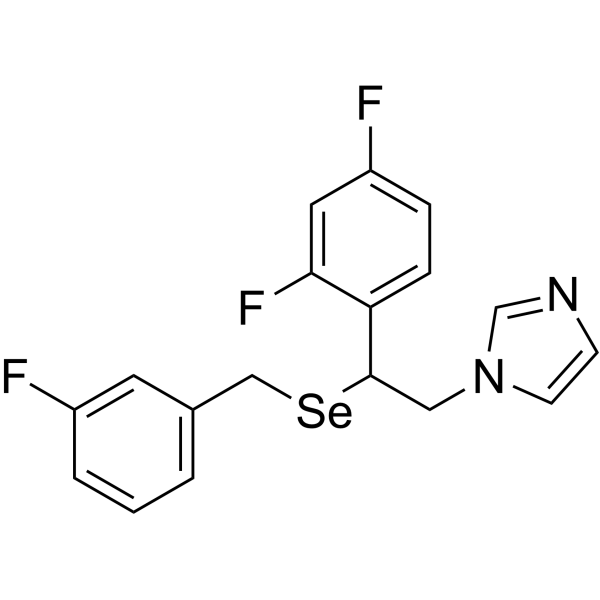 0 ImagesCat. No.: HY-153623CAS No.: 2422019-94-9Antifungal agent 58 (compound A21) is a potent antifungal agent, against Fluconazole (HY-B0101)-resistant strains. Antifungal agent 58 is more effective than Miconazole (HY-B0454). Antifungal agent 58 inhibits Candida albicans strains with MIC values of 0.06-8 μg/mL.
-
Alamethicin F 50
 0 ImagesCat. No.: HY-P2098CAS No.: 56165-93-6Alamethicin F 50 is an antibiotic. Alamethicin F 50 is composed of membrane-active peptide, containing 75% Alamethicin F 50/5 and 10% Alamethicin F 50/7. Alamethicin F 50 is exhibits antifungal and antibacterial activity by disrupting the integrity of microbial cell membranes, resulting in leakage of cell contents and death of the microorganisms. Alamethicin F 50 is able to reduce the surface tension of water, which can be used as a surfactant or detergent.
-
Acetophenone-13C8
 0 ImagesCat. No.: HY-W750064CAS No.: 1173022-59-7Synonyms: 1-Phenylethan-1-One-13C8Acetophenone-13C8 (1-Phenylethan-1-One-13C8) is the 13C-labeled Acetophenone (HY-Y0989). Acetophenone (1-Phenylethan-1-One) is an organic compound with simple structure. Acetophenone can be bioreduced to phenylethanol (PEA).
-
4-Chlorosalicylic acid (Standard)
 0 Images4-Chlorosalicylic acid (Standard) is the analytical standard of 4-Chlorosalicylic acid. This product is intended for research and analytical applications. 4-Chlorosalicylic acid is a pharmaceutical intermediate. Inhibits monophenolase and diphenolase activity with IC50s of 1.89 mM and 1.10 mM. Potent antimicrobial activity. Against E. coli with the MIC of 250 μg/mL and with the MBC of 500 μg/mL.




