



Fungal
An antifungal agent is a drug that selectively eliminates fungal pathogens from a host with minimal toxicity to the host.
Classes: 1. Polyene Antifungal Drugs: Amphotericin, nystatin, and pimaricin interact with sterols in the cell membrane (ergosterol in fungi, cholesterol in humans) to form channels through which small molecules leak from the inside of the fungal cell to the outside. 2. Azole Antifungal Drugs: Fluconazole, itraconazole, and ketoconazole inhibit cytochrome P450-dependent enzymes (particularly C14-demethylase) involved in the biosynthesis of ergosterol, which is required for fungal cell membrane structure and function. 3. Allylamine and Morpholine Antifungal Drugs: lylamines (naftifine, terbinafine) inhibit ergosterol biosynthesis at the level of squalene epoxidase. The morpholine drug, amorolfine, inhibits the same pathway at a later step. 4. Antimetabolite Antifungal Drugs: 5-Fluorocytosine acts as an inhibitor of both DNA and RNA synthesis via the intracytoplasmic conversion of 5-fluorocytosine to 5-fluorouracil.
All Product Categories
-
Productos relacionados con Fungal (2751)
Productos relacionados con (2751)

-
Antibodies (1)
-
Related Compound Screening Libraries (1)
-
Ac-CoA Synthase-IN-2
 0 ImagesReferencia número: HY-183249Ac-CoA Synthase-IN-2 is an Ac-CoA Synthase (ACS) inhibitor and antifungal agent. Ac-CoA Synthase-IN-2 binds in the ATP/acetyl-AMP pocket of fungal and human ACS enzymes to exert competitive inhibition with ATP, and inhibits Cryptococcus neoformans CnKbc1-mediated acetoacetate-to-aceto-acetyl CoA conversion. Ac-CoA Synthase-IN-2 can be used for the research of fungal infections.
-
Herbicidin A
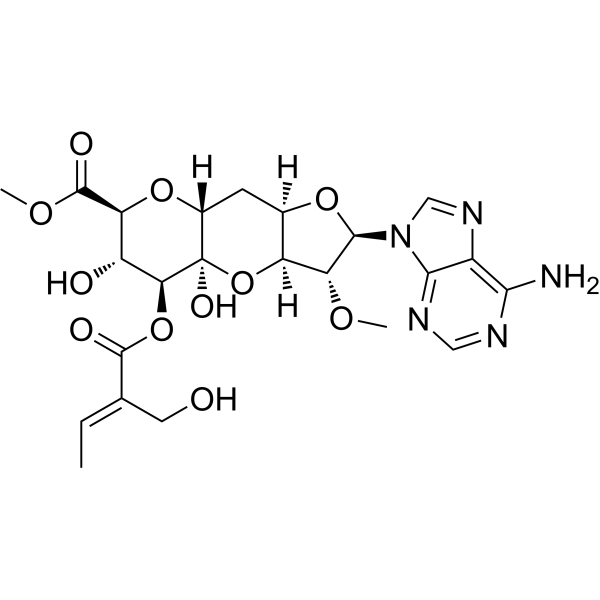 0 ImagesReferencia número: HY-124438No. CAS: 55353-31-6Herbicidin A is an adenosine-derived nucleoside antibiotic, but also is a herbicide against dicotyledonous plants. Herbicidin A can be isolated from Streptomyces scopuliridis M40.
-
Bromelain (USP)
 0 ImagesReferencia número: HY-E71367Bromelain USP is an orally active proteolytic agent. Bromelain USP converts plasminogen to plasmin to support fibrinolysis, cleaves CD44 adhesion molecules from cell surfaces, and diminishes uPAR expression and uPA activity. Bromelain USP can inhibit the activity of a variety of fungi and bacteria. Bromelain USP can be used for the research of angina pectoris, atherosclerotic disease, fungal infections, bacterial infections, chronic inflammatory bowel disease, and cancer.
-
Undecanoic acid-d3
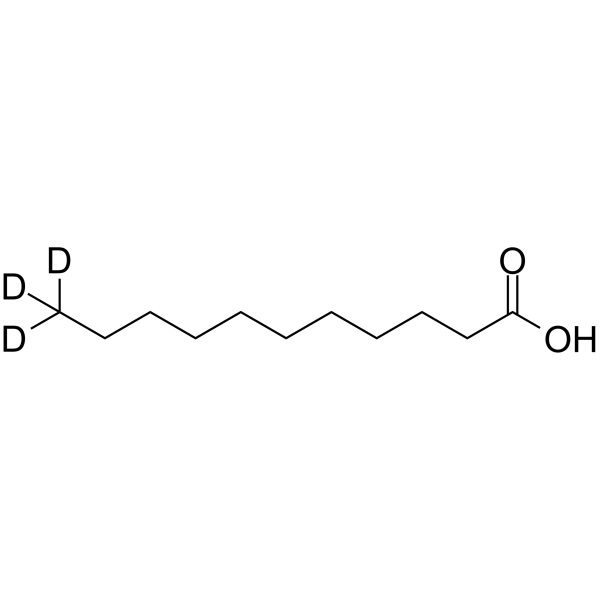 0 ImagesReferencia número: HY-W004282S1No. CAS: 1219802-11-5Synonyms: Undecanoate-d3; Hendecanoic acid-d3Undecanoic acid-d3 (Undecanoate-d3) is the deuterium labeled Undecanoic acid (HY-W004282). Undecanoic acid is a monocarboxylic acid with antifungal property. Undecanoic acid inhibits the production of exocellular keratinase, lipase and the biosynthesis of several phospholipids in T. rubrum.
-
Amorolfine
 0 ImagesReferencia número: HY-121169No. CAS: 78613-35-1Synonyms: Ro 14-4767; Ro 14-4767/000Amorolfine (Ro 14-4767) is an antifungal agent. Amorolfine ameliorates the onychomycosis through inhibition of ergosterol biosynthesis. Amorolfine inhibits Candida albicans with a MIC of 0.404 µg/mL.
-
Antibacterial agent 373
 0 ImagesReferencia número: HY-189127No. CAS: 668468-75-5Antibacterial agent 373 is a broad-spectrum antibacterial agent. Antibacterial agent 373 exhibits antibacterial activity against Gram-negative/Gram-positive bacteria and some fungi, with MIC values ranging from 11.25 to 22.5 mg/mL. Antibacterial agent 373 is predicted to target Staphylococcus aureus topoisomerase IV, occupy the novobiocin binding pocket, and form hydrogen bonds with the active site residues Asn49 and Glu53. Antibacterial agent 373 can be used in studies related to bacterial and Candida infections.
-
Dichlobentiazox
 0 ImagesReferencia número: HY-134339No. CAS: 957144-77-3Dichlobentiazox (Compound B14) is a component of Fungicidal compositions. Dichlobentiazox is used in studies on plant diseases caused by phytopathogenic fungi.
-
Caspofungin-d4
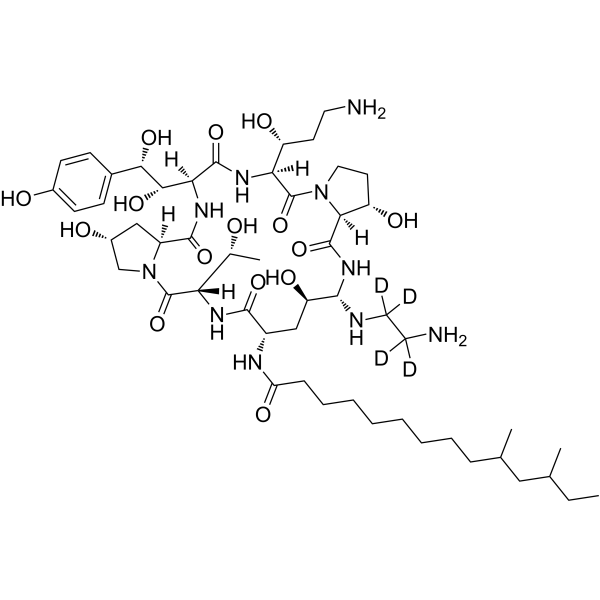 0 ImagesReferencia número: HY-17006ASNo. CAS: 1131958-73-0Synonyms: MK-0991-d4; L-743872-d4Caspofungin-d4 (MK-0991-d4; L-743872-d4) is a deuterium labeled Caspofungin (HY-17006A). Caspofungin is a potent antifungal agent. Caspofungin inhibits the synthesis of the fungal cell wall component β-(l,3)-D-glucan.
-
Temporin-SHa
 0 ImagesReferencia número: HY-P11102No. CAS: 1065010-73-2Temporin-Sha is an antibacterial peptide with extensive biological activity. Temporin-Sha exhibits broad-spectrum antibacterial activity (e.g., against L. ivanovii, MIC = 6.25 μM), and is effective against Gram-negative bacteria (such as Escherichia coli, MIC = 10 μM), including drug-resistant strains (such as Methicillin (HY-121544)-resistant Staphylococcus aureus). Temporin-Sha also has inhibitory effects on Candida albicans (MIC = 25 μM), Saccharomyces cerevisiae (MIC = 12 μM), the pre-flagellated and non-flagellated forms of Leishmania infantum (IC50 = 5-20 μM), and Trypanosoma cruzi (IC50 = 17 μM). Temporin-Sha exhibits antiviral activity against HSV-1 and has anti-cancer effects (cytotoxicity against breast cancer cells MCF-7 and lung cancer cells H460, etc.).
-
Viridicatol (Standard)
 0 ImagesReferencia número: HY-116474RNo. CAS: 14484-44-7Viridicatol (Standard) is the analytical standard of Viridicatol (HY-116474). This product is intended for research and analytical applications. Viridicatol is a quinolone alkaloid with anti-inflammatory, antibacterial, antifungal, osteogenic and chondrogenic activities. Viridicatol reduces the phosphorylation levels of ERK, JNK, p38 and STAT6; inhibits MMP-2, MMP-9, NF-κB signaling pathway and PTP1B; downregulates genes related to mast cell activation; and binds to SHN3 to activate the Wnt/SHN3 signaling pathway. Viridicatol inhibits the expression of pro-inflammatory mediators and cytokines, and promotes osteogenic/chondrogenic differentiation. Viridicatol can be used in studies related to fibrosarcoma, allergy, bacterial infection, fungal infection and osteoporosis.
-
MS-347a
 0 ImagesReferencia número: HY-N19735No. CAS: 144678-18-2MS-347a is an inhibitor of myosin light chain kinase (MLCK) and protein kinase C (PKC), with IC50 values of 9.2 μM, 31 μM and 16 μM against calmodulin-dependent MLCK, calmodulin-independent MLCK and PKC, respectively. MS-347a binds to the catalytic domain of MLCK and blocks both calmodulin-dependent and calmodulin-independent MLCK activity. MS-347a inhibits the growth of drug-sensitive fission yeast and multiple ascomycete phytopathogenic fungi. MS-347a exhibits fungicidal activity against a variety of phytopathogenic fungi and protective activity against Magnaporthe oryzae in rice seedlings. MS-347a shows antibacterial activity against specific Gram-positive bacteria and Proteus vulgaris. MS-347a can be used in studies related to rice blast, bacterial infections and phytopathogenic fungal diseases.
-
Arborcandin E
 0 ImagesReferencia número: HY-N5164No. CAS: 223465-80-3Arborcandin E is a 1,3-β-glucan synthase inhibitor that serves as an antifungal antibiotic. Arborcandin E exhibits IC50 values of 0.1 μg/mL and 0.012 μg/mL against Candida albicans and Aspergillus fumigatus, respectively. Additionally, Arborcandin E has an MIC of 0.5-2 μg/mL against the genus Candida.
-
E-α-Bisabolene
 0 ImagesReferencia número: HY-W746764No. CAS: 25532-79-0E-α-Bisabolene is a non-cyclic sesquiterpene. E-α-Bisabolene holds a central position in the metabolic network of Phanerochaete chrysosporium. E-α-Bisabolene can be utilized by white-rot fungi for the biosynthesis of secondary metabolites.
-
Puupehenone
 0 ImagesReferencia número: HY-N8255No. CAS: 73573-17-8Puupehenone is a cytotoxic and antifungal agent present in various marine sponge species. Puupehenone exerts cytotoxic activity against leukemia, lung cancer, colon cancer and breast cancer cells, and inhibits the growth of Candida albicans. Puupehenone can be used in research related to cancers such as leukemia, lung cancer, colon cancer and breast cancer.
-
Disorazol A
 0 ImagesReferencia número: HY-N14734No. CAS: 158181-47-6Disorazol A1 is an tubulin inhibitor with antifungal activity. Disorazol A1 functions by inhibiting tubulin polymerization, interfering with microtubule formation, blocking mitosis, thus arresting the cell cycle at the G2/M phase and inducing apoptosis. Disorazol A1 also exhibits an inhibitory effect against L929 mouse fibroblasts with an IC50 value of 3 pM. Disorazol A1 causes the accumulation of p53 protein in the cell nucleus. Disorazol A1 is promising for research of cancers.
-
Antifungal agent 180
 0 ImagesReferencia número: HY-189372No. CAS: 3117572-66-1Antifungal agent 180 is a pyrazole-oxadiazole-linked 1,2,4-triazole derivative and a broad-spectrum antifungal agent. Antifungal agent 180 disrupts fungal cellular homeostasis through multiple pathways, damaging the integrity of fungal hyphal cell membranes, increasing membrane permeability, and causing leakage of intracellular nucleic acids and proteins; it induces hyphal shrinkage, collapse, and organelle disintegration; and it causes widespread dysregulation of sterol/lipid metabolism, carbohydrate utilization, mitochondrial respiration, and stress response pathways at both the transcriptomic and proteomic levels. Antifungal agent 180 exhibits protective and curative efficacy against rice blast in vivo. Antifungal agent 180 can be used in research on rice blast and gray mold.
-
Drimenal
 0 ImagesReferencia número: HY-N19881No. CAS: 105426-71-9
-
S-F24
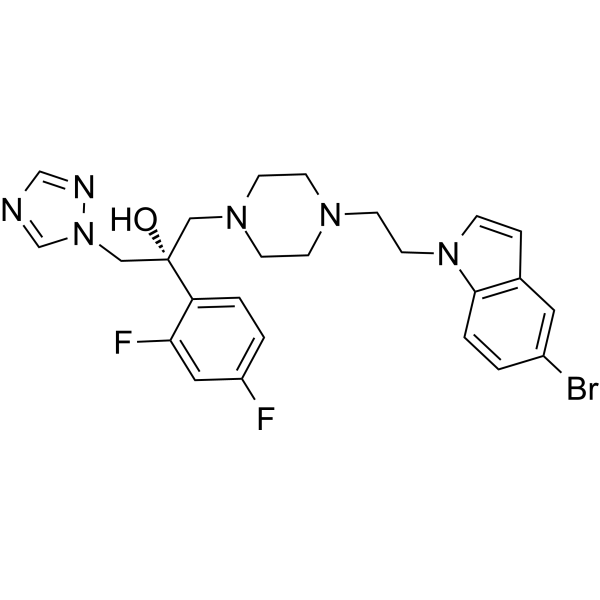 0 ImagesReferencia número: HY-149844No. CAS: 2946669-78-7S-F24 is an antifungal agent with excellent broad-spectrum. S-F24 inhibits CYP3A4 with an IC50 value of 0.4 μM. S-F24 displays a good safety profile with high selectivity, low hemolytic effects, and low tendency to induce resistance. S-F24 can be used for research on fungal infections.




