



Trigonelline chloride (Standard)
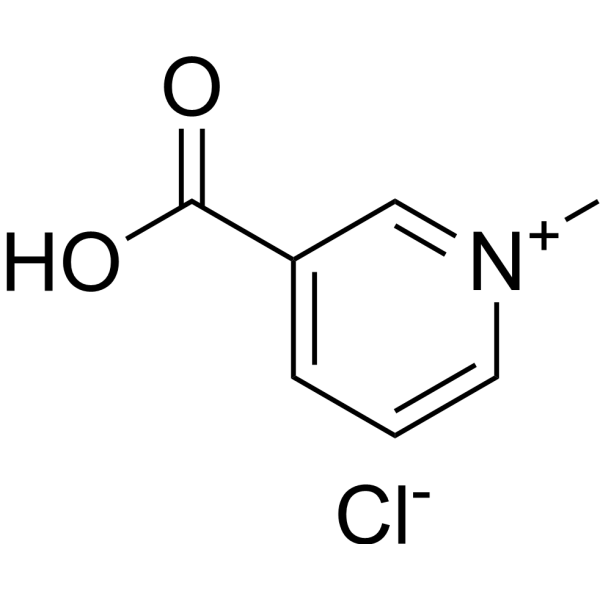
Trigonelline (chloride) (Standard) is the analytical standard of Trigonelline (chloride). This product is intended for research and analytical applications. Trigonelline chloride is an alkaloid with potential antidiabetic activity that can be isolated from Trigonella foenum-graecum L or Leonurus artemisia. Trigonelline chloride is a potent Nrf2 inhibitor that blocks Nrf2-dependent proteasome activity, thereby enhancing apoptosis in pancreatic cancer cells. Trigonelline chloride also has anti-HSV-1, antibacterial, and antifungal activity, and induces ferroptosis.
For research use only. We do not sell to patients.
- Purity : 98%
- CAS No.: 6138-41-6
- Formula: C₇H₈ClNO₂
- Molecular Weight:173.60
-
Storage:
Please store the product under the recommended conditions in the Certificate of Analysis.


To place orders, for customer services and technical support, please contact: MedChemExpress USA
Tel: 609-228-6898 E-mail: [email protected] [email protected]


-
 Product Information
-
Chemical Information
- Purity & Documentation
-
 Help & FAQs


-
HY-N0415
Trigonelline chlorideNrf2 Inhibitor -
HY-N0440
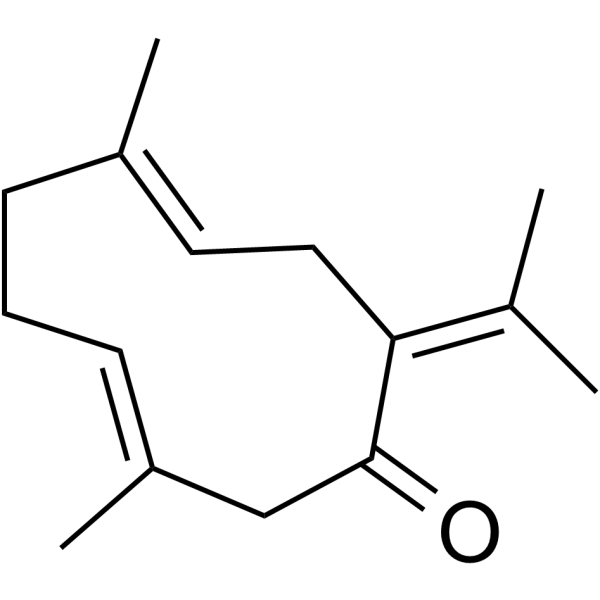
GermacroneAnti-viral/Cancer/Inflammatory Agent -
HY-14860
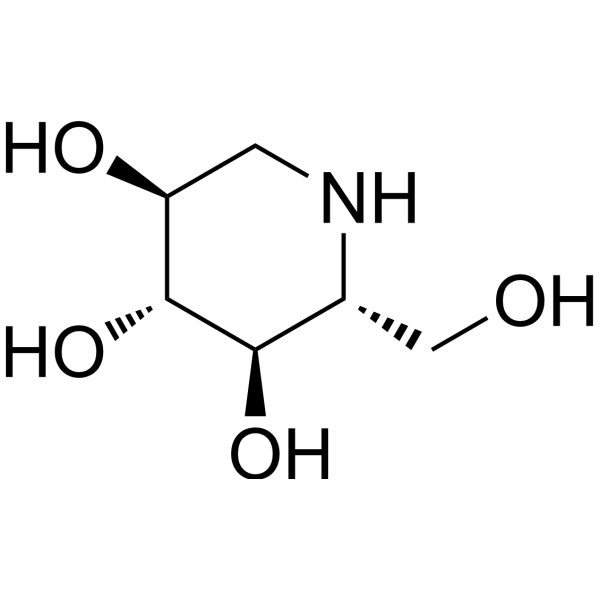
1-Deoxynojirimycinα-glucosidase Inhibitor -
HY-N0337
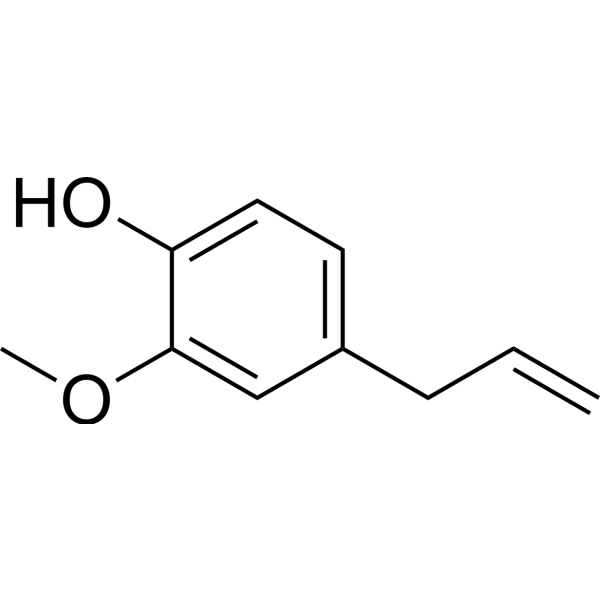
Eugenol,98% (stabilized with TBC)Antioxidant -

HY-N0440R
Germacrone (Standard)Standard of Germacrone -
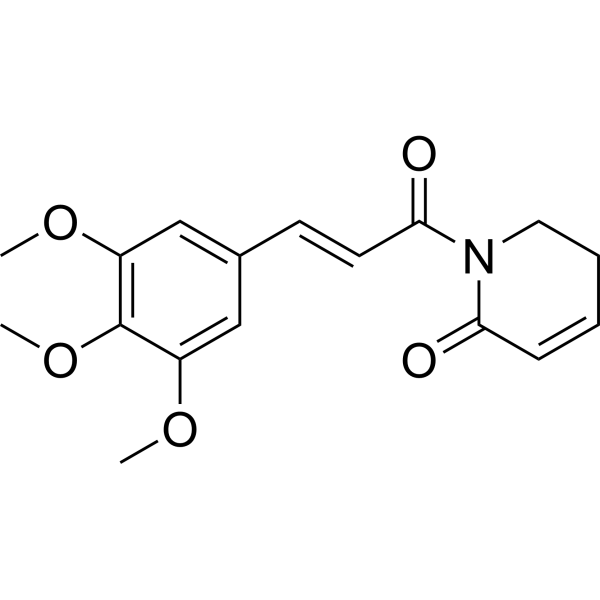
HY-N2329
PiperlongumineAnticancer Agent -

HY-N0337R
Eugenol (Standard)Antioxidant -

HY-14860R
1-Deoxynojirimycin (Standard)α-glucosidase Inhibitor -

HY-N2329R
Piperlongumine (Standard)Anticancer Agent


Product Information
Information
Application
The compound is the grade of analytical standard, which is the reference standard supplied assay. It is commonly used in qualitative, quantitative and methodological research experiments in HPLC, GC and MS.


Chemical Information
-
CAS No. 6138-41-6
-
Molecular Weight 173.60
-
Formula C₇H₈ClNO₂
-
SMILES
C[N+]1=CC(C(O)=O)=CC=C1.[Cl-]
-
Synonyms
Trigonelline hydrochloride (Standard)
-
Structure Classification
-
Shipping
Room temperature in continental US; may vary elsewhere.
-
Storage
Please store the product under the recommended conditions in the Certificate of Analysis.


Purity & Documentation
References
[1]. Ilavenil S, et al. Trigonelline protects the cardiocyte from hydrogen peroxide induced apoptosis in H9c2 cells. Asian Pac J Trop Med. 2015 Apr;8(4):263-8. [Content Brief]
[2]. Joanna Folwarczna, et al. Effects of Trigonelline, an Alkaloid Present in Coffee, on Diabetes-Induced Disorders in the Rat Skeletal System. Nutrients. 2016 Mar; 8(3): 133. [Content Brief]
[3]. A Arlt, et al. Inhibition of the Nrf2 transcription factor by the alkaloid trigonelline renders pancreatic cancer cells more susceptible to apoptosis through decreased proteasomal gene expression and proteasome activity. Oncogene. 2013 Oct;32(40):4825-35. [Content Brief]
[4]. Ozçelik B, et al. Cytotoxicity, antiviral and antimicrobial activities of alkaloids, flavonoids, and phenolic acids. Pharm Biol. 2011 Apr;49(4):396-402. [Content Brief]
[5]. Su Y, et al. Ferroptosis, a novel pharmacological mechanism of anti-cancer drugs. Cancer Lett. 2020 Jul 28;483:127-136. [Content Brief]

Calculators
Concentration (start) × Volume (start) = Concentration (final) × Volume (final)


Trigonelline chloride (Standard) Related Classifications
HY-N0415R Related Classifications
 Powered by Bioz