



Food-Sourced Standards
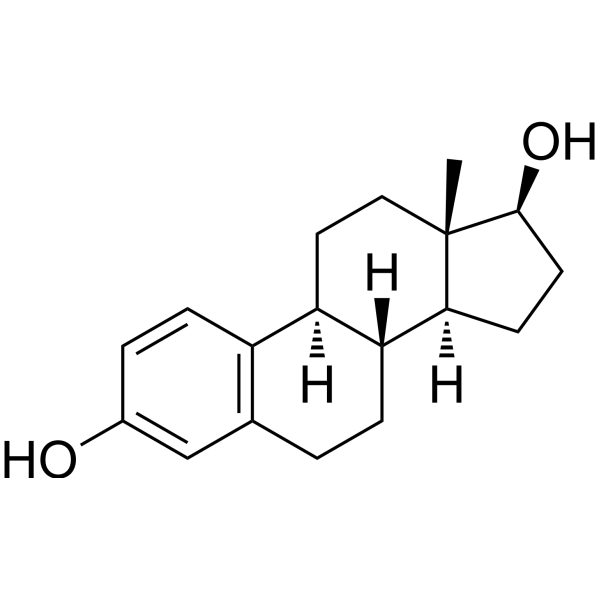
- Formula: C18H24O2
- Molecular Weight: 272.38
Estradiol (Standard) is the analytical standard of Estradiol. This product is intended for research and analytical applications. Estradiol (β-Estradiol) is a steroid hormone and the major female sex hormone. Estradiol can up-regulate the expression of neural markers of human endometrial stem cells (hEnSCs) and promote their neural differentiation. Estradiol can be used for the research of cancers, neurodegenerative diseases and neural tissue engineering.
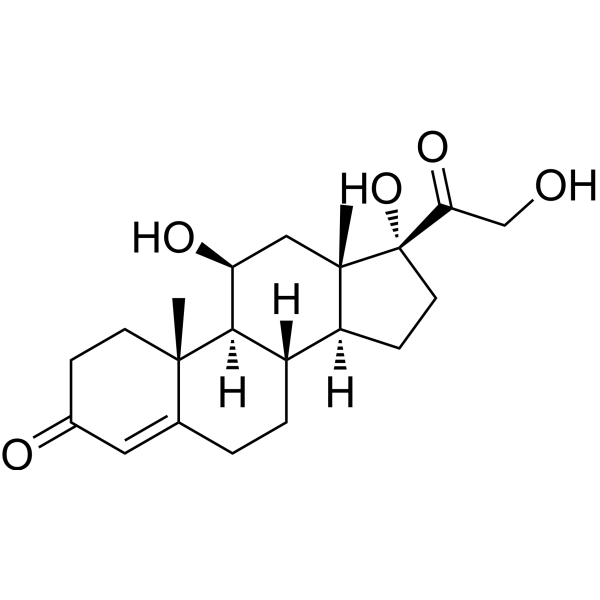
- Formula: C₂₁H₃₀O₅
- Molecular Weight: 362.46
Hydrocortisone (Standard) is the analytical standard of Hydrocortisone. This product is intended for research and analytical applications. Hydrocortisone (Cortisol) is a steroid hormone or glucocorticoid secreted by the adrenal cortex.
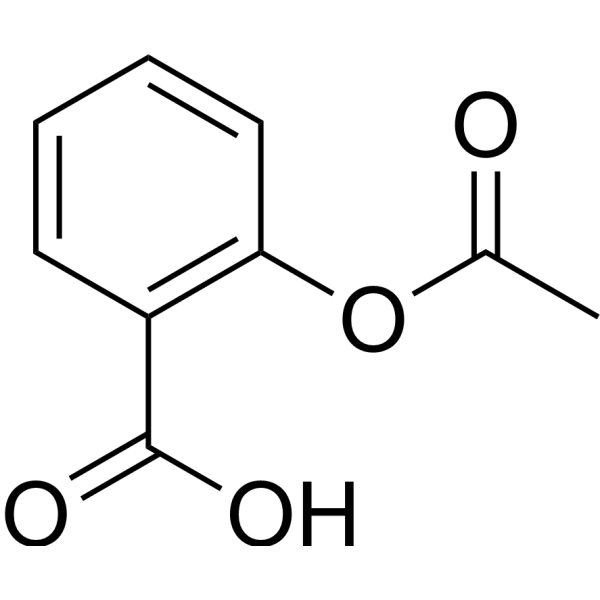
- Formula: C9H8O4
- Molecular Weight: 180.16
Aspirin (Standard) is the analytical standard of Aspirin. This product is intended for research and analytical applications. Aspirin (Acetylsalicylic acid) is an orally active, potent and irreversible inhibitor of cyclooxygenase COX-1 and COX-2, with IC50 values of 5 and 210 μg/mL, respectively. Aspirin induces apoptosis. Aspirin inhibits the activation of NF-κB. Aspirin also inhibits platelet prostaglandin synthetase, and can prevent coronary artery and cerebrovascular thrombosis.

- Formula: C6H8O6
- Molecular Weight: 176.12
L-Ascorbic acid (Standard) is the analytical standard of L-Ascorbic acid. This product is intended for research and analytical applications. L-Ascorbic acid (L-Ascorbate), an electron donor, is an endogenous antioxidant agent. L-Ascorbic acid inhibits selectively Cav3.2 channels with an IC50 of 6.5 μM. L-Ascorbic acid is also a collagen deposition enhancer and an elastogenesis inhibitor. L-Ascorbic acid exhibits anti-cancer effects through the generation of reactive oxygen species (ROS) and selective damage to cancer cells.
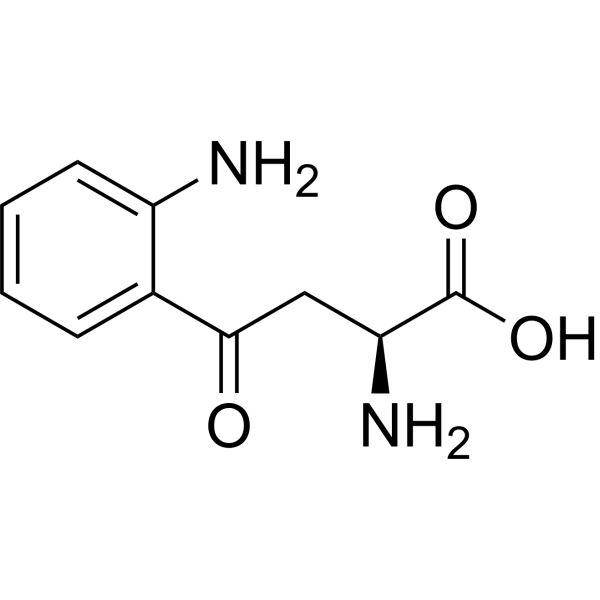
- Formula: C10H12N2O3
- Molecular Weight: 208.21
L-Kynurenine (Standard) is the analytical standard of L-Kynurenine. This product is intended for research and analytical applications. L-Kynurenine is a metabolite of the amino acid L-tryptophan. L-Kynurenine is an aryl hydrocarbon receptor agonist.
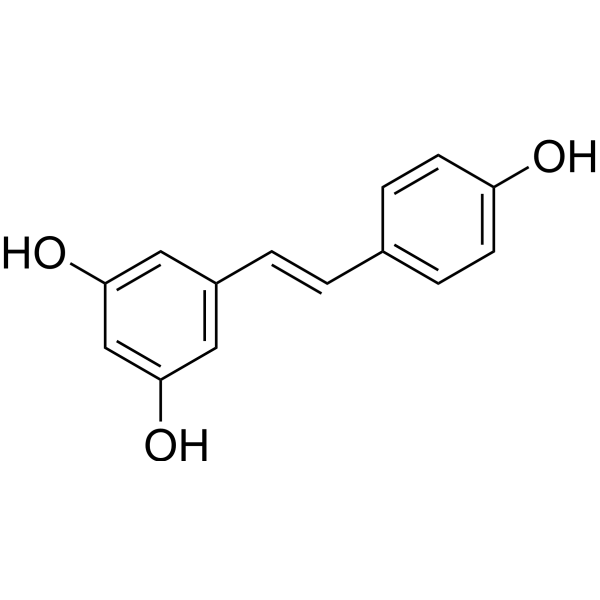
- Formula: C14H12O3
- Molecular Weight: 228.24
Resveratrol (Standard) is the analytical standard of Resveratrol. This product is intended for research and analytical applications. Resveratrol (trans-Resveratrol; SRT501), a natural polyphenolic phytoalexin that possesses anti-oxidant, anti-inflammatory, cardioprotective, and anti-cancer properties. Resveratrol (SRT 501) has a wide spectrum of targets including mTOR, JAK, β-amyloid, Adenylyl cyclase, IKKβ, DNA polymerase. Resveratrol also is a specific SIRT1 activator. Resveratrol is a potent pregnane X receptor (PXR) inhibitor. Resveratrol is an Nrf2 activator, ameliorates aging-related progressive renal injury in mice model. Resveratrol increases production of NO in endothelial cells.
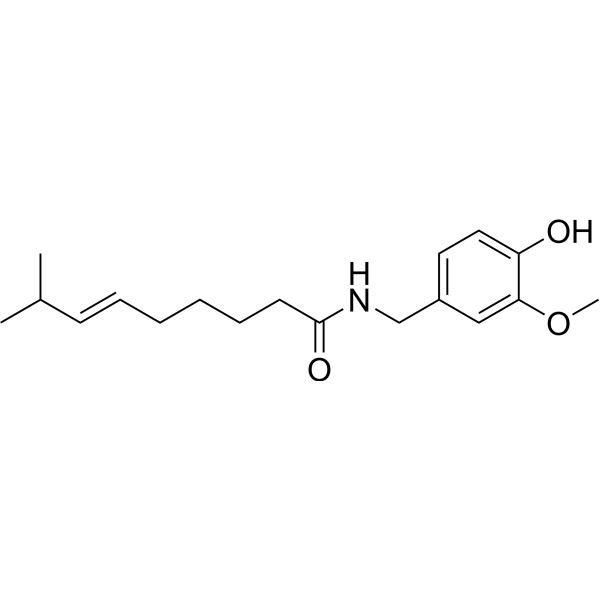
- Formula: C18H27NO3
- Molecular Weight: 305.41
Capsaicin (Standard) is the analytical standard of Capsaicin. This product is intended for research and analytical applications. Capsaicin ((E)-Capsaicin), an active component of chili peppers, is a TRPV1 agonist. Capsaicin induces a nociceptive response by binding to its receptors. Capsaicin has analgesic effects on neurological disorders. Capsaicin has antioxidant, anti-inflammatory, anti-cancer effects.
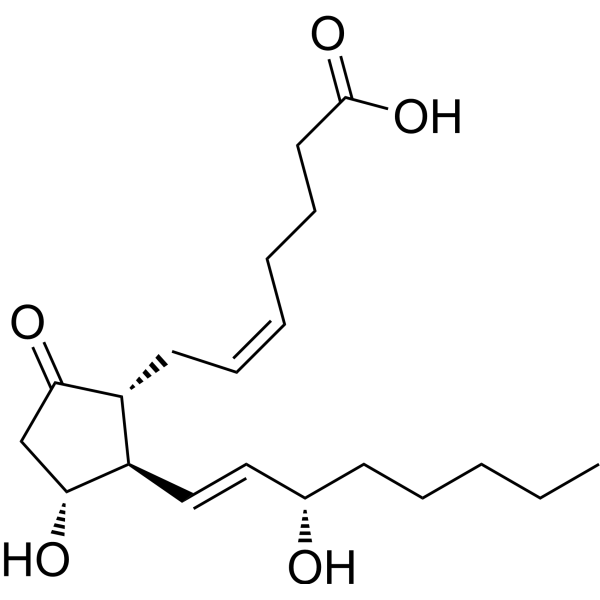
- Formula: C₂₀H₃₂O₅
- Molecular Weight: 352.47
Prostaglandin E2 (Standard) is the analytical standard of Prostaglandin E2. This product is intended for research and analytical applications. Prostaglandin E2 (PGE2) is a hormone-like substance that participate in a wide range of body functions such as the contraction and relaxation of smooth muscle, the dilation and constriction of blood vessels, control of blood pressure, and modulation of inflammation.

- Formula: C11H12N2O2
- Molecular Weight: 204.23
L-Tryptophan (standard) is the analytical standard of L-Tryptophan. L-Tryptophan (Tryptophan) is an orally active and essential amino acid that is the precursor of serotonin, melatonin, and vitamin B3. L-Tryptophan can promote an increase in stemness and osteogenic ability of BMSCs in vitro and in vivo. L-Tryptophan inhibits cell proliferation and induced cell cycle arrest with high levels.

- Formula: C15H10O7
- Molecular Weight: 302.24
Quercetin (Standard) is the analytical standard of Quercetin. This product is intended for research and analytical applications. Quercetin, a natural flavonoid, is a stimulator of recombinant SIRT1 and also a PI3K inhibitor with IC50 of 2.4 μM, 3.0 μM and 5.4 μM for PI3K γ, PI3K δ and PI3K β, respectively.

- Formula: C21H20O6
- Molecular Weight: 368.38
Curcumin (Standard) is the analytical standard of Curcumin (HY-N0005). This product is intended for research and analytical applications. Curcumin (Diferuloylmethane), a natural phenolic compound, is a p300/CREB-binding protein-specific inhibitor of acetyltransferase, represses the acetylation of histone/nonhistone proteins and histone acetyltransferase-dependent chromatin transcription. Curcumin is a photosensitizer against microorganisms. Curcumin shows inhibitory effects on NF-κB and MAPKs, and has diverse pharmacologic effects including anti-inflammatory, antioxidant, antiproliferative and antiangiogenic activities. Curcumin induces stabilization of Nrf2 protein through Keap1 cysteine modification.
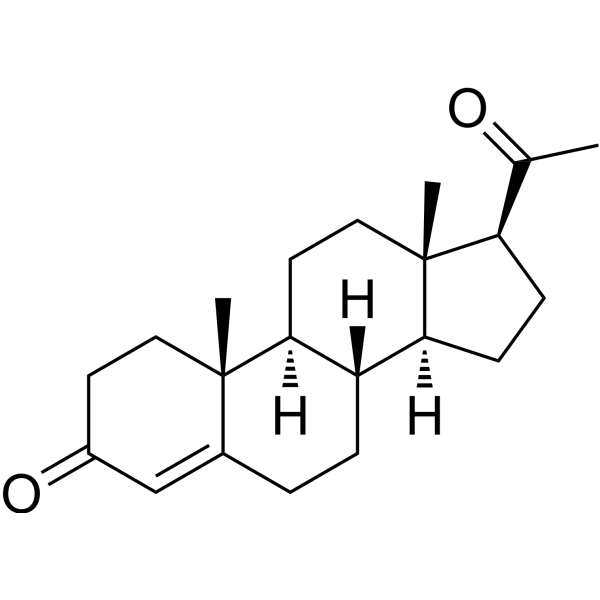
- Formula: C₂₁H₃₀O₂
- Molecular Weight: 314.47
Progesterone (Standard) is the analytical standard of Progesterone. This product is intended for research and analytical applications. Progesterone is a steroid hormone that regulates the menstrual cycle and is crucial for pregnancy.
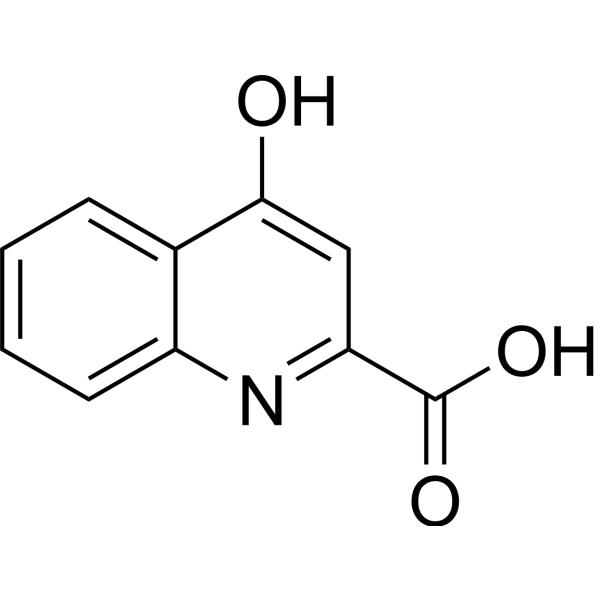
- Formula: C10H7NO3
- Molecular Weight: 189.17
Kynurenic acid (Standard) is the analytical standard of Kynurenic acid. This product is intended for research and analytical applications. Kynurenic acid, an endogenous tryptophan metabolite, is a broad-spectrum antagonist targeting NMDA, glutamate, α7 nicotinic acetylcholine receptor. Kynurenic acid is also an agonist of GPR35/CXCR8.
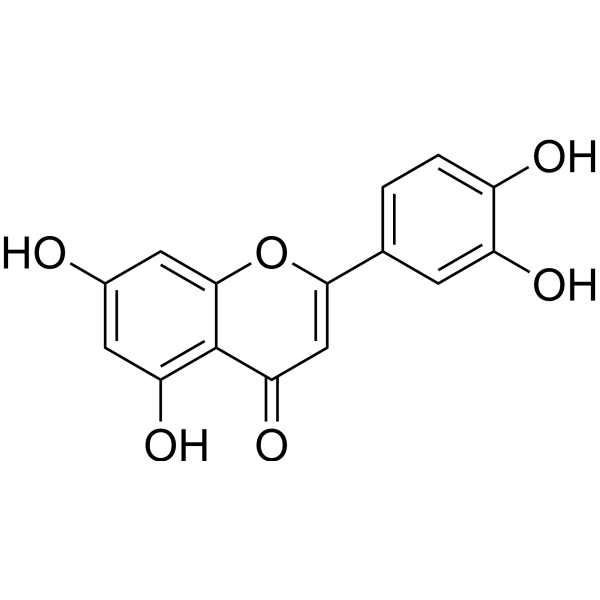
- Formula: C15H10O6
- Molecular Weight: 286.24
Luteolin (Standard) is the analytical standard of Luteolin. This product is intended for research and analytical applications. Luteolin (Luteoline), a flavanoid compound, is a potent Nrf2 inhibitor. Luteolin has anti-inflammatory, anti-cancer properties, including the induction of apoptosis and cell cycle arrest, and the inhibition of metastasis and angiogenesis, in several cancer cell lines, including human non-small lung cancer cells.

- Formula: C10H14N5O7P
- Molecular Weight: 347.22
Adenosine monophosphate (Standard) is the analytical standard of Adenosine monophosphate (HY-A0181). This product is intended for research and analytical applications. Adenosine monophosphate is an adenosine A1 receptor agonist. Adenosine monophosphate has significant antiviral activity against HSV-1 and HSV-2. Adenosine monophosphate is a key cellular metabolite regulating energy homeostasis and signal transduction.
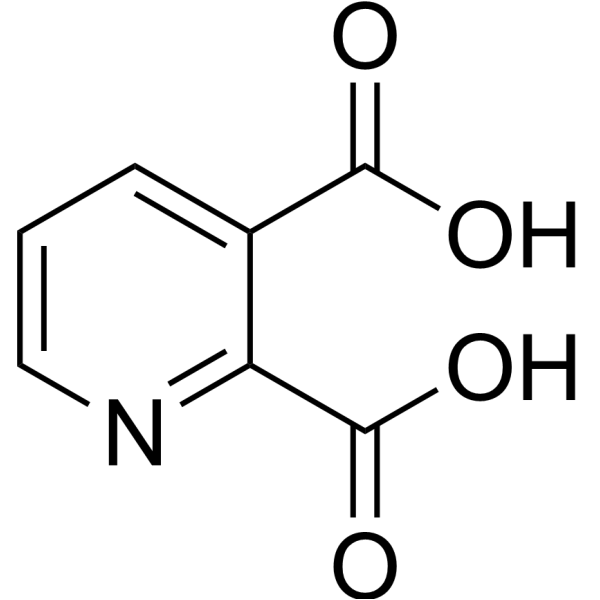
- Formula: C7H5NO4
- Molecular Weight: 167.12
Quinolinic acid (Standard) is the analytical standard of Quinolinic acid. This product is intended for research and analytical applications. Quinolinic acid, an endogenous metabolite of tryptophan, is a N-methyl-D-aspartate receptor (NMDA receptor) agonist. Quinolinic acid increases glutamate efflux, induces the generation of ROS, activates nitric oxide synthase, produces excessive NO, leading to calcium ion influx and neuronal apoptosis.

- Formula: C₆H₁₄N₄O₂
- Molecular Weight: 174.20
L-Arginine (Standard) is the analytical standard of L-Arginine. This product is intended for research and analytical applications. L-Arginine ((S)-(+)-Arginine) is the substrate for the endothelial nitric oxide synthase (eNOS) to generate NO. L-Arginine is transported into vascular smooth muscle cells by the cationic amino acid transporter family of proteins where it is metabolized to nitric oxide (NO), polyamines, or L-proline. L-Arginine is a potent vasodilator, and can be used to induce experimental acute pancreatitis.

- Formula: C₆H₁₃N₃O₃
- Molecular Weight: 175.19
L-Citrulline (Standard) is the analytical standard of L-Citrulline. This product is intended for research and analytical applications. L-Citrulline is an amino acid derived from ornithine in the catabolism of proline or glutamine and glutamate, or from l-arginine via arginine-citrulline pathway.

- Formula: C27H30O16
- Molecular Weight: 610.52
Rutin (Standard) is the analytical standard of Rutin. This product is intended for research and analytical applications. Rutin (Rutoside) is a flavonoid found in many plants and shows a wide range of biological activities including anti-inflammatory, antidiabetic, antioxidant, neuroprotective, nephroprotective, hepatoprotective and reducing Aβ oligomer activities. Rutin is also a CBR1 inhibitor, which can cross the blood brain barrier. Rutin attenuates vancomycin-induced renal tubular cell apoptosis via suppression of apoptosis, mitochondrial dysfunction, and oxidative stress.

- Formula: C21H27N7Na2O14P2
- Molecular Weight: 709.40
NADH (disodium salt) (Standard) is the analytical standard of NADH (disodium salt). This product is intended for research and analytical applications. NADH disodium salt (Disodium NADH) is an orally active reduced coenzyme. NADH disodium salt is a donor of ADP-ribose units in ADP-ribosylaton reactions and a precursor of cyclic ADP-ribose. NADH disodium salt plays a role as a regenerative electron donor in cellular energy metabolism, including glycolysis, β-oxidation and the tricarboxylic acid (TCA) cycle.



