



CBR1
Cannabinoid receptor 1 (CBR1/CB1R) is a Gi/o-coupled G protein-coupled receptor that functions as a major regulator of endocannabinoid signaling in the central nervous system and peripheral tissues, where it modulates neurotransmitter release and synaptic activity through presynaptic mechanisms[1]. Mechanistically, CBR1 inhibits adenylyl cyclase, regulates cyclic AMP-dependent signaling, activates mitogen-activated protein kinase pathways, and modulates voltage-gated calcium and inwardly rectifying potassium channels, thereby controlling neuronal excitability and cellular responses[2]. Endocannabinoid-mediated CBR1 signaling acts as a feedback system that limits excessive synaptic transmission and contributes to neuronal plasticity and neuroprotection[3]. In disease-related experimental models, CBR1 activation promotes cell-survival pathways involving PI3K/Akt/mTORC1 signaling and brain-derived neurotrophic factor expression, supporting neuronal viability in models of striatal injury and Huntington’s disease[3]. Compared with the related cannabinoid receptor CB2, which is predominantly associated with immune tissues and immunomodulatory functions, CBR1 is highly enriched in neuronal populations and uniquely exhibits prominent ion-channel regulation[2]. For experimental applications, selective CBR1 agonists and antagonists are widely used to distinguish receptor-specific functions, investigate feeding behavior, metabolic regulation, synaptic plasticity, and neurodegenerative mechanisms, although centrally acting antagonists have shown psychiatric liabilities in clinical development[1][4].
References:
- [1]. Howlett AC, et al. CB1 and CB2 Receptor Pharmacology. Adv Pharmacol. 2017;80:169-206. [Content Brief]
- [2]. Turu G, et al. Signal transduction of the CB1 cannabinoid receptor. J Mol Endocrinol. 2010 Feb;44(2):75-85.
- [3]. Blázquez C, et al. The CB₁ cannabinoid receptor signals striatal neuroprotection via a PI3K/Akt/mTORC1/BDNF pathway. Cell Death Differ. 2015 Oct;22(10):1618-29. [Content Brief]
- [4]. Rabezanahary H, et al. Live virus neutralizing antibodies against pre and post Omicron strains in food and retail workers in Québec, Canada. Heliyon. 2024 May 21;10(10):e31026. [Content Brief]
All Product Categories
-
CBR1 Related Products (3)
Related Products (3)

-
Hydroxy-PP
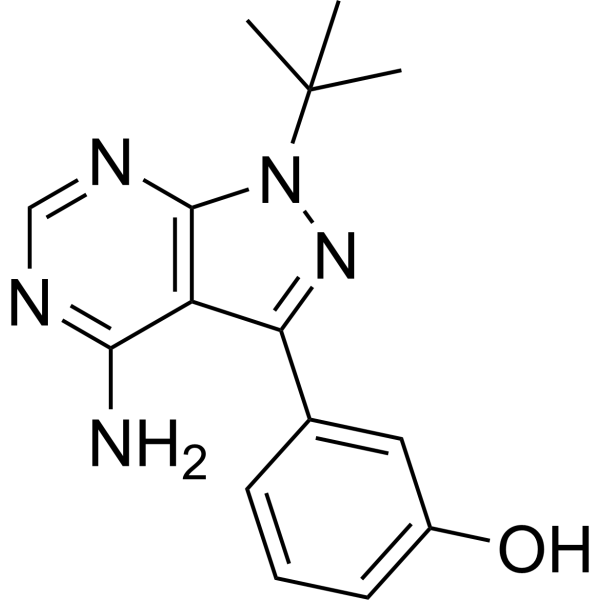 0 ImagesHydroxy-PP is a potent carbonyl reductase 1 (CBR1) inhibitor with an IC50 value of 0.78 μM. Hydroxy-PP also potently inhibits the cytoplasmic tyrosine kinase Fyn with an IC50 value of 5 nM.
-
MonoHER
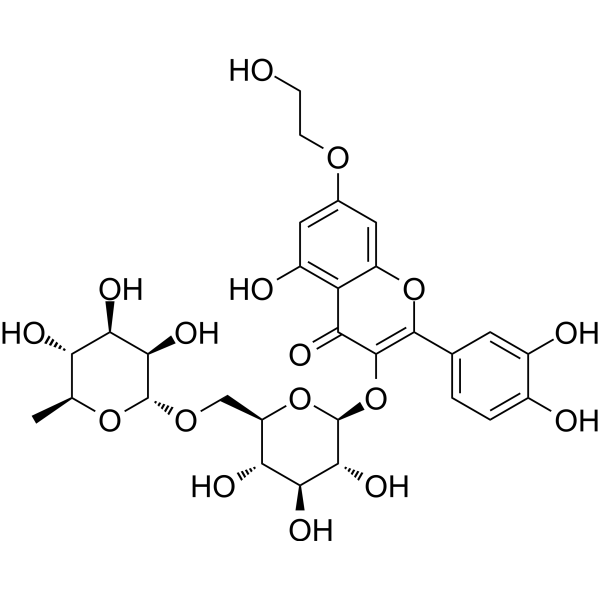 0 ImagesCat. No.: HY-121710CAS No.: 23869-24-1Synonyms: 7-MonohydroxyethylrutosideMonoHER (7-Monohydroxyethylrutoside) is a Carbonyl reductase 1 (CBR1) inhibitor and can be used as a cardioprotective agent. MonoHER inhibits the activity of CBR1 V88 and CBR1 I88 in a concentration-dependent manner.
-
CBR1-IN-4
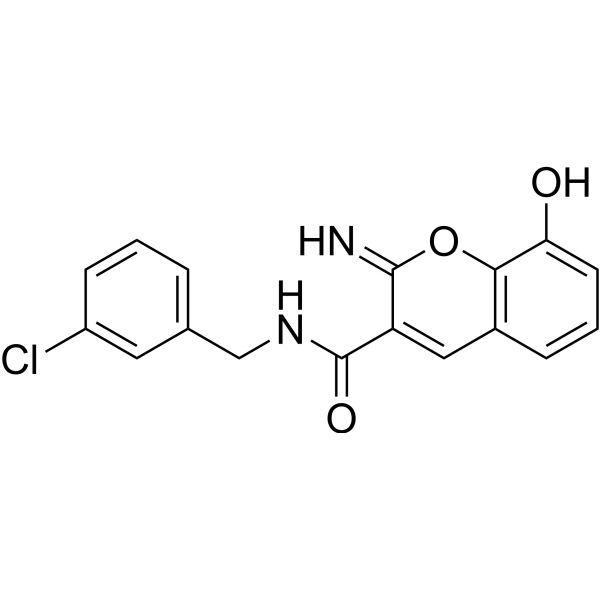 0 ImagesCat. No.: HY-157447CAS No.: 1798284-64-6CBR1-IN-4 (Compound 13p) is a human carbonyl reductase 1 (CBR1) inhibitor (IC50=0.09 μM). CBR1-IN-4 can be used in cancer research.



