



Fungal
An antifungal agent is a drug that selectively eliminates fungal pathogens from a host with minimal toxicity to the host.
Classes: 1. Polyene Antifungal Drugs: Amphotericin, nystatin, and pimaricin interact with sterols in the cell membrane (ergosterol in fungi, cholesterol in humans) to form channels through which small molecules leak from the inside of the fungal cell to the outside. 2. Azole Antifungal Drugs: Fluconazole, itraconazole, and ketoconazole inhibit cytochrome P450-dependent enzymes (particularly C14-demethylase) involved in the biosynthesis of ergosterol, which is required for fungal cell membrane structure and function. 3. Allylamine and Morpholine Antifungal Drugs: lylamines (naftifine, terbinafine) inhibit ergosterol biosynthesis at the level of squalene epoxidase. The morpholine drug, amorolfine, inhibits the same pathway at a later step. 4. Antimetabolite Antifungal Drugs: 5-Fluorocytosine acts as an inhibitor of both DNA and RNA synthesis via the intracytoplasmic conversion of 5-fluorocytosine to 5-fluorouracil.
All Product Categories
-
Fungal Related Products (2741)
Related Products (2741)

-
Antibodies (1)
-
Related Compound Screening Libraries (1)
-
Altiloxin A
 0 ImagesCat. No.: HY-N13889CAS No.: 92675-11-1Altiloxin A, a fungal metabolite, is a drimane-type sesquiterpenoid. Altiloxin A shows phytotoxic activity on the lettuce seedlings.
-
Gartanin (Standard)
 0 ImagesCat. No.: HY-N6038RCAS No.: 33390-42-0Gartanin (Standard) is the analytical standard of Gartanin. This product is intended for research and analytical applications. Gartanin is a natural xanthone of mangosteen, with antioxidant, anti-inflammatory, antifungal, neuroprotective and antineoplastic properties. Gartanin induces cell cycle arrest and autophagy and suppresses migration in human glioma cells.
-
Propamocarb
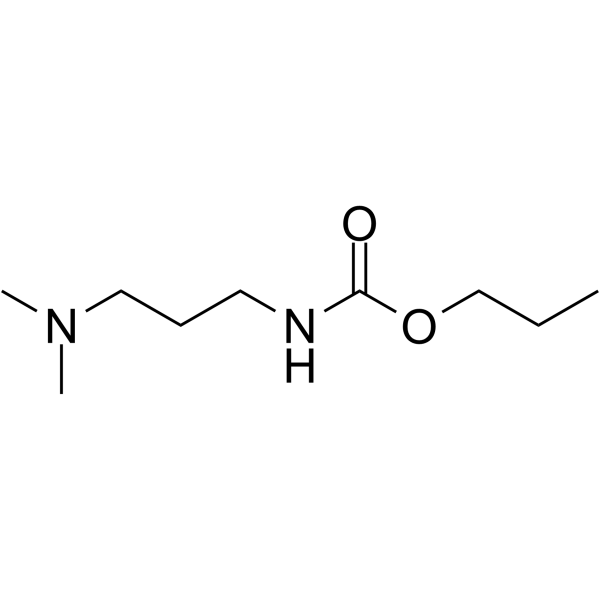 0 ImagesCat. No.: HY-B2026CAS No.: 24579-73-5Propamocarb is an orally active phenylalanine ammonia-lyase (PAL) inducer and oomycete membrane biosynthesis inhibitor that can be present in synthetic formulations. Propamocarb is used in research on blight, gut microbiota dysbiosis and metabolic disorders, cardiovascular diseases, and potato late blight.
-
Misakimycin
 0 ImagesCat. No.: HY-130451CAS No.: 91776-49-7Misakimycin is a naphthoquinone compound. Misakimycin exhibits cytotoxicity against human melanoma, breast cancer and ovarian cancer cells. Misakimycin can be found in strains of the genus Pyrenochaetopsis (strain MSX63693). Misakimycin can be used in research related to melanoma, breast cancer and ovarian cancer.
-
L-731120
 0 ImagesCat. No.: HY-178088CAS No.: 2232226-16-1L-731120 is an alkyl citrate zargozaga acid A analogue, which is secondary metabolite produced by fungal fermentation. L-731120 shows inhibitory activity against squalene synthase (SQS) (IC50 = 260 nM). L-731120 can inhibit the synthesis of cholesterol in the liver. L-731120 can be used for the research of infection and metabolic disease, such as hypercholesterolemia.
-
Cortex pseudolaricis extract
 0 ImagesCat. No.: HY-N20394Synonyms: Pseudolarix amabilis cortex extractCortex pseudolaricis extract (Pseudolarix amabilis cortex extract) is a root bark extract of Pseudolarix amabilis Rehder, which has antifungal and anticancer biological activities.
-
Phoslactomycin C
 0 ImagesCat. No.: HY-N12682CAS No.: 159991-59-0Phoslactomycin C has weak effect against Gram-positive bacteria, but has strong effect against fungi.
-
Sequosempervirin B
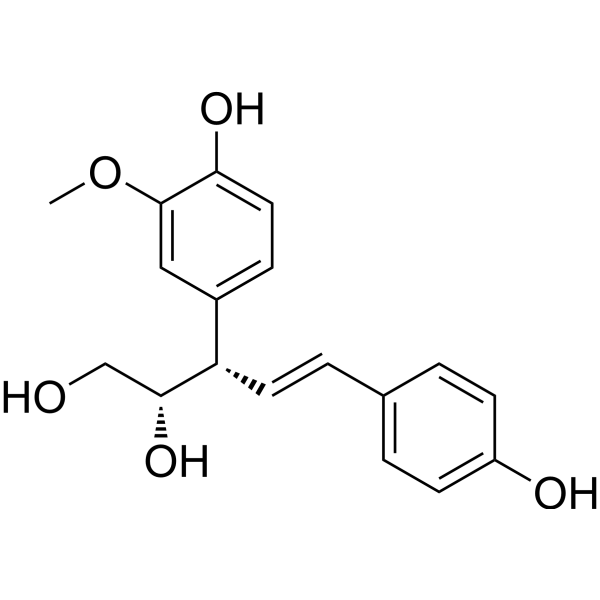 0 ImagesCat. No.: HY-N1289CAS No.: 864719-17-5Sequosempervirin B, a norlignan isolated from the branches and leaves of Sequoia sempervirens, has antifungal properties. Sequosempervirin B has an inhibitory effect on cyclic AMP phosphodiesterase.
-
Antifungal agent 39
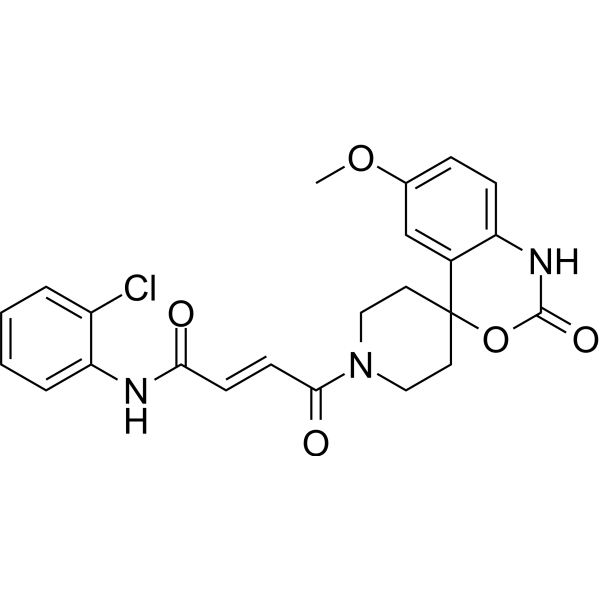 0 ImagesCat. No.: HY-151423CAS No.: 2725074-94-0Antifungal agent 39 (Compound 9h) is a broad-spectrum antifungal agent.
-
Trigonelline chloride (Standard)
 0 ImagesTrigonelline (chloride) (Standard) is the analytical standard of Trigonelline (chloride). This product is intended for research and analytical applications. Trigonelline chloride is an alkaloid with potential antidiabetic activity that can be isolated from Trigonella foenum-graecum L or Leonurus artemisia. Trigonelline chloride is a potent Nrf2 inhibitor that blocks Nrf2-dependent proteasome activity, thereby enhancing apoptosis in pancreatic cancer cells. Trigonelline chloride also has anti-HSV-1, antibacterial, and antifungal activity, and induces ferroptosis.
-
2-Phenylethyl isothiocyanate-d5
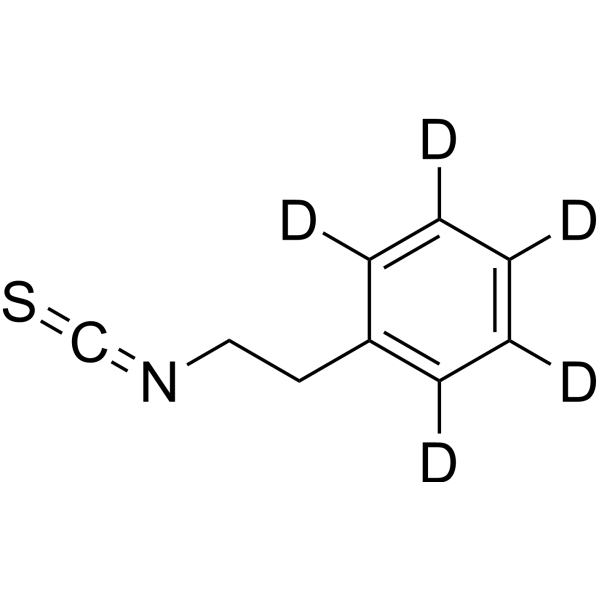 0 ImagesCat. No.: HY-23155SCAS No.: 912627-98-6Synonyms: 2-PE ITC-d52-Phenylethyl isothiocyanate-d5 isothiocyanate-d5 is the deuterium labeled 2-Phenylethyl isothiocyanate[1]. 2-Phenylethyl isothiocyanate is a potent antifungal agent. 2-Phenylethyl isothiocyanate significantly inhibited spore germination and mycelial growth of Alternaria alternata, with a MIC (minimum inhibitory concentration) of 1.22 mM. The antifungal effect of 2-Phenylethyl isothiocyanate against Alternaria alternata might be via reduction in toxin content and breakdown of cell membrane integrity[2][3].
-
Fumonisin B3-13C34-1
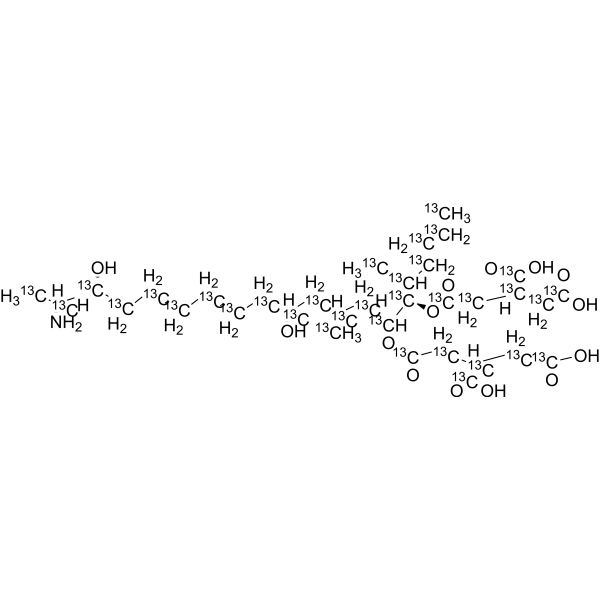 0 ImagesCat. No.: HY-N6726S1CAS No.: 1217494-88-6Fumonisin B3-13C34-1 is the isotopic internal standard of Fumonisin B3 (HY-N6726). Fumonisin B3 is an orally active fumonisin Mycotoxin. Fumonisin B3 can be isolated from Fusarium moniliforme, Fusarium proliferatum and Fusarium nygamai. Fumonisin B3 induces precancerous lesions, triggers embryonic death of chicken embryos, causes severe hemorrhage in dead chicken embryos. Fumonisin B3 can be used in studies related to hepatocellular carcinoma.
-
Pyrimorph
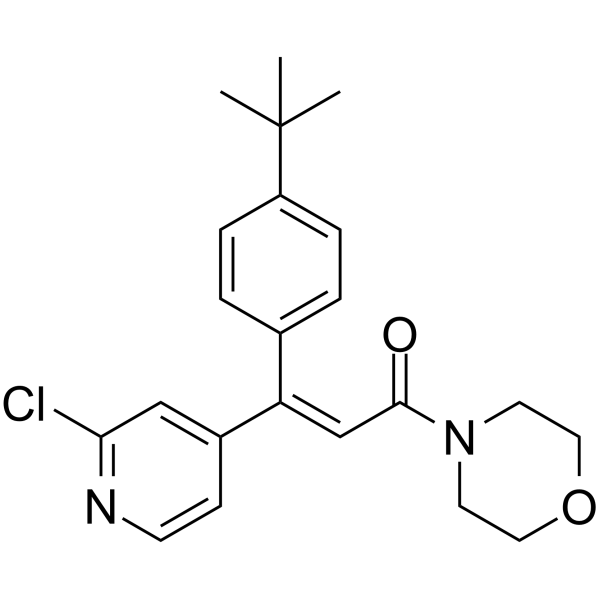 0 ImagesCat. No.: HY-123155CAS No.: 868390-90-3Pyrimorph is a fungicide with excellent antifungal activity against oomycetes.
-
Topazolin
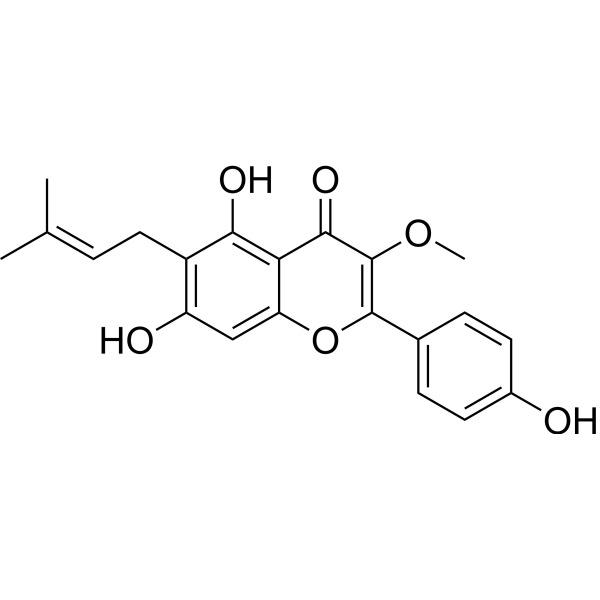 0 ImagesCat. No.: HY-133169CAS No.: 109605-79-0Topazolin is a flavone. Topazolin has weak fungi-toxic activity against Cladosporium herbarum AHU 9262.
-
Elsinochrome A
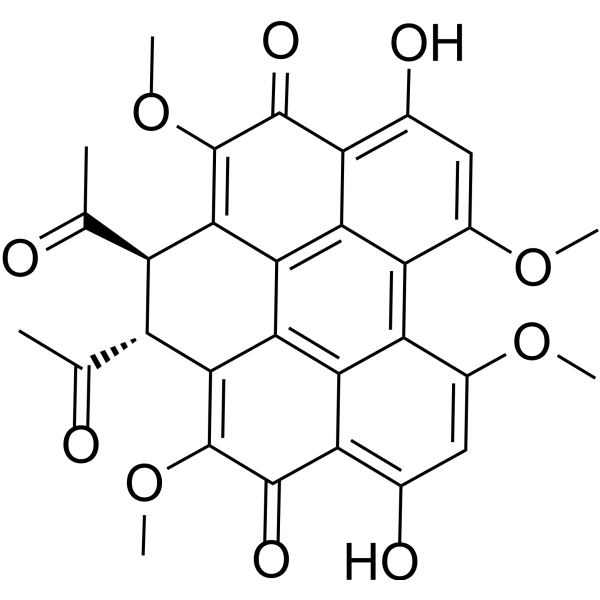 0 ImagesCat. No.: HY-N10611CAS No.: 24568-67-0Elsinochrome A is a perylene quinone photosensitizer, and can generate reactive oxygen species (ROS) to induce apoptosis and autophagy under light excitation. Elsinochrome A also shows antifungal activity against C. albicans biofilm through photodynamic antimicrobial chemotherapy (PACT). Elsinochrome A can be used for research of photodynamic therapy (PDT) (Ex: 460 nm).
-
Hydroxyphenyllactic acid-d4
 0 ImagesCat. No.: HY-113219SHydroxyphenyllactic acid-d4 is the deuterium labeled Hydroxyphenyllactic acid (HY-113219). Hydroxyphenyllactic acid is an antifungal metabolite.
-
ECO-02301
 0 ImagesCat. No.: HY-N19232CAS No.: 735316-93-5ECO-02301 is an antifungal agent identified in Streptomyces aizunensis NRRL B-11277. ECO-02301 exhibits antifungal activity against human pathogenic fungi including Candida albicans, and can be used in research related to fungal infections.
-
5-(12Z-Heptadecenyl)-resorcinol
 0 ImagesCat. No.: HY-N7519CAS No.: 103462-06-25-(12Z-Heptadecenyl)-resorcinol serves as the main component of Antifungal mixtures. 5-(12Z-Heptadecenyl)-resorcinol can be isolated from mango peels. Antifungal mixtures composed of 5-(12Z-Heptadecenyl)-resorcinol exhibit activity against Alternaria alternata. 5-(12Z-Heptadecenyl)-resorcinol can be used in studies related to mango fruit black spot disease.
-
Aszonapyrone A
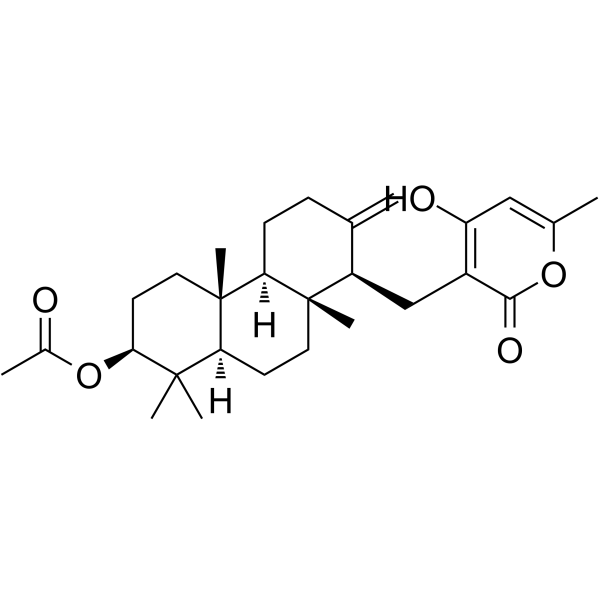 0 ImagesCat. No.: HY-N8258CAS No.: 83103-08-6Aszonapyrone A is a metabolite produced by Aspergillus zonatus.
-
Wyerone
 0 ImagesCat. No.: HY-N21819CAS No.: 20079-30-5Wyerone is a furan-acetylene phytoalexin that exhibits antifungal activity and selective toxicity against Gram-positive bacteria. Wyerone is abundantly biosynthesized and accumulated in broad bean tissues following infection by Botrytis, and it inhibits the growth of Gram-positive bacteria. Wyerone is applicable to studies related to plant infections.




