



SUV39H2/KMT1B
SUV39H2/KMT1B is an H3K9 methyltransferase that works with SUV39H1/KMT1A to generate H3K9 di- and trimethylation in constitutive heterochromatin, supporting transcriptional repression and heterochromatin structure[1]. Mechanistically, SUV39H2 also methylates histone H2AX at lysine 134, and loss of this methylation reduces γ-H2AX production, linking SUV39H2 activity to DNA-damage repair signaling in human cancer cells[2]. In disease models, SUV39H2 promoted colorectal cancer proliferation and metastasis through tri-methylation of the SLIT1 promoter, making SUV39H2-SLIT1 regulation a practical axis for epigenetic cancer research[3]. In neurodevelopmental models, a loss-of-function SUV39H2 variant caused altered H3K9 trimethylation and dysregulated protocadherin β-cluster genes in the developing brain, connecting SUV39H2 dysfunction with autism-spectrum disorder biology[4]. Compared with related isoforms, SUV39H2 differs from SUV39H1 in substrate-recognition features, including stronger dependence on residues around the RKST motif and G12 preference, which supports isoform-specific experimental design[5]. Current selected literature supports SUV39H2 as a chromatin regulator and disease-model target, but does not provide sufficient high-confidence evidence for selective SUV39H2 agonists or inhibitors[1][5].
References:
- [1]. Hyun K, et al. Writing, erasing and reading histone lysine methylations. Exp Mol Med. 2017 Apr 28;49(4):e324. [Content Brief]
- [2]. Sone K, et al. Critical role of lysine 134 methylation on histone H2AX for γ-H2AX production and DNA repair. Nat Commun. 2014 Dec 9;5:5691. [Content Brief]
- [3]. Shuai W, et al. SUV39H2 promotes colorectal cancer proliferation and metastasis via tri-methylation of the SLIT1 promoter. Cancer Lett. 2018 May 28;422:56-69. [Content Brief]
- [4]. Balan S, et al. A loss-of-function variant in SUV39H2 identified in autism-spectrum disorder causes altered H3K9 trimethylation and dysregulation of protocadherin β-cluster genes in the developing brain. Mol Psychiatry. 2021 Dec;26(12):7550-7559. [Content Brief]
- [5]. Weirich S, et al. Structure, Activity and Function of the Suv39h1 and Suv39h2 Protein Lysine Methyltransferases. Life (Basel). 2021 Jul 16;11(7):703. [Content Brief]
All Product Categories
-
SUV39H2/KMT1B Related Products (4)
Related Products (4)

-
MS4322
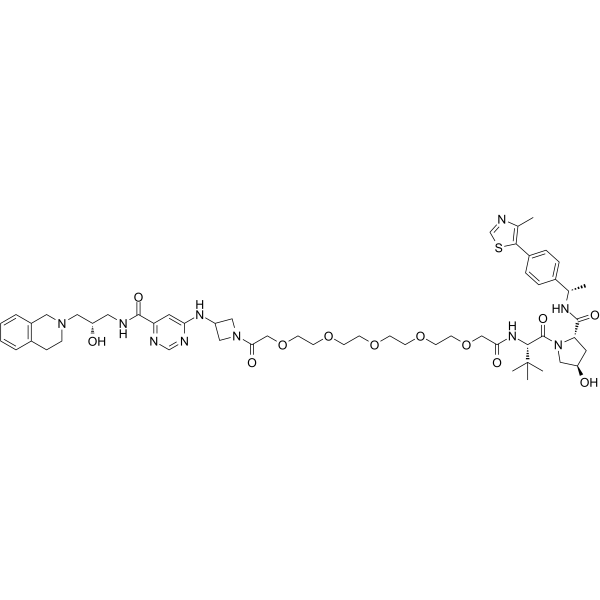 0 ImagesSynonyms: YS43-22MS4322 (YS43-22) is a specific PRMT5 PROTAC degrader. MS4322 reduces the PRMT5 protein level with a DC50 of 1.1 μM in MCF-7 cells. MS4322 inhibits the methyltransferase activity of PRMT5 with an IC50 of 18 nM. MS4322 promotes ubiquitination and degradation of PRMT5. MS4322 can be used for the research of breast cancer, lung cancer, and hepatocellular cancer. (Pink: PRMT5 ligand (HY-173092); Blue: E3 ligase ligand HY-112078); Black: linker (HY-124780); E3+linker (HY-173093 )).
-
OTS193320
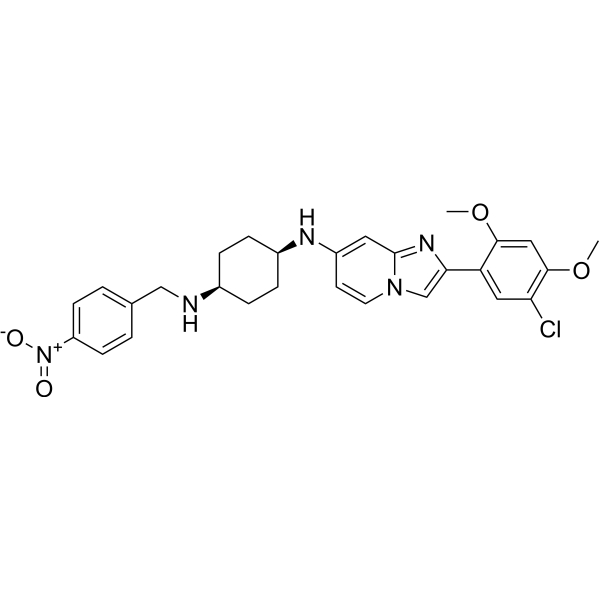 0 ImagesOTS193320, a imidazo[1,2-a]pyridine compound, is a SUV39H2 methyltransferase activity inhibitor. OTS193320 decreases global histone H3 lysine 9 tri-methylation levels in breast cancer cells and triggers apoptotic cell death. Combination of OTS193320 with Doxorubicin (HY-15142A) results in reduction of γ-H2AX levels as well as cancer cell viability compared to a single agent OTS193320 or DOX.
-
MS4322 (isomer)
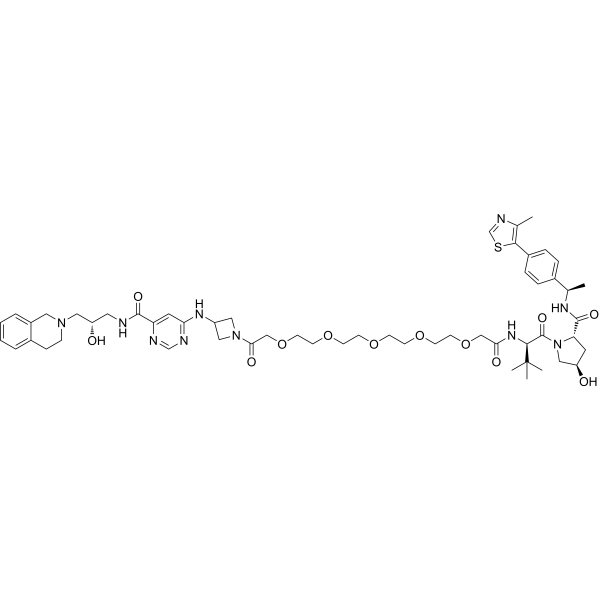 0 ImagesSynonyms: YS43-22 (isomer)MS4322 (YS43-22) isomer is an isomer of MS4322. MS4322 is a specific PRMT5 PROTAC degrader. MS4322 reduces the PRMT5 protein level with a DC50 of 1.1 μM in MCF-7 cells. MS4322 inhibits the methyltransferase activity of PRMT5 with an IC50 of 18 nM. MS4322 promotes ubiquitination and degradation of PRMT5. MS4322 can be used for the research of breast cancer, lung cancer, and hepatocellular cancer.
-
Go 6983 (GMP)
 0 ImagesCat. No.: HY-13689GCAS No.: 133053-19-7Go 6983 GMP is Go 6983 (HY-13689) produced by using GMP guidelines. GMP small molecules works appropriately as an auxiliary reagent for cell therapy manufacture. Go 6983 is a dual inhibitor targeting Suv39h1/2 (KMT1A/KMT1B) and PKC, as well as a transcriptional activator capable of inducing DNA hypomethylation. Go 6983 stimulates the transcription of Prdm14 by reducing Suv39h1/2 protein levels, decreasing histone modifications in the Prdm14 promoter region, and increasing the recruitment of RNA polymerase II. Go 6983 induces genome-wide DNA hypomethylation by inhibiting de novo methyltransferase expression and increasing Tet1/Tet2 levels, thereby promoting self-renewal and pluripotency maintenance of stem cells. Meanwhile, Go 6983 can block PKC-mediated signaling pathways to reduce the expression of EMT-related genes and eliminate the upregulation of antioxidant genes downstream of NRF2. Go 6983 is mainly used in mechanism studies related to myocardial ischemia/reperfusion injury.



