



Go 6983 GMP is Go 6983 (HY-13689) produced by using GMP guidelines. GMP small molecules works appropriately as an auxiliary reagent for cell therapy manufacture. Go 6983 is a dual inhibitor targeting Suv39h1/2 (KMT1A/KMT1B) and PKC, as well as a transcriptional activator capable of inducing DNA hypomethylation. Go 6983 stimulates the transcription of Prdm14 by reducing Suv39h1/2 protein levels, decreasing histone modifications in the Prdm14 promoter region, and increasing the recruitment of RNA polymerase II. Go 6983 induces genome-wide DNA hypomethylation by inhibiting de novo methyltransferase expression and increasing Tet1/Tet2 levels, thereby promoting self-renewal and pluripotency maintenance of stem cells. Meanwhile, Go 6983 can block PKC-mediated signaling pathways to reduce the expression of EMT-related genes and eliminate the upregulation of antioxidant genes downstream of NRF2. Go 6983 is mainly used in mechanism studies related to myocardial ischemia/reperfusion injury.
For research use only. We do not sell to patients.
- CAS No.: 133053-19-7
- Formula: C26H26N4O3
- Molecular Weight:442.51
-
Storage:
Please store the product under the recommended conditions in the Certificate of Analysis.


To place orders, for customer services and technical support, please contact: MedChemExpress USA
Tel: 609-228-6898 E-mail: [email protected] [email protected]


-
 Biological Activity
-
Chemical Information
- Protocols
- Purity & Documentation
- References
-
 Help & FAQs


-
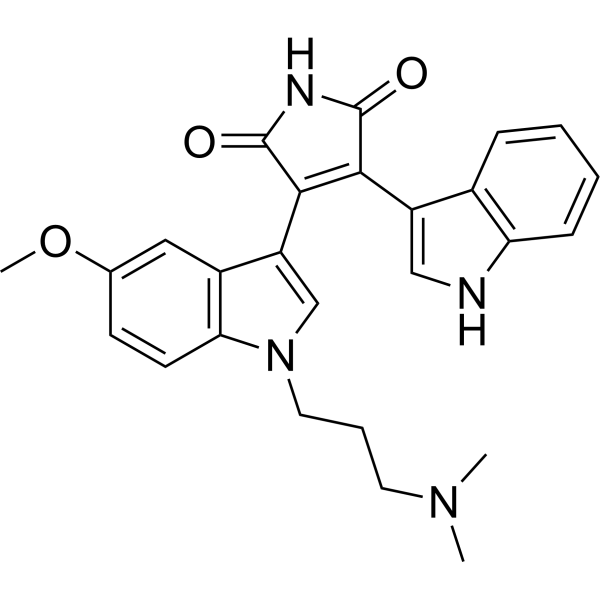
HY-13689
Go 6983PKC Inhibitor -
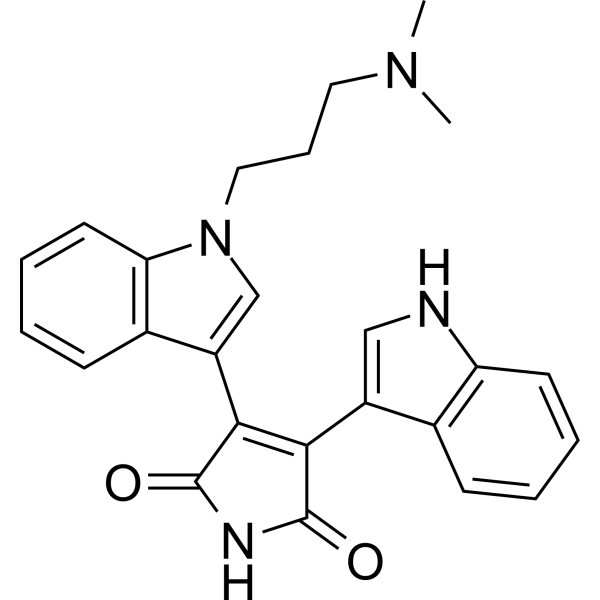
HY-13867
Bisindolylmaleimide IPKC Inhibitor -
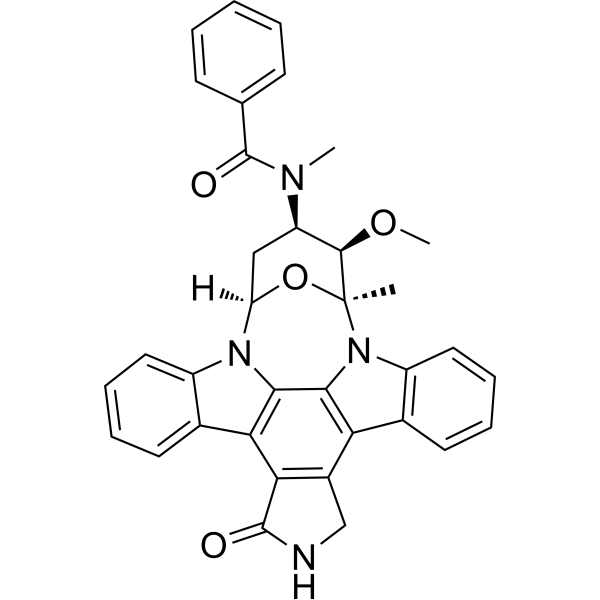
HY-10230
MidostaurinMulti-targeted Protein Kinase Inhibitor -
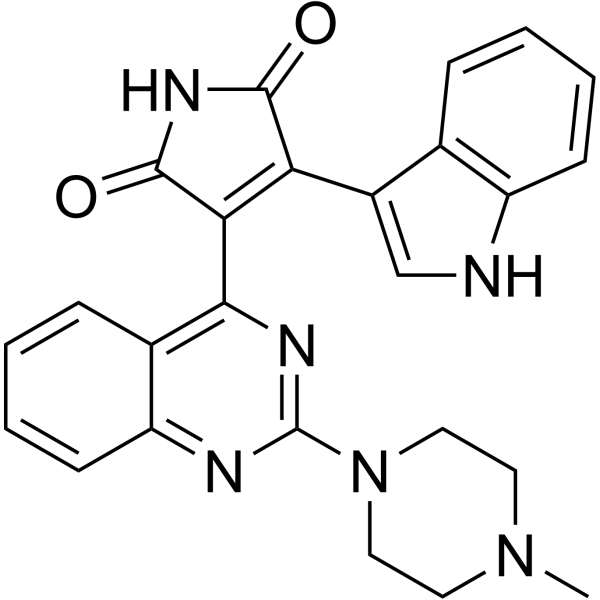
HY-10343
SotrastaurinPan-PKC Inhibitor -
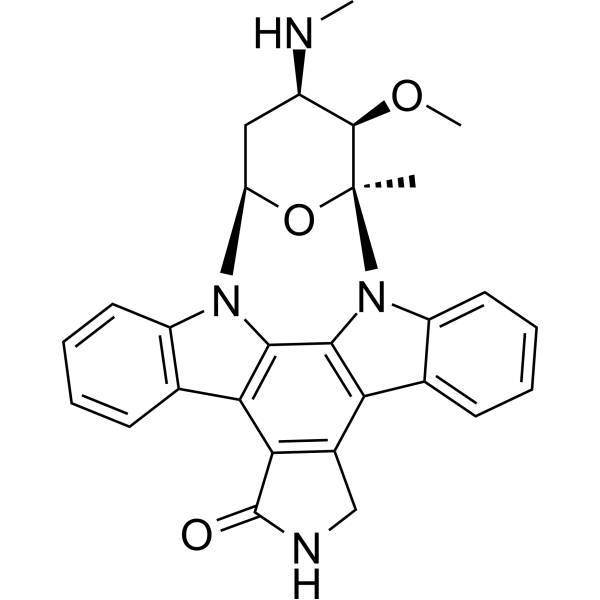
HY-15141
StaurosporinePKC/PKA Inhibitor -
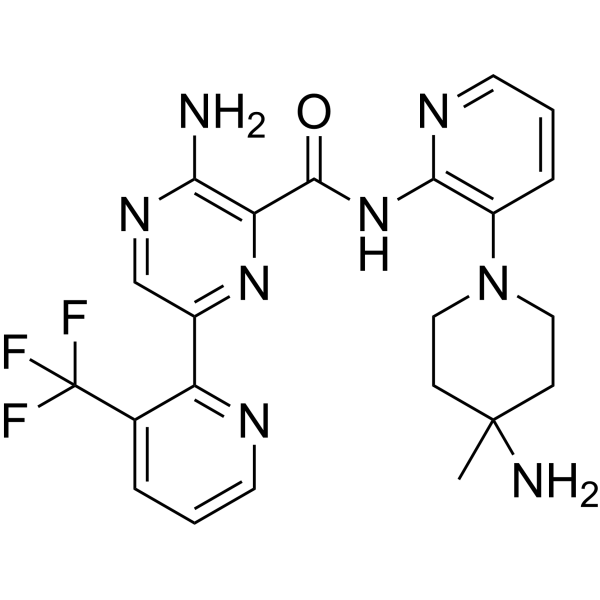
HY-101569
DarovasertibPKC Inhibitor -

HY-13689R
Go 6983 (Standard)PKC Inhibitor -
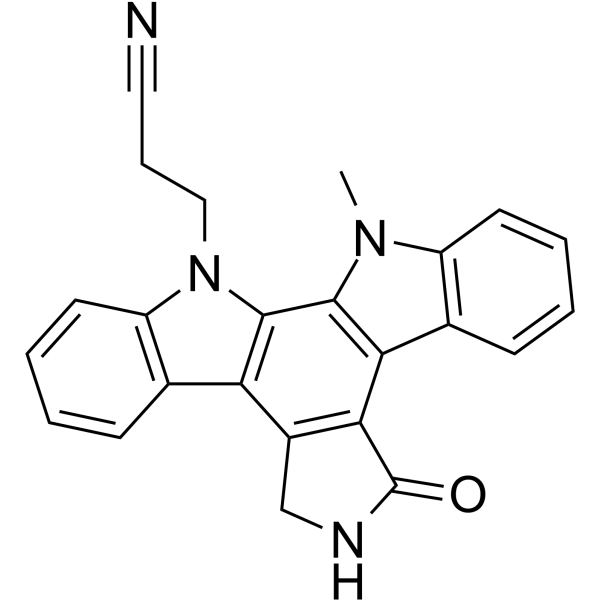
HY-10183
Go6976PKC Inhibitor -
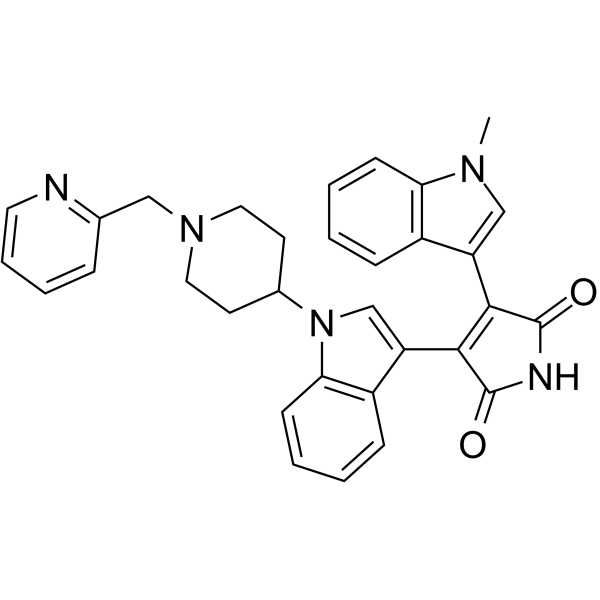
HY-10342
EnzastaurinPKCβ Inhibitor -
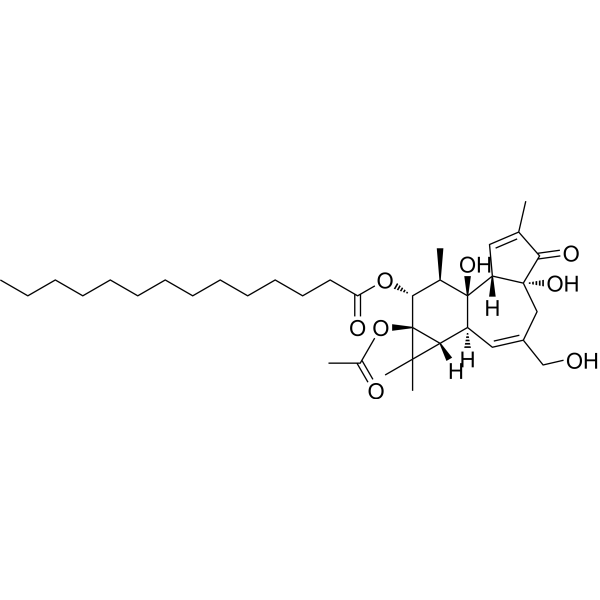
HY-18739
Phorbol 12-myristate 13-acetatePKC Activator -
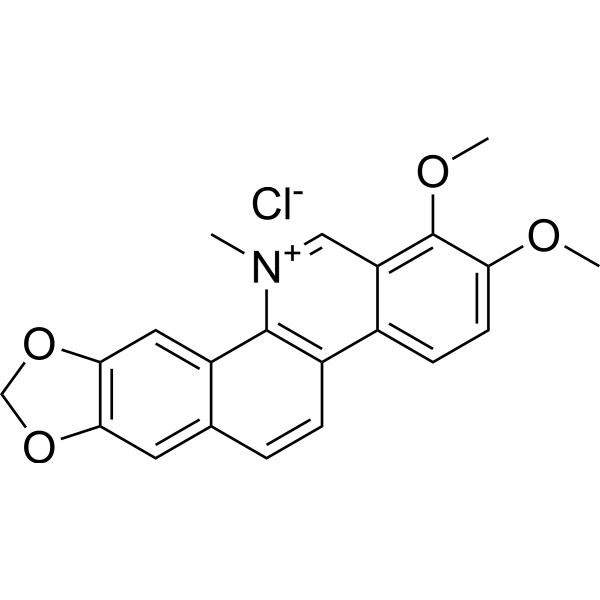
HY-12048
Chelerythrine chlorideBcl-2 Family Inhibitor -

HY-13867R
Bisindolylmaleimide I (Standard)PKC Inhibitor
All Histone Methyltransferase Isoforms
MoreAll DNA Methyltransferase Isoforms
MoreAll DNA/RNA Synthesis Isoforms
More

Biological Activity
Description
IC50 & Target
|
DNMT3A |
SUV39H2/KMT1B |
In Vitro
Go 6983 GMP (5 μM; 8 d) promotes short-term self-renewal and maintains pluripotency of 46C mouse embryonic stem cells in both serum-containing medium without LIF and serum-free N2B27 medium[1].
Go 6983 GMP (5 μM; 8 d) promotes the self-renewal of 46C mouse embryonic stem cells via Prdm14, as overexpression of Prdm14 mimics the activity of Go6983, while knockdown of Prdm14 abolishes Go6983-mediated pluripotency maintenance[1].
Go 6983 GMP (5 μM; 24 h) promotes short-term self-renewal of human induced pluripotent stem cells, and this effect is mediated by Prdm14 through inhibiting the expression of Dnmt3 gene[1].
Go 6983 GMP (5 μM; 12 h, 24 h) enhances the expression of Prdm14 in 46C mouse embryonic stem cells by reducing the expression levels of Suv39h1 and Suv39h2[1].
Go 6983 (5 μM) blocks Dihydrotanshinone I (HY-N0360)-induced NRF2 nuclear accumulation by inhibiting nuclear import, and this process cannot be reversed by the nuclear export inhibitory effect of leptomycin B in HL-1 mouse cardiomyocytes[2].
MedChemExpress (MCE) has not independently confirmed the accuracy of these methods. They are for reference only.
-
Cell Line:Prdm14 expression in 46C mouse embryonic stem cells
-
Concentration:5 μM
-
Incubation Time:12 h, 24 h
-
Result:Enhanced Prdm14 expression by reducing Suv39h1 and Suv39h2 levels, which alleviated repressive H3K9me2 and H3K9me3 marks at the Prdm14 promoter and increased RNA polymerase II recruitment and elongation.


Chemical Information
-
CAS No. 133053-19-7
-
Molecular Weight 442.51
-
Formula C26H26N4O3
-
SMILES
O=C(C(C1=CN(CCCN(C)C)C2=C1C=C(OC)C=C2)=C3C4=CNC5=C4C=CC=C5)NC3=O
-
Shipping
Room temperature in continental US; may vary elsewhere.
-
Storage
Please store the product under the recommended conditions in the Certificate of Analysis.


Purity & Documentation
References
[1]. Ji J, et al. Inhibition of protein kinase C increases Prdm14 level to promote self-renewal of embryonic stem cells through reducing Suv39h-induced H3K9 methylation. J Biol Chem. 2024;300(3):105714. [Content Brief]
[2]. Zeng H, et al. Activated PKB/GSK-3β synergizes with PKC-δ signaling in attenuating myocardial ischemia/reperfusion injury via potentiation of NRF2 activity: Therapeutic efficacy of dihydrotanshinone-I. Acta Pharm Sin B. 2021;11(1):71-88. [Content Brief]
[3]. Yu CY, et al. The Trans-Spliced Long Noncoding RNA tsRMST Impedes Human Embryonic Stem Cell Differentiation Through WNT5A-Mediated Inhibition of the Epithelial-to-Mesenchymal Transition. Stem Cells. 2016;34(8):2052-2062. [Content Brief]

Calculators
Concentration (start) × Volume (start) = Concentration (final) × Volume (final)


Go 6983 (GMP) Related Classifications
HY-13689G Related Classifications
 Powered by Bioz