



SETD7/KMT7
SETD7 (KMT7) is a SET domain-containing lysine methyltransferase that primarily catalyzes histone H3 lysine 4 monomethylation (H3K4me1), an epigenetic mark associated with transcriptional activation and enhancer function[1][2]. Mechanistically, SETD7 regulates gene expression through both histone and non-histone substrate methylation, extending its influence beyond chromatin remodeling to the control of protein stability, subcellular localization, and protein-protein interactions[3][4]. In addition to histone H3, SETD7 methylates multiple regulatory proteins, including p53, TAF10, and cGAS, thereby linking lysine methylation to transcriptional regulation, stress responses, and innate immune signaling[2][3]. Consequently, SETD7 participates in diverse biological processes, including cell differentiation, cell-cycle control, apoptosis, epithelial-mesenchymal transition, and DNA damage responses[4]. In disease settings, extensive evidence implicates SETD7 in cancer-associated pathways, although its biological effects are highly dependent on cellular context and substrate availability[4][5]. For example, SETD7-mediated methylation can stabilize tumor-suppressive proteins such as p53 or promote degradation of oncogenic KRAS, thereby attenuating RAS/MEK/ERK signaling in non-small cell lung cancer models[3][5]. Compared with other lysine methyltransferases that predominantly target histones, SETD7 is distinguished by its broad repertoire of non-histone substrates and its ability to directly modulate signaling networks through substrate-specific methylation events[2][3]. For experimental applications, SETD7 is frequently investigated as a regulator of epigenetic signaling and protein methylation, making it a useful target for mechanistic studies of transcriptional control, cancer biology, and cellular stress responses[4].
References:
- [1]. Nishioka K, et al. Set9, a novel histone H3 methyltransferase that facilitates transcription by precluding histone tail modifications required for heterochromatin formation. Genes Dev. 2002 Feb 15;16(4):479-89. [Content Brief]
- [2]. Wäsch R, et al. APC-dependent proteolysis of the mitotic cyclin Clb2 is essential for mitotic exit. Nature. 2002 Aug 1;418(6897):556-62. [Content Brief]
- [3]. Kiepiela P, et al. Dominant influence of HLA-B in mediating the potential co-evolution of HIV and HLA. Nature. 2004 Dec 9;432(7018):769-75. [Content Brief]
- [4]. Monteiro FL, et al. A Systematic Review to Define the Multi-Faceted Role of Lysine Methyltransferase SETD7 in Cancer. Cancers (Basel). 2022 Mar 10;14(6):1414. [Content Brief]
- [5]. Chiang CY, et al. Methylation of KRAS by SETD7 promotes KRAS degradation in non-small cell lung cancer. Cell Rep. 2023 Sep 26;42(9):113003. [Content Brief]
All Product Categories
-
SETD7/KMT7 Related Products (6)
Related Products (6)

-
PFI-2 hydrochloride
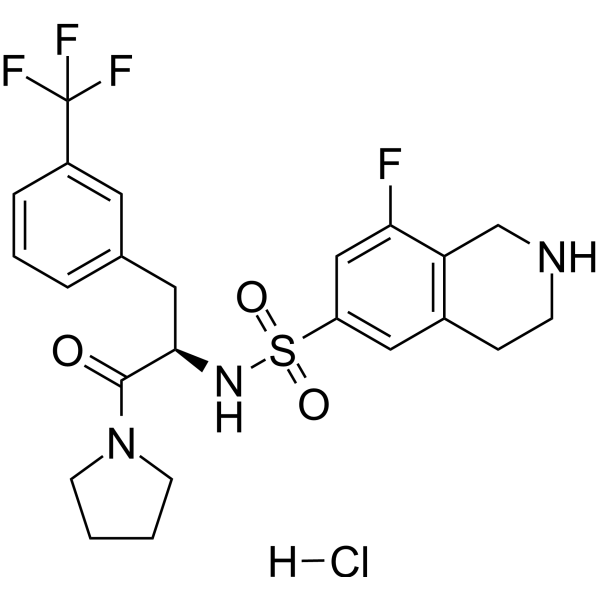 0 ImagesSynonyms: (R)-PFI-2 hydrochloridePFI-2 ((R)-PFI-2 hydrochloride) hydrochloride is a potent and selective SET domain containing lysine methyltransferase 7 (SETD7) inhibitor. (R)-PFI-2 shows high inhibiting activity with IC50 value of 2.0 nM and (S)-PFI-2 shows inhibiting activity with IC50 value of 1.0 μM. PFI-2 hydrochloride can be used for the research of chronic kidney disease and inflammation response in the development of renal fibrosis.
-
MS4322
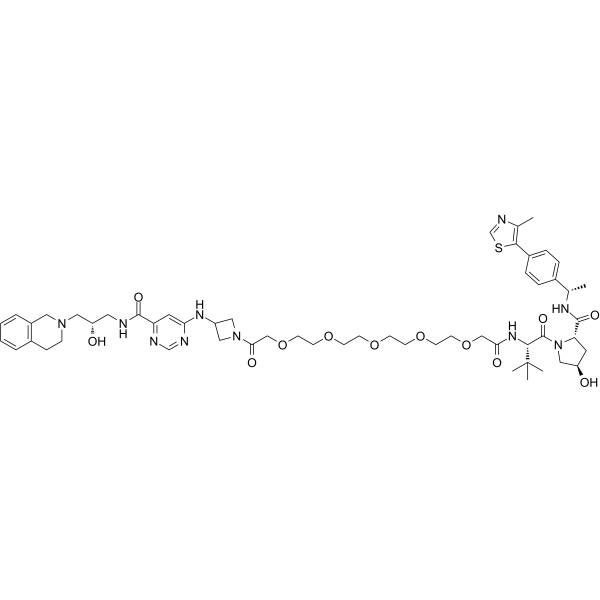 0 ImagesSynonyms: YS43-22MS4322 (YS43-22) is a specific PRMT5 PROTAC degrader. MS4322 reduces the PRMT5 protein level with a DC50 of 1.1 μM in MCF-7 cells. MS4322 inhibits the methyltransferase activity of PRMT5 with an IC50 of 18 nM. MS4322 promotes ubiquitination and degradation of PRMT5. MS4322 can be used for the research of breast cancer, lung cancer, and hepatocellular cancer. (Pink: PRMT5 ligand (HY-173092); Blue: E3 ligase ligand HY-112078); Black: linker (HY-124780); E3+linker (HY-173093 )).
-
PFI-2
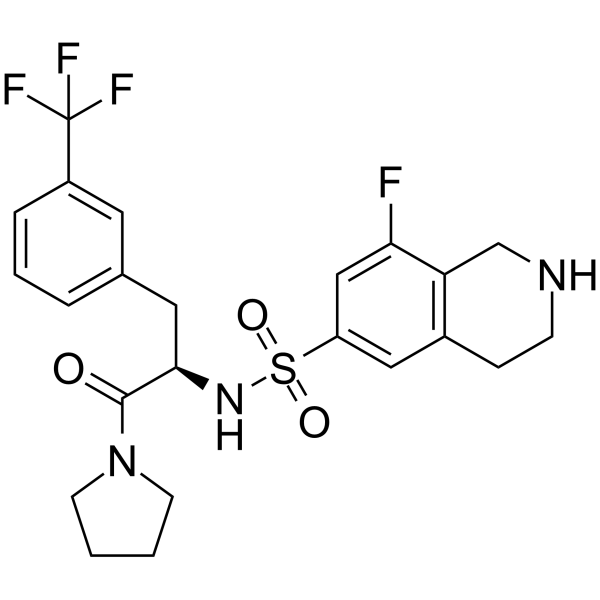 0 ImagesSynonyms: (R)-PFI-2PFI-2 ((R)-PFI-2 hydrochloride) hydrochloride, a chemical probe, is a potent and selective SET domain containing lysine methyltransferase 7 (SETD7) inhibitor. (R)-PFI-2 shows high inhibiting activity with IC50 value of 2.0 nM and (S)-PFI-2 shows inhibiting activity with IC50 value of 1.0 μM. PFI-2 hydrochloride can be used for the research of chronic kidney disease and inflammation response in the development of renal fibrosis.
-
MS4322 (isomer)
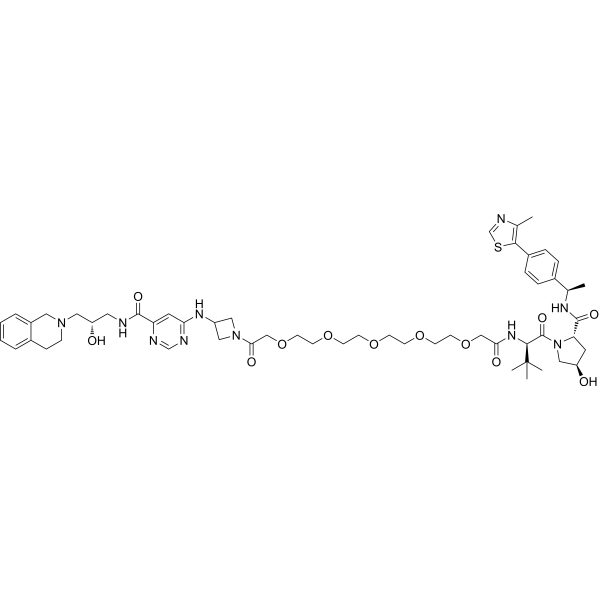 0 ImagesSynonyms: YS43-22 (isomer)MS4322 (YS43-22) isomer is an isomer of MS4322. MS4322 is a specific PRMT5 PROTAC degrader. MS4322 reduces the PRMT5 protein level with a DC50 of 1.1 μM in MCF-7 cells. MS4322 inhibits the methyltransferase activity of PRMT5 with an IC50 of 18 nM. MS4322 promotes ubiquitination and degradation of PRMT5. MS4322 can be used for the research of breast cancer, lung cancer, and hepatocellular cancer.
-
DC-S238
 0 ImagesCat. No.: HY-119164CAS No.: 832109-48-5DC-S238 is an orally active and highly selective histone methyltransferase SET7 (SETD7) inhibitor (IC50=4.88 μM). DC-S238 is promising for research of cancer, diabetes and inflammatory diseases.
-
DC-S100
 0 ImagesCat. No.: HY-125105CAS No.: 178803-91-3DC-S100 is a potent SET7 inhibitor with an IC50 of 30.04 μM. DC-S100 binds to the cofactor (SAM) binding site of SET7 and forms hydrogen bonds and hydrophobic interactions with residues at this site. DC-S100 is applicable to biological studies of epigenetics and related diseases.



