



PRMT3
PRMT3 (protein arginine methyltransferase 3) is a type I protein arginine methyltransferase that catalyzes asymmetric dimethylation of arginine residues and functions as a ribosomal protein methyltransferase involved in ribosome biogenesis and cellular protein synthesis regulation[1][2]. Mechanistically, PRMT3 is distinguished within the PRMT family by the presence of a zinc-finger domain that mediates substrate interaction, enabling regulation of diverse proteins involved in transcriptional control, post-transcriptional regulation, translation, and metabolic signaling pathways[3]. Through these activities, PRMT3 contributes to the control of gene expression and cellular metabolism, linking arginine methylation to fundamental biological processes[3]. In disease contexts, accumulating evidence indicates that PRMT3 participates in oncogenic programs by promoting metabolic reprogramming and gene expression changes associated with tumorigenesis[3]. Experimental studies further demonstrate that PRMT3 can influence cellular metabolism through regulation of glycolytic pathways and other metabolic processes relevant to cancer progression[3]. Compared with related PRMT isoforms, PRMT3 exhibits distinct substrate recognition, subcellular functions, and regulatory mechanisms, highlighting its nonredundant biological role[1][3]. For experimental applications, the allosteric inhibitor SGC707 provides a highly selective chemical probe for PRMT3, exhibiting nanomolar potency and substantial selectivity over other methyltransferases, thereby enabling mechanistic studies of PRMT3-dependent signaling and metabolic regulation[2]. Pharmacological inhibition of PRMT3 has also shown effects on hepatic triglyceride metabolism in preclinical models, supporting its utility for pathway interrogation and therapeutic target validation studies[4].
References:
- [1]. Bachand F, et al. PRMT3 is a ribosomal protein methyltransferase that affects the cellular levels of ribosomal subunits. EMBO J. 2004 Jul 7;23(13):2641-50. [Content Brief]
- [2]. Kaniskan HÜ, et al. Discovery of Potent and Selective Allosteric Inhibitors of Protein Arginine Methyltransferase 3 (PRMT3). J Med Chem. 2018 Feb 8;61(3):1204-1217. [Content Brief]
- [3]. Hsu SH, et al. Protein arginine methyltransferase 3: A crucial regulator in metabolic reprogramming and gene expression in cancers. Cancer Lett. 2023 Feb 1;554:216008. [Content Brief]
- [4]. de Jong LM, et al. PRMT3 inhibitor SGC707 reduces triglyceride levels and induces pruritus in Western-type diet-fed LDL receptor knockout mice. Sci Rep. 2022 Jan 10;12(1):483. [Content Brief]
All Product Categories
-
PRMT3 Related Products (17)
Related Products (17)

- 1
-
GSK3368715 dihydrochloride
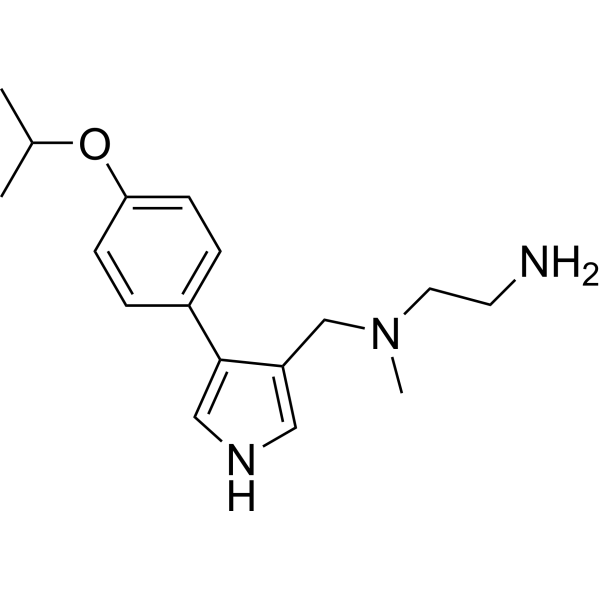
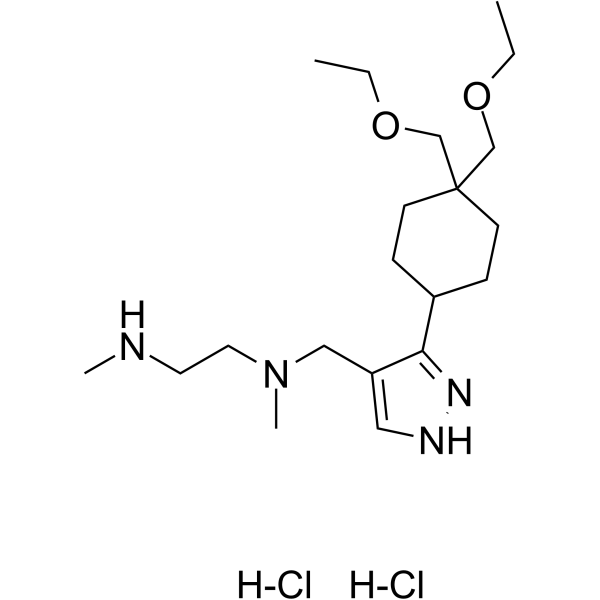 0 ImagesSynonyms: EPZ019997 dihydrochlorideGSK3368715 dihydrochloride (EPZ019997 dihydrochloride) is an orally active, reversible, and S-adenosyl-L-methionine (SAM) uncompetitive type I protein arginine methyltransferases (PRMTs) inhibitor (IC50=3.1 nM (PRMT1), 48 nM (PRMT3), 1148 nM (PRMT4), 5.7 nM (PRMT6), 1.7 nM (PRMT8)). GSK3368715 dihydrochloride (EPZ019997 dihydrochloride) produces a shift in arginine methylation states, alters exon usage, and has strong anti-cancer activity.
-
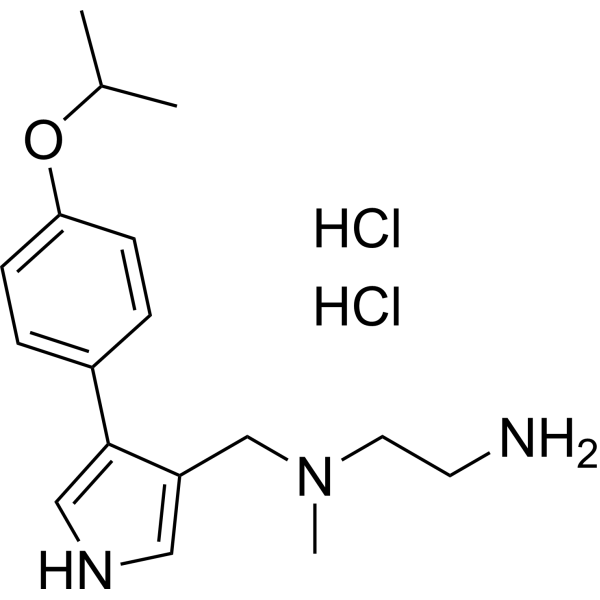
GSK3368715
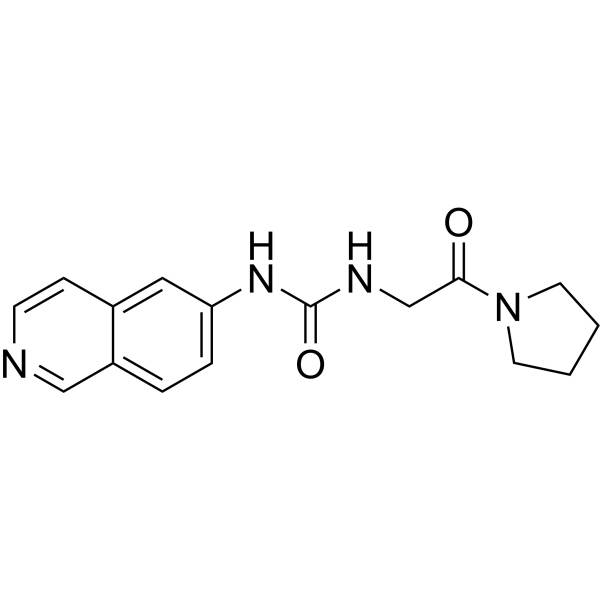
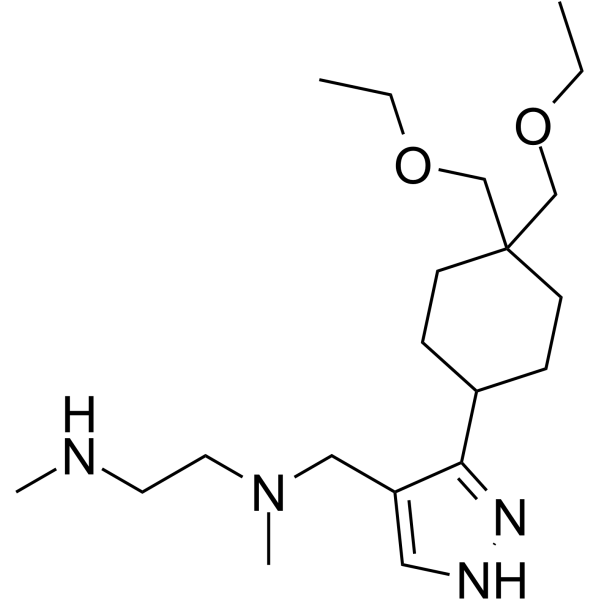 0 ImagesSynonyms: EPZ019997GSK3368715 (EPZ019997) is an orally active, reversible, and S-adenosyl-L-methionine (SAM) uncompetitive type I protein arginine methyltransferases (PRMTs) inhibitor (IC50=3.1 nM (PRMT1), 48 nM (PRMT3), 1148 nM (PRMT4), 5.7 nM (PRMT6), 1.7 nM (PRMT8)). GSK3368715 (EPZ019997) produces a shift in arginine methylation states, alters exon usage, and has strong anti-cancer activity.
-
CM112
 0 ImagesCat. No.: HY-172769CM112 is a hydrophobic tag-based PRMT1 degrader (DC50 = 0.83 μM) with pan-inhibitory activity against type I PRMTs. CM112 induces proteasome-dependent degradation of PRMT1, inhibits the methyltransferase activities of PRMT1, PRMT3, PRMT4 and PRMT6, downregulates the stability of orphan receptor TR3, thereby interfering with the non-enzymatic scaffolding function of PRMT1. CM112 suppresses clonogenicity and proliferation of tumor cells. CM112 is applicable to research related to breast cancer and non-small cell lung cancer.
-
MS3-123
 0 ImagesCat. No.: HY-184653MS3-123 is an orally active PRMT1 inhibitor (IC50 = 11.4 nM) that selectively targets the unique Cys119 residue within the SAM-binding pocket. MS3-123 covalently binds to PRMT1 through a time-dependent irreversible mechanism and exhibits high selectivity over other PRMT family members and other methyltransferases. MS3-123 inhibits breast cancer cell proliferation, migration and invasion, and induces cell cycle arrest and apoptosis. MS3-123 is useful for breast cancer research.
-
MS4322
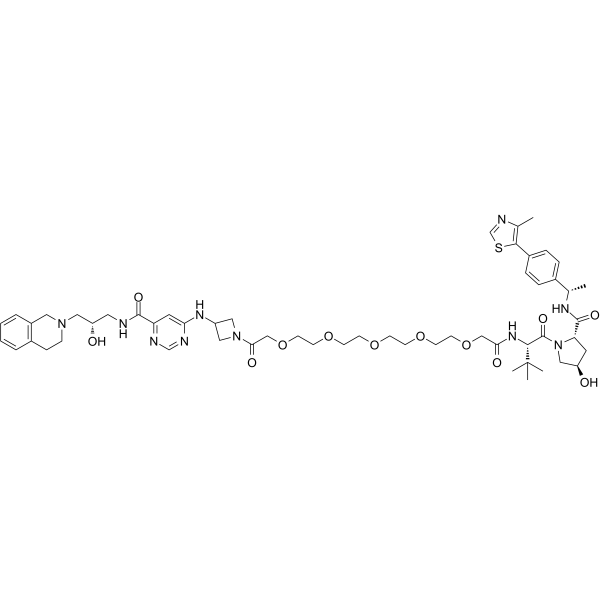 0 ImagesSynonyms: YS43-22MS4322 (YS43-22) is a specific PRMT5 PROTAC degrader. MS4322 reduces the PRMT5 protein level with a DC50 of 1.1 μM in MCF-7 cells. MS4322 inhibits the methyltransferase activity of PRMT5 with an IC50 of 18 nM. MS4322 promotes ubiquitination and degradation of PRMT5. MS4322 can be used for the research of breast cancer, lung cancer, and hepatocellular cancer. (Pink: PRMT5 ligand (HY-173092); Blue: E3 ligase ligand HY-112078); Black: linker (HY-124780); E3+linker (HY-173093 )).
-
MS4322 (isomer)
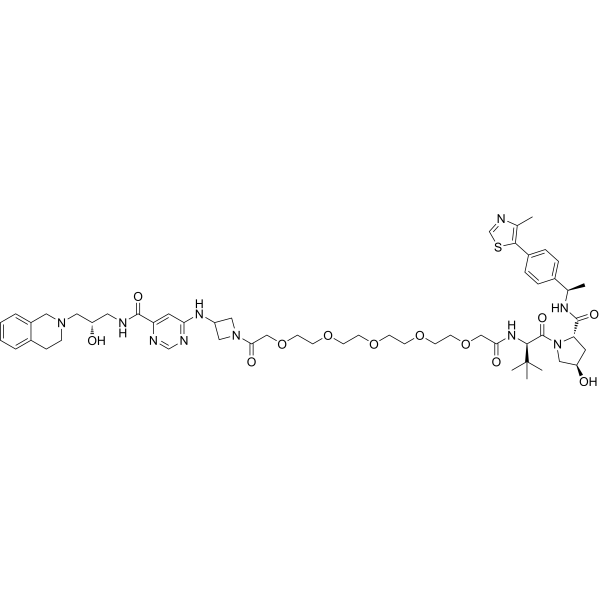 0 ImagesSynonyms: YS43-22 (isomer)MS4322 (YS43-22) isomer is an isomer of MS4322. MS4322 is a specific PRMT5 PROTAC degrader. MS4322 reduces the PRMT5 protein level with a DC50 of 1.1 μM in MCF-7 cells. MS4322 inhibits the methyltransferase activity of PRMT5 with an IC50 of 18 nM. MS4322 promotes ubiquitination and degradation of PRMT5. MS4322 can be used for the research of breast cancer, lung cancer, and hepatocellular cancer.
-
GSK3368715 trihydrochloride
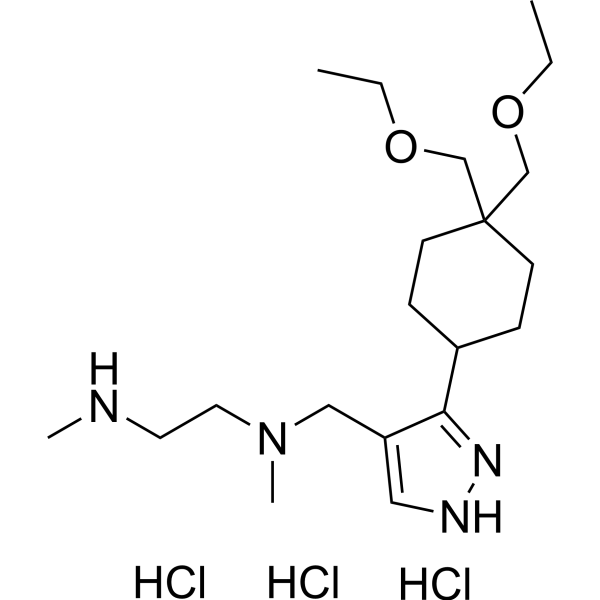 0 ImagesCat. No.: HY-128717BCAS No.: 2227587-26-8Synonyms: EPZ019997 trihydrochlorideGSK3368715 trihydrochloride (EPZ019997) is an orally active, reversible, and S-adenosyl-L-methionine (SAM) uncompetitive type I protein arginine methyltransferases (PRMTs) inhibitor (IC50=3.1 nM (PRMT1), 48 nM (PRMT3), 1148 nM (PRMT4), 5.7 nM (PRMT6), 1.7 nM (PRMT8)). GSK3368715 trihydrochloride (EPZ019997) produces a shift in arginine methylation states, alters exon usage, and has strong anti-cancer activity.
-
PRMT4-IN-1
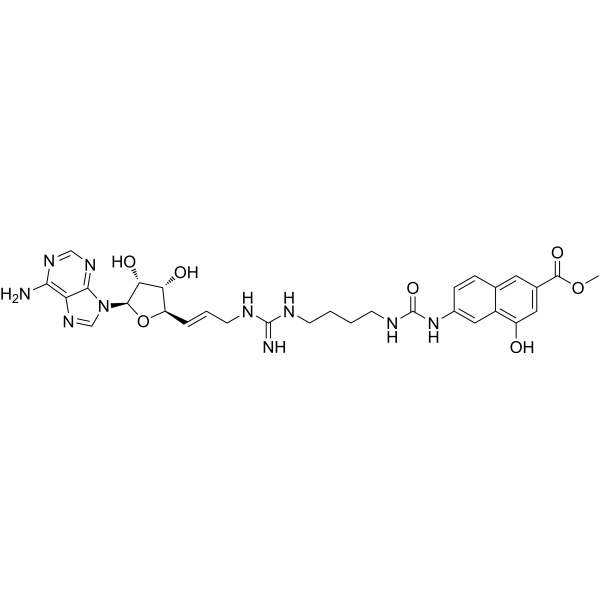 0 ImagesCat. No.: HY-146810CAS No.: 3035425-70-5PRMT4-IN-1 is a selective inhibitor of PRMT4 (IC50=3.2 nM). PRMT4-IN-1 inhibits MCF7 relative viability.
-
PROTAC PRMT3 degrader 1
 0 ImagesCat. No.: HY-159728PROTAC PRMT3 degrader 1 is a selective PRMT3 PROTAC degrader with a DC50 of 2.566 μM. PROTAC PRMT3 degrader 1 forms a ternary complex with MDM2 E3 ubiquitin ligase to induce proteasomal and neddylation-dependent degradation of PRMT3. PROTAC PRMT3 degrader 1 activates intrinsic apoptosis, endoplasmic reticulum stress signaling pathways. PROTAC PRMT3 degrader 1 downregulates E2F, MYC, oxidative phosphorylation pathways. PROTAC PRMT3 degrader 1 reduces cellular asymmetric dimethylarginine (ADMA) levels. PROTAC PRMT3 degrader 1 inhibits acute leukemia cell growth. PROTAC PRMT3 degrader 1 acts with glycolysis inhibitor 2-DG to reduce ATP production, induce intrinsic apoptosis, drive synergistic antiproliferative effects. PROTAC PRMT3 degrader 1 can be used for the research of acute leukemia.
-
PRMT1-IN-3
 0 ImagesCat. No.: HY-175821CAS No.: 892570-48-8PRMT1-IN-3 is a potent protein arginine methyltransferase 1 (PRMT1) inhibitor with an IC50 of 4.11 μM. PRMT1-IN-3 inhibits PRMT6 and PRMT8 with IC50s of 23.3 and 30.1 μM. PRMT1-IN-3 suppresses asymmetric dimethylarginine (ADMA) levels and histone H4R3me2a modification in triple-negative breast cancer (TNBC) cells. PRMT1-IN-3 induces cell cycle arrest, apoptosis, and inhibits migration and colony formation in MDA-MB-231 cells. PRMT1-IN-3 acts as chemotherapeutic sensitizers for Paclitaxel (HY-B0015). PRMT1-IN-3 can be used for the study of TNBC.

-
PRMT3-IN-5
 0 ImagesCat. No.: HY-171132CAS No.: 2204250-25-7PRMT3-IN-5 (Compound 14) is an allosteric PRMT3 inhibitor (IC50: 291 nM). PRMT3-IN-5 can be used for investigating PRMT3's biological functions and disease associations.
-
CARM1-IN-4
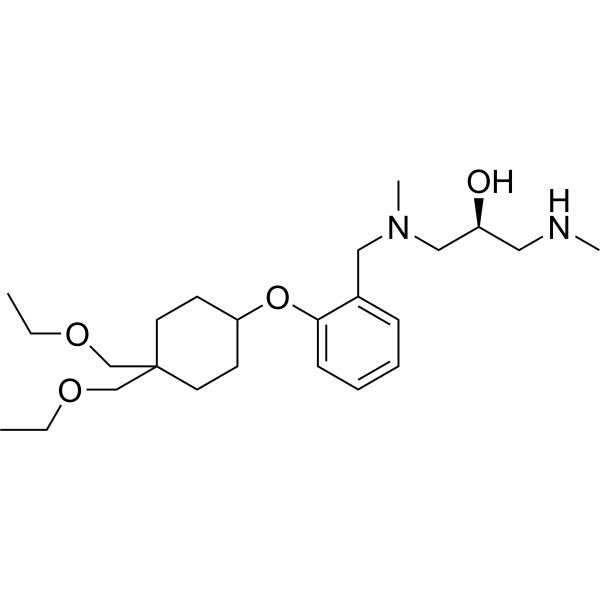 0 ImagesCat. No.: HY-161334CAS No.: 2878481-07-1CARM1-IN-4 (compound 11f) is a potent CARM1 inhibitor with IC50s of 9 nM and 56 nM for CARM1 and PRMT1, respectively. CARM1-IN-4 displays significant anti-proliferative effects on colorectal cancer cell lines. CARM1-IN-4 effectively inhibits the methyltransferase activity of CARM1 and prevents methylation of downstream proteins. CARM1-IN-4 induces apoptosis and shows antitumor activity.
- 1



