



NSD2/MMSET/WHSC1
The histone methyltransferase NSD2/MMSET/WHSC1 catalyzes mono- and di-methylation of histone H3 at lysine 36 (H3K36me1/2), regulating chromatin structure and transcriptional fidelity[1][2]. Mechanistically, NSD2 modifies chromatin accessibility to control gene expression programs associated with cell cycle progression, DNA repair, and metabolic regulation[3][4][2]. In disease models, NSD2 overexpression promotes tumor aggressiveness in multiple myeloma, prostate cancer, neuroblastoma, and triple-negative breast cancer by activating genes involved in epithelial-mesenchymal transition, autophagy, and glucose metabolism[5][6][7][8]. NSD2 contributes to oncogenic RAS-driven transcription and enhances DNA damage repair, increasing resistance to chemotherapeutic agents[9][10]. Compared with related isoforms NSD1 and NSD3, NSD2 exhibits distinct substrate specificity, preferentially catalyzing H3K36 dimethylation and coordinating with EZH2 to reprogram the epigenome[11][12][2]. The PHD domains of NSD2 are crucial for recruitment to oncogenic gene loci and transcriptional activation, distinguishing its functional engagement from other NSD family members[13]. For experimental applications, selective NSD2 inhibitors such as KTX-1001 and peptide-based compounds (PTD2) have been developed to suppress H3K36 methylation, demonstrating efficacy in multiple myeloma and breast cancer models[1][14][15]. These tools enable mechanistic studies of NSD2 function and provide promising avenues for targeted epigenetic therapy.
References:
- [1]. He L, et al. NSD family proteins: Rising stars as therapeutic targets. Cell Insight. 2024 Feb 3;3(2):100151. [Content Brief]
- [2]. Ali SR, et al. Nerve Density and Neuronal Biomarkers in Cancer. Cancers (Basel). 2022 Oct 1;14(19):4817. [Content Brief]
- [3]. Tanaka H, et al. The NSD2/WHSC1/MMSET methyltransferase prevents cellular senescence-associated epigenomic remodeling. Aging Cell. 2020 Jul;19(7):e13173. [Content Brief]
- [4]. Ezponda T, et al. The histone methyltransferase MMSET/WHSC1 activates TWIST1 to promote an epithelial-mesenchymal transition and invasive properties of prostate cancer. Oncogene. 2013 Jun 6;32(23):2882-90. [Content Brief]
- [5]. Topchu I, et al. The role of NSD1, NSD2, and NSD3 histone methyltransferases in solid tumors[J]. Cellular and Molecular Life Sciences, 2022, 79(6): 285. [Content Brief]
- [6]. Shah MY, et al. MMSET/WHSC1 enhances DNA damage repair leading to an increase in resistance to chemotherapeutic agents. Oncogene. 2016 Nov 10;35(45):5905-5915. [Content Brief]
- [7]. Chen D, et al. H3K36me2 methyltransferase NSD2/WHSC1 promotes triple-negative breast cancer metastasis via activation of ULK1-dependent autophagy. Autophagy. 2025 Aug;21(8):1824-1842. [Content Brief]
- [8]. Popovic R, et al. Histone methyltransferase MMSET/NSD2 alters EZH2 binding and reprograms the myeloma epigenome through global and focal changes in H3K36 and H3K27 methylation. PLoS Genet. 2014 Sep 4;10(9):e1004566. [Content Brief]
- [9]. Ma Z, et al. Drug Discovery Targeting Nuclear Receptor Binding SET Domain Protein 2 (NSD2). J Med Chem. 2023 Aug 24;66(16):10991-11026. [Content Brief]
- [10]. Wang J, et al. Reprogramming metabolism by histone methyltransferase NSD2 drives endocrine resistance via coordinated activation of pentose phosphate pathway enzymes. Cancer Lett. 2016 Aug 10;378(2):69-79. [Content Brief]
- [11]. Hudlebusch HR, et al. MMSET is highly expressed and associated with aggressiveness in neuroblastoma. Cancer Res. 2011 Jun 15;71(12):4226-35. [Content Brief]
- [12]. García-Carpizo V, et al. NSD2 contributes to oncogenic RAS-driven transcription in lung cancer cells through long-range epigenetic activation. Sci Rep. 2016 Sep 8;6:32952. [Content Brief]
- [13]. Morrison MJ, et al. Identification of a peptide inhibitor for the histone methyltransferase WHSC1. PLoS One. 2018 May 9;13(5):e0197082. [Content Brief]
- [14]. Huang Z, et al. NSD2 is recruited through its PHD domain to oncogenic gene loci to drive multiple myeloma. Cancer Res. 2013 Oct 15;73(20):6277-88. [Content Brief]
- [15]. Park JE, et al. NSD Family-Mediated H3K36 Methylation in Human Cancer: Mechanisms and Therapeutic Opportunities. Biomedicines. 2025 Nov 11;13(11):2749. [Content Brief]
-
NSD2/MMSET/WHSC1 Related Products (16)
Related Products (16)

- 1
-
LLC0424
 0 ImagesLLC0424 is a potent and selective cereblon-based PROTAC nuclear receptor-binding SET domain-containing 2 (NSD2) degrader. LLC0424 effectively degraded NSD2 with a DC50 of 20 nM in RPMI-8402 cells. LLC0424 selectively induces NSD2 degradation in a cereblon- and proteasome-dependent fashion. (Blue: CRBN ligand (HY-14658), Black: linker (HY-40002); Pink: NSD2 inhibitor (HY-161575)).
-
MS4322
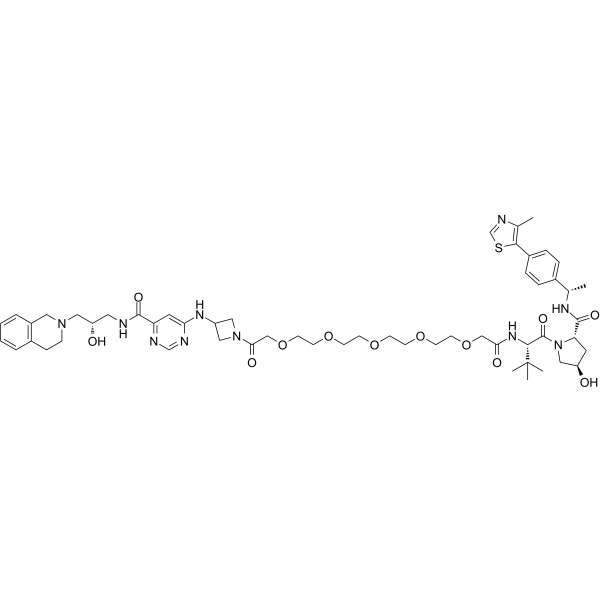 0 ImagesSynonyms: YS43-22MS4322 (YS43-22) is a specific PRMT5 PROTAC degrader. MS4322 reduces the PRMT5 protein level with a DC50 of 1.1 μM in MCF-7 cells. MS4322 inhibits the methyltransferase activity of PRMT5 with an IC50 of 18 nM. MS4322 promotes ubiquitination and degradation of PRMT5. MS4322 can be used for the research of breast cancer, lung cancer, and hepatocellular cancer. (Pink: PRMT5 ligand (HY-173092); Blue: E3 ligase ligand HY-112078); Black: linker (HY-124780); E3+linker (HY-173093 )).
-
LEM-14
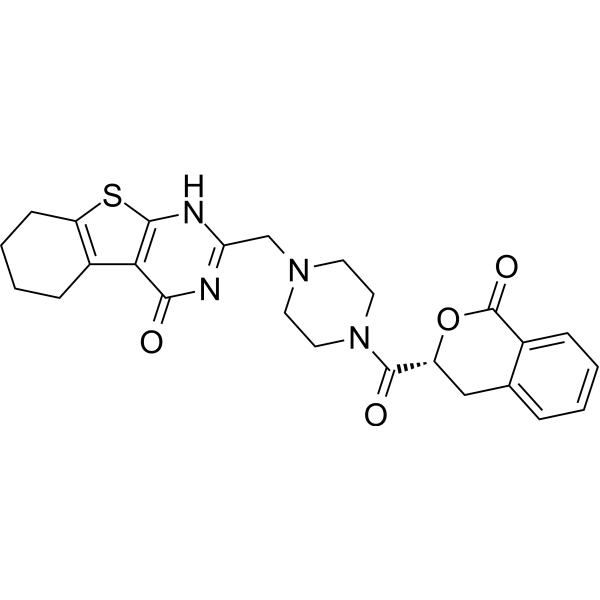 0 ImagesLEM-14 is a potent and selective NSD2 inhibitor with an IC50 of 132 µM. LEM-14 has very weak activitv against NSD1 and has no activity against NSD3. LEM-14 inhibits fibrotic gene expression in ND but not DIO BMDMs. LEM-14 combined with ionizing radiation (IR) enhances the apoptosis rate and reduces the colony-formation ability of CRC cells. LEM-14 exhibits enhanced anti-tumor efficacy in Balb/c nude mice bearing LoVo cell xenografts when combined with ionizing radiation. LEM-14 has the potential for the research of multiple myeloma and colorectal cancer.
-
W4275
 0 ImagesW4275 (Compound 42) is a selective NSD2 inhibitor with oral activity, showing an IC50 value of 17 nM. W4275 exhibits antiproliferative activity with an IC50 of 230 nM against RS411 cells and significantly inhibits tumor growth in the RS411 tumor xenograft model. Pharmacokinetic analysis in mice demonstrates that W4275 has good oral bioavailability (F of 27.34%). W4275 holds promise for use in cancer research.

-
NSD2-IN-5
 0 ImagesNSD2-IN-5 (Compound 198) is a SET domain-containing nuclear protein 2 (NSD2) inhibitor with an IC50 value ranging from 0.001 μM to 0.01 μM. NSD2-IN-5 blocks the activity of NSD2, thereby regulating NSD2-mediated biological processes. NSD2-IN-5 can be used in the research of various cancers including breast cancer, cervical cancer, skin cancer, ovarian cancer, as well as pulmonary hypertension.
-
PROTAC NSD2 degrader-1
 0 ImagesCat. No.: HY-184968CAS No.: 3108071-48-0PROTAC NSD2 degrader-1 is a PROTAC degrader that selectively targets NSD2, with a DC50 of 0.37 μM. PROTAC NSD2 degrader-1 induces selective degradation of long and short isoforms of NSD2 containing the PWWP1 domain by forming a ternary complex with FBXO22. NSD2 degradation mediated by PROTAC NSD2 degrader-1 depends on the ubiquitin-proteasome system and the neddylation pathway. PROTAC NSD2 degrader-1 can be used in cancer-related research such as non-small cell lung cancer, multiple myeloma and prostate cancer.

-
MS4322 (isomer)
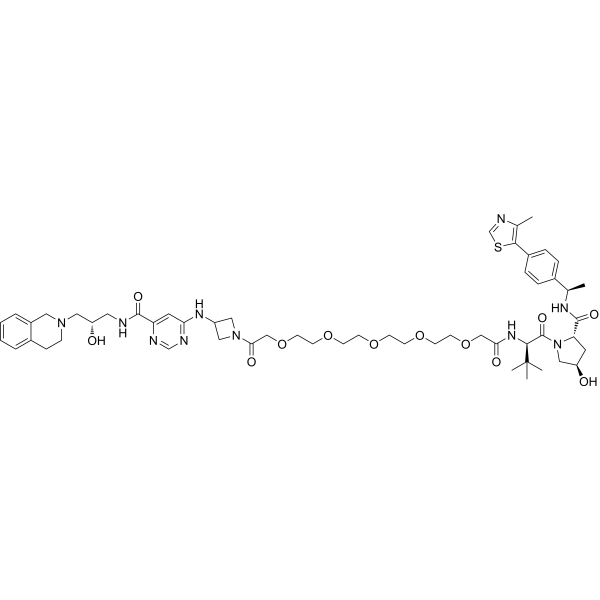 0 ImagesSynonyms: YS43-22 (isomer)MS4322 (YS43-22) isomer is an isomer of MS4322. MS4322 is a specific PRMT5 PROTAC degrader. MS4322 reduces the PRMT5 protein level with a DC50 of 1.1 μM in MCF-7 cells. MS4322 inhibits the methyltransferase activity of PRMT5 with an IC50 of 18 nM. MS4322 promotes ubiquitination and degradation of PRMT5. MS4322 can be used for the research of breast cancer, lung cancer, and hepatocellular cancer.


-
NSD2/H3K36me2 modulator-1
 0 ImagesCat. No.: HY-179427NSD2/H3K36me2 modulator-1 is an orally active NSD2/H3K36me2 modulator. NSD2/H3K36me2 modulator-1 competitively binds to the SAM pocket of NSD2, potently inhibits NSD2 expression and suppresses H3K36me2 methylation. NSD2/H3K36me2 modulator-1 reverses epithelial-mesenchymal transition (EMT), inhibits cell migration, and induces G0/G1 phase arrest and apoptosis. NSD2/H3K36me2 modulator-1 induces decreased Mitochondrial membrane potential (MMP) and subsequent Reactive oxygen species (ROS) generation. NSD2/H3K36me2 modulator-1 can be used to research the NSD2-targeting epigenetic anticancer strategies for hepatocellular carcinoma (HCC).
-
NSD-IN-5
 0 ImagesCat. No.: HY-177400CAS No.: 3034213-62-9NSD-IN-5 is a nuclear receptor-binding SET domain (NSD) inhibitor with IC50 values of 6 nM and < 1 nM against NSD1 and NSD2, respectively. NSD-IN-5 can be used in research related to multiple myeloma.
-
UNC10415667
 0 ImagesCat. No.: HY-178322UNC10415667 is a non-competitive, non-prodrug NSD2 degrader with a DC50 of 460 nM in U2OS NSD2 HiBiT cells. UNC10415667 forms a reversible covalent hemithioacetal bond with Cys326 of FBXO22, promoting the formation of a ternary complex with FBXO22 and NSD2, which in turn triggers the polyubiquitination and degradation of NSD2 via the ubiquitin-proteasome system. UNC10415667 can form complexes with FBXO22, NSD2 and BACH1 simultaneously, driving the synchronized degradation of NSD2 and BACH1 without competition. UNC10415667 can be used in research related to multiple myeloma, acute lymphoblastic leukemia, and prostate cancer.
-
RK-0080552
 0 ImagesCat. No.: HY-172614CAS No.: 313527-11-6Synonyms: RK-552RK-0080552 (RK-552) is a NSD2 inhibitor with an IC50 of 0.11 μM, and it exhibits selectivity over histone methyltransferases G9a (IC50: 1.2 μM) and SET7/9 (IC50: >50 μM). RK-0080552 functionally inhibits NSD2 histone methyltransferase activity, reduces the dimethylation level of histone H3 lysine 36, suppresses IRF4 transcription, induces apoptosis and triggers cell death. RK-0080552 inhibits the growth of xenograft tumors and prolongs host survival. RK-0080552 is available for the research of multiple myeloma.

- 1



