



SETD2/KMT3A
SETD2 (KMT3A) is a SET domain-containing histone methyltransferase that catalyzes histone H3 lysine 36 trimethylation (H3K36me3), a chromatin mark associated with active transcription and epigenetic regulation[1]. Mechanistically, SETD2 associates with RNA polymerase II and coordinates transcription-coupled chromatin modification, thereby linking gene expression programs with chromatin state maintenance[1][2]. H3K36 methylation represents a central epigenetic pathway controlling faithful gene regulation, and SETD2 functions as the principal enzyme responsible for H3K36me3 deposition within gene bodies[3]. Beyond chromatin regulation, SETD2 also acts as a dual-function methyltransferase that remodels both chromatin and the cytoskeleton, supporting genomic stability and proper cellular division[4]. In disease contexts, recurrent SETD2 loss or mutation has been reported across multiple malignancies, including leukemia and lymphoid cancers, supporting a tumor-suppressive role for this enzyme and highlighting the biological importance of H3K36me3-dependent pathways[5][6]. Compared with related H3K36 methyltransferases such as NSD1, NSD2, NSD3, and ASH1L, SETD2 is distinguished by its predominant role in H3K36me3 deposition, whereas other family members primarily contribute to H3K36 mono- and dimethylation[3]. Experimental studies further demonstrate that SETD2 cooperates with NSD3 and other chromatin regulators during transcriptional activation, providing useful mechanistic models for investigating epigenetic control of gene expression and chromatin-dependent disease mechanisms[7].
References:
- [1]. Sun XJ, et al. Identification and characterization of a novel human histone H3 lysine 36-specific methyltransferase. J Biol Chem. 2005 Oct 21;280(42):35261-71. [Content Brief]
- [2]. SETD2/KMT3A gene information from NCBI.
- [3]. Huang Y, et al. The adjuvant treatment role of ω-3 fatty acids by regulating gut microbiota positively in the acne vulgaris. J Dermatolog Treat. 2024 Dec;35(1):2299107. [Content Brief]
- [4]. Park IY, et al. Dual Chromatin and Cytoskeletal Remodeling by SETD2. Cell. 2016 Aug 11;166(4):950-962. [Content Brief]
- [5]. Adeola HA, et al. The Practicality of the Use of Liquid Biopsy in Early Diagnosis and Treatment Monitoring of Oral Cancer in Resource-Limited Settings. Cancers (Basel). 2022 Feb 23;14(5):1139. [Content Brief]
- [6]. Peter EK, et al. A Hybrid Hamiltonian for the Accelerated Sampling along Experimental Restraints. Int J Mol Sci. 2019 Jan 16;20(2):370. [Content Brief]
- [7]. Shah A, et al. Histone methyltransferase G9a crosstalks with H3K36 histone methyltransferases NSD3 and SETD2 to mediate gene activation. Front Cell Dev Biol. 2026 Mar 26;14:1790894. [Content Brief]
All Product Categories
-
SETD2/KMT3A Related Products (5)
Related Products (5)

-
EZM0414 TFA
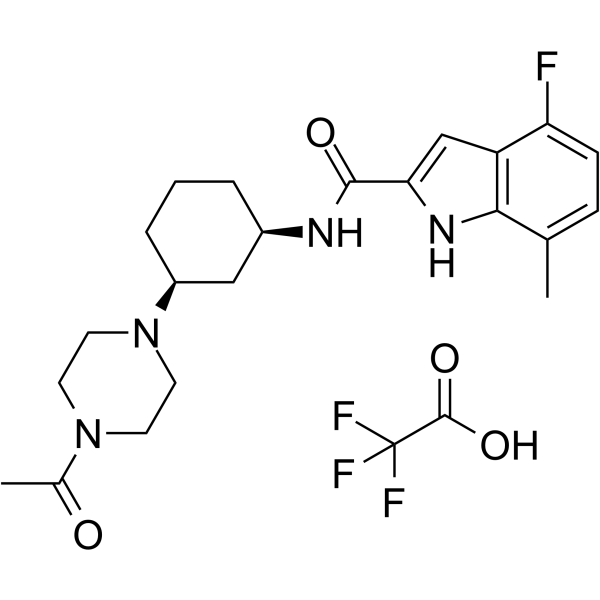 0 ImagesCat. No.: HY-136328CAS No.: 2411759-92-5Synonyms: SETD2-IN-1 TFAEZM0414 (SETD2-IN-1) TFA is the TFA salt form of EZM0414 (HY-144858). EZM0414 TFA is a potent, selective, orally active inhibitor of SETD2 (IC50=18 nM in SETD2 biochemical assay; IC50=34 nM in cellular assay). EZM0414 TFA can be used for the research of relapsed or refractory multiple myeloma and diffuse large B-cell lymphoma.
-
EZM0414
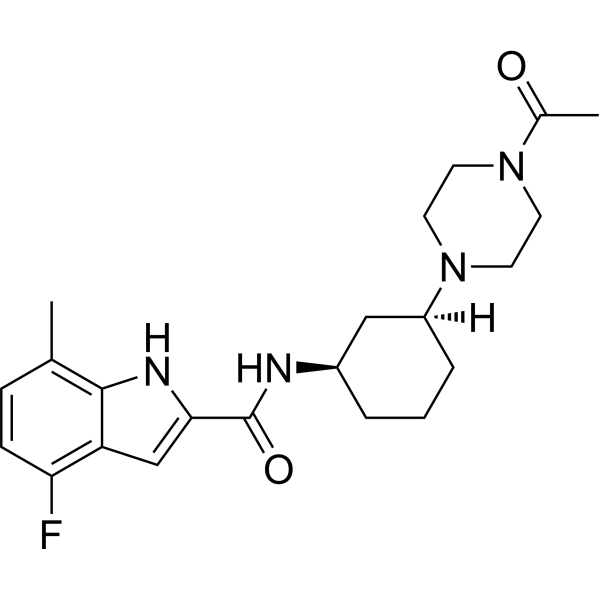 0 ImagesEZM0414 is a potent, selective, orally bioavailable inhibitor of SETD2 (IC50=18 nM in SETD2 biochemical assay; IC50=34 nM in cellular assay). EZM0414 can be used for the research of relapsed or refractory multiple myeloma and diffuse large B-cell lymphoma.
-
EPZ-719
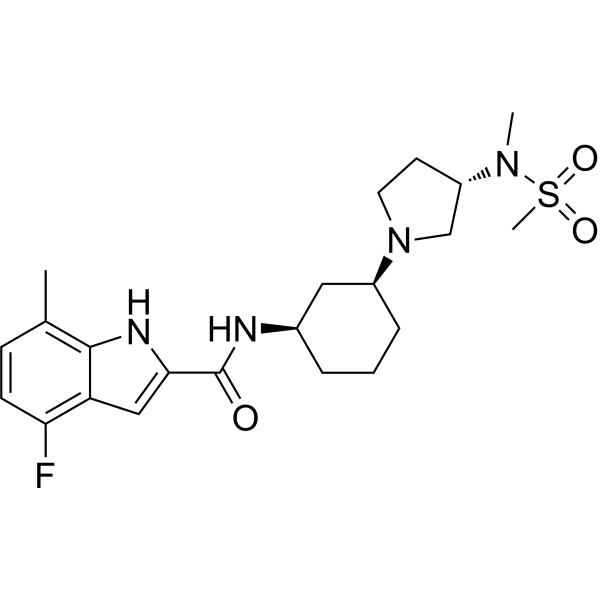 0 ImagesEPZ-719 is a selective, orally effective SETD2 inhibitor with an IC50 value of 0.005 μM. EPZ-719 has anticancer activity.
-
MS4322
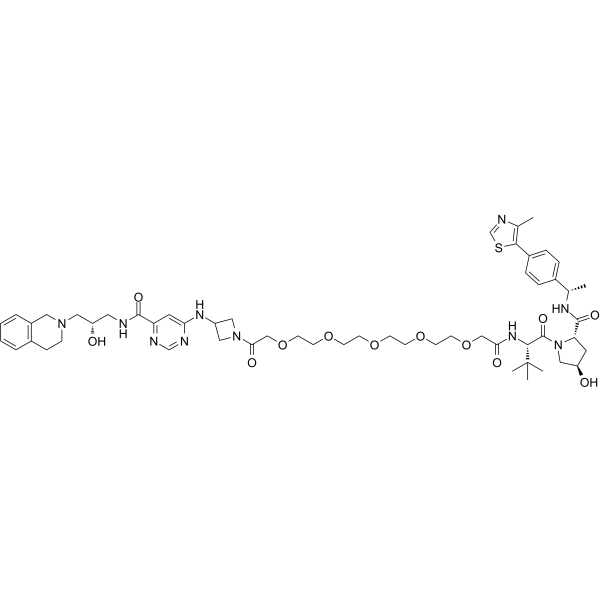 0 ImagesSynonyms: YS43-22MS4322 (YS43-22) is a specific PRMT5 PROTAC degrader. MS4322 reduces the PRMT5 protein level with a DC50 of 1.1 μM in MCF-7 cells. MS4322 inhibits the methyltransferase activity of PRMT5 with an IC50 of 18 nM. MS4322 promotes ubiquitination and degradation of PRMT5. MS4322 can be used for the research of breast cancer, lung cancer, and hepatocellular cancer. (Pink: PRMT5 ligand (HY-173092); Blue: E3 ligase ligand HY-112078); Black: linker (HY-124780); E3+linker (HY-173093 )).
-
MS4322 (isomer)
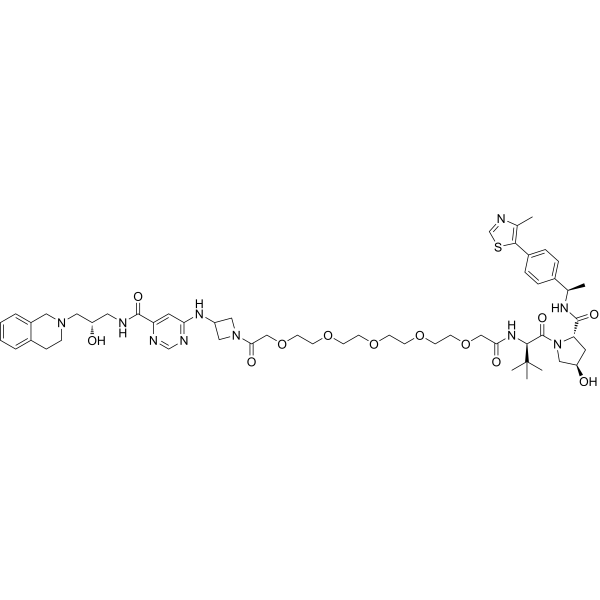 0 ImagesSynonyms: YS43-22 (isomer)MS4322 (YS43-22) isomer is an isomer of MS4322. MS4322 is a specific PRMT5 PROTAC degrader. MS4322 reduces the PRMT5 protein level with a DC50 of 1.1 μM in MCF-7 cells. MS4322 inhibits the methyltransferase activity of PRMT5 with an IC50 of 18 nM. MS4322 promotes ubiquitination and degradation of PRMT5. MS4322 can be used for the research of breast cancer, lung cancer, and hepatocellular cancer.



